




• SHQIPËRI
  • KOSOVË
  • MAQEDONIA E VERIUT
  • MALI I ZI
  • Revista në PDF
15 June, 2026
  • Home
  • OP/ED

    The visit that changed Albania’s strategic future

    Pierre Nora and the institution of memory we lack in Eastern Europe

    The Blueprint of a Diplomatic Debacle: Analyzing Germany’s Historic UNSC Loss

    Between Russia, Iran and Europe: Azerbaijan as a balancing power in the South Caucasus

    The Zero-Tariff Gate: Sovereignty as a Service in the Sino-African Corridor

    Albania vs. the Sea/ Marginal Notes on A. Leka’s Novel The Hidden Side of the Albanian Socialist Garden

    May 9 and the long shadow of a Letter: Is Europe still Schuman’s Project?

    The Arbnesh of Zadar: A living memory of Albanian identity on the Adriatic coast

    Science Diplomacy and Academic Freedom: A strategic nexus for contemporary diplomacy

  • Interview

    Exclusive Interview with Oleksandr Tyshchenko: A 40-Year Legacy of Chernobyl, Nuclear Risks, and Global Responsibility

    INTERVIEW: ZLATKO KRAMARIĆ – THOUGHTS ON THE OLD CONTINENT

    EXCLUSIVE / Ukrainian Ambassador to Albania, Volodymyr Shkurov: “Ukraine wants peace, but not at the expense of its freedom and independence”

    EXCLUSIVE| Ambassador Tayyar Kagan Atay: Türkiye and Albania, a Strategic Partnership Rooted in Shared Heritage and a Common Vision for the Future

    “Diplomacy, Not War”: Palestinian Ambassador to Albania Calls for Justice, Peace, and Global Action for Gaza

    Exclusive: “Even After Tito – Tito”/ Ambassador Zlatko Kramarić on Authoritarian Legacies and Democracy’s Future in the Balkans

    The Conclusion of the Diplomatic Mission / Ambassador Dancho Markovski: Strengthening Albania-North Macedonia Relations for a Shared European Future

    A Century of Diplomatic Relations Between Albania and Russia: Exclusive Interview with the Russian Ambassador to Albania, H.E. Alexey Zaytsev

    Exclusive/ The chairman of the Freedom Party, Ilir Meta: “The will of the citizens will triumph in Albania, as it did in North Macedonia”

  • Realpolitik

    IBAR? ”Sufficiently! Much ado about nothing! Shart contrasts in Beijing! Where is the exit?!

    Neither peace nor war! Peace with bombs?! IBAR in autumn?! Not another Hormuz in Taivan! 

    IBAR – a springing board or an obstacle? Can we catch the EU Negotiation train 2027? When the dress makes the news!  EU electoral April  ends in a draw 1:1!  

    The European Parliament building in Strasbourg, France with flags waving calmly celebrating peace of the Europe. July 12, 2020.

    EU 2027 or 2037! Even half membership failed! No exit strategy!     

    What next?

    “With diplomatic velvet“! Major question marks! In Washington yes, but  in the White House NO! A strange dinner in Brussels!

    From a great ‘apple of disaccord’ to a  point of  cooperation! A bad start! The strange absence in Davos!

    5 lessons from the American 3 January! Don’t count the chicken before they are hatched! Will NATO freeze in Greenland? Wrong diplomatic messages!

    German Chancellor Friedrich Merz, European Commission President Ursula von der Leyen, Ukraine's President Volodymyr Zelenskiy, U.S. Special Envoy Steve Witkoff and Jared Kushner, son-in-law of U.S. President Donald Trump line up for a family photo opportunity at the Chancellery in Berlin, Germany, December 15, 2025.    REUTERS/Lisi Niesner/Pool

    A Strategy that could change the world! Europe in Berlin! Why an historic compromise? Only charm diplomacy in Athens!

  • Current Events

    Council of Albanian Ambassadors Backs Civic Protests, Calls for Transparency and Protection of National Interests

    Russian Ambassador in Tirana: “Without a Strong and Sovereign Russia, the Creation of a Just World Order Is Impossible”

    EU-Western Balkans Summit 2026: New Impetus for the Enlargement Debate?

    “The Flamingo Revolution”: Day 10 of Protests in Albania Draws International Attention

    Rama alleges ‘hybrid war’ behind protests against Kushner-linked coastal development

    BELGRADE, SERBIA - JUNE 18. 2020: Russian and Serbian flags on display during Russian Foreign Minister Sergei Lavrov's visit to the Liberators of Belgrade Memorial. Valery Sharifulin/TASS,Image: 533095429, License: Rights-managed, Restrictions: UWAGA! Zdjęcia zawierają oryginalny opis dostawcy (ITAR-TASS). Szczególnie w związku z agresją Rosji na Ukrainę mogą zawierać przekaz niezgodny z faktami. Zweryfikuj go przed publikacją, Model Release: no, Credit line: Valery Sharifulin / TASS / Forum

    Balkan Maskirovka: Why Moscow’s “Distancing” Is Only an Operation for the Survival of Vučić’s Regime

    Serbia – China 2026: Technological partnership, geopolitical positioning and a new phase of the Chinese presence in the Western Balkans

    The Digital Protectorate: How the EU AI Act Codified Silicon Valley’s Monopoly

    The 28th MFC Annual Conference in Durrës / Sulaj: Microfinance remains a key instrument for financial inclusion

  • Top News

    Russian Ambassador in Tirana: “Without a Strong and Sovereign Russia, the Creation of a Just World Order Is Impossible”

    “The Flamingo Revolution”: Day 10 of Protests in Albania Draws International Attention

    Rama alleges ‘hybrid war’ behind protests against Kushner-linked coastal development

    No End in Sight: Trump, Netanyahu and the Expanding Middle East War

    Tirana – €20 Million EU–Banking Agreement Boosts Albanian SMEs

    “EU4Municipalities II” Project, a Strategic Investment for Strengthening Municipalities and Accelerating Albania’s Path towards the EU

    Albania, Italy deepen defence ties with naval shipbuilding deal

    U.S. Embassy: Iran-Linked Groups May Target Americans and Iranian Opposition in Albania

    The Council of Albanian Ambassadors disappointed with the voting of the draft law on the foreign service in the parliamentary committees.

  • YOUR VOICE
  • Shqip
No Result
View All Result
Argumentum
  • Home
  • OP/ED

    The visit that changed Albania’s strategic future

    Pierre Nora and the institution of memory we lack in Eastern Europe

    The Blueprint of a Diplomatic Debacle: Analyzing Germany’s Historic UNSC Loss

    Between Russia, Iran and Europe: Azerbaijan as a balancing power in the South Caucasus

    The Zero-Tariff Gate: Sovereignty as a Service in the Sino-African Corridor

    Albania vs. the Sea/ Marginal Notes on A. Leka’s Novel The Hidden Side of the Albanian Socialist Garden

    May 9 and the long shadow of a Letter: Is Europe still Schuman’s Project?

    The Arbnesh of Zadar: A living memory of Albanian identity on the Adriatic coast

    Science Diplomacy and Academic Freedom: A strategic nexus for contemporary diplomacy

  • Interview

    Exclusive Interview with Oleksandr Tyshchenko: A 40-Year Legacy of Chernobyl, Nuclear Risks, and Global Responsibility

    INTERVIEW: ZLATKO KRAMARIĆ – THOUGHTS ON THE OLD CONTINENT

    EXCLUSIVE / Ukrainian Ambassador to Albania, Volodymyr Shkurov: “Ukraine wants peace, but not at the expense of its freedom and independence”

    EXCLUSIVE| Ambassador Tayyar Kagan Atay: Türkiye and Albania, a Strategic Partnership Rooted in Shared Heritage and a Common Vision for the Future

    “Diplomacy, Not War”: Palestinian Ambassador to Albania Calls for Justice, Peace, and Global Action for Gaza

    Exclusive: “Even After Tito – Tito”/ Ambassador Zlatko Kramarić on Authoritarian Legacies and Democracy’s Future in the Balkans

    The Conclusion of the Diplomatic Mission / Ambassador Dancho Markovski: Strengthening Albania-North Macedonia Relations for a Shared European Future

    A Century of Diplomatic Relations Between Albania and Russia: Exclusive Interview with the Russian Ambassador to Albania, H.E. Alexey Zaytsev

    Exclusive/ The chairman of the Freedom Party, Ilir Meta: “The will of the citizens will triumph in Albania, as it did in North Macedonia”

  • Realpolitik

    IBAR? ”Sufficiently! Much ado about nothing! Shart contrasts in Beijing! Where is the exit?!

    Neither peace nor war! Peace with bombs?! IBAR in autumn?! Not another Hormuz in Taivan! 

    IBAR – a springing board or an obstacle? Can we catch the EU Negotiation train 2027? When the dress makes the news!  EU electoral April  ends in a draw 1:1!  

    The European Parliament building in Strasbourg, France with flags waving calmly celebrating peace of the Europe. July 12, 2020.

    EU 2027 or 2037! Even half membership failed! No exit strategy!     

    What next?

    “With diplomatic velvet“! Major question marks! In Washington yes, but  in the White House NO! A strange dinner in Brussels!

    From a great ‘apple of disaccord’ to a  point of  cooperation! A bad start! The strange absence in Davos!

    5 lessons from the American 3 January! Don’t count the chicken before they are hatched! Will NATO freeze in Greenland? Wrong diplomatic messages!

    German Chancellor Friedrich Merz, European Commission President Ursula von der Leyen, Ukraine's President Volodymyr Zelenskiy, U.S. Special Envoy Steve Witkoff and Jared Kushner, son-in-law of U.S. President Donald Trump line up for a family photo opportunity at the Chancellery in Berlin, Germany, December 15, 2025.    REUTERS/Lisi Niesner/Pool

    A Strategy that could change the world! Europe in Berlin! Why an historic compromise? Only charm diplomacy in Athens!

  • Current Events

    Council of Albanian Ambassadors Backs Civic Protests, Calls for Transparency and Protection of National Interests

    Russian Ambassador in Tirana: “Without a Strong and Sovereign Russia, the Creation of a Just World Order Is Impossible”

    EU-Western Balkans Summit 2026: New Impetus for the Enlargement Debate?

    “The Flamingo Revolution”: Day 10 of Protests in Albania Draws International Attention

    Rama alleges ‘hybrid war’ behind protests against Kushner-linked coastal development

    BELGRADE, SERBIA - JUNE 18. 2020: Russian and Serbian flags on display during Russian Foreign Minister Sergei Lavrov's visit to the Liberators of Belgrade Memorial. Valery Sharifulin/TASS,Image: 533095429, License: Rights-managed, Restrictions: UWAGA! Zdjęcia zawierają oryginalny opis dostawcy (ITAR-TASS). Szczególnie w związku z agresją Rosji na Ukrainę mogą zawierać przekaz niezgodny z faktami. Zweryfikuj go przed publikacją, Model Release: no, Credit line: Valery Sharifulin / TASS / Forum

    Balkan Maskirovka: Why Moscow’s “Distancing” Is Only an Operation for the Survival of Vučić’s Regime

    Serbia – China 2026: Technological partnership, geopolitical positioning and a new phase of the Chinese presence in the Western Balkans

    The Digital Protectorate: How the EU AI Act Codified Silicon Valley’s Monopoly

    The 28th MFC Annual Conference in Durrës / Sulaj: Microfinance remains a key instrument for financial inclusion

  • Top News

    Russian Ambassador in Tirana: “Without a Strong and Sovereign Russia, the Creation of a Just World Order Is Impossible”

    “The Flamingo Revolution”: Day 10 of Protests in Albania Draws International Attention

    Rama alleges ‘hybrid war’ behind protests against Kushner-linked coastal development

    No End in Sight: Trump, Netanyahu and the Expanding Middle East War

    Tirana – €20 Million EU–Banking Agreement Boosts Albanian SMEs

    “EU4Municipalities II” Project, a Strategic Investment for Strengthening Municipalities and Accelerating Albania’s Path towards the EU

    Albania, Italy deepen defence ties with naval shipbuilding deal

    U.S. Embassy: Iran-Linked Groups May Target Americans and Iranian Opposition in Albania

    The Council of Albanian Ambassadors disappointed with the voting of the draft law on the foreign service in the parliamentary committees.

  • YOUR VOICE
  • Shqip
No Result
View All Result
Argumentum
No Result
View All Result
Home ENGLISH

Russia in reviw: The Kremlin faces setbacks in the Balkans

27 April, 2020
in ENGLISH, In Focus
A A
Share on FacebookShare on Twitter

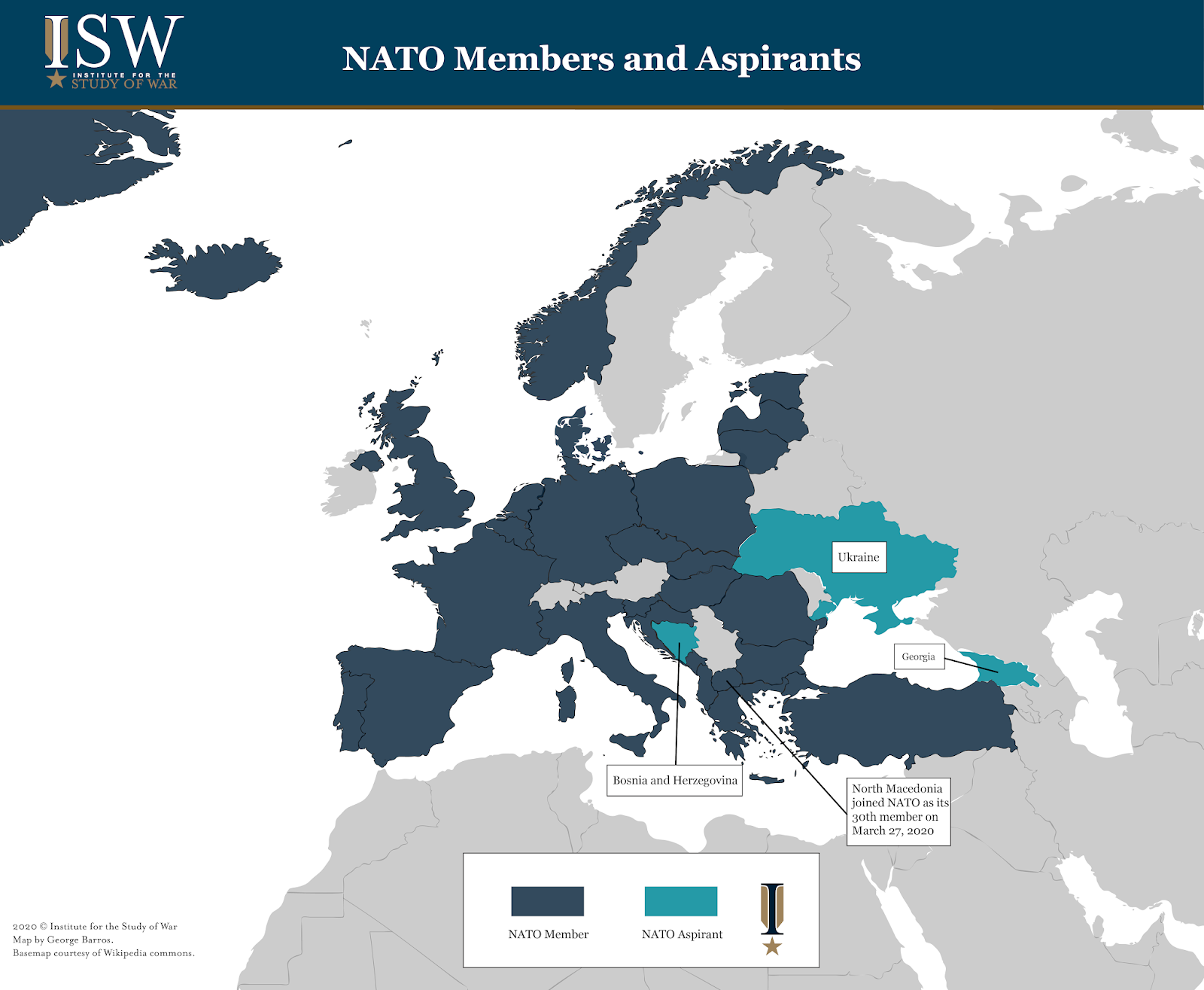
Key Takeaway: The Kremlin is losing initiative and influence in several Balkan states. North Macedonia joined NATO despite Russia’s efforts to prevent it. Russia’s strategic partner Serbia is increasingly vocal about its aspirations to join the EU. Balkan states are curbing the influence of Russian energy and the Russian Orthodox Church in their countries. The Kremlin is attempting to counteract these potential influence losses by exploiting its connections to Serbia’s defense establishment to prevent Serbia from deepening ties with the EU. The West should keep the Kremlin on the defensive in Europe by supporting ongoing EU and NATO efforts to integrate the Western Balkans.

The Kremlin is facing setbacks in the Balkans due to the West’s intensified outreach and limits to Russia’s value proposition. Halting the expansion of the European Union (EU) and the North Atlantic Treaty Organization (NATO) in the Balkans is a major Russian strategic objective. Serbia-Kosovo normalization talks might resume and could open a path to Serbia’s EU accession. The Kremlin likely has overestimated the extent to which it can curb Serbia’s European aspirations. Montenegro threatens to reduce the influence of the Russian Orthodox Church, a key vector for Russian soft power influence. An EU ruling in March limited the Kremlin’s energy leverage over Bulgaria. In late March, North Macedonia joined NATO despite strong Kremlin resistance.[1]

The EU intensified its outreach to the Balkans in recent months. The European Commission proposed a new enlargement procedure for the Western Balkans, calling the region their “top priority,” on February 5.[2] An enlargement procedure is a plan for an EU candidate country to meet the necessary criteria for EU membership. The EU intensified outreach to Serbia after struggling to restart normalization talks between Kosovo and Serbia since 2018.[3] The talks stalled when Kosovo imposed a 100-percent tariff on Serbian goods in response to Serbia blocking Kosovo’s bid to join Interpol in November 2018.[4] Serbia’s recognition of Kosovo and normalization of relations between the two countries are preconditions for both Serbia and Kosovo’s EU accession processes.[5]

French President Emmanuel Macron pledged “unconditional support” for Serbia’s pursuit of its “European path” in a call with Serbian President Aleksandar Vucic on April 2.[6] Macron also reversed his opposition to EU expansion in Albania and North Macedonia in February, when he said France is open to both countries beginning EU accession talks.[7] The change in Macron’s rhetoric likely indicates consolidating political consensus in the EU on expanding into the Balkans. The EU planned a Western Balkans summit in Zagreb for May 2020, but the COVID-19 pandemic forced the bloc to postpone it.[8]

President Vucic is responding positively to the EU’s outreach, and Kosovo might be setting conditions to renew talks. Vucic said in January that the Serbian people “don’t see a real alternative” to joining the EU.[9] Vucic met with Kosovo’s president and top US officials in Washington, DC, in March – representing progress in Serbia and Kosovo’s stalled dialogue.[10] Vucic called for “compromise” on Kosovo resulting in “guarantees for a much better future” during his US trip, likely referencing EU membership guarantees in exchange for recognizing Kosovo.[11] Vucic expressed support for the EU’s new enlargement procedure on February 6.[12] Vucic is doubling down on his pro-European rhetoric after balancing between Europe and Russia for several years.[13] Vucic may be setting expectations for the Serbian people for a deal in which Serbia recognizes Kosovo in exchange for EU membership guarantees.

Kosovo might be setting conditions to renew normalization talks with Serbia. Kosovo lifted its 100-percent tariff on Serbian goods – a major impediment to Kosovo and Serbia’s normalization talks – on April 1.[14] However, Kosovo’s outgoing interim prime minister, Albin Kurti, threatened to reimpose the tariffs unless Serbia delivered reciprocal concessions by June 15.[15] That said, Kurti’s threat to reinstate the tariff may be hollow; he lost a vote of no confidence on March 25 and may not be prime minister when the June 15 deadline passes.[16] Kurti likely agreed to completely remove the tariff only after he failed his vote of no confidence in an attempt to expand his political leverage inside Kosovo. Kosovar President Hashim Thaçi is attempting to remove Kurti and is likely supportive of removing the tariff and resuming talks with Serbia.[17] US officials pressured Kurti for refusing to completely remove Kosovo’s tariff against Serbia in February.[18]

Vucic is likely trying to extract major political concessions from Kosovo and the EU during Serbia’s accession process. Serbian officials expressed discontent with Kosovo’s tariff removal because the lifting came with additional demands from Kurti.[19] Serbian officials likely understand that Kosovo may not reimpose the tariff on June 15 due to Western political pressure and uncertainty about Kurti’s tenure as interim prime minister and may refuse to make concessions as a result. Regardless of the outcome of Serbia and Kosovo’s political maneuverings, the COVID-19 pandemic will likely stall progress on the countries’ normalization talks.

The Kremlin is mitigating a potential loss of influence in Serbia by increasing its outreach there.

The Kremlin’s objectives in the Balkans include maintaining influence in Serbia and the non-recognition of Kosovo. The Kremlin describes NATO’s 1999 military intervention in Serbia and the subsequent creation of Kosovo as a classic example of an “illegal NATO intervention.”[20] The Kremlin opposes EU and NATO expansion into Serbia.  Serbia and Kosovo’s mutual recognition would open a pathway for Serbia’s EU accession, eroding Kremlin influence in the Balkans. Russia also seeks to maintain its cultural influence in Serbia and the reach of the Russian Orthodox Church.

The Kremlin increased its military outreach to Serbia as the EU increased engagement with Serbia. Russian Defense Minister Sergey Shoigu met with Serbian Defense Minister Aleksandar Vulin in Serbia on February 17.[21] A Russian shipment of Pantsir-S1 air-defense systems arrived in Serbia on February 24.[22] The Kremlin is likely trying to cultivate new and reinforce existing human connections and institutional links in Serbia’s defense establishment to consolidate opposition to future talks with Kosovo and Serbia’s integration with the West. The Kremlin may exploit its influence among Serbian defense officials to set conditions for political and military resistance against the expansion of Western structures in Serbia.[23] The Kremlin has been carrying out a campaign to expand its influence in Serbia at all levels, including the military, economy, and infrastructure spheres – a campaign ISW analyzed in detail.[24]

The Kremlin is exploiting the COVID-19 pandemic to increase its influence in Serbia and the Republika Srpska – as the Kremlin likely previously did in Italy and the United States. The Russian Air Force sent at least 87 military specialists with military and medical equipment to Serbia on April 3-4.[25] The Kremlin sent military cargo planes with medical supplies and military experts to the Republika Srpska – the political entity for Serbs within Bosnia – on April 10.[26] Bosnian Serb leader Milorad Dodik thanked the Kremlin for its assistance.[27] The Kremlin may also be using counter-COVID-19 measures as a pretext to deploy military units to collect intelligence on Serbia and Europe, as Russian military intelligence likely did when the Kremlin deployed Russian military assets and “humanitarian aid” to Italy and the United States in March.[28] 

The Russian Orthodox Church may lose influence in Montenegro – another state in the Balkans. Montenegrin President Milos Djukanovic signed a law in December that could strip the Serbian Orthodox Church of hundreds of religious sites in Montenegro.[29] The Serbian Orthodox Church denounced the law and organized protests that injured four Montenegrin police officers.[30] The Serbian Orthodox Church is allied with the Russian Orthodox Church, a Kremlin foreign policy tool.[31] Djukanovic accused the Serbian Orthodox Church of promoting policies that undermine Montenegro, a NATO member and EU membership candidate.[32] A loss of Serbian Orthodox Church influence in Montenegro would likely prelude a loss of Kremlin influence in Montenegro. The Kremlin is likely using its influence in the Serbian Orthodox Church to undermine Montenegro’s EU membership aspirations.[33]           

The EU forced the Kremlin to cut energy prices for Bulgaria. Russian state-owned gas operator Gazprom cut gas prices to Bulgaria by 40 percent to comply with a European Commission antitrust ruling on March 3.[34] Bulgaria is the latest of eight European states, including the Czech Republic, Estonia, Hungary, Latvia, Lithuania, Poland, and Slovakia, to agree on gas price cuts with Gazprom under the European Commission’s ruling.[35] The Kremlin regularly seeks energy deals that place other countries at a disadvantage, though it typically casts these deals as fair trades or even concessions by Russia. For example, the West allowed the Kremlin to secure a deal with Ukraine in December 2019 that eroded Ukraine’s long-term energy leverage against Russia.[36] In contrast, Western intervention, specifically by the European Commission, cost the Kremlin leverage over Bulgaria and reduced Russian revenue. Furthermore, Bulgaria, like other European actors, is diversifying its gas imports, eroding a key point of Russian leverage.[37]

The Kremlin was unable to stop the NATO accession of North Macedonia, another Balkan state. North Macedonia joined NATO on March 27.[38] The Kremlin accused NATO of “procedural and legislative violations” in North Macedonia’s accession. The Kremlin claimed there is no “single clear justification” for North Macedonia’s NATO membership, that it does not offer any national security value for Europe or Macedonia and only creates further divisions.[39]  The Kremlin tried to use an information operation to disrupt the process of North Macedonia’s renaming, a condition for North Macedonia’s NATO membership.[40] The Kremlin similarly tried and failed to stop the NATO accession of Montenegro in 2017.[41] These events mark significant setbacks for the Kremlin’s efforts to prevent NATO expansion in the Balkans.

http://www.understandingwar.org/
Related Posts

Current Events

Council of Albanian Ambassadors Backs Civic Protests, Calls for Transparency and Protection of National Interests

12 June, 2026
Current Events

Russian Ambassador in Tirana: “Without a Strong and Sovereign Russia, the Creation of a Just World Order Is Impossible”

11 June, 2026
Balkan Overview

EU-Western Balkans Summit 2026: New Impetus for the Enlargement Debate?

10 June, 2026

Follow US

Subscribe

Receive Argumentum Magazine by Email

Last Posts

Council of Albanian Ambassadors Backs Civic Protests, Calls for Transparency and Protection of National Interests

12 June, 2026

Russian Ambassador in Tirana: “Without a Strong and Sovereign Russia, the Creation of a Just World Order Is Impossible”

11 June, 2026

EU-Western Balkans Summit 2026: New Impetus for the Enlargement Debate?

10 June, 2026

The visit that changed Albania’s strategic future

10 June, 2026

Serbia’s Lost Legal Battle and the Exploitation of Resolution 1244 for Lawfare and Terrorism

10 June, 2026
Argumentum

“Argumentum”, një proces intelektual …

Contact Us

[email protected]
[email protected]
[email protected]

Follow Us

Media Partner

Register

Receive Argumentum Magazine by Email
  • Home
  • Privacy Policy
  • About Us
  • Contact

© 2022 Argumentum. All Rights Reserved. | NUIS: L91415033Q

Welcome Back!

Login to your account below

Forgotten Password? Sign Up

Create New Account!

Fill the forms bellow to register

*By registering into our website, you agree to the Terms & Conditions and Privacy Policy.
All fields are required. Log In

Retrieve your password

Please enter your username or email address to reset your password.

Log In

Add New Playlist

No Result
View All Result
  • Home
  • OP/ED
  • Interview
  • Realpolitik
  • Current Events
  • Top News
  • YOUR VOICE
  • Shqip

© 2022 Argumentum. All Rights Reserved. | NUIS: L91415033Q

This website uses cookies. By continuing to use this website you are giving consent to cookies being used. Visit our Privacy and Cookie Policy.