




• SHQIPËRI
  • KOSOVË
  • MAQEDONIA E VERIUT
  • MALI I ZI
  • Revista në PDF
9 June, 2026
  • Home
  • OP/ED

    Pierre Nora and the institution of memory we lack in Eastern Europe

    The Blueprint of a Diplomatic Debacle: Analyzing Germany’s Historic UNSC Loss

    Cyber Attribution, Corruption, and the False-Flag Question in Albania’s 2022 Alleged Iranian Cyberattack

    Between Russia, Iran and Europe: Azerbaijan as a balancing power in the South Caucasus

    The Zero-Tariff Gate: Sovereignty as a Service in the Sino-African Corridor

    Albania vs. the Sea/ Marginal Notes on A. Leka’s Novel The Hidden Side of the Albanian Socialist Garden

    May 9 and the long shadow of a Letter: Is Europe still Schuman’s Project?

    The Arbnesh of Zadar: A living memory of Albanian identity on the Adriatic coast

    Science Diplomacy and Academic Freedom: A strategic nexus for contemporary diplomacy

  • Interview

    Exclusive Interview with Oleksandr Tyshchenko: A 40-Year Legacy of Chernobyl, Nuclear Risks, and Global Responsibility

    INTERVIEW: ZLATKO KRAMARIĆ – THOUGHTS ON THE OLD CONTINENT

    EXCLUSIVE / Ukrainian Ambassador to Albania, Volodymyr Shkurov: “Ukraine wants peace, but not at the expense of its freedom and independence”

    EXCLUSIVE| Ambassador Tayyar Kagan Atay: Türkiye and Albania, a Strategic Partnership Rooted in Shared Heritage and a Common Vision for the Future

    “Diplomacy, Not War”: Palestinian Ambassador to Albania Calls for Justice, Peace, and Global Action for Gaza

    Exclusive: “Even After Tito – Tito”/ Ambassador Zlatko Kramarić on Authoritarian Legacies and Democracy’s Future in the Balkans

    The Conclusion of the Diplomatic Mission / Ambassador Dancho Markovski: Strengthening Albania-North Macedonia Relations for a Shared European Future

    A Century of Diplomatic Relations Between Albania and Russia: Exclusive Interview with the Russian Ambassador to Albania, H.E. Alexey Zaytsev

    Exclusive/ The chairman of the Freedom Party, Ilir Meta: “The will of the citizens will triumph in Albania, as it did in North Macedonia”

  • Realpolitik

    IBAR? ”Sufficiently! Much ado about nothing! Shart contrasts in Beijing! Where is the exit?!

    Neither peace nor war! Peace with bombs?! IBAR in autumn?! Not another Hormuz in Taivan! 

    IBAR – a springing board or an obstacle? Can we catch the EU Negotiation train 2027? When the dress makes the news!  EU electoral April  ends in a draw 1:1!  

    The European Parliament building in Strasbourg, France with flags waving calmly celebrating peace of the Europe. July 12, 2020.

    EU 2027 or 2037! Even half membership failed! No exit strategy!     

    What next?

    “With diplomatic velvet“! Major question marks! In Washington yes, but  in the White House NO! A strange dinner in Brussels!

    From a great ‘apple of disaccord’ to a  point of  cooperation! A bad start! The strange absence in Davos!

    5 lessons from the American 3 January! Don’t count the chicken before they are hatched! Will NATO freeze in Greenland? Wrong diplomatic messages!

    German Chancellor Friedrich Merz, European Commission President Ursula von der Leyen, Ukraine's President Volodymyr Zelenskiy, U.S. Special Envoy Steve Witkoff and Jared Kushner, son-in-law of U.S. President Donald Trump line up for a family photo opportunity at the Chancellery in Berlin, Germany, December 15, 2025.    REUTERS/Lisi Niesner/Pool

    A Strategy that could change the world! Europe in Berlin! Why an historic compromise? Only charm diplomacy in Athens!

  • Current Events

    Rama alleges ‘hybrid war’ behind protests against Kushner-linked coastal development

    BELGRADE, SERBIA - JUNE 18. 2020: Russian and Serbian flags on display during Russian Foreign Minister Sergei Lavrov's visit to the Liberators of Belgrade Memorial. Valery Sharifulin/TASS,Image: 533095429, License: Rights-managed, Restrictions: UWAGA! Zdjęcia zawierają oryginalny opis dostawcy (ITAR-TASS). Szczególnie w związku z agresją Rosji na Ukrainę mogą zawierać przekaz niezgodny z faktami. Zweryfikuj go przed publikacją, Model Release: no, Credit line: Valery Sharifulin / TASS / Forum

    Balkan Maskirovka: Why Moscow’s “Distancing” Is Only an Operation for the Survival of Vučić’s Regime

    Serbia – China 2026: Technological partnership, geopolitical positioning and a new phase of the Chinese presence in the Western Balkans

    The Digital Protectorate: How the EU AI Act Codified Silicon Valley’s Monopoly

    The 28th MFC Annual Conference in Durrës / Sulaj: Microfinance remains a key instrument for financial inclusion

    Serbia at the Crossroads of EU Integration and Geopolitical Balancing: IFIMES Analysis

    Tirana – €20 Million EU–Banking Agreement Boosts Albanian SMEs

    The Myth of Independence: How Chinese Efficiency is Rewriting the Constitution of Modern Geopolitics!

    Europe Yesterday and Today: Why 9 May Still Matters

  • Top News

    Rama alleges ‘hybrid war’ behind protests against Kushner-linked coastal development

    No End in Sight: Trump, Netanyahu and the Expanding Middle East War

    Tirana – €20 Million EU–Banking Agreement Boosts Albanian SMEs

    “EU4Municipalities II” Project, a Strategic Investment for Strengthening Municipalities and Accelerating Albania’s Path towards the EU

    Albania, Italy deepen defence ties with naval shipbuilding deal

    U.S. Embassy: Iran-Linked Groups May Target Americans and Iranian Opposition in Albania

    The Council of Albanian Ambassadors disappointed with the voting of the draft law on the foreign service in the parliamentary committees.

    Prime Minister Edi Rama Addresses Israel’s Knesset in Historic Special Session

    Kazakhstan’s Strategic Reform Agenda: Stability, Modern Governance, and Responsible Diplomacy

  • YOUR VOICE
  • Shqip
No Result
View All Result
Argumentum
  • Home
  • OP/ED

    Pierre Nora and the institution of memory we lack in Eastern Europe

    The Blueprint of a Diplomatic Debacle: Analyzing Germany’s Historic UNSC Loss

    Cyber Attribution, Corruption, and the False-Flag Question in Albania’s 2022 Alleged Iranian Cyberattack

    Between Russia, Iran and Europe: Azerbaijan as a balancing power in the South Caucasus

    The Zero-Tariff Gate: Sovereignty as a Service in the Sino-African Corridor

    Albania vs. the Sea/ Marginal Notes on A. Leka’s Novel The Hidden Side of the Albanian Socialist Garden

    May 9 and the long shadow of a Letter: Is Europe still Schuman’s Project?

    The Arbnesh of Zadar: A living memory of Albanian identity on the Adriatic coast

    Science Diplomacy and Academic Freedom: A strategic nexus for contemporary diplomacy

  • Interview

    Exclusive Interview with Oleksandr Tyshchenko: A 40-Year Legacy of Chernobyl, Nuclear Risks, and Global Responsibility

    INTERVIEW: ZLATKO KRAMARIĆ – THOUGHTS ON THE OLD CONTINENT

    EXCLUSIVE / Ukrainian Ambassador to Albania, Volodymyr Shkurov: “Ukraine wants peace, but not at the expense of its freedom and independence”

    EXCLUSIVE| Ambassador Tayyar Kagan Atay: Türkiye and Albania, a Strategic Partnership Rooted in Shared Heritage and a Common Vision for the Future

    “Diplomacy, Not War”: Palestinian Ambassador to Albania Calls for Justice, Peace, and Global Action for Gaza

    Exclusive: “Even After Tito – Tito”/ Ambassador Zlatko Kramarić on Authoritarian Legacies and Democracy’s Future in the Balkans

    The Conclusion of the Diplomatic Mission / Ambassador Dancho Markovski: Strengthening Albania-North Macedonia Relations for a Shared European Future

    A Century of Diplomatic Relations Between Albania and Russia: Exclusive Interview with the Russian Ambassador to Albania, H.E. Alexey Zaytsev

    Exclusive/ The chairman of the Freedom Party, Ilir Meta: “The will of the citizens will triumph in Albania, as it did in North Macedonia”

  • Realpolitik

    IBAR? ”Sufficiently! Much ado about nothing! Shart contrasts in Beijing! Where is the exit?!

    Neither peace nor war! Peace with bombs?! IBAR in autumn?! Not another Hormuz in Taivan! 

    IBAR – a springing board or an obstacle? Can we catch the EU Negotiation train 2027? When the dress makes the news!  EU electoral April  ends in a draw 1:1!  

    The European Parliament building in Strasbourg, France with flags waving calmly celebrating peace of the Europe. July 12, 2020.

    EU 2027 or 2037! Even half membership failed! No exit strategy!     

    What next?

    “With diplomatic velvet“! Major question marks! In Washington yes, but  in the White House NO! A strange dinner in Brussels!

    From a great ‘apple of disaccord’ to a  point of  cooperation! A bad start! The strange absence in Davos!

    5 lessons from the American 3 January! Don’t count the chicken before they are hatched! Will NATO freeze in Greenland? Wrong diplomatic messages!

    German Chancellor Friedrich Merz, European Commission President Ursula von der Leyen, Ukraine's President Volodymyr Zelenskiy, U.S. Special Envoy Steve Witkoff and Jared Kushner, son-in-law of U.S. President Donald Trump line up for a family photo opportunity at the Chancellery in Berlin, Germany, December 15, 2025.    REUTERS/Lisi Niesner/Pool

    A Strategy that could change the world! Europe in Berlin! Why an historic compromise? Only charm diplomacy in Athens!

  • Current Events

    Rama alleges ‘hybrid war’ behind protests against Kushner-linked coastal development

    BELGRADE, SERBIA - JUNE 18. 2020: Russian and Serbian flags on display during Russian Foreign Minister Sergei Lavrov's visit to the Liberators of Belgrade Memorial. Valery Sharifulin/TASS,Image: 533095429, License: Rights-managed, Restrictions: UWAGA! Zdjęcia zawierają oryginalny opis dostawcy (ITAR-TASS). Szczególnie w związku z agresją Rosji na Ukrainę mogą zawierać przekaz niezgodny z faktami. Zweryfikuj go przed publikacją, Model Release: no, Credit line: Valery Sharifulin / TASS / Forum

    Balkan Maskirovka: Why Moscow’s “Distancing” Is Only an Operation for the Survival of Vučić’s Regime

    Serbia – China 2026: Technological partnership, geopolitical positioning and a new phase of the Chinese presence in the Western Balkans

    The Digital Protectorate: How the EU AI Act Codified Silicon Valley’s Monopoly

    The 28th MFC Annual Conference in Durrës / Sulaj: Microfinance remains a key instrument for financial inclusion

    Serbia at the Crossroads of EU Integration and Geopolitical Balancing: IFIMES Analysis

    Tirana – €20 Million EU–Banking Agreement Boosts Albanian SMEs

    The Myth of Independence: How Chinese Efficiency is Rewriting the Constitution of Modern Geopolitics!

    Europe Yesterday and Today: Why 9 May Still Matters

  • Top News

    Rama alleges ‘hybrid war’ behind protests against Kushner-linked coastal development

    No End in Sight: Trump, Netanyahu and the Expanding Middle East War

    Tirana – €20 Million EU–Banking Agreement Boosts Albanian SMEs

    “EU4Municipalities II” Project, a Strategic Investment for Strengthening Municipalities and Accelerating Albania’s Path towards the EU

    Albania, Italy deepen defence ties with naval shipbuilding deal

    U.S. Embassy: Iran-Linked Groups May Target Americans and Iranian Opposition in Albania

    The Council of Albanian Ambassadors disappointed with the voting of the draft law on the foreign service in the parliamentary committees.

    Prime Minister Edi Rama Addresses Israel’s Knesset in Historic Special Session

    Kazakhstan’s Strategic Reform Agenda: Stability, Modern Governance, and Responsible Diplomacy

  • YOUR VOICE
  • Shqip
No Result
View All Result
Argumentum
No Result
View All Result
Home ENGLISH

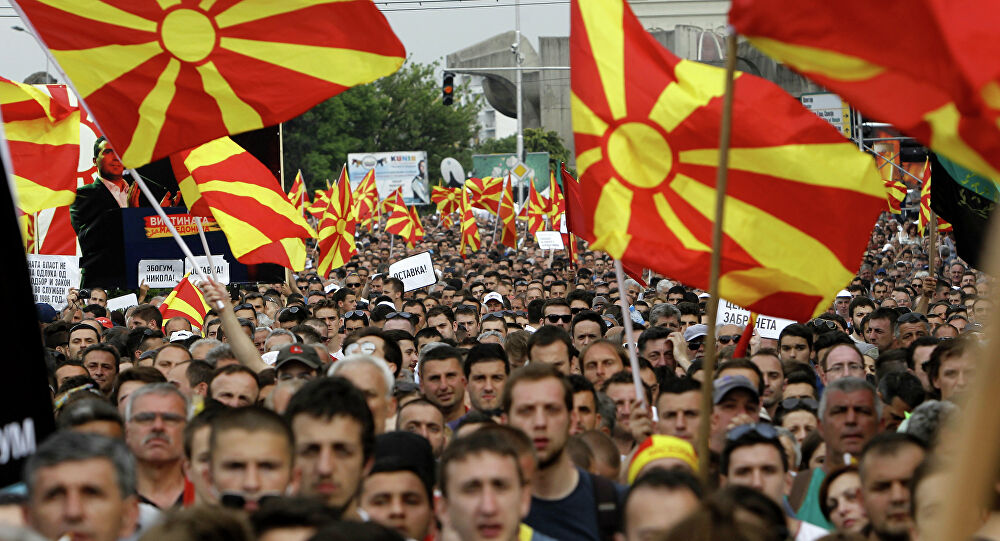
North Macedonia: Increased Security Challenges and Threats

10 March, 2021
in ENGLISH, In Focus
A A
Share on FacebookShare on Twitter
After long and difficult negotiations in June/July 2015 the political leaders in North Macedonia brokered the Przino agreement and agreed to overcome the deep multiyear political crisis, which was caused by the illegal tapping of more than 20,000 citizens and the plunder by the regime in the amount of more than 5 billion Euros of public money, and then organized early parliamentary elections in December 2016 after the fulfillment of specific preconditions. The electoral rolls were “cleansed” as they included a “surplus” of no less than 330,000 voters and appropriate media regulations were established. Specifically, instead of the complete media hegemony of VMRO-DPMNE and the Nikola Gruevski – Sašo Mijalkov duo, all political subjects participating in the elections were given equal access and treatment in the media.

After the democratic outcome in North Macedonia, democratic transformation and consolidation of the country begun. The state has managed to find its path and choose between democracy and authoritarianism, that is between the civic and/or ethnic character of North Macedonia. However, the difficult situation that was inherited has left a deep mark and far-reaching consequences. The Gruevski – Mijalkov regime has still not been dismantled. Although in March 2020, North Macedonia became a full-fledged member of NATO, it is currently faced with intensified threats by criminal structures and political-intelligence underground, which operates within the country and from abroad.

The key paradigm of the policy of Zoran Zaev and the SDSM (Social-Democratic Union of Macedonia) is that the political left should take responsibility for resolution of the key national issues, because the national issues had previously predominantly been addressed by the right wing parties, as well as radical and rigid right wing parties, as a result of what the situation in the West Balkans region is rather worrying.

The shift in the political, diplomatic and broader social paradigm in North Macedonia commenced some six years ago when the then opposition leader Zoran Zaev (SDSM) started a wave of democratic changes and peaceful change of government/regime, which created a new positive image of this in many aspects important Balkans state.

Epilogue of illegal tapping
The former head of the Macedonian Department for Security and Counterintelligence (UBK) Sašo Mijalkov (VMRO-DPMNE) was recently sentenced to 12 years of imprisonment in the “Target – Tvrdina”/Target-Fortress/Case for massive illegal surveillance and destruction of equipment of the UBK which had been used for interception of communications. Mijalkov was convicted for criminal association, abuse of office and receipt of a reward for unlawful influence. In the same case the former minister of internal affairs Gordana Jankuloska (VMRO-DPMNE) was sentenced to four years of imprisonment. Between 2008 and 2015, the convicted used three different surveillance systems to intercept communications and, as a part of the former secret police, illegally tapped almost 4,300 phone numbers without previously obtaining court warrants. By doing so, they have directly or indirectly caused damage to more than 20,000 persons. In October 2018, former Macedonian Prime Minister Nikola Gruevski (VMRO-DPMNE) was sentenced to two years of imprisonment for the unlawful procurement of the luxurious Mercedes vehicle worth 600,000 Euro in 2012 and is currently on the run.

Analysts believe that North Macedonia had recently experienced an attempt of a “mini coup d’état” which was aimed to topple Zoran Zaev’s government. The propaganda machinery of the VMRO-DPMNE has been asserting for the last three years that Zoran Zaev and Sašo Mijalkov are of the same kind. However, the swift arrest after his fleeing prior to pronunciation of the judgment and the draconic sentence of imprisonment pronounced to Mijalkov have negated such assertions. It is worth reminding that on the day when Mijalkov’s runaway was publicized, the VMRO-DPMNE already had a list of members of the new government and were looking forward to establishing a new parliamentary majority. The express arrest of Mijalkov and the long sentence of imprisonment had thwarted the attempted “mini coup d’état” and prolonged the mandate of the democratic government headed by Zoran Zaev until the regular parliamentary elections, which are to take place in three and a half years.

The membership in NATO has wrapped up Macedonian statehood. NATO guarantees survivability and territorial integrity of the modern Macedonian state. After the integration into NATO nobody can count any more on North Macedonia for its hegemonistic projects. Democratic changes and the achieved results in the past four years have shown that changes are possible and feasible and that Macedonia, as well as the West Balkans region, have the required potential to implement changes.  This sent a strong message and was an incentive to other countries, which are in the waiting room for the European Union and NATO. It is also important that the official Brussels has recognized the trend of changes in North Macedonia, but did not respond positively and constructively to them- as it had promised to do.
Spirit of changes resonates in the region

The change in political, diplomatic and broader social paradigm in North Macedonia begun when the SDSM leader Zoran Zaev initiated a number of democratic changes and processes, which later resonated in the region as well.

The current ruling political structures in Macedonia have managed to implement a peaceful democratic change of government/regime, which had illegally tapped more than 20,000 citizens and syphoned out of the country an estimated 5 billion Euros-at least. The integration paradigm of Zoran Zaev and the strong international engagement led to the signing of the Treaty on Good Neighborliness with Bulgaria and the adoption of the law on the use of languages of other ethnic communities. Furthermore, the Prespa Agreement with Greece, which enabled unblocking of the Euro-Atlantic integration process, was signed and implemented.

Although a bit more than four years ago North Macedonia was a “case country”, today it is used as an example of a country that has implemented numerous reforms and unblocked its Euro-Atlantic path, which was crowned with full-fledged membership in the NATO organization. The Government of the Republic of North Macedonia has had the strongest international support that any government in the region has enjoyed. This is a very important fact, which needs to be used in the coming period so that North Macedonia, as well as the entire region, could finally embark on the path of prosperity. However, in this process the Macedonian authorities must have a zero tolerance to crimes, corruption and violation of human rights.

Following the resolution of the situation in North Macedonia the attention was focused on finalization of the dialogue between the official Belgrade and Pristina. This process is entering its final phase, and once it is completed turn the attention will be shifted to resolution of the situation in Bosnia and Herzegovina. In the meantime, Milo Đukanović‘s (DPS) regime was defeated at the elections in Montenegro, as well as Hashim Thaci‘s (PDK) regime in Kosovo.

Analysts believe that the success of North Macedonia was not welcomed in a part of political circles in the country, the region, as well as in a part of the international community, which do not look favorably on finalization of the dialogue between the official Belgrade and Pristina and subsequently the resolution of the situation in BiH. Although a part of political forces would like to see North Macedonia return to the old “state of affairs”, the democratic process of political changes is an irrevocable process.

Minister Spasovski – main target of political-mafia structures 
North Macedonia has demonstrated that it is able to be the proponent of change. That is the democratic political legitimation of the current authorities. Membership in NATO is a confirmation of the correctness of their course of action.

Membership in the NATO alliance means security, stability and wellbeing. It increases the reliability and safety of the country for foreign investments. Membership in NATO is simultaneously a major step forward towards membership in the EU, as has been the experience of all the new member countries that were coopted after the end of the Cold War. Without membership in NATO not one of the 30 countries would be as successful as they currently are. Membership means co-deciding on key issues of international policy. North Macedonia is no longer a subject included for discussion on agendas of international forums, but is a country that discusses issues together with other member countries and contributes to resolution of key international issues and challenges. This is a quality step forward in the functioning of a state, which has become u full-fledged member of the NATO alliance.

Membership in NATO does not imply benefits just for the defense, military and security structures and functioning of the state. Through its numerous boards NATO deals also with issues such as education, ecology, innovation, scientific research, etc. Furthermore, Macedonian companies that obtain the NATO certificate can be awarded contracts on different tenders, which was not possible in the past. Membership in NATO will also open the opportunities for development of the defense industry. Of course, all this depends on the extent of the readiness of the country to demonstrate a proactive approach in this prestigious club of states.

Analysts emphasize the relevance of the democratic transformation and restoration of the Macedonian society through the strengthening of professional and depoliticized national institutions and the judicial reform. Creation of strong institutions will mean creation of the strongest possible barrier to crime and corruption, as well as the mafia-model of organization. This is exactly the reason behind the attacks and attempts of discreditation of the Minister of Internal Affairs Oliver Spasovski (SDSM), who initiated thorough reforms after he came to office. A result of these reforms is the fact that North Macedonia has one of the best police forces in South East Europe, which combats crime, corruption and mafia. This is also the reason why Minister Spasovski has become the target of political-mafia structures. Specifically, he has initiated a showdown with such structures, just like Serbian President Aleksandar Vučić (SNS) has done when he launched the fight against organized crime and mafia in Serbia. These are the reasons why Vučić and Spasovski are the two senior officials in the region that are most exposed to the attacks and threats by mafia structures. Unfortunately, the Macedonian judiciary, prosecutor offices and courts lag behind the progress achieved in internal affairs bodies (police). Namely, it is necessary to accelerate the reform processes in these sectors, as well as establish and strengthen state institutions.

Analysts believe that the processing of Nikola Gruevski (VMRO-DPMNE), Saša Mijalkov (VMRO-DPMNE), Hashim Thaci (PDK), Kadri Veseli (PDK), Ramush Haradinaj (AAK), has opened the path to the processing of Milo Đukanović (DPS) and his regime, the three ethnic leaders in Bosnia and Herzegovina Milorad Dodik (SNSD), Dragan Čović (HDZBiH), Bakir Izetbegović (SDA) and others in the region in order to ensure prosperity and lasting peace and long-term stability.

How to avoid destabilization of North Macedonia 
Tumultuous political developments in North Macedonia are not a consequence of just the dynamic political life, which is intensively taking place in the country. Namely, a “hybrid war” is also continuously being waged against this country. Currently, it is mainly aimed against the Minister of Internal Affairs Oliver Spasovski, as a part of the attempt to topple Zoran Zaev and his government.

Intelligence services have registered and located more than 150 portals that constantly and on daily basis fabricate “fake news.” That is why all the affairs, which are being produced in North Macedonia on daily basis, like on a production line, should be of no surprise.

According to the research that had been conducted, four separate networks of Facebook pages have published texts and content that had been posted on a dozen Macedonian internet websites. This is brought in connection with the Adinamic Media, a company that administers websites that support the VMRO-DPMNE opposition party. Adinamic Media is connected with the Hungarian public broadcasting service Magyar Televizo (MTV), which is supportive of the leading Fidesz party headed by Prime Minister Viktor Orbán.

Analysts believe that the fight against crimes and corruption is an opportunity to avoid destabilization of the Republic of North Macedonia, on which specific internal and external factors are intensively working. Russia intensively works on preventing recognition of autocephaly of the Macedonian Orthodox Church (MPC-OA), which is expected to take place. However, the paradox is that the key security challenges and threats are coming from EU and NATO member countries, whose leaders are closely connected with the former prime minister Nikola Gruevski, who had fled to Hungary where he is under direct protection of Viktor Orbán, and a few other EU prime ministers, who are predominantly from the European People’s Party (EPP).

It is expected that new affairs will be fabricated before the local elections, which are to take place in the autumn of 2021. That is why the most important thing for the current government is to ensure peace and stability, as well as prosperity of the country. The last few years saw several attempts of a coup d’état, which were prevented by the timely intervention of the Ministry of Internal Affairs and Minister Spasovski. In this context, it is important to bear in mind that a coup cannot be implemented without the support and participation of the foreign factor. The territory of North Macedonia is a “battlefield” on which a “true war” is being waged among a dozen of foreign intelligence services. The attacks on Minister Spasovski will continue, as well as the attempts to discredit him in order to completely eliminate him from the political life and to overthrow Zoran Zaev’s government.

Bulgaria – “ugly face” of EU
Although in 2017 it signed the Agreement on good neighborliness with North Macedonia, Bulgaria still blocks the beginning of the negotiation process between North Macedonia and the EU, specifically the organization of the first intergovernmental conference.

Ever since its inception Bulgaria has been faced with an identity crisis. The independent Bulgaria was established on the basis of the agreement between the Russian Empire and the Ottoman Empire, that is the Treaty of San-Stefano from 1878. The then territory of Bulgaria was predominantly inhabited by Bogomil, Macedonian and Turkish population, which later under strong pressure of the newly established state was forcibly “bulgarized.” The fact that Russia established Bulgaria created an unbreakable bond with Moscow- as a counterbalance to the dukedom and subsequently the Kingdom of Serbia, which had close relations with the Austria-Hungarian monarchy.

The “bulgarization” of the population has continued until the present time. Bulgaria is trying to conceal this fact and is putting strong pressure of ethnic Macedonians in Bulgaria to declare themselves as Bulgarians, although according to the assessments the number of ethnic Macedonians residing in Bulgaria amounts to at least 10% of the overall population. Bulgaria has multi-decade experience in the concealing of the number of members of ethnic minorities, and particularly the Turks in Bulgaria, as well as the forcible assimilation of Turks within which they were forced to change their identity, that is their first and family names, and declare themselves as ethnic Bulgarians. National and international organizations are in possession of numerous evidence of the above. Through the policy of forcible assimilation and mass exiles in 1980-ies, the Turks in Bulgaria were stripped of their rights under the regime headed by the communist dictator Todor Živkov. In the period June-September 1989 alone, around 340,000 ethnic Turks were forcibly exiled from Bulgaria to Turkey. This was ethnic cleansing and not voluntarily departure as was presented at the time.

Analysts believe that despite the century long strong pressure and the attempts of assimilation on what is today the territory of the Republic of North Macedonia, the Bulgarians did not manage to “bulgarize” the autochthonic Macedonian population, not even during the occupation by the fascist Bulgarian regime. In fact, Bulgaria is striving to ban any references to the occupation in Macedonian textbooks and the public domain.  Slovenia and Croatia are also EU and NATO member countries and in their textbooks and public domain they refer to the then Germany, that is the Third Reich, and Italy as the Nazi and fascist occupiers. Just like Bulgarians have unbreakable bonds with Moscow, Macedonians have unbreakable bonds with the South Slav peoples. If the Macedonians were Bulgarians by origin, it would be expected that in the past 100 years or more the “bulgarization” of the Macedonians on what is today the territory of the Republic of North Macedonia would have been successfully completed. However, the “bulgarization” process has experienced a complete fiasco.

According to analysts, more than 100 years later Bulgaria is still faced with an identity crisis and the failure of the “bulgarization” of ethnic Macedonians. As a consequence, it is striving to find satisfaction in the blocking of the process of the beginning of negotiations between North Macedonia and the EU. North Macedonia is a successful and proven model of democratic transformation of a country in the XXI century, which is why the EU, as well as the US; need to end the Bulgarian “taking it out on” North Macedonia. Namely, by blocking the integration process of North Macedonia, Bulgaria blocks the integration process of all Western Balkans countries into the EU. A specific point of concern is the information that Bulgaria is planning to apply a similar blockade with respect to the Serbian path to the EU. Because of the above, Bulgaria is the “ugly face” of the EU. /IFIMES
Tags: ifimesMAqedonia

Related Posts

ENGLISH

The View from Tirana: Navigating the Intra-European Split for Digital Sovereignty

8 June, 2026
Current Events

Rama alleges ‘hybrid war’ behind protests against Kushner-linked coastal development

5 June, 2026
ENGLISH

Pierre Nora and the institution of memory we lack in Eastern Europe

5 June, 2026

Follow US

Subscribe

Receive Argumentum Magazine by Email

Last Posts

The View from Tirana: Navigating the Intra-European Split for Digital Sovereignty

8 June, 2026

Rama alleges ‘hybrid war’ behind protests against Kushner-linked coastal development

5 June, 2026

Pierre Nora and the institution of memory we lack in Eastern Europe

5 June, 2026
BELGRADE, SERBIA - JUNE 18. 2020: Russian and Serbian flags on display during Russian Foreign Minister Sergei Lavrov's visit to the Liberators of Belgrade Memorial. Valery Sharifulin/TASS,Image: 533095429, License: Rights-managed, Restrictions: UWAGA! Zdjęcia zawierają oryginalny opis dostawcy (ITAR-TASS). Szczególnie w związku z agresją Rosji na Ukrainę mogą zawierać przekaz niezgodny z faktami. Zweryfikuj go przed publikacją, Model Release: no, Credit line: Valery Sharifulin / TASS / Forum

Balkan Maskirovka: Why Moscow’s “Distancing” Is Only an Operation for the Survival of Vučić’s Regime

5 June, 2026

The Blueprint of a Diplomatic Debacle: Analyzing Germany’s Historic UNSC Loss

4 June, 2026
Argumentum

“Argumentum”, një proces intelektual …

Contact Us

[email protected]
[email protected]
[email protected]

Follow Us

Media Partner

Register

Receive Argumentum Magazine by Email
  • Home
  • Privacy Policy
  • About Us
  • Contact

© 2022 Argumentum. All Rights Reserved. | NUIS: L91415033Q

Welcome Back!

Login to your account below

Forgotten Password? Sign Up

Create New Account!

Fill the forms bellow to register

*By registering into our website, you agree to the Terms & Conditions and Privacy Policy.
All fields are required. Log In

Retrieve your password

Please enter your username or email address to reset your password.

Log In

Add New Playlist

No Result
View All Result
  • Home
  • OP/ED
  • Interview
  • Realpolitik
  • Current Events
  • Top News
  • YOUR VOICE
  • Shqip

© 2022 Argumentum. All Rights Reserved. | NUIS: L91415033Q

This website uses cookies. By continuing to use this website you are giving consent to cookies being used. Visit our Privacy and Cookie Policy.