









• SHQIPËRI
  • KOSOVË
  • MAQEDONIA E VERIUT
  • MALI I ZI
  • Revista në PDF
3 June, 2026
  • Home
  • OP/ED

    Cyber Attribution, Corruption, and the False-Flag Question in Albania’s 2022 Alleged Iranian Cyberattack

    Between Russia, Iran and Europe: Azerbaijan as a balancing power in the South Caucasus

    The Zero-Tariff Gate: Sovereignty as a Service in the Sino-African Corridor

    Albania vs. the Sea/ Marginal Notes on A. Leka’s Novel The Hidden Side of the Albanian Socialist Garden

    May 9 and the long shadow of a Letter: Is Europe still Schuman’s Project?

    The Arbnesh of Zadar: A living memory of Albanian identity on the Adriatic coast

    Science Diplomacy and Academic Freedom: A strategic nexus for contemporary diplomacy

    Serbia and Kosovo between new regional alliances and old geopolitical patterns

    Hungarian Writers and the European Spirit: Between Central Europe, Auschwitz, and Inner Exile

  • Interview

    Exclusive Interview with Oleksandr Tyshchenko: A 40-Year Legacy of Chernobyl, Nuclear Risks, and Global Responsibility

    INTERVIEW: ZLATKO KRAMARIĆ – THOUGHTS ON THE OLD CONTINENT

    EXCLUSIVE / Ukrainian Ambassador to Albania, Volodymyr Shkurov: “Ukraine wants peace, but not at the expense of its freedom and independence”

    EXCLUSIVE| Ambassador Tayyar Kagan Atay: Türkiye and Albania, a Strategic Partnership Rooted in Shared Heritage and a Common Vision for the Future

    “Diplomacy, Not War”: Palestinian Ambassador to Albania Calls for Justice, Peace, and Global Action for Gaza

    Exclusive: “Even After Tito – Tito”/ Ambassador Zlatko Kramarić on Authoritarian Legacies and Democracy’s Future in the Balkans

    The Conclusion of the Diplomatic Mission / Ambassador Dancho Markovski: Strengthening Albania-North Macedonia Relations for a Shared European Future

    A Century of Diplomatic Relations Between Albania and Russia: Exclusive Interview with the Russian Ambassador to Albania, H.E. Alexey Zaytsev

    Exclusive/ The chairman of the Freedom Party, Ilir Meta: “The will of the citizens will triumph in Albania, as it did in North Macedonia”

  • Realpolitik

    IBAR? ”Sufficiently! Much ado about nothing! Shart contrasts in Beijing! Where is the exit?!

    Neither peace nor war! Peace with bombs?! IBAR in autumn?! Not another Hormuz in Taivan! 

    IBAR – a springing board or an obstacle? Can we catch the EU Negotiation train 2027? When the dress makes the news!  EU electoral April  ends in a draw 1:1!  

    The European Parliament building in Strasbourg, France with flags waving calmly celebrating peace of the Europe. July 12, 2020.

    EU 2027 or 2037! Even half membership failed! No exit strategy!     

    What next?

    “With diplomatic velvet“! Major question marks! In Washington yes, but  in the White House NO! A strange dinner in Brussels!

    From a great ‘apple of disaccord’ to a  point of  cooperation! A bad start! The strange absence in Davos!

    5 lessons from the American 3 January! Don’t count the chicken before they are hatched! Will NATO freeze in Greenland? Wrong diplomatic messages!

    German Chancellor Friedrich Merz, European Commission President Ursula von der Leyen, Ukraine's President Volodymyr Zelenskiy, U.S. Special Envoy Steve Witkoff and Jared Kushner, son-in-law of U.S. President Donald Trump line up for a family photo opportunity at the Chancellery in Berlin, Germany, December 15, 2025.    REUTERS/Lisi Niesner/Pool

    A Strategy that could change the world! Europe in Berlin! Why an historic compromise? Only charm diplomacy in Athens!

  • Current Events

    Serbia – China 2026: Technological partnership, geopolitical positioning and a new phase of the Chinese presence in the Western Balkans

    The Digital Protectorate: How the EU AI Act Codified Silicon Valley’s Monopoly

    The 28th MFC Annual Conference in Durrës / Sulaj: Microfinance remains a key instrument for financial inclusion

    Serbia at the Crossroads of EU Integration and Geopolitical Balancing: IFIMES Analysis

    Tirana – €20 Million EU–Banking Agreement Boosts Albanian SMEs

    The Myth of Independence: How Chinese Efficiency is Rewriting the Constitution of Modern Geopolitics!

    Europe Yesterday and Today: Why 9 May Still Matters

    “EU4Municipalities II” Project, a Strategic Investment for Strengthening Municipalities and Accelerating Albania’s Path towards the EU

    Eight Years in the Service of Identity: The Journey of the Montenegrin Community in Albania

  • Top News

    No End in Sight: Trump, Netanyahu and the Expanding Middle East War

    Tirana – €20 Million EU–Banking Agreement Boosts Albanian SMEs

    “EU4Municipalities II” Project, a Strategic Investment for Strengthening Municipalities and Accelerating Albania’s Path towards the EU

    Albania, Italy deepen defence ties with naval shipbuilding deal

    U.S. Embassy: Iran-Linked Groups May Target Americans and Iranian Opposition in Albania

    The Council of Albanian Ambassadors disappointed with the voting of the draft law on the foreign service in the parliamentary committees.

    Prime Minister Edi Rama Addresses Israel’s Knesset in Historic Special Session

    Kazakhstan’s Strategic Reform Agenda: Stability, Modern Governance, and Responsible Diplomacy

    Trump Invites Rama to Peace Board, Prime Minister: Proud of Albania

  • YOUR VOICE
  • Shqip
No Result
View All Result
Argumentum
  • Home
  • OP/ED

    Cyber Attribution, Corruption, and the False-Flag Question in Albania’s 2022 Alleged Iranian Cyberattack

    Between Russia, Iran and Europe: Azerbaijan as a balancing power in the South Caucasus

    The Zero-Tariff Gate: Sovereignty as a Service in the Sino-African Corridor

    Albania vs. the Sea/ Marginal Notes on A. Leka’s Novel The Hidden Side of the Albanian Socialist Garden

    May 9 and the long shadow of a Letter: Is Europe still Schuman’s Project?

    The Arbnesh of Zadar: A living memory of Albanian identity on the Adriatic coast

    Science Diplomacy and Academic Freedom: A strategic nexus for contemporary diplomacy

    Serbia and Kosovo between new regional alliances and old geopolitical patterns

    Hungarian Writers and the European Spirit: Between Central Europe, Auschwitz, and Inner Exile

  • Interview

    Exclusive Interview with Oleksandr Tyshchenko: A 40-Year Legacy of Chernobyl, Nuclear Risks, and Global Responsibility

    INTERVIEW: ZLATKO KRAMARIĆ – THOUGHTS ON THE OLD CONTINENT

    EXCLUSIVE / Ukrainian Ambassador to Albania, Volodymyr Shkurov: “Ukraine wants peace, but not at the expense of its freedom and independence”

    EXCLUSIVE| Ambassador Tayyar Kagan Atay: Türkiye and Albania, a Strategic Partnership Rooted in Shared Heritage and a Common Vision for the Future

    “Diplomacy, Not War”: Palestinian Ambassador to Albania Calls for Justice, Peace, and Global Action for Gaza

    Exclusive: “Even After Tito – Tito”/ Ambassador Zlatko Kramarić on Authoritarian Legacies and Democracy’s Future in the Balkans

    The Conclusion of the Diplomatic Mission / Ambassador Dancho Markovski: Strengthening Albania-North Macedonia Relations for a Shared European Future

    A Century of Diplomatic Relations Between Albania and Russia: Exclusive Interview with the Russian Ambassador to Albania, H.E. Alexey Zaytsev

    Exclusive/ The chairman of the Freedom Party, Ilir Meta: “The will of the citizens will triumph in Albania, as it did in North Macedonia”

  • Realpolitik

    IBAR? ”Sufficiently! Much ado about nothing! Shart contrasts in Beijing! Where is the exit?!

    Neither peace nor war! Peace with bombs?! IBAR in autumn?! Not another Hormuz in Taivan! 

    IBAR – a springing board or an obstacle? Can we catch the EU Negotiation train 2027? When the dress makes the news!  EU electoral April  ends in a draw 1:1!  

    The European Parliament building in Strasbourg, France with flags waving calmly celebrating peace of the Europe. July 12, 2020.

    EU 2027 or 2037! Even half membership failed! No exit strategy!     

    What next?

    “With diplomatic velvet“! Major question marks! In Washington yes, but  in the White House NO! A strange dinner in Brussels!

    From a great ‘apple of disaccord’ to a  point of  cooperation! A bad start! The strange absence in Davos!

    5 lessons from the American 3 January! Don’t count the chicken before they are hatched! Will NATO freeze in Greenland? Wrong diplomatic messages!

    German Chancellor Friedrich Merz, European Commission President Ursula von der Leyen, Ukraine's President Volodymyr Zelenskiy, U.S. Special Envoy Steve Witkoff and Jared Kushner, son-in-law of U.S. President Donald Trump line up for a family photo opportunity at the Chancellery in Berlin, Germany, December 15, 2025.    REUTERS/Lisi Niesner/Pool

    A Strategy that could change the world! Europe in Berlin! Why an historic compromise? Only charm diplomacy in Athens!

  • Current Events

    Serbia – China 2026: Technological partnership, geopolitical positioning and a new phase of the Chinese presence in the Western Balkans

    The Digital Protectorate: How the EU AI Act Codified Silicon Valley’s Monopoly

    The 28th MFC Annual Conference in Durrës / Sulaj: Microfinance remains a key instrument for financial inclusion

    Serbia at the Crossroads of EU Integration and Geopolitical Balancing: IFIMES Analysis

    Tirana – €20 Million EU–Banking Agreement Boosts Albanian SMEs

    The Myth of Independence: How Chinese Efficiency is Rewriting the Constitution of Modern Geopolitics!

    Europe Yesterday and Today: Why 9 May Still Matters

    “EU4Municipalities II” Project, a Strategic Investment for Strengthening Municipalities and Accelerating Albania’s Path towards the EU

    Eight Years in the Service of Identity: The Journey of the Montenegrin Community in Albania

  • Top News

    No End in Sight: Trump, Netanyahu and the Expanding Middle East War

    Tirana – €20 Million EU–Banking Agreement Boosts Albanian SMEs

    “EU4Municipalities II” Project, a Strategic Investment for Strengthening Municipalities and Accelerating Albania’s Path towards the EU

    Albania, Italy deepen defence ties with naval shipbuilding deal

    U.S. Embassy: Iran-Linked Groups May Target Americans and Iranian Opposition in Albania

    The Council of Albanian Ambassadors disappointed with the voting of the draft law on the foreign service in the parliamentary committees.

    Prime Minister Edi Rama Addresses Israel’s Knesset in Historic Special Session

    Kazakhstan’s Strategic Reform Agenda: Stability, Modern Governance, and Responsible Diplomacy

    Trump Invites Rama to Peace Board, Prime Minister: Proud of Albania

  • YOUR VOICE
  • Shqip
No Result
View All Result
Argumentum
No Result
View All Result
Home Balkan Overview

Can the war in Ukraine lead to a faster EU integration of the Western Balkans?

3 May, 2022
in Balkan Overview, ENGLISH, In Focus
A A
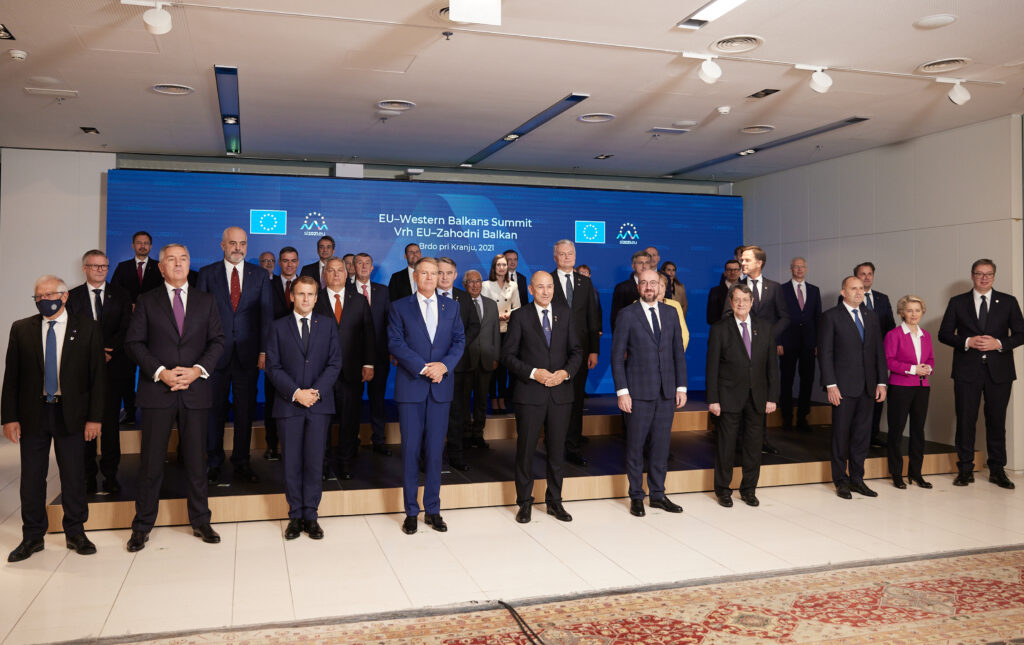
(Γ.Τ. Πρωθυπουργού/ Δημήτρης Παπαμήτσος)

(Γ.Τ. Πρωθυπουργού/ Δημήτρης Παπαμήτσος)

Share on FacebookShare on Twitter

by Aleksandar Ivković

The war in Ukraine has gotten the talk of accelerating the EU integration of the Western Balkans going. After two months, however, the talk has not been followed by political decisions, and there are differing opinions on how likely they are.

In the light of the war, the geopolitical argument for EU enlargement to the Western Balkans has become more prominent than ever in recent years. The EU, proponents say, should counter the influence of third actors in the region by integrating it more decisively. The ways in which this can be done have also become a part of the conversation.

It soon became obvious that there is no consensus in the EU on a fast-track accession requested by Ukraine, which applied for membership together with Georgia and Moldova soon after the war had started. The hopes for accelerated integration of the Western Balkans are still there – but for how long?

Talking the talk…

The accession process of the Western Balkans has returned as a talking point among the EU leaders.

On 28 March, during a joint press conference with Swedish Prime Minister Magdalena Andersson, German Chancellor Olaf Scholz said that any further delay of accession talks with North Macedonia and Albania would make the region more vulnerable to the third actors. He repeated the argument a couple of days later during a meeting with Austrian counterpart Karl Nehammer.

While on a visit to the region in March, EU High Representative Josep Borrell also stated that it was “high time to reinvigorate the enlargement process”.

Josep Borrell with the parliamentary parties of North Macedonia; Photo: Twitter / @JosepBorrellF

Even the President of France Emmanuel Macron, who famously vetoed the Intergovernmental Conferences with North Macedonia and Albania in 2019, stated in the European Parliament in January that Western Balkans should have a clear perspective while repeating that the decision-making rules of the EU need to be reformed first. Macron’s speech came at a time when a full-blown war in Ukraine still had not started.

Following the aggression, the voices from the Balkans also made it clear that this moment should be used to make political decisions on enlargement. This was stressed by the Secretary-General of the Regional Cooperation Council Majlinda Bregu in an op-ed in March.

“The geopolitical context blatantly reminds us that EU membership is not simply a methodological process of legislative approximation but political action. And a political action does not take a lifetime to be enacted”, she wrote.

Some commentators in the region stated that it is the Western Balkans that should get a fast-track accession process or at least a concrete date of EU accession.

Despite all this, there are currently no indications that these ideas might be accepted in the near future. And even the less ambitious goal of getting the already established process moving still seems to be a struggle.

…but still not walking the walk

North Macedonia and Albania are the obvious places to make the next step. The two countries have been waiting for their first Intergovernmental Conferences with the EU for almost three years. Bulgaria is currently blocking the accession of North Macedonia and, by extension, Albania, and the issue is still unresolved.

Last week in Sofia, Bulgarian leadership stuck to its demands, repeating that the Bulgarian minority should be included in the Constitution of North Macedonia for the veto to be lifted.

The June Council meeting will be the next opportunity for a decision on Skopje and Tirana, but even if that happens, it would only be interpreted as a long-overdue step rather than a breakthrough.

Kosovo’s visa liberalization is another longstanding issue, but it is scarcely mentioned anymore, even though the European Commission assessed back in 2018 that the conditions for the decision had been met.

Meanwhile, leaders of Bosnia and Herzegovina still occasionally express the hope of getting an official candidate status, but this issue too has long been marginalized, with the EU and the United States trying, and failing, to mediate the change of the electoral legislation against the backdrop of the crisis of the state institutions in recent months.

Serbia was the last country to formally make any progress in the EU accession process, opening Cluster 4 in December last year. It is now unlikely to get the opening of another one soon, given its decision not to align with the sanctions on Russia and a general slowdown in reforms since the start of the year due to the elections in April.

The new Government of Montenegro was elected on 28 April, one of its primary stated goals being to accelerate the country’s EU path. According to the new accession methodology, no further chapters will be closed until Montenegro fulfills the interim benchmarks for the rule of law chapters, which is expected to take some time.

The (limited) power of geopolitics

While in late February and early March it seemed likely that the situation in the region, together with the rest of the continent, would significantly change, not everybody is sure about that now.

Nikolaos Tzifakis, Professor at the University of Peloponnese and a member of the Balkans in Europe Policy Advisory Group (BiEPAG), agrees with the interpretation that Russia’s military aggression on Ukraine has alerted the EU about the danger of crisis spillover in areas such as the Western Balkans. However, he says, we should not expect any dramatic policy change anytime soon.

“First, while all EU members share the concern of eliminating any Russian sphere of influence from the Western Balkans, there is no consensus in Brussels on a speedy round of EU enlargement”, he says.

Moreover, Tzifakis adds, the EU accession of the Western Balkans has not stalled only in Brussels, it has also been sluggish due to the lack of commitment of most of the region’s leadership to the EU-prescribed reform agenda.

“Western Balkan decision-makers should not nurture any expectations that the EU might lower the bar of accession requirements in reply to the Russian war on Ukraine”, he explains.
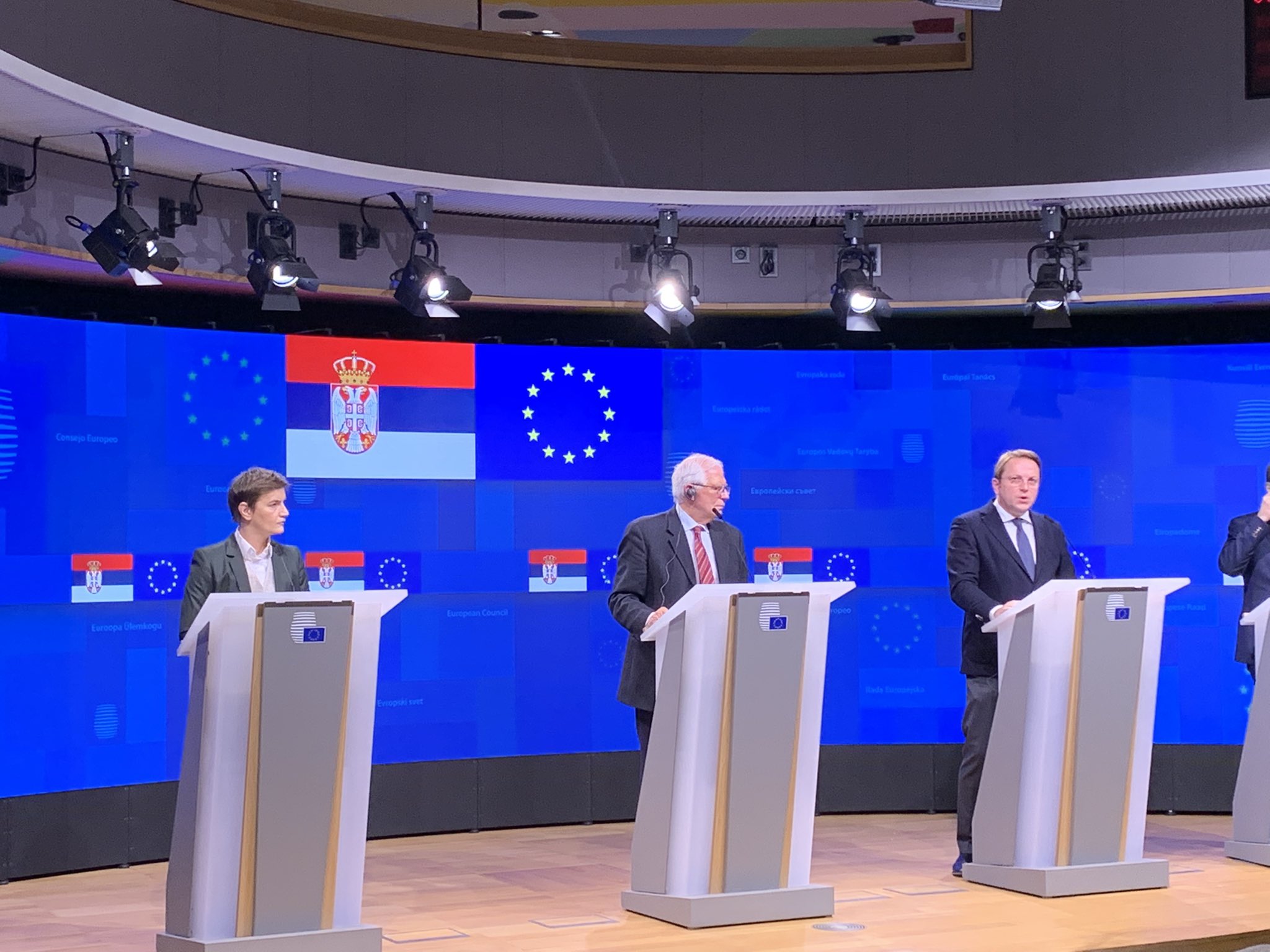
Ana Brnabić, Josep Borrell, Oliver Varhelyi at the EU-Serbia Intergovernmental Conference in 2021; Photo: Twitter/@olivervarhelyi

In the Strategic Compass, a document outlining the EU’s global strategy adopted in March, Western Balkans is recognized as a region where EU’s security interests are at stake. Nevertheless, enlargement to the region is only mentioned once, together with the assertion that a “tangible progress on the rule of law and reforms based on European values, rules, and standards needs to continue”.

On the other hand, Strahinja Subotić, Programme Manager and Senior Researcher at the European Policy Centre (CEP) in Belgrade, sees more signs of optimism for the region in the messages coming from Germany as well as the re-election of President Macron.

“For those who do make credible reforms, I believe that German messages should be considered as a possible signal. In a short period of time, Germany has shown that it is proactive, it follows the Western Balkans closely, it will not allow the status quo to remain in place, but at the same time, it would expect stronger alignment with the EU’s position on Ukraine”, Subotić points out.

Meanwhile, now that President Macron has won the second term, Subotić expects that the next five years will be a “second phase” for him, which could also have an impact on the Western Balkans.

“In his first term, he was a man of words, now I expect him to be a man of action. Enlargement has not moved too much ahead during his first term. We expect him now to be more active and to do things he might not have been able to do during the first term out of the fear of how his citizens and voters would react”, he says.

Subotić concludes that signals have been there for those who want to look at them, but also that the EU has a lot more to do for these signals to become more visible to the citizens of the Western Balkans.

Are alternative models more likely than the “traditional” accession process?

The first mention of the Western Balkans in the EU Strategic Compass stresses the need to develop a “tailored partnership” with the region. The phrase could be interpreted in various ways, which corresponds to multiple viewpoints on the future of the relations.

Recently, several ideas for an alternative path to the EU integration of the Western Balkans have been put forward. They propose including the region in some EU policies or even the Single Market. This is regarded by some as a more realistic option than insisting on full membership status, which would then come later, after the intermediate stages.

The discussion about these proposals among the experts has also intensified since the start of the war in Ukraine. Last year, European Policy Centre from Belgrade and the Centre for European Policy Studies from Brussels proposed a model of staged accession. It prevents the Western Balkan countries from gaining veto rights until the final stage, thus aiming to reassure more skeptical Member States. At the same time, it provides the countries of the region with other benefits of membership, such as funding, in earlier stages.

Strahinja Subotić says that CEP has been discussing the model with multiple interlocutors in the EU and that the situation has noticeably changed since the start of the war in Ukraine.

“One interlocutor told us that October 2021 is not February 2022. Meaning that even some who are skeptical are now more likely have different look and show understanding of such ideas”, Subotić says.

If nothing is done to the enlargement, it is unlikely that the current process will lead to tangible results, he warns.

Nikolaos Tzifakis also believes that the proposal for a staged accession merits some consideration.

“Admittedly, EU accession is a too long process that is deficient in tangible interim rewards. Nevertheless, I am not entirely sure that all contemporary Western Balkan leaderships are eager to sacrifice much of their grip on power to advance the EU accession of their countries”, he says.

So far, the proposals for alternative ways of integrating the Western Balkans into the EU have not been tackled by the political leaders. On the other hand, the acceleration of the current enlargement process remains theoretical. June will bring more clarity as the Council will once again decide at least on the IGCs of North Macedonia and Albania.
Tags: balkaEUukriane

Related Posts

Current Events

Serbia – China 2026: Technological partnership, geopolitical positioning and a new phase of the Chinese presence in the Western Balkans

1 June, 2026
ENGLISH

IBAR? ”Sufficiently! Much ado about nothing! Shart contrasts in Beijing! Where is the exit?!

1 June, 2026
ENGLISH

How Alkida Lushaj is redefining democratic inclusion globally

31 May, 2026

Follow US

Subscribe

Receive Argumentum Magazine by Email

Last Posts

Serbia – China 2026: Technological partnership, geopolitical positioning and a new phase of the Chinese presence in the Western Balkans

1 June, 2026

IBAR? ”Sufficiently! Much ado about nothing! Shart contrasts in Beijing! Where is the exit?!

1 June, 2026

How Alkida Lushaj is redefining democratic inclusion globally

31 May, 2026

Cyber Attribution, Corruption, and the False-Flag Question in Albania’s 2022 Alleged Iranian Cyberattack

30 May, 2026

The Digital Protectorate: How the EU AI Act Codified Silicon Valley’s Monopoly

30 May, 2026
Argumentum

“Argumentum”, një proces intelektual …

Contact Us

[email protected]
[email protected]
[email protected]

Follow Us

Media Partner

Register

Receive Argumentum Magazine by Email
  • Home
  • Privacy Policy
  • About Us
  • Contact

© 2022 Argumentum. All Rights Reserved. | NUIS: L91415033Q

Welcome Back!

Login to your account below

Forgotten Password? Sign Up

Create New Account!

Fill the forms bellow to register

*By registering into our website, you agree to the Terms & Conditions and Privacy Policy.
All fields are required. Log In

Retrieve your password

Please enter your username or email address to reset your password.

Log In

Add New Playlist

No Result
View All Result
  • Home
  • OP/ED
  • Interview
  • Realpolitik
  • Current Events
  • Top News
  • YOUR VOICE
  • Shqip

© 2022 Argumentum. All Rights Reserved. | NUIS: L91415033Q

This website uses cookies. By continuing to use this website you are giving consent to cookies being used. Visit our Privacy and Cookie Policy.