



• SHQIPËRI
  • KOSOVË
  • MAQEDONIA E VERIUT
  • MALI I ZI
  • Revista në PDF
21 June, 2026
  • Home
  • OP/ED

    The visit that changed Albania’s strategic future

    Pierre Nora and the institution of memory we lack in Eastern Europe

    The Blueprint of a Diplomatic Debacle: Analyzing Germany’s Historic UNSC Loss

    Between Russia, Iran and Europe: Azerbaijan as a balancing power in the South Caucasus

    The Zero-Tariff Gate: Sovereignty as a Service in the Sino-African Corridor

    Albania vs. the Sea/ Marginal Notes on A. Leka’s Novel The Hidden Side of the Albanian Socialist Garden

    May 9 and the long shadow of a Letter: Is Europe still Schuman’s Project?

    The Arbnesh of Zadar: A living memory of Albanian identity on the Adriatic coast

    Science Diplomacy and Academic Freedom: A strategic nexus for contemporary diplomacy

  • Interview

    Exclusive Interview with Oleksandr Tyshchenko: A 40-Year Legacy of Chernobyl, Nuclear Risks, and Global Responsibility

    INTERVIEW: ZLATKO KRAMARIĆ – THOUGHTS ON THE OLD CONTINENT

    EXCLUSIVE / Ukrainian Ambassador to Albania, Volodymyr Shkurov: “Ukraine wants peace, but not at the expense of its freedom and independence”

    EXCLUSIVE| Ambassador Tayyar Kagan Atay: Türkiye and Albania, a Strategic Partnership Rooted in Shared Heritage and a Common Vision for the Future

    “Diplomacy, Not War”: Palestinian Ambassador to Albania Calls for Justice, Peace, and Global Action for Gaza

    Exclusive: “Even After Tito – Tito”/ Ambassador Zlatko Kramarić on Authoritarian Legacies and Democracy’s Future in the Balkans

    The Conclusion of the Diplomatic Mission / Ambassador Dancho Markovski: Strengthening Albania-North Macedonia Relations for a Shared European Future

    A Century of Diplomatic Relations Between Albania and Russia: Exclusive Interview with the Russian Ambassador to Albania, H.E. Alexey Zaytsev

    Exclusive/ The chairman of the Freedom Party, Ilir Meta: “The will of the citizens will triumph in Albania, as it did in North Macedonia”

  • Realpolitik

    Just kind words  in Tivat! Where is the peace!? A deal yes, peace No!What is happening with USA and  EU?  5 elections but no solution!

    IBAR? ”Sufficiently! Much ado about nothing! Shart contrasts in Beijing! Where is the exit?!

    Neither peace nor war! Peace with bombs?! IBAR in autumn?! Not another Hormuz in Taivan! 

    IBAR – a springing board or an obstacle? Can we catch the EU Negotiation train 2027? When the dress makes the news!  EU electoral April  ends in a draw 1:1!  

    The European Parliament building in Strasbourg, France with flags waving calmly celebrating peace of the Europe. July 12, 2020.

    EU 2027 or 2037! Even half membership failed! No exit strategy!     

    What next?

    “With diplomatic velvet“! Major question marks! In Washington yes, but  in the White House NO! A strange dinner in Brussels!

    From a great ‘apple of disaccord’ to a  point of  cooperation! A bad start! The strange absence in Davos!

    5 lessons from the American 3 January! Don’t count the chicken before they are hatched! Will NATO freeze in Greenland? Wrong diplomatic messages!

  • Current Events

    The Diplomacy of Gas and Algorithms: The Nuances of Official Tirana—Is It Breaking the European Taboo with Azerbaijan?

    Council of Albanian Ambassadors Backs Civic Protests, Calls for Transparency and Protection of National Interests

    Russian Ambassador in Tirana: “Without a Strong and Sovereign Russia, the Creation of a Just World Order Is Impossible”

    EU-Western Balkans Summit 2026: New Impetus for the Enlargement Debate?

    “The Flamingo Revolution”: Day 10 of Protests in Albania Draws International Attention

    Rama alleges ‘hybrid war’ behind protests against Kushner-linked coastal development

    BELGRADE, SERBIA - JUNE 18. 2020: Russian and Serbian flags on display during Russian Foreign Minister Sergei Lavrov's visit to the Liberators of Belgrade Memorial. Valery Sharifulin/TASS,Image: 533095429, License: Rights-managed, Restrictions: UWAGA! Zdjęcia zawierają oryginalny opis dostawcy (ITAR-TASS). Szczególnie w związku z agresją Rosji na Ukrainę mogą zawierać przekaz niezgodny z faktami. Zweryfikuj go przed publikacją, Model Release: no, Credit line: Valery Sharifulin / TASS / Forum

    Balkan Maskirovka: Why Moscow’s “Distancing” Is Only an Operation for the Survival of Vučić’s Regime

    Serbia – China 2026: Technological partnership, geopolitical positioning and a new phase of the Chinese presence in the Western Balkans

    The Digital Protectorate: How the EU AI Act Codified Silicon Valley’s Monopoly

  • Top News

    Daniel Serwer: A Bad War Ending Badly May Still Be Good News

    Friedrich Merz, Keir Starmer, António Costa, Donald Trump, Emmanuel Macron, Mark Carney, Ursula von der Leyen, Giorgia Meloni and Sanae Takaichi

    G7 Leaders Gather in Évian Amid Global Uncertainty, Focus on Security, Economy and International Cooperation

    Russian Ambassador in Tirana: “Without a Strong and Sovereign Russia, the Creation of a Just World Order Is Impossible”

    “The Flamingo Revolution”: Day 10 of Protests in Albania Draws International Attention

    Rama alleges ‘hybrid war’ behind protests against Kushner-linked coastal development

    No End in Sight: Trump, Netanyahu and the Expanding Middle East War

    Tirana – €20 Million EU–Banking Agreement Boosts Albanian SMEs

    “EU4Municipalities II” Project, a Strategic Investment for Strengthening Municipalities and Accelerating Albania’s Path towards the EU

    Albania, Italy deepen defence ties with naval shipbuilding deal

  • YOUR VOICE
  • Shqip
No Result
View All Result
Argumentum
  • Home
  • OP/ED

    The visit that changed Albania’s strategic future

    Pierre Nora and the institution of memory we lack in Eastern Europe

    The Blueprint of a Diplomatic Debacle: Analyzing Germany’s Historic UNSC Loss

    Between Russia, Iran and Europe: Azerbaijan as a balancing power in the South Caucasus

    The Zero-Tariff Gate: Sovereignty as a Service in the Sino-African Corridor

    Albania vs. the Sea/ Marginal Notes on A. Leka’s Novel The Hidden Side of the Albanian Socialist Garden

    May 9 and the long shadow of a Letter: Is Europe still Schuman’s Project?

    The Arbnesh of Zadar: A living memory of Albanian identity on the Adriatic coast

    Science Diplomacy and Academic Freedom: A strategic nexus for contemporary diplomacy

  • Interview

    Exclusive Interview with Oleksandr Tyshchenko: A 40-Year Legacy of Chernobyl, Nuclear Risks, and Global Responsibility

    INTERVIEW: ZLATKO KRAMARIĆ – THOUGHTS ON THE OLD CONTINENT

    EXCLUSIVE / Ukrainian Ambassador to Albania, Volodymyr Shkurov: “Ukraine wants peace, but not at the expense of its freedom and independence”

    EXCLUSIVE| Ambassador Tayyar Kagan Atay: Türkiye and Albania, a Strategic Partnership Rooted in Shared Heritage and a Common Vision for the Future

    “Diplomacy, Not War”: Palestinian Ambassador to Albania Calls for Justice, Peace, and Global Action for Gaza

    Exclusive: “Even After Tito – Tito”/ Ambassador Zlatko Kramarić on Authoritarian Legacies and Democracy’s Future in the Balkans

    The Conclusion of the Diplomatic Mission / Ambassador Dancho Markovski: Strengthening Albania-North Macedonia Relations for a Shared European Future

    A Century of Diplomatic Relations Between Albania and Russia: Exclusive Interview with the Russian Ambassador to Albania, H.E. Alexey Zaytsev

    Exclusive/ The chairman of the Freedom Party, Ilir Meta: “The will of the citizens will triumph in Albania, as it did in North Macedonia”

  • Realpolitik

    Just kind words  in Tivat! Where is the peace!? A deal yes, peace No!What is happening with USA and  EU?  5 elections but no solution!

    IBAR? ”Sufficiently! Much ado about nothing! Shart contrasts in Beijing! Where is the exit?!

    Neither peace nor war! Peace with bombs?! IBAR in autumn?! Not another Hormuz in Taivan! 

    IBAR – a springing board or an obstacle? Can we catch the EU Negotiation train 2027? When the dress makes the news!  EU electoral April  ends in a draw 1:1!  

    The European Parliament building in Strasbourg, France with flags waving calmly celebrating peace of the Europe. July 12, 2020.

    EU 2027 or 2037! Even half membership failed! No exit strategy!     

    What next?

    “With diplomatic velvet“! Major question marks! In Washington yes, but  in the White House NO! A strange dinner in Brussels!

    From a great ‘apple of disaccord’ to a  point of  cooperation! A bad start! The strange absence in Davos!

    5 lessons from the American 3 January! Don’t count the chicken before they are hatched! Will NATO freeze in Greenland? Wrong diplomatic messages!

  • Current Events

    The Diplomacy of Gas and Algorithms: The Nuances of Official Tirana—Is It Breaking the European Taboo with Azerbaijan?

    Council of Albanian Ambassadors Backs Civic Protests, Calls for Transparency and Protection of National Interests

    Russian Ambassador in Tirana: “Without a Strong and Sovereign Russia, the Creation of a Just World Order Is Impossible”

    EU-Western Balkans Summit 2026: New Impetus for the Enlargement Debate?

    “The Flamingo Revolution”: Day 10 of Protests in Albania Draws International Attention

    Rama alleges ‘hybrid war’ behind protests against Kushner-linked coastal development

    BELGRADE, SERBIA - JUNE 18. 2020: Russian and Serbian flags on display during Russian Foreign Minister Sergei Lavrov's visit to the Liberators of Belgrade Memorial. Valery Sharifulin/TASS,Image: 533095429, License: Rights-managed, Restrictions: UWAGA! Zdjęcia zawierają oryginalny opis dostawcy (ITAR-TASS). Szczególnie w związku z agresją Rosji na Ukrainę mogą zawierać przekaz niezgodny z faktami. Zweryfikuj go przed publikacją, Model Release: no, Credit line: Valery Sharifulin / TASS / Forum

    Balkan Maskirovka: Why Moscow’s “Distancing” Is Only an Operation for the Survival of Vučić’s Regime

    Serbia – China 2026: Technological partnership, geopolitical positioning and a new phase of the Chinese presence in the Western Balkans

    The Digital Protectorate: How the EU AI Act Codified Silicon Valley’s Monopoly

  • Top News

    Daniel Serwer: A Bad War Ending Badly May Still Be Good News

    Friedrich Merz, Keir Starmer, António Costa, Donald Trump, Emmanuel Macron, Mark Carney, Ursula von der Leyen, Giorgia Meloni and Sanae Takaichi

    G7 Leaders Gather in Évian Amid Global Uncertainty, Focus on Security, Economy and International Cooperation

    Russian Ambassador in Tirana: “Without a Strong and Sovereign Russia, the Creation of a Just World Order Is Impossible”

    “The Flamingo Revolution”: Day 10 of Protests in Albania Draws International Attention

    Rama alleges ‘hybrid war’ behind protests against Kushner-linked coastal development

    No End in Sight: Trump, Netanyahu and the Expanding Middle East War

    Tirana – €20 Million EU–Banking Agreement Boosts Albanian SMEs

    “EU4Municipalities II” Project, a Strategic Investment for Strengthening Municipalities and Accelerating Albania’s Path towards the EU

    Albania, Italy deepen defence ties with naval shipbuilding deal

  • YOUR VOICE
  • Shqip
No Result
View All Result
Argumentum
No Result
View All Result
Home English OP/ED

POLAND ALWAYS ON THE SIDE OF FREEDOM

24 February, 2023
in English OP/ED
A A
Share on FacebookShare on Twitter

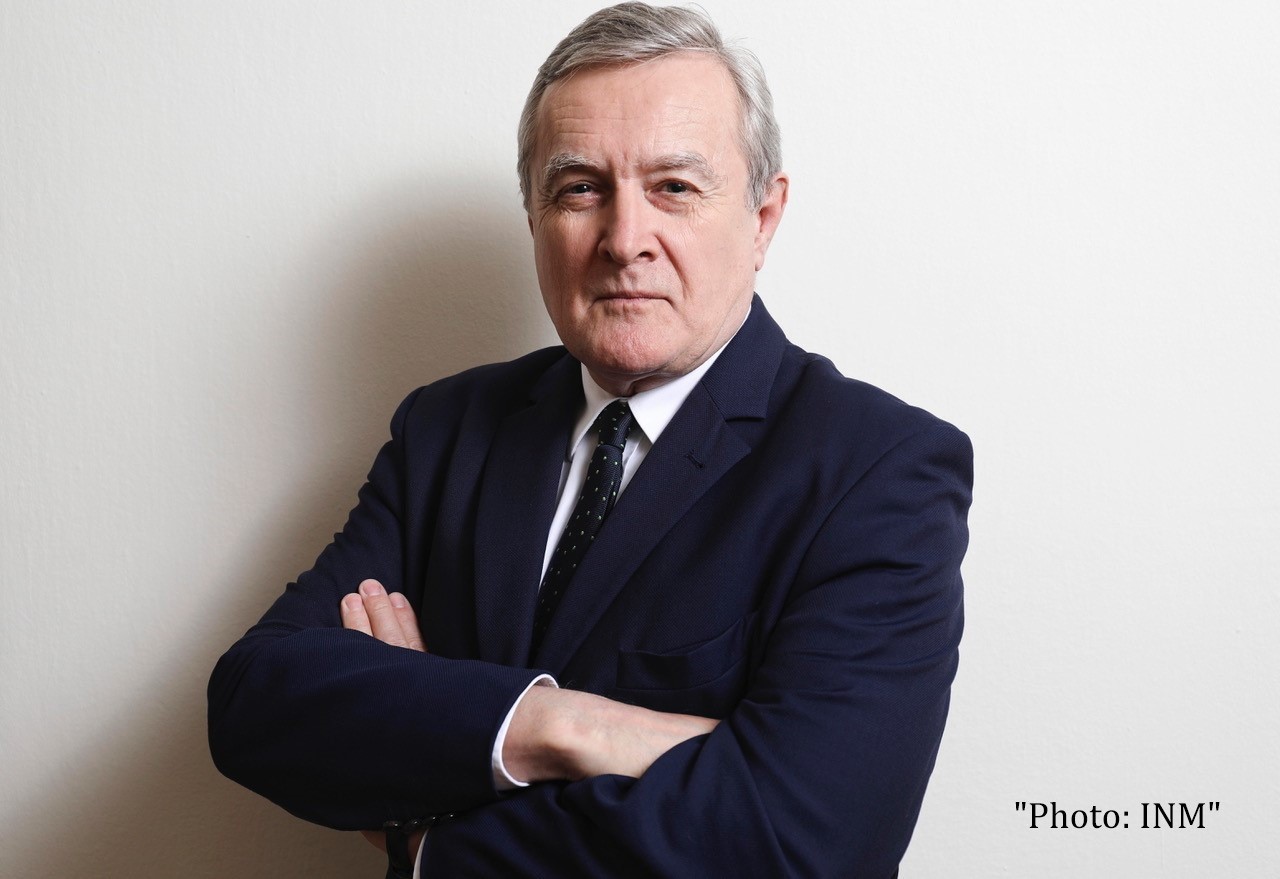
Prof. Piotr GLIŃSKI

Professor of Humanities. Deputy Prime Minister, Minister of Culture and National Heritage. In 2005 – 2011, President of the Polish Sociological Association. Has cooperated with the Institute of Philosophy and Sociology, Polish Academy of Sciences. In 1997 -2005, Head of the Civic Society Department.

POLAND ALWAYS ON THE SIDE OF FREEDOM

At the end of last February, the media ran pictures of Polish borders, railway stations, cities, towns, and roads that showed waves of war-stricken Ukrainians – women, children, and old people – flowing into our country. The Poles opened their homes to them; volunteers, community workers, representatives of NGOs, officials at local and central levels and Polish services worked day and night; businessmen and regular citizens supported the refugees, organising aid, accommodation, food, care, and work. The world looked on in disbelief.

This should come as no surprise, given that the world did not know about Polish history. It did not know that the Poles value most of all freedom and a sense of community and that, in the face of unprecedented criminal aggression against the country with which we share some past grievances, solidarity in defence of those values comes first. This attitude has been the hallmark of the Polish culture for generations. Very early on in its development, the Polish identity was formed in step with an understanding of commonality and freedom. The latter was the foundation of social institutions that emerged to protect civic freedoms and respect human dignity.

From the days of Paweł Włodkowic and the 15th-century Council of Constance, the Poles have been well aware that freedom grows through interdependence. Deterministic ideas and restrictions were looked at askance. Freedom of conscience was sacred. The Commonwealth was inspired by Roman republicanism from which it adopted the notion of freedom from domination as a prerequisite for political life, the importance of tradition, the freedom to choose and decide, the feeling of what is right, and  a sense of duty towards the community of free people. The republican and freedom-loving spirit was part and parcel of the Polish genotype. The Constitution of 3 May 1791 went down in history a great act of liberty. Its opponents claimed obsolete freedoms and chose despotism that eventually destroyed the carved-out space of freedom.

For 123 years, between late 18th-century and 1918, Poland was deprived of its statehood and sovereignty, relying primarily on the community of ideas, traditions, culture, and language. Attempts to restore independence were present in the tradition of Polish Positivism and insurrections. Our national mentality was shaped by the propensity to offer armed resistance to violence. In the 20th century, this manifested in the WW1 push for independence, redeeming lost territories (1918-21), hampering the progress of Bolshevism (1920), and combatting the Third Reich (1939). The “dream of freedom” continued in the Polish collective conscience. Then came the baptism of fire in the form of socialist realism that shattered social structures based on national values and the primacy of the family, triggered mass migrations, and negated human subjectivity.  But not even that could suppress the drive for freedom (1980, 1989). In the light of all this, it becomes obvious why the Poles have so much understanding for the continued need to defend freedom and the right to self-determination.

The cultural and civilisational clash that the world could see so clearly during the Russian onslaught on Ukraine is also rooted in history. When the peripheral 15th-century Moscow decided to extend its dominion onto the former Ruthenia, its dispute with the Commonwealth over the territories of today’s Belarus and Ukraine went beyond political affiliation to include religious, civilisational, and ethnic identity. The Polish experiment of a political union with Lithuania showcased a political culture steeped in the ideas of participation and civic freedoms. Moscow, on the other hand, was already then running a radically different political system based on geographic expansion and the enforcement of political, military, and economic domination. Right from the outset, this supremacy was considered to be a threat to the existence of the Commonwealth, and very rightly so. The Polish political thought countered those imperial aspirations with the ideas of national self-determination which became the mainstay of the Polish anti-imperial eastern policy.

After regaining independence in 1918, Poland pursued its foreign policy based on the doctrine of the Intermarium, whose roots went back to the multicultural Polish-Lithuanian Commonwealth, a doctrine that called for an alliance of CEE countries to avoid the domination of Russia or Germany. It was premised on the solidarity and cooperation of all participating states, defence of sovereignty, development of subjectivity, and the pursuit of shared interests of CEE countries inspired by Poland. Following 1945, the concept was picked up by Polish emigrants (Polish Independence League) and members of the opposition in the Polish People’s Republic.

When it got back its autonomy, Poland seemed too weak in terms of its resources, mentality, economy, and political clout to be the leader of change in the region, but it still had that sense of experience and duty stemming from history, geopolitics, neighbourhood relations, and an awareness of raison d’etat. Meanwhile, disappointed by the results of its rapprochement with the West, Russia kept forging a separate identity and resurrecting imperial ambitions. Under the new circumstances, Poland felt that it virtually had an obligation to get involved in the East. A person that featured prominently in the pantheon the Polish eastern policy at that time was Lech Kaczyński, a practitioner of the anti-imperial doctrine developed through a long tradition of thinking about Poland’s place in the world. The doctrine says that imperialism is a threat to peace, and the strategic interests of Poland include freedom, sovereignty and independence for our eastern neighbours.

But let us go back to history and values. The Poles have protected the European civilisation from the eastern menace on many occasions, acting as the bulwark of Christianity. Such was the case in the 13th (Legnica 1241), 17th (Vienna 1683), and 20th (Warsaw 1920) centuries. During the great war with the Teutonic Order (1409-11), they fought for a civilisation of solidarity, freedom and human dignity. At the Battle of Grunwald, the Poles, Lithuanians and Ruthenians defended their right to self-determination. At the end of the early modern period, it was believed that “Poland is wherever freedom is defended.” On 25 January 1831, the demonstration in Warsaw featured the following motto: “In the name of God for our freedom and yours.” It became the national motto of the Poles, a nation that, like none other, can relate to those who are ready to pay the highest price for their freedom.

During WW2, from the September Campaign to Berlin, “where there was the enemy, there were also the Poles,” fighting in the resistance units, on the seas and oceans and in the air. They then challenged the Soviet-imposed communist regime. It was Solidarity – that quintessentially Polish phenomenon, a freedom movement merging insurrection, civic and worker rights, postmodernism, religion, morality, revolution and social issues – that initiated the victorious process of dismantling the Soviet domination in Central and Eastern Europe.

Yes, the Poles treat solidary and the love of freedom not as an empty catchphrase, but a geopolitical concept that is one of the pillars of their foreign policy. It is not only a source of pride, but also a duty. To prevent the defeat of Ukraine, we need to pool our efforts and act in solidarity. Poland shall not give up this struggle and will always stand in solidarity to defend freedom.

*The text has been published in cooperation with the Polish monthly Wszystko co Najważniejsze as part of a historical project involving the Institute of National Remembrance and the Polish National Foundation.


/Argumentum.al
 

Related Posts

ENGLISH

The visit that changed Albania’s strategic future

10 June, 2026
ENGLISH

Pierre Nora and the institution of memory we lack in Eastern Europe

5 June, 2026
ENGLISH

The Blueprint of a Diplomatic Debacle: Analyzing Germany’s Historic UNSC Loss

4 June, 2026

Follow US

Subscribe

Receive Argumentum Magazine by Email

Last Posts

World Refugee Day and 75 Years of the Refugee Convention: Why Humanity must not look away

20 June, 2026

G7 Leaders Present Unified Geopolitical Agenda at Évian Summit

17 June, 2026

Daniel Serwer: A Bad War Ending Badly May Still Be Good News

17 June, 2026

The Diplomacy of Gas and Algorithms: The Nuances of Official Tirana—Is It Breaking the European Taboo with Azerbaijan?

17 June, 2026
Friedrich Merz, Keir Starmer, António Costa, Donald Trump, Emmanuel Macron, Mark Carney, Ursula von der Leyen, Giorgia Meloni and Sanae Takaichi

G7 Leaders Gather in Évian Amid Global Uncertainty, Focus on Security, Economy and International Cooperation

16 June, 2026
Argumentum

“Argumentum”, një proces intelektual …

Contact Us

[email protected]
[email protected]
[email protected]

Follow Us

Media Partner

Register

Receive Argumentum Magazine by Email
  • Home
  • Privacy Policy
  • About Us
  • Contact

© 2022 Argumentum. All Rights Reserved. | NUIS: L91415033Q

Welcome Back!

Login to your account below

Forgotten Password? Sign Up

Create New Account!

Fill the forms bellow to register

*By registering into our website, you agree to the Terms & Conditions and Privacy Policy.
All fields are required. Log In

Retrieve your password

Please enter your username or email address to reset your password.

Log In

Add New Playlist

No Result
View All Result
  • Home
  • OP/ED
  • Interview
  • Realpolitik
  • Current Events
  • Top News
  • YOUR VOICE
  • Shqip

© 2022 Argumentum. All Rights Reserved. | NUIS: L91415033Q

This website uses cookies. By continuing to use this website you are giving consent to cookies being used. Visit our Privacy and Cookie Policy.