




• SHQIPËRI
  • KOSOVË
  • MAQEDONIA E VERIUT
  • MALI I ZI
  • Revista në PDF
7 June, 2026
  • Home
  • OP/ED

    Pierre Nora and the institution of memory we lack in Eastern Europe

    The Blueprint of a Diplomatic Debacle: Analyzing Germany’s Historic UNSC Loss

    Cyber Attribution, Corruption, and the False-Flag Question in Albania’s 2022 Alleged Iranian Cyberattack

    Between Russia, Iran and Europe: Azerbaijan as a balancing power in the South Caucasus

    The Zero-Tariff Gate: Sovereignty as a Service in the Sino-African Corridor

    Albania vs. the Sea/ Marginal Notes on A. Leka’s Novel The Hidden Side of the Albanian Socialist Garden

    May 9 and the long shadow of a Letter: Is Europe still Schuman’s Project?

    The Arbnesh of Zadar: A living memory of Albanian identity on the Adriatic coast

    Science Diplomacy and Academic Freedom: A strategic nexus for contemporary diplomacy

  • Interview

    Exclusive Interview with Oleksandr Tyshchenko: A 40-Year Legacy of Chernobyl, Nuclear Risks, and Global Responsibility

    INTERVIEW: ZLATKO KRAMARIĆ – THOUGHTS ON THE OLD CONTINENT

    EXCLUSIVE / Ukrainian Ambassador to Albania, Volodymyr Shkurov: “Ukraine wants peace, but not at the expense of its freedom and independence”

    EXCLUSIVE| Ambassador Tayyar Kagan Atay: Türkiye and Albania, a Strategic Partnership Rooted in Shared Heritage and a Common Vision for the Future

    “Diplomacy, Not War”: Palestinian Ambassador to Albania Calls for Justice, Peace, and Global Action for Gaza

    Exclusive: “Even After Tito – Tito”/ Ambassador Zlatko Kramarić on Authoritarian Legacies and Democracy’s Future in the Balkans

    The Conclusion of the Diplomatic Mission / Ambassador Dancho Markovski: Strengthening Albania-North Macedonia Relations for a Shared European Future

    A Century of Diplomatic Relations Between Albania and Russia: Exclusive Interview with the Russian Ambassador to Albania, H.E. Alexey Zaytsev

    Exclusive/ The chairman of the Freedom Party, Ilir Meta: “The will of the citizens will triumph in Albania, as it did in North Macedonia”

  • Realpolitik

    IBAR? ”Sufficiently! Much ado about nothing! Shart contrasts in Beijing! Where is the exit?!

    Neither peace nor war! Peace with bombs?! IBAR in autumn?! Not another Hormuz in Taivan! 

    IBAR – a springing board or an obstacle? Can we catch the EU Negotiation train 2027? When the dress makes the news!  EU electoral April  ends in a draw 1:1!  

    The European Parliament building in Strasbourg, France with flags waving calmly celebrating peace of the Europe. July 12, 2020.

    EU 2027 or 2037! Even half membership failed! No exit strategy!     

    What next?

    “With diplomatic velvet“! Major question marks! In Washington yes, but  in the White House NO! A strange dinner in Brussels!

    From a great ‘apple of disaccord’ to a  point of  cooperation! A bad start! The strange absence in Davos!

    5 lessons from the American 3 January! Don’t count the chicken before they are hatched! Will NATO freeze in Greenland? Wrong diplomatic messages!

    German Chancellor Friedrich Merz, European Commission President Ursula von der Leyen, Ukraine's President Volodymyr Zelenskiy, U.S. Special Envoy Steve Witkoff and Jared Kushner, son-in-law of U.S. President Donald Trump line up for a family photo opportunity at the Chancellery in Berlin, Germany, December 15, 2025.    REUTERS/Lisi Niesner/Pool

    A Strategy that could change the world! Europe in Berlin! Why an historic compromise? Only charm diplomacy in Athens!

  • Current Events

    Rama alleges ‘hybrid war’ behind protests against Kushner-linked coastal development

    BELGRADE, SERBIA - JUNE 18. 2020: Russian and Serbian flags on display during Russian Foreign Minister Sergei Lavrov's visit to the Liberators of Belgrade Memorial. Valery Sharifulin/TASS,Image: 533095429, License: Rights-managed, Restrictions: UWAGA! Zdjęcia zawierają oryginalny opis dostawcy (ITAR-TASS). Szczególnie w związku z agresją Rosji na Ukrainę mogą zawierać przekaz niezgodny z faktami. Zweryfikuj go przed publikacją, Model Release: no, Credit line: Valery Sharifulin / TASS / Forum

    Balkan Maskirovka: Why Moscow’s “Distancing” Is Only an Operation for the Survival of Vučić’s Regime

    Serbia – China 2026: Technological partnership, geopolitical positioning and a new phase of the Chinese presence in the Western Balkans

    The Digital Protectorate: How the EU AI Act Codified Silicon Valley’s Monopoly

    The 28th MFC Annual Conference in Durrës / Sulaj: Microfinance remains a key instrument for financial inclusion

    Serbia at the Crossroads of EU Integration and Geopolitical Balancing: IFIMES Analysis

    Tirana – €20 Million EU–Banking Agreement Boosts Albanian SMEs

    The Myth of Independence: How Chinese Efficiency is Rewriting the Constitution of Modern Geopolitics!

    Europe Yesterday and Today: Why 9 May Still Matters

  • Top News

    Rama alleges ‘hybrid war’ behind protests against Kushner-linked coastal development

    No End in Sight: Trump, Netanyahu and the Expanding Middle East War

    Tirana – €20 Million EU–Banking Agreement Boosts Albanian SMEs

    “EU4Municipalities II” Project, a Strategic Investment for Strengthening Municipalities and Accelerating Albania’s Path towards the EU

    Albania, Italy deepen defence ties with naval shipbuilding deal

    U.S. Embassy: Iran-Linked Groups May Target Americans and Iranian Opposition in Albania

    The Council of Albanian Ambassadors disappointed with the voting of the draft law on the foreign service in the parliamentary committees.

    Prime Minister Edi Rama Addresses Israel’s Knesset in Historic Special Session

    Kazakhstan’s Strategic Reform Agenda: Stability, Modern Governance, and Responsible Diplomacy

  • YOUR VOICE
  • Shqip
No Result
View All Result
Argumentum
  • Home
  • OP/ED

    Pierre Nora and the institution of memory we lack in Eastern Europe

    The Blueprint of a Diplomatic Debacle: Analyzing Germany’s Historic UNSC Loss

    Cyber Attribution, Corruption, and the False-Flag Question in Albania’s 2022 Alleged Iranian Cyberattack

    Between Russia, Iran and Europe: Azerbaijan as a balancing power in the South Caucasus

    The Zero-Tariff Gate: Sovereignty as a Service in the Sino-African Corridor

    Albania vs. the Sea/ Marginal Notes on A. Leka’s Novel The Hidden Side of the Albanian Socialist Garden

    May 9 and the long shadow of a Letter: Is Europe still Schuman’s Project?

    The Arbnesh of Zadar: A living memory of Albanian identity on the Adriatic coast

    Science Diplomacy and Academic Freedom: A strategic nexus for contemporary diplomacy

  • Interview

    Exclusive Interview with Oleksandr Tyshchenko: A 40-Year Legacy of Chernobyl, Nuclear Risks, and Global Responsibility

    INTERVIEW: ZLATKO KRAMARIĆ – THOUGHTS ON THE OLD CONTINENT

    EXCLUSIVE / Ukrainian Ambassador to Albania, Volodymyr Shkurov: “Ukraine wants peace, but not at the expense of its freedom and independence”

    EXCLUSIVE| Ambassador Tayyar Kagan Atay: Türkiye and Albania, a Strategic Partnership Rooted in Shared Heritage and a Common Vision for the Future

    “Diplomacy, Not War”: Palestinian Ambassador to Albania Calls for Justice, Peace, and Global Action for Gaza

    Exclusive: “Even After Tito – Tito”/ Ambassador Zlatko Kramarić on Authoritarian Legacies and Democracy’s Future in the Balkans

    The Conclusion of the Diplomatic Mission / Ambassador Dancho Markovski: Strengthening Albania-North Macedonia Relations for a Shared European Future

    A Century of Diplomatic Relations Between Albania and Russia: Exclusive Interview with the Russian Ambassador to Albania, H.E. Alexey Zaytsev

    Exclusive/ The chairman of the Freedom Party, Ilir Meta: “The will of the citizens will triumph in Albania, as it did in North Macedonia”

  • Realpolitik

    IBAR? ”Sufficiently! Much ado about nothing! Shart contrasts in Beijing! Where is the exit?!

    Neither peace nor war! Peace with bombs?! IBAR in autumn?! Not another Hormuz in Taivan! 

    IBAR – a springing board or an obstacle? Can we catch the EU Negotiation train 2027? When the dress makes the news!  EU electoral April  ends in a draw 1:1!  

    The European Parliament building in Strasbourg, France with flags waving calmly celebrating peace of the Europe. July 12, 2020.

    EU 2027 or 2037! Even half membership failed! No exit strategy!     

    What next?

    “With diplomatic velvet“! Major question marks! In Washington yes, but  in the White House NO! A strange dinner in Brussels!

    From a great ‘apple of disaccord’ to a  point of  cooperation! A bad start! The strange absence in Davos!

    5 lessons from the American 3 January! Don’t count the chicken before they are hatched! Will NATO freeze in Greenland? Wrong diplomatic messages!

    German Chancellor Friedrich Merz, European Commission President Ursula von der Leyen, Ukraine's President Volodymyr Zelenskiy, U.S. Special Envoy Steve Witkoff and Jared Kushner, son-in-law of U.S. President Donald Trump line up for a family photo opportunity at the Chancellery in Berlin, Germany, December 15, 2025.    REUTERS/Lisi Niesner/Pool

    A Strategy that could change the world! Europe in Berlin! Why an historic compromise? Only charm diplomacy in Athens!

  • Current Events

    Rama alleges ‘hybrid war’ behind protests against Kushner-linked coastal development

    BELGRADE, SERBIA - JUNE 18. 2020: Russian and Serbian flags on display during Russian Foreign Minister Sergei Lavrov's visit to the Liberators of Belgrade Memorial. Valery Sharifulin/TASS,Image: 533095429, License: Rights-managed, Restrictions: UWAGA! Zdjęcia zawierają oryginalny opis dostawcy (ITAR-TASS). Szczególnie w związku z agresją Rosji na Ukrainę mogą zawierać przekaz niezgodny z faktami. Zweryfikuj go przed publikacją, Model Release: no, Credit line: Valery Sharifulin / TASS / Forum

    Balkan Maskirovka: Why Moscow’s “Distancing” Is Only an Operation for the Survival of Vučić’s Regime

    Serbia – China 2026: Technological partnership, geopolitical positioning and a new phase of the Chinese presence in the Western Balkans

    The Digital Protectorate: How the EU AI Act Codified Silicon Valley’s Monopoly

    The 28th MFC Annual Conference in Durrës / Sulaj: Microfinance remains a key instrument for financial inclusion

    Serbia at the Crossroads of EU Integration and Geopolitical Balancing: IFIMES Analysis

    Tirana – €20 Million EU–Banking Agreement Boosts Albanian SMEs

    The Myth of Independence: How Chinese Efficiency is Rewriting the Constitution of Modern Geopolitics!

    Europe Yesterday and Today: Why 9 May Still Matters

  • Top News

    Rama alleges ‘hybrid war’ behind protests against Kushner-linked coastal development

    No End in Sight: Trump, Netanyahu and the Expanding Middle East War

    Tirana – €20 Million EU–Banking Agreement Boosts Albanian SMEs

    “EU4Municipalities II” Project, a Strategic Investment for Strengthening Municipalities and Accelerating Albania’s Path towards the EU

    Albania, Italy deepen defence ties with naval shipbuilding deal

    U.S. Embassy: Iran-Linked Groups May Target Americans and Iranian Opposition in Albania

    The Council of Albanian Ambassadors disappointed with the voting of the draft law on the foreign service in the parliamentary committees.

    Prime Minister Edi Rama Addresses Israel’s Knesset in Historic Special Session

    Kazakhstan’s Strategic Reform Agenda: Stability, Modern Governance, and Responsible Diplomacy

  • YOUR VOICE
  • Shqip
No Result
View All Result
Argumentum
No Result
View All Result
Home ENGLISH

It is crucial for Skopje and Tirana to get a date by the end of March

13 February, 2020
in ENGLISH, Interview
A A
Share on FacebookShare on Twitter

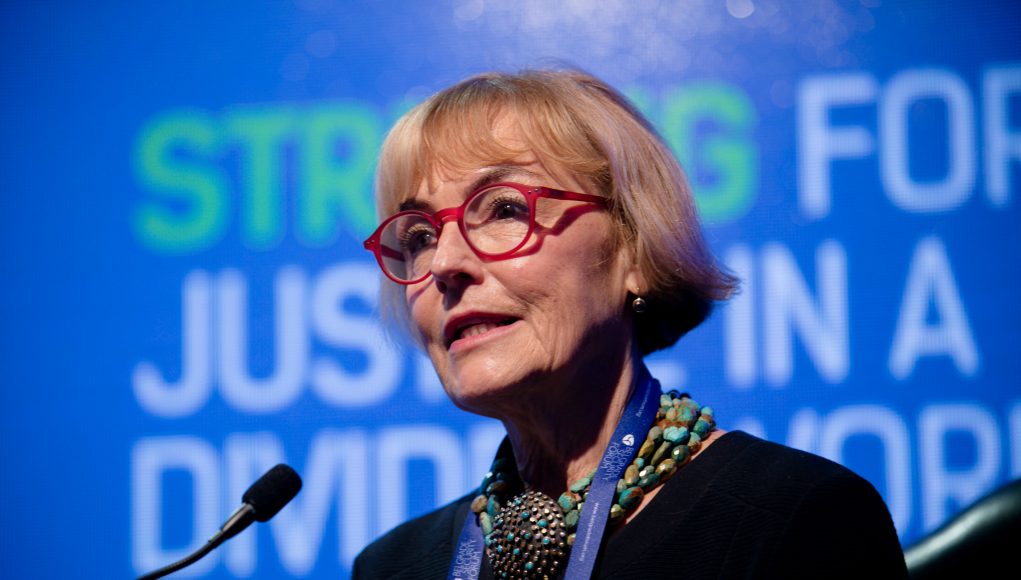
“If it plays smartly, Croatia can have a significant and very positive role when it comes to EU enlargement”, estimates Member of Parliament and former Minister of Foreign and European Affairs of Croatia Vesna Pusić in an interview for our portal. We talked to Ms Pusić during the ProgWeb Conference in Skopje on 9 February, which gathered social democratic and liberal politicians from across the region and the European Union to support further EU integration of the Western Balkans. Some of the most important developments within this process have fallen into Croatia’s lap as the country holds its first Presidency of the Council, and Ms Pusić shared her views on how they could play out in the near future.

European Western Balkans: Do you think the new methodology proposal of the European Commission will persuade countries such as France, the Netherlands and others to support the opening of negotiations with North Macedonia and Albania?

Vesna Pusić: Honestly, I think that is the main purpose of the new methodology because, once France led this group of countries, and in fact I think France was the only one to oppose giving a date to North Macedonia, and then the Netherlands and Denmark were also skeptical about Albania, and it was clear that no one would override France within the European Council, it was necessary to find a way to make it a de facto French initiative. And I would say, by the content of the new methodology, that this was achieved, i.e. that much was taken from the French proposal to change the methodology and that France had been given the opportunity to lead that new period in the negotiations.

In my opinion, it has never been a problem with methodology, but with dramatically changed circumstances within the European Union itself, which then prevented EU Member States from noticing the dramatic changes that occurred in the Western Balkan countries. Until a few years ago, the EU had no serious competition in the area. This is no longer the case today. There are serious competitors, who are very active as well. The US has slipped away a bit even though they are still appearing here and there, but China is very present, Russia is very present, Turkey as a regional power too. So, that whole idea of all the countries in this region, both Croatia and Slovenia and non-Member States – we are Europe, there is no alternative to EU for us – it turned out that those alternatives did come up, even though I don’t think they are real alternatives. They are not nearly as good as options as the EU, with all its difficulties and problems. However, there are serious political forces in the countries of the region that look at, and I would even say support some of these alternatives.

EWB: Is that why you think it is realistic that negotiations will open in the next few months?

VP: I think it is crucial that by the end of March, North Macedonia and Albania get a date and, as things stand, I believe that it will happen. Despite all of President Macron’s criticism of the decision, I think he was right in one way, looking from the Croatian experience – which is that, without competition, the key point of that EU membership negotiations is a professional and independent judiciary and rule rights based on liberal democratic values, which in our context can be translated as high standards of protection of human and minority rights of all minorities. In our region, they are always thought of as ethnic, but they can also be political, sexual, regional, even by age if you will. I think that this is the most useful translation of what those values mean. Because, you can also have the rule of law in apartheid states. That is why it is important to say that it is based on liberal democratic values, that is, a high standard of human rights grounding and a sharp fight against discrimination.

EWB: How would you estimate the standards of liberal democracy in the Western Balkan countries? Are they in decline, as some estimate?

VP: They are limping, they are in a really bad shape, because they are also pretty bad globally. The famous sovereignist ideologies, that is, those which say “all about me and I don’t care about anybody else” are in absolute ascension right now. This is what makes the EU, which, despite all its difficulties, still holds on to those values, even more important. I do not think that you can play with these values anywhere, but in our region, with this history, with this diversity, there is no other possibility for us, because everything else is disastrous security-vise, economically and in terms of quality of life for all of us. You may, in some ethnically homogeneous spaces, play with such sovereignty without much punishment. In a chessboard-like region like the Southeastern Europe, which is crucial to the security of Europe itself, it is dangerous. And I would recommend everyone to see the movie “1917”, because it is crucial for all generations to see what happens in Europe when there is no EU, because it is a historical fact and as much as we can speak from above about peace as something given, this is not true in the Southeastern Europe.

EWB: Do you think that the EU needs to take a clearer stance on these issues in Southeastern Europe, because it sometimes seems to be insufficiently critical?

VP: It’s not just a matter of criticism, it’s also a matter of being proactive. I think that the EU should have a much more proactive attitude towards the Western Balkan countries. It may be that the new methodology will lead to this, as it gives some room for Member States. Of course, this can mean a potential to blackmail, and there needs to be extra carefulness about it, but it can also mean more actual engagement.

The Western Balkans, no matter what everyone else is, is part of Europe. The President of the European Commission said she wants the EU as a political factor, as a “geopolitical fact”, in other words as someone who has global influence and is a global player. It is also one of the four goals of Croatia’s EU Presidency, which, of course, was not devised by Croatia but agreed by consensus. If the EU wants to be a factor, a geopolitical actor on the world stage, for which it absolutely has grounds, interests and needs, then it must first be able to consolidate a part of its territory. The Western Balkans is a part of Europe that is completely surrounded by the EU and not consolidated. And that is a European task. If it wants to play a role in Africa, Southeast Asia, Latin America, if it wants to talk to the US, China, Russia, it must be able to consolidate its own territory. And on that side, it’s not enough to say “here are the criteria, let us know when you meet them” – it’s no longer good enough. The EU must have a clear strategy for bringing its territory home.

EWB: What are your expectations for the EU-Western Balkans Summit, which will be held in three months in Zagreb?

VP: Firstly, I believe that for a number of practical reasons, a decision regarding North Macedonia and Albania is taken before. This summit in Zagreb, which is actually some kind of second or third such summit, should be converted into an annual event, or even something that happens during each Council Presidency, in accordance with the new methodology. Speaking from my own experience, the very fact of attending these meetings draws the executives of political power into the whole project, makes them part of it, makes them aware that it is not something “there”, some “they”, “Brussels” – they become “we” . And it’s so important, that psychological leap, that the whole region starts to understand it as one joint project. The Zagreb Summit should be a starting point in one such thing.

I also think that some practical translations of what that methodology carries with it should be prepared – and in my opinion, it should be rule of law with the values ​​I have already mentioned, and a functioning judiciary that is not only independent but highly professional. It is another Croatian experience. All of us in the region have complained for years that various politicians have brought some of their friends and relatives to the judicial system – and then you start to negotiate membership, and all of these people turn into untouchable independent judges, the standard of justice is brought down, and no one has control in the sense that they can intervene in that space which has become a kind of refuge for, to a large extent, the political clients of the ruling parties. And that is where professionalism should start to play a key role. In the current circumstances, I think that the main problem for Croatia is not the independence of the judiciary but its unprofessionalism.

EWB: What do you think about the proposals, which have also emerged in the recent presidential campaign, that Croatia should block Serbia, i.e. its accession, until certain bilateral issues are resolved?

VP: I think this is a suicidal idea, apart from the fact that it is stupid, of course, because even if Croatia is fighting against it, if there is a critical political mass in the EU willing to move forward, then Croatia will only worsen relationships with its neighbors and further compromise itself. This issue in Croatia is for internal use – it can be used by certain forces, or even in elections within one party, in the HDZ, but seriously it is pure nonsense. Croatia needs to try to resolve bilateral issues long before any of these countries enter the EU, and this can only be done if you have relatively decent relations. If you have bad relations, nothing will be resolved, no matter how much you resist. The only way this can be started is through relatively decent political relations in which there is a certain amount of trust, I am not saying that there must be some great love. Because if it doesn’t exist – you can do whatever you want, but nothing will be achieved. So there must be some kind of “ladies agreement”.

EWB: How do you assess the way Croatia has chaired the EU Council for the first time so far?

VP: In my opinion, it’s all been decent. So far, there have been some funny anecdotes, but there have been no major dramas because, as far as objectively major dramas which are concerning Europe, the Council Presidency has no particular influence on this. Brexit has happened, and it is now time to negotiate future relationship. That Croatian Presidency will not play a decisive role, but it can play a facilitating role – more like a kind of an honest broker. The second topic is the seven-year financial framework, which is now overtaken as the responsibility by the President of the European Council, Michel, so this is also beyond the Croatian Presidency.

Objectively speaking, the Presidency is something that has a technical role, except in one topic, and that is an enlargement to the Western Balkans. Here, if it plays smartly, Croatia can have a significant and very positive role. And now this seems to be the case, notwithstanding all this noise in the background. The Summit in Zagreb, and the fact that the Croatian Prime Minister visited France trying to contribute to solving the problem, and we can even say that he has contributed in a positive direction./EWB
Related Posts

Current Events

Rama alleges ‘hybrid war’ behind protests against Kushner-linked coastal development

5 June, 2026
ENGLISH

Pierre Nora and the institution of memory we lack in Eastern Europe

5 June, 2026
BELGRADE, SERBIA - JUNE 18. 2020: Russian and Serbian flags on display during Russian Foreign Minister Sergei Lavrov's visit to the Liberators of Belgrade Memorial. Valery Sharifulin/TASS,Image: 533095429, License: Rights-managed, Restrictions: UWAGA! Zdjęcia zawierają oryginalny opis dostawcy (ITAR-TASS). Szczególnie w związku z agresją Rosji na Ukrainę mogą zawierać przekaz niezgodny z faktami. Zweryfikuj go przed publikacją, Model Release: no, Credit line: Valery Sharifulin / TASS / Forum
Current Events

Balkan Maskirovka: Why Moscow’s “Distancing” Is Only an Operation for the Survival of Vučić’s Regime

5 June, 2026

Follow US

Subscribe

Receive Argumentum Magazine by Email

Last Posts

Rama alleges ‘hybrid war’ behind protests against Kushner-linked coastal development

5 June, 2026

Pierre Nora and the institution of memory we lack in Eastern Europe

5 June, 2026
BELGRADE, SERBIA - JUNE 18. 2020: Russian and Serbian flags on display during Russian Foreign Minister Sergei Lavrov's visit to the Liberators of Belgrade Memorial. Valery Sharifulin/TASS,Image: 533095429, License: Rights-managed, Restrictions: UWAGA! Zdjęcia zawierają oryginalny opis dostawcy (ITAR-TASS). Szczególnie w związku z agresją Rosji na Ukrainę mogą zawierać przekaz niezgodny z faktami. Zweryfikuj go przed publikacją, Model Release: no, Credit line: Valery Sharifulin / TASS / Forum

Balkan Maskirovka: Why Moscow’s “Distancing” Is Only an Operation for the Survival of Vučić’s Regime

5 June, 2026

The Blueprint of a Diplomatic Debacle: Analyzing Germany’s Historic UNSC Loss

4 June, 2026

Serbia – China 2026: Technological partnership, geopolitical positioning and a new phase of the Chinese presence in the Western Balkans

1 June, 2026
Argumentum

“Argumentum”, një proces intelektual …

Contact Us

[email protected]
[email protected]
[email protected]

Follow Us

Media Partner

Register

Receive Argumentum Magazine by Email
  • Home
  • Privacy Policy
  • About Us
  • Contact

© 2022 Argumentum. All Rights Reserved. | NUIS: L91415033Q

Welcome Back!

Login to your account below

Forgotten Password? Sign Up

Create New Account!

Fill the forms bellow to register

*By registering into our website, you agree to the Terms & Conditions and Privacy Policy.
All fields are required. Log In

Retrieve your password

Please enter your username or email address to reset your password.

Log In

Add New Playlist

No Result
View All Result
  • Home
  • OP/ED
  • Interview
  • Realpolitik
  • Current Events
  • Top News
  • YOUR VOICE
  • Shqip

© 2022 Argumentum. All Rights Reserved. | NUIS: L91415033Q

This website uses cookies. By continuing to use this website you are giving consent to cookies being used. Visit our Privacy and Cookie Policy.