









• SHQIPËRI
  • KOSOVË
  • MAQEDONIA E VERIUT
  • MALI I ZI
  • Revista në PDF
23 July, 2026
  • Home
  • OP/ED

    The Self-Inflicted Decoupling: How U.S. Immigration Policy Is Ceding the Tech Edge to China

    The Blueprint Does Not Stop at the Drina

    The Underlying Logic behind China’s Economic Success

    Do Not Misuse the U.S. Declaration of Independence to Justify the Narrative of Insurrection in Albania

    The visit that changed Albania’s strategic future

    Pierre Nora and the institution of memory we lack in Eastern Europe

    The Blueprint of a Diplomatic Debacle: Analyzing Germany’s Historic UNSC Loss

    Between Russia, Iran and Europe: Azerbaijan as a balancing power in the South Caucasus

    The Zero-Tariff Gate: Sovereignty as a Service in the Sino-African Corridor

  • Interview

    Exclusive Interview with Oleksandr Tyshchenko: A 40-Year Legacy of Chernobyl, Nuclear Risks, and Global Responsibility

    INTERVIEW: ZLATKO KRAMARIĆ – THOUGHTS ON THE OLD CONTINENT

    EXCLUSIVE / Ukrainian Ambassador to Albania, Volodymyr Shkurov: “Ukraine wants peace, but not at the expense of its freedom and independence”

    EXCLUSIVE| Ambassador Tayyar Kagan Atay: Türkiye and Albania, a Strategic Partnership Rooted in Shared Heritage and a Common Vision for the Future

    “Diplomacy, Not War”: Palestinian Ambassador to Albania Calls for Justice, Peace, and Global Action for Gaza

    Exclusive: “Even After Tito – Tito”/ Ambassador Zlatko Kramarić on Authoritarian Legacies and Democracy’s Future in the Balkans

    The Conclusion of the Diplomatic Mission / Ambassador Dancho Markovski: Strengthening Albania-North Macedonia Relations for a Shared European Future

    A Century of Diplomatic Relations Between Albania and Russia: Exclusive Interview with the Russian Ambassador to Albania, H.E. Alexey Zaytsev

    Exclusive/ The chairman of the Freedom Party, Ilir Meta: “The will of the citizens will triumph in Albania, as it did in North Macedonia”

  • Realpolitik

    The Summit of Unity! Think of peace and prepare for war! It’s only the start to the end! Just a pause between two wars!

    Peace with war diplomacy! The protest,  image and tourism! Why this silence from the EU Commission and Council? A deal or a pause?

    Just kind words  in Tivat! Where is the peace!? A deal yes, peace No!What is happening with USA and  EU?  5 elections but no solution!

    IBAR? ”Sufficiently! Much ado about nothing! Shart contrasts in Beijing! Where is the exit?!

    Neither peace nor war! Peace with bombs?! IBAR in autumn?! Not another Hormuz in Taivan! 

    IBAR – a springing board or an obstacle? Can we catch the EU Negotiation train 2027? When the dress makes the news!  EU electoral April  ends in a draw 1:1!  

    The European Parliament building in Strasbourg, France with flags waving calmly celebrating peace of the Europe. July 12, 2020.

    EU 2027 or 2037! Even half membership failed! No exit strategy!     

    What next?

    “With diplomatic velvet“! Major question marks! In Washington yes, but  in the White House NO! A strange dinner in Brussels!

  • Current Events

    Who Is Interested in War in the Balkans?

    From Calculating Executions to Justifying Ethnic Cleansing

    When Algorithm Becomes the Most Powerful Manipulator: The Case of the Protests in Tirana

    NATO Summit in Ankara: Allies Adopt Declaration Reaffirming Collective Defence and Long-Term Security Commitments

    The Diplomacy of Gas and Algorithms: The Nuances of Official Tirana—Is It Breaking the European Taboo with Azerbaijan?

    Protection for Serbs, or Protection for Radoicic?

    The Architecture of Selective Sovereignty:Corporate Immunity, Technological Protectionism, and the Erosion of Credibility

    Montenegro’s Unfinished Transition

    The Paradox of Selective Capitalism: How Western Rule-Breaking Accelerates Its Own Systemic Demise

  • Top News

    The Council of Albanian Ambassadors condemns chauvinistic rhetoric by Serbian officials and calls for diplomatic action

    NATO at Ankara 2026: Strategic Rebalancing Between Russia Deterrence, Turkey’s Rise, and National Interests

    Daniel Serwer: A Bad War Ending Badly May Still Be Good News

    Friedrich Merz, Keir Starmer, António Costa, Donald Trump, Emmanuel Macron, Mark Carney, Ursula von der Leyen, Giorgia Meloni and Sanae Takaichi

    G7 Leaders Gather in Évian Amid Global Uncertainty, Focus on Security, Economy and International Cooperation

    Russian Ambassador in Tirana: “Without a Strong and Sovereign Russia, the Creation of a Just World Order Is Impossible”

    “The Flamingo Revolution”: Day 10 of Protests in Albania Draws International Attention

    Rama alleges ‘hybrid war’ behind protests against Kushner-linked coastal development

    No End in Sight: Trump, Netanyahu and the Expanding Middle East War

    Tirana – €20 Million EU–Banking Agreement Boosts Albanian SMEs

  • YOUR VOICE
  • Shqip
No Result
View All Result
Argumentum
  • Home
  • OP/ED

    The Self-Inflicted Decoupling: How U.S. Immigration Policy Is Ceding the Tech Edge to China

    The Blueprint Does Not Stop at the Drina

    The Underlying Logic behind China’s Economic Success

    Do Not Misuse the U.S. Declaration of Independence to Justify the Narrative of Insurrection in Albania

    The visit that changed Albania’s strategic future

    Pierre Nora and the institution of memory we lack in Eastern Europe

    The Blueprint of a Diplomatic Debacle: Analyzing Germany’s Historic UNSC Loss

    Between Russia, Iran and Europe: Azerbaijan as a balancing power in the South Caucasus

    The Zero-Tariff Gate: Sovereignty as a Service in the Sino-African Corridor

  • Interview

    Exclusive Interview with Oleksandr Tyshchenko: A 40-Year Legacy of Chernobyl, Nuclear Risks, and Global Responsibility

    INTERVIEW: ZLATKO KRAMARIĆ – THOUGHTS ON THE OLD CONTINENT

    EXCLUSIVE / Ukrainian Ambassador to Albania, Volodymyr Shkurov: “Ukraine wants peace, but not at the expense of its freedom and independence”

    EXCLUSIVE| Ambassador Tayyar Kagan Atay: Türkiye and Albania, a Strategic Partnership Rooted in Shared Heritage and a Common Vision for the Future

    “Diplomacy, Not War”: Palestinian Ambassador to Albania Calls for Justice, Peace, and Global Action for Gaza

    Exclusive: “Even After Tito – Tito”/ Ambassador Zlatko Kramarić on Authoritarian Legacies and Democracy’s Future in the Balkans

    The Conclusion of the Diplomatic Mission / Ambassador Dancho Markovski: Strengthening Albania-North Macedonia Relations for a Shared European Future

    A Century of Diplomatic Relations Between Albania and Russia: Exclusive Interview with the Russian Ambassador to Albania, H.E. Alexey Zaytsev

    Exclusive/ The chairman of the Freedom Party, Ilir Meta: “The will of the citizens will triumph in Albania, as it did in North Macedonia”

  • Realpolitik

    The Summit of Unity! Think of peace and prepare for war! It’s only the start to the end! Just a pause between two wars!

    Peace with war diplomacy! The protest,  image and tourism! Why this silence from the EU Commission and Council? A deal or a pause?

    Just kind words  in Tivat! Where is the peace!? A deal yes, peace No!What is happening with USA and  EU?  5 elections but no solution!

    IBAR? ”Sufficiently! Much ado about nothing! Shart contrasts in Beijing! Where is the exit?!

    Neither peace nor war! Peace with bombs?! IBAR in autumn?! Not another Hormuz in Taivan! 

    IBAR – a springing board or an obstacle? Can we catch the EU Negotiation train 2027? When the dress makes the news!  EU electoral April  ends in a draw 1:1!  

    The European Parliament building in Strasbourg, France with flags waving calmly celebrating peace of the Europe. July 12, 2020.

    EU 2027 or 2037! Even half membership failed! No exit strategy!     

    What next?

    “With diplomatic velvet“! Major question marks! In Washington yes, but  in the White House NO! A strange dinner in Brussels!

  • Current Events

    Who Is Interested in War in the Balkans?

    From Calculating Executions to Justifying Ethnic Cleansing

    When Algorithm Becomes the Most Powerful Manipulator: The Case of the Protests in Tirana

    NATO Summit in Ankara: Allies Adopt Declaration Reaffirming Collective Defence and Long-Term Security Commitments

    The Diplomacy of Gas and Algorithms: The Nuances of Official Tirana—Is It Breaking the European Taboo with Azerbaijan?

    Protection for Serbs, or Protection for Radoicic?

    The Architecture of Selective Sovereignty:Corporate Immunity, Technological Protectionism, and the Erosion of Credibility

    Montenegro’s Unfinished Transition

    The Paradox of Selective Capitalism: How Western Rule-Breaking Accelerates Its Own Systemic Demise

  • Top News

    The Council of Albanian Ambassadors condemns chauvinistic rhetoric by Serbian officials and calls for diplomatic action

    NATO at Ankara 2026: Strategic Rebalancing Between Russia Deterrence, Turkey’s Rise, and National Interests

    Daniel Serwer: A Bad War Ending Badly May Still Be Good News

    Friedrich Merz, Keir Starmer, António Costa, Donald Trump, Emmanuel Macron, Mark Carney, Ursula von der Leyen, Giorgia Meloni and Sanae Takaichi

    G7 Leaders Gather in Évian Amid Global Uncertainty, Focus on Security, Economy and International Cooperation

    Russian Ambassador in Tirana: “Without a Strong and Sovereign Russia, the Creation of a Just World Order Is Impossible”

    “The Flamingo Revolution”: Day 10 of Protests in Albania Draws International Attention

    Rama alleges ‘hybrid war’ behind protests against Kushner-linked coastal development

    No End in Sight: Trump, Netanyahu and the Expanding Middle East War

    Tirana – €20 Million EU–Banking Agreement Boosts Albanian SMEs

  • YOUR VOICE
  • Shqip
No Result
View All Result
Argumentum
No Result
View All Result
Home ENGLISH

Remembering the Bombing of Yugoslavia, Twenty Years On

25 March, 2019
in ENGLISH, English OP/ED
A A
Share on FacebookShare on Twitter

By Neil Clark

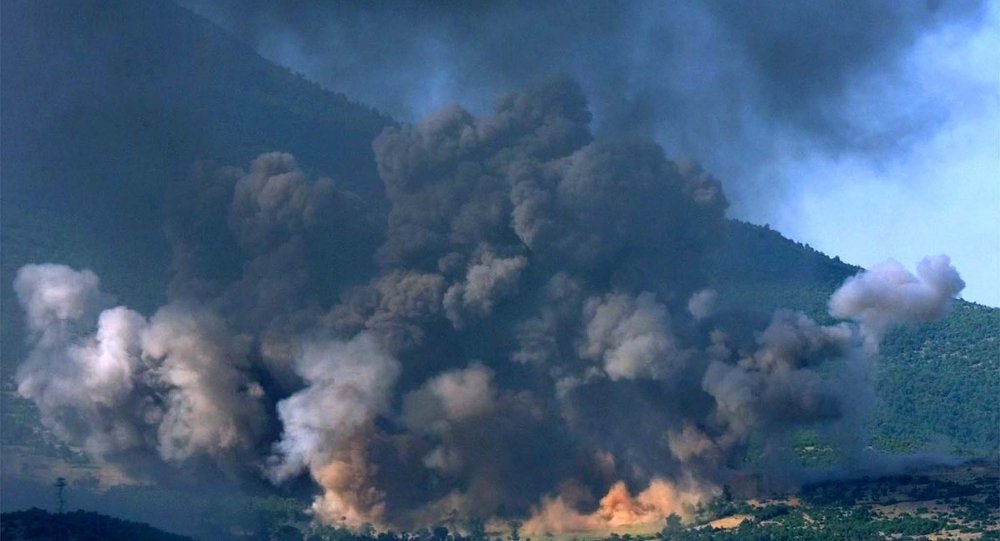
We’re coming up shortly to the 20th anniversary of the start of the NATO bombing of Yugoslavia. It began on 24th March 1999 and lasted for 78 days. There was no break, not even for Orthodox Easter.

The war, fought ostensibly to protect the ethnic Albanian citizens of the province of Kosovo from ethnic cleansing, did not, it’s fair to say, attract the same level of opposition as other US-led military actions. In the British House of Commons 13 MPs (including Jeremy Corbyn, George Galloway and John McDonnell), tried to force a vote but failed.

Among left-wing supporters who you’d normally expected to be against US-led military actions was one Ken Livingstone.

There was a fear from well-intentioned people that something terrible might be about to happen in Kosovo, similar to the events in Srebrenica in 1995, where approximately 8,000 men and boys were killed in a massacre carried out by Bosnian Serb forces (later held to be a genocide by the ICJ), and during ‘Operation Storm’ that same year when around 200,000 Serbs fled, or were driven out of their homes in the Krajina area, by Croat forces.

Nevertheless, like the invasion of Iraq which followed it four years later the attack on Yugoslavia was wrong.

There’s much evidence to show that it helped create the very humanitarian crisis it was supposed to prevent, as thousands fled from the bombing. ‘Operation Allied Force’ as it was called, cost the lives of around 500 Yugoslav civilians.

At least fifteen were killed when NATO strikes hit the passenger train they were travelling on at Grdelica Gorge. Sixteen died on an attack on RTS, Serbian television. Over sixty Kosovan Albanians were killed when a US fighter pilot bombed their convoy. NATO at first tried to blame the attack on Yugoslav forces.

If the NATO ‘humanitarians’ had seriously been concerned with reducing tensions between Belgrade and Pristina and protecting civilians from possible harm, they could have brokered a genuine peace process. But they were clearly looking to escalate. Consider what happened at Chateau de Rambouillet.

An annex was added to the document, allowing for NATO’s military occupation of Yugoslavia, which the US and UK knew Slobodan Milosevic, the Yugoslav leader, could not possibly accept.

Just over a year later, Lord Gilbert, a UK Minister for Defence Procurement, admitted: “I think certain people were spoiling for a fight in NATO at that time. I think the terms put to Milosevic at Rambouillet were absolutely intolerable: how could he possibly accept them? It was quite deliberate.”

Henry Kissinger, who can hardly be described as a ‘peacenik’, agreed. He wrote:

“The Rambouillet text, which called on Serbia to admit NATO troops throughout Yugoslavia, was a provocation, an excuse to start bombing.”

That the war on Yugoslavia was about economics, and not humanitarianism, can also be seen by looking at other parts of the Rambouillet Accord. As I in noted in the Guardian in 2005, Article I (1) of Chapter Four called for a “free-market economy”, and article II (1) for privatisation of all government-owned assets. 
Why was this included if the aim was simply to protect civilians?

For an answer we only need to turn to George Kenney, a former Yugoslavia desk officer of the US State Department. “In post-cold war Europe no place remained for a large, independent-minded socialist state that resisted globalisation,” Kenney stated, by way of explaining his country’s hostile actions.

Under Milosevic, the F.R. Yugoslavia operated an economic system under which old communist-era models of social ownership still predominated. Large swathes of the economy were either state-owned or worker-controlled. And all this, don’t forget, ten years after communism was supposed to have ended in Europe.

While he was portrayed in NATO propaganda as ‘the New Hitler’, Milosevic was actually a socialist who believed in the old Yugoslav ideal of ‘Brotherhood and Unity’. He was demonised not because he was a hardcore Serb nationalist, but because he wasn’t. He came from the partisan tradition in Balkan politics, not the chetnik one.

At the time of the NATO bombing I was based in Hungary and myself and a friend, who was also from Britain, organised a street protest opposite from the British Embassy in Budapest. Interestingly, the first person who signed our petition calling for the bombing to be stopped was a lady from Croatia who told us of the kindness Croats like her had received in Milosevic’s Yugoslavia. The British Ambassador very kindly invited us in to the Embassy for tea and biscuits and a chat and tried to ‘sell’ to us the case for war, producing a photocopy of a speech by Tony Blair. But we were not taken in by the words of the British Prime Minister. In April I returned home to Britain for Easter, and attended with my mother, an anti-war march in London. At the head of the demonstration was the veteran Labour MP Tony Benn. I asked if he could sign my copy of his book ‘Arguments for Socialism’. He did so and then I told him where I had bought the book. In a state-owned bookshop in the centre of the city (Belgrade) that NATO were now bombing.

It was also while I was in Britain that I watched an excellent television documentary against the war, made by the award-winning playwright Harold Pinter.

“The NATO action in Serbia is in breach of its own charter, outside the recognised parameters of international law, and entirely without reference to the United Nations‘ Pinter declared. He also told an anti-war demonstration: “Let us face the truth. The. truth is that neither Clinton nor Blair gives a damn about the Kosovar Albanians. This action has been yet another blatant and brutal assertion of US power using Nato as its missile. It set out to consolidate one thing — American domination of Europe. This must be fully recognised and it must be resisted.”

No doubt some thought Pinter’s words hyperbolic in 1999. But consider what came next. The bombing of Yugoslavia was not a ‘one-off’ but merely the first stage in a war against independently-minded, strategically important countries that defied the imperial writ of the hawks in Washington.

The invasion of Afghanistan followed in 2001- to topple a government that only came to power because of previous US attempts to topple leftist governments there.

The illegal and utterly catastrophic assault on Iraq was launched two years after that, on the fraudulent grounds that the country possessed WMDs which could be assembled and launched within 45 minutes. The NATO bombardment of Libya came in 2011, transforming a country with the Highest Human Development in Africa into a jihadists’ playground. In Syria, ‘rebels’ were backed in order to try and topple a secular government which posed no threat to the west.

Today, its Venezuela and Iran which are in the line of fire and of course there’s the ongoing baiting of Russia and the ratcheting up of Cold War 2.0 tensions.

How many more people would have opposed the bombing of Yugoslavia in 1999 had they known what was to come?/sputnik
Related Posts

ENGLISH

A constant in an era of radical change

22 July, 2026
ENGLISH

Azerbaijan’s Policy in the Middle East: ties, overlaps, and divergences

22 July, 2026
ENGLISH

The Summit of Unity! Think of peace and prepare for war! It’s only the start to the end! Just a pause between two wars!

20 July, 2026

Follow US

Subscribe

Receive Argumentum Magazine by Email

Last Posts

A constant in an era of radical change

22 July, 2026

Who Is Interested in War in the Balkans?

22 July, 2026

Azerbaijan’s Policy in the Middle East: ties, overlaps, and divergences

22 July, 2026

The Summit of Unity! Think of peace and prepare for war! It’s only the start to the end! Just a pause between two wars!

20 July, 2026

The Self-Inflicted Decoupling: How U.S. Immigration Policy Is Ceding the Tech Edge to China

20 July, 2026
Argumentum

“Argumentum”, një proces intelektual …

Contact Us

[email protected]
[email protected]
[email protected]

Follow Us

Media Partner

Register

Receive Argumentum Magazine by Email
  • Home
  • Privacy Policy
  • About Us
  • Contact

© 2022 Argumentum. All Rights Reserved. | NUIS: L91415033Q

Welcome Back!

Login to your account below

Forgotten Password? Sign Up

Create New Account!

Fill the forms bellow to register

*By registering into our website, you agree to the Terms & Conditions and Privacy Policy.
All fields are required. Log In

Retrieve your password

Please enter your username or email address to reset your password.

Log In

Add New Playlist

No Result
View All Result
  • Home
  • OP/ED
  • Interview
  • Realpolitik
  • Current Events
  • Top News
  • YOUR VOICE
  • Shqip

© 2022 Argumentum. All Rights Reserved. | NUIS: L91415033Q

This website uses cookies. By continuing to use this website you are giving consent to cookies being used. Visit our Privacy and Cookie Policy.