



• SHQIPËRI
  • KOSOVË
  • MAQEDONIA E VERIUT
  • MALI I ZI
  • Revista në PDF
21 June, 2026
  • Home
  • OP/ED

    The visit that changed Albania’s strategic future

    Pierre Nora and the institution of memory we lack in Eastern Europe

    The Blueprint of a Diplomatic Debacle: Analyzing Germany’s Historic UNSC Loss

    Between Russia, Iran and Europe: Azerbaijan as a balancing power in the South Caucasus

    The Zero-Tariff Gate: Sovereignty as a Service in the Sino-African Corridor

    Albania vs. the Sea/ Marginal Notes on A. Leka’s Novel The Hidden Side of the Albanian Socialist Garden

    May 9 and the long shadow of a Letter: Is Europe still Schuman’s Project?

    The Arbnesh of Zadar: A living memory of Albanian identity on the Adriatic coast

    Science Diplomacy and Academic Freedom: A strategic nexus for contemporary diplomacy

  • Interview

    Exclusive Interview with Oleksandr Tyshchenko: A 40-Year Legacy of Chernobyl, Nuclear Risks, and Global Responsibility

    INTERVIEW: ZLATKO KRAMARIĆ – THOUGHTS ON THE OLD CONTINENT

    EXCLUSIVE / Ukrainian Ambassador to Albania, Volodymyr Shkurov: “Ukraine wants peace, but not at the expense of its freedom and independence”

    EXCLUSIVE| Ambassador Tayyar Kagan Atay: Türkiye and Albania, a Strategic Partnership Rooted in Shared Heritage and a Common Vision for the Future

    “Diplomacy, Not War”: Palestinian Ambassador to Albania Calls for Justice, Peace, and Global Action for Gaza

    Exclusive: “Even After Tito – Tito”/ Ambassador Zlatko Kramarić on Authoritarian Legacies and Democracy’s Future in the Balkans

    The Conclusion of the Diplomatic Mission / Ambassador Dancho Markovski: Strengthening Albania-North Macedonia Relations for a Shared European Future

    A Century of Diplomatic Relations Between Albania and Russia: Exclusive Interview with the Russian Ambassador to Albania, H.E. Alexey Zaytsev

    Exclusive/ The chairman of the Freedom Party, Ilir Meta: “The will of the citizens will triumph in Albania, as it did in North Macedonia”

  • Realpolitik

    Just kind words  in Tivat! Where is the peace!? A deal yes, peace No!What is happening with USA and  EU?  5 elections but no solution!

    IBAR? ”Sufficiently! Much ado about nothing! Shart contrasts in Beijing! Where is the exit?!

    Neither peace nor war! Peace with bombs?! IBAR in autumn?! Not another Hormuz in Taivan! 

    IBAR – a springing board or an obstacle? Can we catch the EU Negotiation train 2027? When the dress makes the news!  EU electoral April  ends in a draw 1:1!  

    The European Parliament building in Strasbourg, France with flags waving calmly celebrating peace of the Europe. July 12, 2020.

    EU 2027 or 2037! Even half membership failed! No exit strategy!     

    What next?

    “With diplomatic velvet“! Major question marks! In Washington yes, but  in the White House NO! A strange dinner in Brussels!

    From a great ‘apple of disaccord’ to a  point of  cooperation! A bad start! The strange absence in Davos!

    5 lessons from the American 3 January! Don’t count the chicken before they are hatched! Will NATO freeze in Greenland? Wrong diplomatic messages!

  • Current Events

    The Diplomacy of Gas and Algorithms: The Nuances of Official Tirana—Is It Breaking the European Taboo with Azerbaijan?

    Council of Albanian Ambassadors Backs Civic Protests, Calls for Transparency and Protection of National Interests

    Russian Ambassador in Tirana: “Without a Strong and Sovereign Russia, the Creation of a Just World Order Is Impossible”

    EU-Western Balkans Summit 2026: New Impetus for the Enlargement Debate?

    “The Flamingo Revolution”: Day 10 of Protests in Albania Draws International Attention

    Rama alleges ‘hybrid war’ behind protests against Kushner-linked coastal development

    BELGRADE, SERBIA - JUNE 18. 2020: Russian and Serbian flags on display during Russian Foreign Minister Sergei Lavrov's visit to the Liberators of Belgrade Memorial. Valery Sharifulin/TASS,Image: 533095429, License: Rights-managed, Restrictions: UWAGA! Zdjęcia zawierają oryginalny opis dostawcy (ITAR-TASS). Szczególnie w związku z agresją Rosji na Ukrainę mogą zawierać przekaz niezgodny z faktami. Zweryfikuj go przed publikacją, Model Release: no, Credit line: Valery Sharifulin / TASS / Forum

    Balkan Maskirovka: Why Moscow’s “Distancing” Is Only an Operation for the Survival of Vučić’s Regime

    Serbia – China 2026: Technological partnership, geopolitical positioning and a new phase of the Chinese presence in the Western Balkans

    The Digital Protectorate: How the EU AI Act Codified Silicon Valley’s Monopoly

  • Top News

    Daniel Serwer: A Bad War Ending Badly May Still Be Good News

    Friedrich Merz, Keir Starmer, António Costa, Donald Trump, Emmanuel Macron, Mark Carney, Ursula von der Leyen, Giorgia Meloni and Sanae Takaichi

    G7 Leaders Gather in Évian Amid Global Uncertainty, Focus on Security, Economy and International Cooperation

    Russian Ambassador in Tirana: “Without a Strong and Sovereign Russia, the Creation of a Just World Order Is Impossible”

    “The Flamingo Revolution”: Day 10 of Protests in Albania Draws International Attention

    Rama alleges ‘hybrid war’ behind protests against Kushner-linked coastal development

    No End in Sight: Trump, Netanyahu and the Expanding Middle East War

    Tirana – €20 Million EU–Banking Agreement Boosts Albanian SMEs

    “EU4Municipalities II” Project, a Strategic Investment for Strengthening Municipalities and Accelerating Albania’s Path towards the EU

    Albania, Italy deepen defence ties with naval shipbuilding deal

  • YOUR VOICE
  • Shqip
No Result
View All Result
Argumentum
  • Home
  • OP/ED

    The visit that changed Albania’s strategic future

    Pierre Nora and the institution of memory we lack in Eastern Europe

    The Blueprint of a Diplomatic Debacle: Analyzing Germany’s Historic UNSC Loss

    Between Russia, Iran and Europe: Azerbaijan as a balancing power in the South Caucasus

    The Zero-Tariff Gate: Sovereignty as a Service in the Sino-African Corridor

    Albania vs. the Sea/ Marginal Notes on A. Leka’s Novel The Hidden Side of the Albanian Socialist Garden

    May 9 and the long shadow of a Letter: Is Europe still Schuman’s Project?

    The Arbnesh of Zadar: A living memory of Albanian identity on the Adriatic coast

    Science Diplomacy and Academic Freedom: A strategic nexus for contemporary diplomacy

  • Interview

    Exclusive Interview with Oleksandr Tyshchenko: A 40-Year Legacy of Chernobyl, Nuclear Risks, and Global Responsibility

    INTERVIEW: ZLATKO KRAMARIĆ – THOUGHTS ON THE OLD CONTINENT

    EXCLUSIVE / Ukrainian Ambassador to Albania, Volodymyr Shkurov: “Ukraine wants peace, but not at the expense of its freedom and independence”

    EXCLUSIVE| Ambassador Tayyar Kagan Atay: Türkiye and Albania, a Strategic Partnership Rooted in Shared Heritage and a Common Vision for the Future

    “Diplomacy, Not War”: Palestinian Ambassador to Albania Calls for Justice, Peace, and Global Action for Gaza

    Exclusive: “Even After Tito – Tito”/ Ambassador Zlatko Kramarić on Authoritarian Legacies and Democracy’s Future in the Balkans

    The Conclusion of the Diplomatic Mission / Ambassador Dancho Markovski: Strengthening Albania-North Macedonia Relations for a Shared European Future

    A Century of Diplomatic Relations Between Albania and Russia: Exclusive Interview with the Russian Ambassador to Albania, H.E. Alexey Zaytsev

    Exclusive/ The chairman of the Freedom Party, Ilir Meta: “The will of the citizens will triumph in Albania, as it did in North Macedonia”

  • Realpolitik

    Just kind words  in Tivat! Where is the peace!? A deal yes, peace No!What is happening with USA and  EU?  5 elections but no solution!

    IBAR? ”Sufficiently! Much ado about nothing! Shart contrasts in Beijing! Where is the exit?!

    Neither peace nor war! Peace with bombs?! IBAR in autumn?! Not another Hormuz in Taivan! 

    IBAR – a springing board or an obstacle? Can we catch the EU Negotiation train 2027? When the dress makes the news!  EU electoral April  ends in a draw 1:1!  

    The European Parliament building in Strasbourg, France with flags waving calmly celebrating peace of the Europe. July 12, 2020.

    EU 2027 or 2037! Even half membership failed! No exit strategy!     

    What next?

    “With diplomatic velvet“! Major question marks! In Washington yes, but  in the White House NO! A strange dinner in Brussels!

    From a great ‘apple of disaccord’ to a  point of  cooperation! A bad start! The strange absence in Davos!

    5 lessons from the American 3 January! Don’t count the chicken before they are hatched! Will NATO freeze in Greenland? Wrong diplomatic messages!

  • Current Events

    The Diplomacy of Gas and Algorithms: The Nuances of Official Tirana—Is It Breaking the European Taboo with Azerbaijan?

    Council of Albanian Ambassadors Backs Civic Protests, Calls for Transparency and Protection of National Interests

    Russian Ambassador in Tirana: “Without a Strong and Sovereign Russia, the Creation of a Just World Order Is Impossible”

    EU-Western Balkans Summit 2026: New Impetus for the Enlargement Debate?

    “The Flamingo Revolution”: Day 10 of Protests in Albania Draws International Attention

    Rama alleges ‘hybrid war’ behind protests against Kushner-linked coastal development

    BELGRADE, SERBIA - JUNE 18. 2020: Russian and Serbian flags on display during Russian Foreign Minister Sergei Lavrov's visit to the Liberators of Belgrade Memorial. Valery Sharifulin/TASS,Image: 533095429, License: Rights-managed, Restrictions: UWAGA! Zdjęcia zawierają oryginalny opis dostawcy (ITAR-TASS). Szczególnie w związku z agresją Rosji na Ukrainę mogą zawierać przekaz niezgodny z faktami. Zweryfikuj go przed publikacją, Model Release: no, Credit line: Valery Sharifulin / TASS / Forum

    Balkan Maskirovka: Why Moscow’s “Distancing” Is Only an Operation for the Survival of Vučić’s Regime

    Serbia – China 2026: Technological partnership, geopolitical positioning and a new phase of the Chinese presence in the Western Balkans

    The Digital Protectorate: How the EU AI Act Codified Silicon Valley’s Monopoly

  • Top News

    Daniel Serwer: A Bad War Ending Badly May Still Be Good News

    Friedrich Merz, Keir Starmer, António Costa, Donald Trump, Emmanuel Macron, Mark Carney, Ursula von der Leyen, Giorgia Meloni and Sanae Takaichi

    G7 Leaders Gather in Évian Amid Global Uncertainty, Focus on Security, Economy and International Cooperation

    Russian Ambassador in Tirana: “Without a Strong and Sovereign Russia, the Creation of a Just World Order Is Impossible”

    “The Flamingo Revolution”: Day 10 of Protests in Albania Draws International Attention

    Rama alleges ‘hybrid war’ behind protests against Kushner-linked coastal development

    No End in Sight: Trump, Netanyahu and the Expanding Middle East War

    Tirana – €20 Million EU–Banking Agreement Boosts Albanian SMEs

    “EU4Municipalities II” Project, a Strategic Investment for Strengthening Municipalities and Accelerating Albania’s Path towards the EU

    Albania, Italy deepen defence ties with naval shipbuilding deal

  • YOUR VOICE
  • Shqip
No Result
View All Result
Argumentum
No Result
View All Result
Home Balkan Overview

Deconstructing the Constructive Ambiguity in the Belgrade-Pristina Dialogue: How Did “Normalization” Become “de facto Recognition”?

4 December, 2023
in Balkan Overview, ENGLISH, In Focus
A A
Share on FacebookShare on Twitter

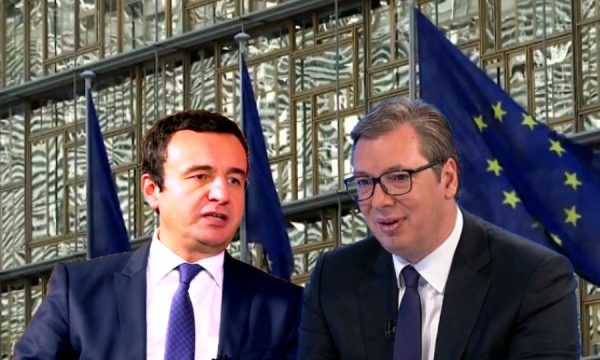
This October, another high-profile diplomatic initiative was launched to unblock the Belgrade-Pristina normalization process. Firstly, on 21 October, a team of special envoys representing the US, EU, Italy, France and Germany, dubbed the Big Five, met with the Prime Minister of Kosovo Albin Kurti in Pristina and with the President of Serbia Aleksandar Vučić in Belgrade. As the shuttle diplomacy attempt proved futile, the leaders of Kosovo and Serbia were summoned to Brussels to meet with the EU officials on the margins of the EU summit.

Then, on 26 October, Serbian President Vučić and Kosovo Prime Minister Kurti met separately with the leaders of Germany, France and Italy in Brussels. The European statesmen were no more successful than their envoys in breaking the deadlock in the Belgrade-Pristina talks. Nonetheless, those efforts marked a turning point in the process. Subsequently, the European leaders dropped a bombshell by explicitly calling on Serbia to de facto recognize Kosovo.

On 27 October, French President Macron, German Chancellor Scholz and Italian Prime Minister Meloni released a joint statement. The statement underscored the expectations of the respective European leaders for Serbia and Kosovo to deliver on their obligations to implement the Agreement on the Path to Normalisation, accepted by the parties in February. The statement, however, contained more than a commonplace appeal to the parties to follow through with their commitments. What rendered it unprecedented was the urge for Serbia to deliver on de facto recognition of Kosovo.

The same request for Serbia to de facto recognize Kosovo was reiterated by the President of the European Commission Ursula von der Leyen during the joint press conference with Kosovo’s President Vjosa Osmani-Sadriu held in Pristina on 30 October. In return for implementing the mentioned and other commitments, the President of the Commission promised the partial opening of the Single Market to Serbia and Kosovo and access to the Growth Plan. The next day, President von der Leyen met in Belgrade with the Serbian President Aleksandar Vučić. On that occasion, von der Leyen clarified that de facto recognition entails the implementation of the Ohrid agreement accepted in March.

The EU’s request for Serbia to recognize Kosovo, be it only de facto, may have caught some observers off guard. Thus far, the EU-facilitated dialogue has been viewed as neutral regarding the recognition issues. Nonetheless, de facto recognition has been hiding in plain sight as the underlying goal of the process all along. The European leaders did nothing more than just call things the right name for the first time.

De facto recognition: From German condition to EU policy

Mutual de facto recognition has been the anticipated outcome of the EU-facilitated dialogue almost from its outset. The general public may not have been aware of that because the better-known phrase “comprehensive normalization” was used as a euphemism for de facto recognition. Nonetheless, the decision-makers were fully cognizant of what was on the other side of the constructive ambiguity.

The course of the Belgrade-Pristina dialogue was arguably set in 2012 when a delegation of German MPs from the then-ruling CDU presented in Belgrade the seven German conditions for Serbia’s EU accession. The conditions were presented to a newly elected Serbian Government which for the first time featured the Serbian Progressive Party (SNS). One of those conditions referred to the signing of the legally binding statement with Kosovo which would have to be implemented before the end of the EU accession talks. An agreement on good neighbourly relations was suggested as the preferred form of such a statement.

The 2012 initiative of the CDU parliamentarians was not completely novel. It was rather a revival of an even earlier German proposal for settling the dispute from 2007 when the status talks were led by the EU-US-Russia Troika. German diplomat Wolfgang Ischinger, the EU representative in Troika, proposed a deal modelled after the Basic Treaty signed by West and East Germany in 1972, allowing both parties to become members of the UN the following year. In line with the two Germanys model, Serbia would commit to acknowledging the parallel international existence of Kosovo and respecting its sovereignty and territorial integrity without formally recognising it. The idea was at the time rejected by Serbia.

In 2013, the Serbian Government led by SNS made a U-turn in its policy towards Kosovo by accepting the Brussels Agreement. The Agreement was considered by some commentators as de facto recognition of Kosovo by Serbia. It stipulated, inter alia, that the parties agreed not to “block, or encourage others to block, the other’s progression in the respective EU paths”. The Agreement fell short of the legally binding statement on good neighbourly relations, as demanded by the CDU. However, it meant a firm step in that direction. Admittedly, the official name of the document was the “First Agreement of Principles Governing the Normalization of Relations”, implying that other agreements would ensue.

Miroslav Lajčak, Albin Kurti and Aleksandar Vučić in Berlin; Photo: Twitter / @MiroslavLajcak

Owing to the Brussels Agreement, the EU accession negotiations with Serbia were opened in early 2014. The Negotiation Framework for the accession talks stated that the dialogue with Kosovo should “gradually lead to the comprehensive normalization of relations between Serbia and Kosovo, in the form of a legally binding agreement by the end of Serbia’s accession negotiations”. The provision reflected the demand raised by the CDU delegates. Accordingly, Serbia was expected to commit in a legally binding way to treat Kosovo as a separate international entity before the completion of its EU membership talks. By consenting to the Negotiation Framework, Serbian officials acknowledged that the EU accession entailed de factorecognition of Kosovo. The phrase “comprehensive normalization” was used as a euphemism for de facto recognition to aid Serbian leaders in coping with the audience costs.

The fate of the Franco-German Plan for normalization

In September 2022, the Franco-German Plan for normalization of relations was presented to Belgrade and Pristina. The Plan was endorsed in February 2023 by the European Council in February and renamed as the European Proposal. Following months of negotiations behind closed doors, the Plan was accepted by the parties in Brussels in February in the form of the Agreement on the Path to Normalisation which was complemented by the Implementation Annex agreed upon in Ohrid in March.

Essentially, the Agreement echoed Ischinger’s model of two Germanies. The parties would pledge to “develop normal, good-neighbourly relations with each other on the basis of equal rights” and to “respect principles laid down in the United Nations Charter, especially those of the sovereign equality of all States, respect for their independence, autonomy and territorial integrity”. Pursuant to the Plan, neither of the parties would “represent the other in the international sphere or act on its behalf”, while Serbia would not “object to Kosovo’s membership in any international organisation”.

By adhering to the Agreement, Serbia would send a clear message to the international community that it renounced its claims over Kosovo and abandoned its attempts to hinder Kosovo’s bid to join the international organizations. Both Kosovo’s Prime Minister Kurti and Serbia’s President Vučić were fully cognizant of the actual meaning of the deal. That is the reason why Kurti has continuously insisted on signing the Agreement, while Vučić has persistently refused to do so long before its acceptance was reframed as de facto recognition. Even though Vučić verbally accepted the Agreement, Serbia has not shown any intent to follow through with its implementation. Kosovo followed suit.

The Franco-German Plan was the realization of the process foreseen by both the 2013 Brussels Agreement and the 2014 Negotiation Framework. However, mainly due to the opposition from Serbia the initiative has hit a dead end. This begs the question of why Serbia reneged on the process it committed to 10 years ago. The answer perhaps lies in the standstill in the EU accession process.

Can Kosovo-Serbia normalization be achieved without EU integration?

For over a decade, the Belgrade-Pristina dialogue and the EU integration of both have been highly intertwined processes. Normalizing relations with Kosovo was the main political condition for Serbia’s progress towards the EU. At the same time, the prospect of EU membership served as the main incentive for Serbia to gradually come to terms with the recognition of Kosovo’s international personality. As a result, Serbia showed readiness to compromise with Kosovo in order to advance on its EU path.

All the milestones in the normalization process followed the same pattern. Each breakthrough in the dialogue was awarded by the EU. Serbia was granted candidate status for EU membership in March 2012 after the agreement on regional representation of Kosovo was reached. In June 2013, the European Council decided to open accession talks with Serbia, following the signing of the Brussels Agreement in April 2013. The first negotiation chapters with Serbia were opened in December 2015 after a series of agreements with Kosovo had previously been accepted in August 2015. By the same token, Serbia signalled its willingness to accept the normalization deal with Kosovo, provided that it was offered shortly before its accession to the EU.

When Belgrade chose to embark on the process of normalization of relations with Pristina, the EU membership was deemed attainable. Accordingly, over the years, Serbian leaders have been hinting at their readiness to eventually accept the normalization deal with Kosovo, or in other words de facto recognition, in exchange for EU membership. For various reasons, EU membership for Serbia nowadays seems elusive, while it is questionable whether Serbia still at all wants it. Consequently, the EU was left without any real leverage over Serbia.

Instead of full-fledged membership, the EU is now offering partial access to the Single Market to Serbia and Kosovo coupled with a Growth Plan as a lure for striking the deal. However, it appears implausible that such an arrangement would suffice to incentivize Serbia to deliver on de facto recognition of Kosovo. If the EU membership was offered in return, Serbia might be in a dilemma. Without it within reach, there is no real incentive for Serbia to pursue normalization with Kosovo. In that respect, to demand from Serbia to de facto recognize Kosovo came too early. With EU membership being distant, Serbia would rather continue to keep Kosovo in international limbo and delay the normalization deal for as long as possible./EWB
Related Posts

ENGLISH

World Refugee Day and 75 Years of the Refugee Convention: Why Humanity must not look away

20 June, 2026
ENGLISH

G7 Leaders Present Unified Geopolitical Agenda at Évian Summit

17 June, 2026
ENGLISH

Daniel Serwer: A Bad War Ending Badly May Still Be Good News

17 June, 2026

Follow US

Subscribe

Receive Argumentum Magazine by Email

Last Posts

World Refugee Day and 75 Years of the Refugee Convention: Why Humanity must not look away

20 June, 2026

G7 Leaders Present Unified Geopolitical Agenda at Évian Summit

17 June, 2026

Daniel Serwer: A Bad War Ending Badly May Still Be Good News

17 June, 2026

The Diplomacy of Gas and Algorithms: The Nuances of Official Tirana—Is It Breaking the European Taboo with Azerbaijan?

17 June, 2026
Friedrich Merz, Keir Starmer, António Costa, Donald Trump, Emmanuel Macron, Mark Carney, Ursula von der Leyen, Giorgia Meloni and Sanae Takaichi

G7 Leaders Gather in Évian Amid Global Uncertainty, Focus on Security, Economy and International Cooperation

16 June, 2026
Argumentum

“Argumentum”, një proces intelektual …

Contact Us

[email protected]
[email protected]
[email protected]

Follow Us

Media Partner

Register

Receive Argumentum Magazine by Email
  • Home
  • Privacy Policy
  • About Us
  • Contact

© 2022 Argumentum. All Rights Reserved. | NUIS: L91415033Q

Welcome Back!

Login to your account below

Forgotten Password? Sign Up

Create New Account!

Fill the forms bellow to register

*By registering into our website, you agree to the Terms & Conditions and Privacy Policy.
All fields are required. Log In

Retrieve your password

Please enter your username or email address to reset your password.

Log In

Add New Playlist

No Result
View All Result
  • Home
  • OP/ED
  • Interview
  • Realpolitik
  • Current Events
  • Top News
  • YOUR VOICE
  • Shqip

© 2022 Argumentum. All Rights Reserved. | NUIS: L91415033Q

This website uses cookies. By continuing to use this website you are giving consent to cookies being used. Visit our Privacy and Cookie Policy.