





• SHQIPËRI
  • KOSOVË
  • MAQEDONIA E VERIUT
  • MALI I ZI
  • Revista në PDF
8 June, 2026
  • Home
  • OP/ED

    Pierre Nora and the institution of memory we lack in Eastern Europe

    The Blueprint of a Diplomatic Debacle: Analyzing Germany’s Historic UNSC Loss

    Cyber Attribution, Corruption, and the False-Flag Question in Albania’s 2022 Alleged Iranian Cyberattack

    Between Russia, Iran and Europe: Azerbaijan as a balancing power in the South Caucasus

    The Zero-Tariff Gate: Sovereignty as a Service in the Sino-African Corridor

    Albania vs. the Sea/ Marginal Notes on A. Leka’s Novel The Hidden Side of the Albanian Socialist Garden

    May 9 and the long shadow of a Letter: Is Europe still Schuman’s Project?

    The Arbnesh of Zadar: A living memory of Albanian identity on the Adriatic coast

    Science Diplomacy and Academic Freedom: A strategic nexus for contemporary diplomacy

  • Interview

    Exclusive Interview with Oleksandr Tyshchenko: A 40-Year Legacy of Chernobyl, Nuclear Risks, and Global Responsibility

    INTERVIEW: ZLATKO KRAMARIĆ – THOUGHTS ON THE OLD CONTINENT

    EXCLUSIVE / Ukrainian Ambassador to Albania, Volodymyr Shkurov: “Ukraine wants peace, but not at the expense of its freedom and independence”

    EXCLUSIVE| Ambassador Tayyar Kagan Atay: Türkiye and Albania, a Strategic Partnership Rooted in Shared Heritage and a Common Vision for the Future

    “Diplomacy, Not War”: Palestinian Ambassador to Albania Calls for Justice, Peace, and Global Action for Gaza

    Exclusive: “Even After Tito – Tito”/ Ambassador Zlatko Kramarić on Authoritarian Legacies and Democracy’s Future in the Balkans

    The Conclusion of the Diplomatic Mission / Ambassador Dancho Markovski: Strengthening Albania-North Macedonia Relations for a Shared European Future

    A Century of Diplomatic Relations Between Albania and Russia: Exclusive Interview with the Russian Ambassador to Albania, H.E. Alexey Zaytsev

    Exclusive/ The chairman of the Freedom Party, Ilir Meta: “The will of the citizens will triumph in Albania, as it did in North Macedonia”

  • Realpolitik

    IBAR? ”Sufficiently! Much ado about nothing! Shart contrasts in Beijing! Where is the exit?!

    Neither peace nor war! Peace with bombs?! IBAR in autumn?! Not another Hormuz in Taivan! 

    IBAR – a springing board or an obstacle? Can we catch the EU Negotiation train 2027? When the dress makes the news!  EU electoral April  ends in a draw 1:1!  

    The European Parliament building in Strasbourg, France with flags waving calmly celebrating peace of the Europe. July 12, 2020.

    EU 2027 or 2037! Even half membership failed! No exit strategy!     

    What next?

    “With diplomatic velvet“! Major question marks! In Washington yes, but  in the White House NO! A strange dinner in Brussels!

    From a great ‘apple of disaccord’ to a  point of  cooperation! A bad start! The strange absence in Davos!

    5 lessons from the American 3 January! Don’t count the chicken before they are hatched! Will NATO freeze in Greenland? Wrong diplomatic messages!

    German Chancellor Friedrich Merz, European Commission President Ursula von der Leyen, Ukraine's President Volodymyr Zelenskiy, U.S. Special Envoy Steve Witkoff and Jared Kushner, son-in-law of U.S. President Donald Trump line up for a family photo opportunity at the Chancellery in Berlin, Germany, December 15, 2025.    REUTERS/Lisi Niesner/Pool

    A Strategy that could change the world! Europe in Berlin! Why an historic compromise? Only charm diplomacy in Athens!

  • Current Events

    Rama alleges ‘hybrid war’ behind protests against Kushner-linked coastal development

    BELGRADE, SERBIA - JUNE 18. 2020: Russian and Serbian flags on display during Russian Foreign Minister Sergei Lavrov's visit to the Liberators of Belgrade Memorial. Valery Sharifulin/TASS,Image: 533095429, License: Rights-managed, Restrictions: UWAGA! Zdjęcia zawierają oryginalny opis dostawcy (ITAR-TASS). Szczególnie w związku z agresją Rosji na Ukrainę mogą zawierać przekaz niezgodny z faktami. Zweryfikuj go przed publikacją, Model Release: no, Credit line: Valery Sharifulin / TASS / Forum

    Balkan Maskirovka: Why Moscow’s “Distancing” Is Only an Operation for the Survival of Vučić’s Regime

    Serbia – China 2026: Technological partnership, geopolitical positioning and a new phase of the Chinese presence in the Western Balkans

    The Digital Protectorate: How the EU AI Act Codified Silicon Valley’s Monopoly

    The 28th MFC Annual Conference in Durrës / Sulaj: Microfinance remains a key instrument for financial inclusion

    Serbia at the Crossroads of EU Integration and Geopolitical Balancing: IFIMES Analysis

    Tirana – €20 Million EU–Banking Agreement Boosts Albanian SMEs

    The Myth of Independence: How Chinese Efficiency is Rewriting the Constitution of Modern Geopolitics!

    Europe Yesterday and Today: Why 9 May Still Matters

  • Top News

    Rama alleges ‘hybrid war’ behind protests against Kushner-linked coastal development

    No End in Sight: Trump, Netanyahu and the Expanding Middle East War

    Tirana – €20 Million EU–Banking Agreement Boosts Albanian SMEs

    “EU4Municipalities II” Project, a Strategic Investment for Strengthening Municipalities and Accelerating Albania’s Path towards the EU

    Albania, Italy deepen defence ties with naval shipbuilding deal

    U.S. Embassy: Iran-Linked Groups May Target Americans and Iranian Opposition in Albania

    The Council of Albanian Ambassadors disappointed with the voting of the draft law on the foreign service in the parliamentary committees.

    Prime Minister Edi Rama Addresses Israel’s Knesset in Historic Special Session

    Kazakhstan’s Strategic Reform Agenda: Stability, Modern Governance, and Responsible Diplomacy

  • YOUR VOICE
  • Shqip
No Result
View All Result
Argumentum
  • Home
  • OP/ED

    Pierre Nora and the institution of memory we lack in Eastern Europe

    The Blueprint of a Diplomatic Debacle: Analyzing Germany’s Historic UNSC Loss

    Cyber Attribution, Corruption, and the False-Flag Question in Albania’s 2022 Alleged Iranian Cyberattack

    Between Russia, Iran and Europe: Azerbaijan as a balancing power in the South Caucasus

    The Zero-Tariff Gate: Sovereignty as a Service in the Sino-African Corridor

    Albania vs. the Sea/ Marginal Notes on A. Leka’s Novel The Hidden Side of the Albanian Socialist Garden

    May 9 and the long shadow of a Letter: Is Europe still Schuman’s Project?

    The Arbnesh of Zadar: A living memory of Albanian identity on the Adriatic coast

    Science Diplomacy and Academic Freedom: A strategic nexus for contemporary diplomacy

  • Interview

    Exclusive Interview with Oleksandr Tyshchenko: A 40-Year Legacy of Chernobyl, Nuclear Risks, and Global Responsibility

    INTERVIEW: ZLATKO KRAMARIĆ – THOUGHTS ON THE OLD CONTINENT

    EXCLUSIVE / Ukrainian Ambassador to Albania, Volodymyr Shkurov: “Ukraine wants peace, but not at the expense of its freedom and independence”

    EXCLUSIVE| Ambassador Tayyar Kagan Atay: Türkiye and Albania, a Strategic Partnership Rooted in Shared Heritage and a Common Vision for the Future

    “Diplomacy, Not War”: Palestinian Ambassador to Albania Calls for Justice, Peace, and Global Action for Gaza

    Exclusive: “Even After Tito – Tito”/ Ambassador Zlatko Kramarić on Authoritarian Legacies and Democracy’s Future in the Balkans

    The Conclusion of the Diplomatic Mission / Ambassador Dancho Markovski: Strengthening Albania-North Macedonia Relations for a Shared European Future

    A Century of Diplomatic Relations Between Albania and Russia: Exclusive Interview with the Russian Ambassador to Albania, H.E. Alexey Zaytsev

    Exclusive/ The chairman of the Freedom Party, Ilir Meta: “The will of the citizens will triumph in Albania, as it did in North Macedonia”

  • Realpolitik

    IBAR? ”Sufficiently! Much ado about nothing! Shart contrasts in Beijing! Where is the exit?!

    Neither peace nor war! Peace with bombs?! IBAR in autumn?! Not another Hormuz in Taivan! 

    IBAR – a springing board or an obstacle? Can we catch the EU Negotiation train 2027? When the dress makes the news!  EU electoral April  ends in a draw 1:1!  

    The European Parliament building in Strasbourg, France with flags waving calmly celebrating peace of the Europe. July 12, 2020.

    EU 2027 or 2037! Even half membership failed! No exit strategy!     

    What next?

    “With diplomatic velvet“! Major question marks! In Washington yes, but  in the White House NO! A strange dinner in Brussels!

    From a great ‘apple of disaccord’ to a  point of  cooperation! A bad start! The strange absence in Davos!

    5 lessons from the American 3 January! Don’t count the chicken before they are hatched! Will NATO freeze in Greenland? Wrong diplomatic messages!

    German Chancellor Friedrich Merz, European Commission President Ursula von der Leyen, Ukraine's President Volodymyr Zelenskiy, U.S. Special Envoy Steve Witkoff and Jared Kushner, son-in-law of U.S. President Donald Trump line up for a family photo opportunity at the Chancellery in Berlin, Germany, December 15, 2025.    REUTERS/Lisi Niesner/Pool

    A Strategy that could change the world! Europe in Berlin! Why an historic compromise? Only charm diplomacy in Athens!

  • Current Events

    Rama alleges ‘hybrid war’ behind protests against Kushner-linked coastal development

    BELGRADE, SERBIA - JUNE 18. 2020: Russian and Serbian flags on display during Russian Foreign Minister Sergei Lavrov's visit to the Liberators of Belgrade Memorial. Valery Sharifulin/TASS,Image: 533095429, License: Rights-managed, Restrictions: UWAGA! Zdjęcia zawierają oryginalny opis dostawcy (ITAR-TASS). Szczególnie w związku z agresją Rosji na Ukrainę mogą zawierać przekaz niezgodny z faktami. Zweryfikuj go przed publikacją, Model Release: no, Credit line: Valery Sharifulin / TASS / Forum

    Balkan Maskirovka: Why Moscow’s “Distancing” Is Only an Operation for the Survival of Vučić’s Regime

    Serbia – China 2026: Technological partnership, geopolitical positioning and a new phase of the Chinese presence in the Western Balkans

    The Digital Protectorate: How the EU AI Act Codified Silicon Valley’s Monopoly

    The 28th MFC Annual Conference in Durrës / Sulaj: Microfinance remains a key instrument for financial inclusion

    Serbia at the Crossroads of EU Integration and Geopolitical Balancing: IFIMES Analysis

    Tirana – €20 Million EU–Banking Agreement Boosts Albanian SMEs

    The Myth of Independence: How Chinese Efficiency is Rewriting the Constitution of Modern Geopolitics!

    Europe Yesterday and Today: Why 9 May Still Matters

  • Top News

    Rama alleges ‘hybrid war’ behind protests against Kushner-linked coastal development

    No End in Sight: Trump, Netanyahu and the Expanding Middle East War

    Tirana – €20 Million EU–Banking Agreement Boosts Albanian SMEs

    “EU4Municipalities II” Project, a Strategic Investment for Strengthening Municipalities and Accelerating Albania’s Path towards the EU

    Albania, Italy deepen defence ties with naval shipbuilding deal

    U.S. Embassy: Iran-Linked Groups May Target Americans and Iranian Opposition in Albania

    The Council of Albanian Ambassadors disappointed with the voting of the draft law on the foreign service in the parliamentary committees.

    Prime Minister Edi Rama Addresses Israel’s Knesset in Historic Special Session

    Kazakhstan’s Strategic Reform Agenda: Stability, Modern Governance, and Responsible Diplomacy

  • YOUR VOICE
  • Shqip
No Result
View All Result
Argumentum
No Result
View All Result
Home ENGLISH

Echo from Belgrade: “Serbia, Don’t Cry, China is with You!”

7 April, 2021
in ENGLISH, English OP/ED
A A
Share on FacebookShare on Twitter
by Aleksandar Ivković    
“Serbia, don’t cry, China is with you!” and “EU CORONA FASCISM!” Scandalous policy of Brussels, they don’t like that we are the best!” – these are the two noticeable headlines from the pro-government media that are quoted in the new study on Serbian media coverage of the EU in 2020 “Love from China and Slaps from Brussels”, released by the Center for Contemporary Politics.
“Overall, the pro-government media, and especially the tabloids, are leaning towards reporting that criticizes the EU with a lot of emotion and praises its ‘rival actors’ in Serbia, mainly quoting the state officials,” states one of the conclusions of the study, which contains the analysis the most visited media webpages in Serbia.
On the other hand, Danas and N1, as the media critical of the authorities, have a much clearer pro-European stance and are more willing to report on initiatives coming from the European Union that have nothing to do with state officials, quoting opposition politicians, civil society organizations and European officials, the study concluded.
In other words, readers of the two types of media get two significantly different images of the EU. To those who rely on pro-government media, the EU is often presented as an entity that conditions Serbia and asks it to give up key identity determinants, as well as its traditional friends for the sake of membership in that organization, inconsistently and unjustifiably criticizes it and leaves it stranded in crisis situations, such as the COVID-19 pandemic.
The first months of the pandemic in Europe were especially fertile ground for the spread of such narratives, when headlines such as “Brussels bureaucratic imaginary exposed” and “EU mortally wounded! It would let the Serbs die!” were present in pro-government tabloids. At the moment when, after a short-term opening, the EU countries decided to close the borders to Serbia again due to the worsening of the epidemiological situation in July 2020, the headlines took on the following tone: “The EU slammed their borders for us!”, “GERMANS DO NOT WANT SERBS!” The EU gave the green light, Berlin closed the border!”
It can hardly be said that the media critically towards the authorities provide a diametrically opposite image of the EU, because they are not dominated by a positive emotional charge towards that entity, as the pro-government ones are often dominated by a negative one. However, the picture they provide still has nuances, and the connection between the process of European integration and European values is still insisted upon.
“In this narrative, the European Union notices the deterioration of the state of democratic institutions, which is why Serbia is not making progress on the path to the European Union. There is also a kind of special role given to the EU as someone who is obliged to take care of democracy in Serbia, electoral conditions and punish the authorities for actions that violate the rule of law,” the study reads.
The publication of the European Commission’s report on Serbia in October 2020, in which, at least in the area of the rule of law and democracy, the assessments were quite negative, is a good example of differences in narratives.
Thus, as stated in the study, a narrative was created in the pro-government media that suggests to the citizens that the President of Serbia Aleksandar Vučić was personally and unjustifiably criticized for the efforts he undertakes in the interest of Serbia, and that the European Commission has no right to evaluate his behavior, which can only be judged by the people in an election. The paradigmatic headlines of the narrative described are “Vučić conquers with the truth” and “the EU criticized Vučić, he responded sharply”.
On the other hand, the critical media reported on the assessments of the Report of the civil society organizations, most often pro-European opposition politicians, and to a lesser extent the statements of government officials. In this group of media, emphasis was placed on the transmission of direct quotations from the European Commission’s Report, including sections concerning political criteria, the judiciary, the rule of law, the fight against corruption and other key areas. One of the headlines stressed that “Serbia is at the risk of the suspension of European integration”, and the other that the Report is a “national shame”.
“This type of reporting is an indicator of the polarization of narratives on the Serbian media scene and the lack of debate between government, opposition, civil society and citizens on the European Commission’s Report as one of the key topics in the negotiation process,” the study concluded.
The interest of the authorities
According to Vesna Radojević, a journalist from the KRIK portal, the findings of this study are part of a long-term trend and part of a bigger problem, which is the connection between politics and the media, as well as the dependence of certain media on the financing provided by the current regime.
“With the exception of a few media, foreign policy is not in the focus and it is being written about less and less seriously, primarily due to the ignorance of journalists. That is why reporting on foreign policy is often reduced to statements by officials,” she added. Radojević also estimates that the pro-government media unequivocally write the way the current ruling regime thinks, regardless of the official position of Serbia, which is declaratively pro-European.
“If you look at the pro-government media, you will not find serious articles reviewing the role of Chinese investments in environmental pollution, you cannot read numerous appeals from citizens and protests over factories that pollute the environment. If the situation was reversed, if they were factories from some of the countries of the European Union – the tabloids would be happy to report on that,” she emphasizes.
Zoran Gavrilović from the Bureau for Social Research (BIRODI) is also clear in his assessment that the reporting of the pro-government media on the EU is directly related to the interests of Aleksandar Vučić.
“The percentage of a negative narratives about the EU depends on the EU’s attitude towards Vučić’s government, that is, his need for the EU to show a negative attitude, in order to justify his positive behavior towards China and Russia,” Gavrilović says for European Western Balkans.
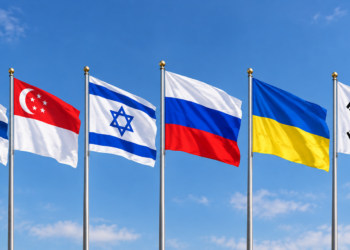
He adds that an example of that is the COVID-19 pandemic, when the President was “angry” with the EU, and praised the Chinese planes, keeping silent that part of the aid was paid for with EU support. The study of the Center for Contemporary Politics also notes that, despite the fact that aid arrived in Serbia from China and the EU almost simultaneously in the spring of 2020, only the former had a dominant presence in the media.
Influence on the public opinion
Although the findings in this area are not completely unambiguous, and the Ministry of European Integration has not published its otherwise regular public opinion poll for over a year, some other surveys show that support for EU membership and a generally positive attitude towards this entity is declining in Serbia.
According to Zoran Gavrilović, the government and the pro-media have a great influence on these trends.
“Reporting of the pro-government media on the EU will depend on Vučić’s order, and thus on the state of the EU in public opinion. Vučić is the master of the public in Serbia. The only alternative is to create a new EU communication strategy in Serbia, which would establish communication with that part of public opinion that is undecided on the issue of Serbia’s membership in the EU”, Gavrilović believes.
Vesna Radojević, on the other hand, believes that other factors should not be lost sight of.
“Certainly, there is a role of the media in that, but I cannot miss the opportunity to say that lately I notice a certain reservation towards the EU among the people whose opinion is not formed by the reporting of the pro-government media. A number of citizens are “angry” with the EU because the opportunity is missed for the EU to clearly state the state of the rule of law in Serbia. People expect the EU to help them solve problems related to corruption, media freedom and justice, so the disappointment is always great when some bitter truths are communicated in a diplomatic way”, she says.
In any case, the European Union, especially after the media images of the magnificent reception of Chinese aid in March last year, initiated the topic of communication in the EU. Thus, the need for clear communication about the commitment to EU membership found its way in the declaration of the Summit in Zagreb 2020, as well as the Report on Serbia by Vladimir Bilčik.

The European Parliament also commissioned a study on fake news and misinformation about the EU in the Western Balkans, which was presented to the Foreign Affairs Committee in December 2020. However, according to a study by the Center for Contemporary Politics, although globally attention is paid to Russian media when it comes to the issue of spreading misinformation about the European Union and the West, in this research, Sputnik Serbia did not surface as a significant source of information on this topic. In the issue of spreading anti-European narratives, the role was primarily played by the domestic media, often those that, through project financing, receive significant state support. /EWB, April, 7, 2021
Tags: chinaEUSerbia

Related Posts

ENGLISH

The View from Tirana: Navigating the Intra-European Split for Digital Sovereignty

8 June, 2026
Current Events

Rama alleges ‘hybrid war’ behind protests against Kushner-linked coastal development

5 June, 2026
ENGLISH

Pierre Nora and the institution of memory we lack in Eastern Europe

5 June, 2026

Follow US

Subscribe

Receive Argumentum Magazine by Email

Last Posts

The View from Tirana: Navigating the Intra-European Split for Digital Sovereignty

8 June, 2026

Rama alleges ‘hybrid war’ behind protests against Kushner-linked coastal development

5 June, 2026

Pierre Nora and the institution of memory we lack in Eastern Europe

5 June, 2026
BELGRADE, SERBIA - JUNE 18. 2020: Russian and Serbian flags on display during Russian Foreign Minister Sergei Lavrov's visit to the Liberators of Belgrade Memorial. Valery Sharifulin/TASS,Image: 533095429, License: Rights-managed, Restrictions: UWAGA! Zdjęcia zawierają oryginalny opis dostawcy (ITAR-TASS). Szczególnie w związku z agresją Rosji na Ukrainę mogą zawierać przekaz niezgodny z faktami. Zweryfikuj go przed publikacją, Model Release: no, Credit line: Valery Sharifulin / TASS / Forum

Balkan Maskirovka: Why Moscow’s “Distancing” Is Only an Operation for the Survival of Vučić’s Regime

5 June, 2026

The Blueprint of a Diplomatic Debacle: Analyzing Germany’s Historic UNSC Loss

4 June, 2026
Argumentum

“Argumentum”, një proces intelektual …

Contact Us

[email protected]
[email protected]
[email protected]

Follow Us

Media Partner

Register

Receive Argumentum Magazine by Email
  • Home
  • Privacy Policy
  • About Us
  • Contact

© 2022 Argumentum. All Rights Reserved. | NUIS: L91415033Q

Welcome Back!

Login to your account below

Forgotten Password? Sign Up

Create New Account!

Fill the forms bellow to register

*By registering into our website, you agree to the Terms & Conditions and Privacy Policy.
All fields are required. Log In

Retrieve your password

Please enter your username or email address to reset your password.

Log In

Add New Playlist

No Result
View All Result
  • Home
  • OP/ED
  • Interview
  • Realpolitik
  • Current Events
  • Top News
  • YOUR VOICE
  • Shqip

© 2022 Argumentum. All Rights Reserved. | NUIS: L91415033Q

This website uses cookies. By continuing to use this website you are giving consent to cookies being used. Visit our Privacy and Cookie Policy.