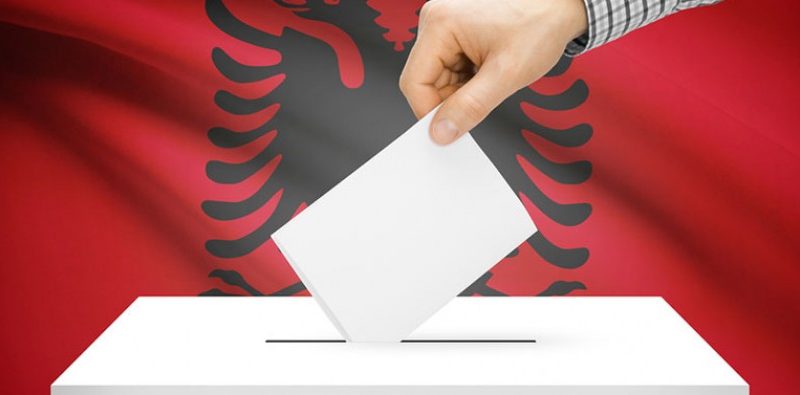
The International Institute for Middle-East and Balkan Studies (IFIMES) from Ljubljana, Slovenia, regularly analyses events in the Middle East and the Balkans. IFIMES has prepared an analysis of the current political situation in the Republic of Albania regarding the local elections, which were scheduled for June 30, 2019 and then postponed, while a new term for holding local elections is scheduled for October 13, 2019. We highlight the most important and the most interesting parts from the comprehensive analysis “Local Elections 2019: Does Edi Rama lead Albania to a Civil War?”
Local elections 2019: Does Edi Rama lead Albania to a civil war?
Local elections have been scheduled in Albania for June 30, 2019, but their holding is still uncertain, as the President of the Republic of Albania, Ilir Meta, has postponed the elections, and on June 27, 2019, determined the new date for October 13, 2019.
The opposition has been boycotting the work of the Albanian Parliament since February 2019, because it doesn’t want to be a democratic façade for a criminal and corrupted regime, and demands that Prime Minister, Edi Rama, resigns and that local elections be held together with early parliamentary elections.
In the parliamentary elections held on June 25, 2017, the election winner was the Socialist Party (PS) of Edi Rama. On the elections and electoral process, a number of objections have been made and, in the opinion of analysts and observers, it is about unfair and irregular elections that had numerous irregularities. There is a number of evidences about criminals who have helped the Socialist Party with “dirty money” to “buy” the parliamentary elections. A corruption has become a way of life in Albania.
Although Edi Rama, at the beginning of his first term as the Prime Minister, was promising and seen as a new hope in the Western Balkans, it soon turned out that Rama became the leader in crime and corruption instead of the leader in democratic processes and reforms. That initial enthusiasm has been lost and Edi Rama is increasingly getting connected to the “cannabisation of Albania” and the flourishing of organized crime and narco-business. Prime Minister Rama draws the attention of the public from these issues by turning to nationalism and nationalist rhetoric. These remarks were not coming only from the opposition, but also from the reputable international community groups and researchers as well as leading intelligence services.
“Cannabisation of Albania“
Edi Rama launched the police action to destroy the village of Lazaret, which was the centre of narco-business. Later, it turned out that Rama himself has taken over that business, and instead of reforms and development and further democratization of the state, initiated the process of “cannabisation of Albania”. Most of the cultivable land is under cannabis, and that business is in the hands of political-criminal structures. During the mandate of Edi Rama, Albania has become a criminal haven for criminals from Europe, Asia, North and South America. The mitigating circumstance for criminal structures is the visa-free regime, which Albania has with the EU member states, allowing free movement and business for criminals, and enormous profits in drug trafficking and human trafficking.
Between 2014 and 2017, Albania became the main producer and trade country for cannabis in Europe, as confirmed by Europol1 , the US State Department2 and the United Nations (UN)3 . Throughout that period, the opposition was accusing the Socialist’s government, in particular the Interior Minister, Saimir Tahiri, that he is directly involved in the drug business. Following the public announcement of official eavesdropping, on January 30, 2019, it had been revealed that dozens of Socialist MPs, mayors of Socialists and other senior officials were caught in the co-operation with organized crime in buying votes, scaring electors, counterfeiting documents and other criminal activities before and after the voting in the General Elections in 2017. There is now clear evidence of a high-level collusion between the Socialist government and criminals, which has allowed the flourishing of narcotics trafficking.
In March 2017, the Interior Minister Saimir Tahiri (2013-2017), in charge of police force and border control of the country, was replaced due to an increased pressure from the opposition boycotting work of the Parliament, which culminated in the protests in front of the headquarter of the Government of Prime Minister Edi Rama, who is brought into connection with drug trafficking. The first charges against Minister Tahiri in relation to narcotics traffickers were brought by Dritan Zagani, an Albanian police officer in the fight against narcotics. After being indicted for information leakage, the Albanian police arrested him. Zagani escaped seeking political asylum in Switzerland. In asylum he stated that his arrest was the revenge of Minister Saimir Tahiri for investigating his connection with drug traffickers.
Former Minister Tahiri at liberty, ordinary citizens in prison
In September 2017, Albanian prosecutors launched an investigation against former Interior Minister Tahiri, accusing him of helping and participating in the organization of drug trafficking. Italian prosecutors were eavesdropping the leaders of the organization, who were eventually arrested and convicted, and who in their talks, revealed that the organization financed Tahiri’s election campaign and his personal affairs. Prime Minister Rama was constantly defending Tahiri and protecting him from arrest, while openly attacking his investigators. The trial of Tahiri is expected soon4 .
About 42 policemen, including several senior regional heads, are currently under investigation for drug trafficking. There is a concern that investigations are being intentionally stopped. In sharp contrast to ordinary people, of which about 38,000 are in prison due, for example, to non-payment of electricity, utilities, and similar, Minister Tahiri and other accused police officers are at liberty and have not been arrested.
In May 2018, it was discovered that Tahiri’s successor, Interior Minister Fatmir Xhafaj, supported his brother, who lives as a fugitive from the Italian judiciary, where he was sentenced to more than seven years imprisonment for international drug trafficking. As more accusations against him and his brother appeared in the following months, Xhafaj resigned his position as Minister of Interior in October 2018.
By using money, networks, and their political connections established through cannabis trafficking, the Albanian criminal organization has expanded to trade in heroin and cocaine. Albania is now “the key gateway to heroin distribution throughout Europe”5 and the main transit corridor for cocaine smuggling.
Money laundering and penetration into the legal economy have become the main activity of the organizations of organized crime. In 2017 and again in 2018, the State Department designated Albania as a “money laundering country”, pointing out that “illegal revenue can easily be laundered and the country still has a high risk of money laundering due to a widespread corruption and weak state institutions”6 . The Council of Europe confirms that “money laundering risks are still high”, and the biggest threat comes from “criminal revenue stemming from narcotics, tax and customs fraud and corruption“7 .
Several luxury skyscrapers have been granted licenses and started construction in Tirana, the poorest capital in Europe, showing a profound penetration of illegal money from narcotics into legal economy in Albania.
According to the State Department data, the production of marijuana in Albania increased by five times in only one year.
Transitional government should prepare the elections
In a tense atmosphere in Albania, which is lagging behind in the EU accession process, the issue of the date for the start of EU negotiations remains open. In countering leads France and its president, Emmanuel Macron, who opposes giving the date for the start of EU negotiations, with support from German Chancellor Angela Merkel. The Netherlands has officially issued the decision of its parliament to launch the procedure for abolishing the visa-free regime that Albania has with the EU member states. It is primarily important to normalize the political scene and relax relations within the state. Regular mass protests involving 200,000 citizens are a clear sign of distrust in Edi Rama’s Government and that he has lost support among the citizens.
The rule of law and the (non) functioning of the legal state are the “cancer wound” of the Albanian state. In solving this issue, the experience of the Republic of North Macedonia can be used, which has found the exit from the then political crisis of 2015/16 in consensual support for the formation of the Special Public Prosecutor’s Office (SPO), through the establishment of a technical government that created the conditions for holding early parliamentary elections. Also, the current Albanian Chief Prosecutor was elected unlawfully in the Parliament by a simple majority.
Thereby, an eventual report by Reinhard Priebe, so-called The Priebe Commission, which would prepare an overview of the situation in the judiciary, can play an important role in Albania. As a precedent in Prieb’s Report, for the Republic of North Macedonia has been given the opportunity to prosecute judges and prosecutors, which is a novelty and revolutionary progress in the legal practice itself. Albania is in a similar situation, because some judges and prosecutors, because of illegal work, connection to political criminal structures, are likely to be investigated and prosecuted.
The findings of the Priebe Commission would refer to a package of amendments to the Law on Courts and the Law on Judicial Council to fully reflect the already issued and upcoming recommendations of the Venice Commission of the Council of Europe and legal experts of the EU. It is necessary to rebuild confidence in the judicial institutions, in particular by taking specific measures to increase transparency and behavioural changes. Furthermore, the inspection of the Automated Court Case Management Information System (ACCMIS) should provide concrete results through investigations conducted by the Public Prosecutor and the audit carried out by the Trial Chamber. The Trial Chamber and the Council of Public Prosecutors should address the recommendations of a group of experts in the rule of law, particularly in the defence of the independence of the judiciary and in ensuring its professionalism and responsibility.
There are no conditions for holding fair and honest local elections in Albania on June 30, 2019
Analysts believe that the conditions have not been fulfilled for holding fair, honest and transparent local elections in the ambience of strong tensions in the society, which could even escalate into a civil war. Therefore, it would be dangerous and counterproductive to hold local elections on June 30, 2019. That is why it is necessary to reach a consensual agreement between the actual Prime Minister and Socialist Party (SP) President, Edi Rama, and the opposition Democratic Party (DP) leader, Lulzim Basha, that is to move and hold the elections together with the early parliamentary elections, when the conditions for that are fulfilled. In reaching an agreement between the government and the opposition, it is necessary to strengthen the EU mediation and primarily the US mediation.
The essence of the agreement between the government and the opposition is to allocate ministerial positions to the opposition in the “transitional” government, so that the opposition has an insight and control over the elections and the electoral process. Thus, the opposition would receive a “technical” vice-president of the government and six ministers of which the most important would be the interior minister, and, for instance, the ministers of justice, finance, health, education and social policy. Rama should leave the key departments to the opposition. In addition to the ministerial positions, the opposition would get its representatives on the leading positions of the five important state agencies and administrations – e.g. for energy distribution, cadastre, property legalization and urban planning, rural development and prison administration.
Disputable printing of ballots?
The printing of ballots for illegal local elections in Albania on June 30, 2019, was carried out in Slovenia. However, there is a question as to how much the ballot papers have been printed and whether their number is much larger than the number of voters on the voter list?
It is also not clear who supervised the printing of ballots, so transparency and publicity of the entire electoral process are very questionable.
Moreover, it is not clear whether the ballots were printed within the envisaged deadline or that deadline has been extended.
Thus, the entire electoral process of illegal local elections is abundant with non-transparency, irregularities and many doubts.
Albanian opposition plays a state guarding role
Since the fall of Enver Hoxha‘s communist regime in 1991, retrograde forces were defeated. By coming to power of Edi Rama and his Socialist Party (SP), which has roots in the former Communist Party of Albania, that forces have come to the fore again. This could also be observed in the Edi Rama’s relationship to Donald Trump during the election campaign in the United States, when he unambiguously supported Hillary Clinton, and not Trump. In a tense situation, the opposition plays a state guarding role, hence Albania is in the first place a positive example of such opposition in the Western Balkans region. Rama will, in order to stay in power, try to transfer the crisis from Albania not only to the region, but also to the wider European area.
The President of the Republic of Albania, Ilir Meta, demonstrated the key role with postponing the local elections from June 30, 2019, to October 13, 2019, that is a few days before the EU summit, which will be held on October 17 and 18, 2019, and which should assign a start date for negotiations with the EU for North Macedonia and Albania. With his actions, President Ilir Meta saved the country from and/or delayed the civil war, which was threatening Albania. Albania was already on the verge of a civil war in 1991 and 1997. The behaviour of Edi Rama in many respects resembles the behaviour of former Serbian President Slobodan Milosevic, who among other things organized the elections despite the boycott of the opposition and ignored mass protests, carried out a large-state project and continued persecuting journalists instead of criminals. Hence, do actions of Prime Minister Edi Rama lead Albania to a civil war?
Analysts believe that a very important fact is that the Congress of Regional and Local Authorities of the Council of Europe will not send an observation mission to supervise the illegal local elections in Albania on June 30, 2019.
The key question for Edi Rama is, why is Albania the poorest country in Europe when it has outstanding potential for development? In the resolution of the crisis in Albania, the EU and NATO have failed, so a stronger and more concrete engagement of the United States is needed in order to achieve a peaceful transition of the government. The crisis in Albania is exposing the corruption network of Edi Rama, which includes some senior officials from the EU and from other countries.
Analysts believe that after the early parliamentary elections, the new Albanian government should work on restoration of the negative image of Albania and focus on obtaining a candidate status for the EU and accelerated fulfilling of the conditions for the EU membership. There is a need to intensify the fight against organized crime and corruption and to increase legal standards in order to attract foreign and domestic investors rather than criticizing international factors, endangering media freedom, prosecution and lawsuits against domestic and foreign journalists and turning to nationalism and developing narco-business and crime, which directly jeopardizes the budget stability, also of other countries, regional peace and stability. Of particularly importance is that the leading intelligence services follow the flow of money and assets of the regime of Edi Rama.
Ljubljana, June 30, 2019
Link: http://www.ifimes.org/en/9680 (Local Elections 2019: Does Edi Rama lead Albania to a Civil War?) [1] Serious and Organised Crime Threat Assessment (SOCTA), European Union (Europol), 2018.
[2] International Narcotics Control Strategy Report, US State Department, March 2018.
[3] World Drug Report, United Nations Drug Office, 2017, 2018.
[4] “Albanian ex-minister to face drug trafficking charges”, Reuters online, May 12, 2018.
[5]International Narcotics Control Report 2018, US State Department, March 2018.
[6] International Narcotics Control Report 2018, US State Department, March 2018.
[7] Anti-Money Laundering and Counter-terrorist Financing Measures – Albania Evaluation Report, Council of Europe, July 2018. |