








By Genc Mlloja
Senior Diplomatic Editor
As the strategist of the Western Balkans’ Berlin process the German Chancellor, Angela Merkel, who has begun the end of her long political career, will be the host of the 2021 Summit which will be held in Berlin on July 5, there is symbolism and query in this act. First, it will honor the charismatic launcher of the initiative towards a region aspiring to join the European Union, but still ‘boiling’ due to many conflicts, some at the point of turning into armed confrontation, and secondly, it will give a clear answer to the controversial dilemma if Germany is going to continue to be the ‘patron’ of the Initiative.
Actually, it is not the first time that the issue related to the future of the Berlin Process and the German leadership of it has been questioned. Hints have circulated from time to time that it could be transferred to the hands of Brussels and the European Commission, and initiative’s history shows that such suppositions pop up becoming intensive sometimes especially on the eve of occasions of major activities held in this frame.
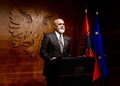
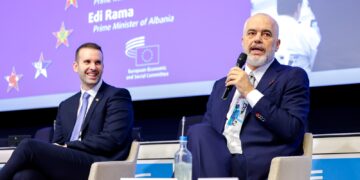
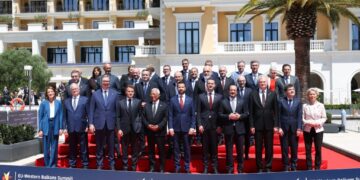
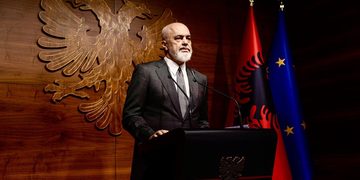
Such an occasion has lastly turned to be Tirana where the latest public formula was made by Albanian Prime Minister Edi Rama, who asked nothing more nothing less but the change of the format of the Berlin Process. Rama unveiled that scenario during the proceedings of the Summit of the Western Balkan Leaders, which was held in Tirana on June 10 this year. As there has not been much media publicity on that and no public comments were made by the other regional leaders, it would be proper to publish what he said as quoted by local media on the day of the event (June 10, 2021).
“The Berlin Process has been the start and now we are in the conditions when we are mastering the process, and the Berlin Process itself can pass into the hands of the EC under the leadership of the President of the Commission with the desire and ambition that the July 5 meeting be the last one to be held in the current format. So next year it must be held under the auspices of the Commission with the presence of the Balkan and EU countries. This is our ambition, it is a wish that we fully share with the Commissioner (Oliver Varhelyi),” said PM Rama.
Even in the Poznan Summit of the Berlin Process in July 2019 there was much hearsay according to which that event would mark the end of the initiative, and having the opportunity to attend the preparatory stage such an idea intrigued me to ask relevant officials on the issue. What some accepted to say was that there would be a novelty without elaborating, which as a matter of fact, happened. The Poznan Summit decided that the following consecutive Summit (2020) would be co-chaired by two countries, namely Bulgaria, an EU member country, and North Macedonia, an EU aspirant country. In spite of the pandemic situation the Summit was held successfully and among others its peculiarity was that two neighboring countries hosted it with the main event being held in Sofia for the first time in the course of the initiative.
An initiative promoting EU enlargement …
The Berlin Process as a diplomatic initiative linked to the future enlargement of the European Union towards the Western Balkans has been marked by the mini-intergovernmentalism, meaning it has involved the Western Balkan countries in addition to Germany, France, Austria, Italy, Slovenia and Croatia, as well as the European Commission and international financial institutions.
It started as an initiative launched by Chancellor Angela Merkel with the 2014 Berlin Conference, which was followed by the 2015 Vienna Summit, the 2016 Paris Summit, the 2017 Trieste Summit, the 2018 London Summit, the 2019 Poznan Summit and the 2020 Bulgaria and North Macedonia Summit.
It’s a highlight that that there is no European leader of the big powers like Chancellor Merkel who has launched initiatives aimed at accelerating reforms and bringing Western Balkan countries closer to the EU on several occasions during the more than 15 years of her mandate.
Turning back in time it can be noted that Merkel became significantly more involved in the Western Balkans region during 2010 at a time when she got involved in a strong support for Croatia’s EU membership. But Germany’s interest became higher when some developments like visa liberalization process and a series of applications for EU membership submitted by Albania, Montenegro, and Serbia, were a breakthrough.
Apparently, the wish of the Western Balkan people to get closer to the EU and the efforts of the obstructionist forces that tried to keep the region far from it have been the prompt for Merkel to frame and put in motion the so-called Berlin Process in the summer of 2014. One of the major targets of the platform of the initiative was to narrow the growing development gap between the Western Balkans and the EU. The prolonged process towards EU accession has served as a means for maintaining high-level contacts and launching infrastructure projects in the Western Balkans.
But, probably, the most important intervention of Merkel in the region, which will hardly be forgotten, happened at the end of the summer of 2018, when she publicly opposed and helped stop the idea of drawing new borders along ethnic lines in the Western Balkans. As it is already known the idea was advocated by the president of Serbia, Aleksandar Vucic and the then president of Kosovo, Hashim Thaci, as well as Albania’s Prime Minister Edi Rama, and they found support for it in the form of the administration of former US President Donald Trump and the former EU High Representative for Foreign Affairs, Federica Mogherini.
In a nutshell a balance sheet is unveiled by Foreign Minister Heiko Maas who has stressed that, since the beginning of the Berlin Process in 2014, the countries of the Western Balkans have achieved a lot, including the establishment of the Regional Office for Youth Cooperation (RYCO), so-called “green lanes”, thanks to which goods can cross borders despite the COVID restrictions and abolishing of roaming charges in the region, which will come into force in July.
‘Road to Berlin’!
It might be heartening for the people of the region that many activities organized before the Berlin Summit have dealt with sensitive issues concerning the Western Balkans which might seem as an indication that Germany’s leadership in the Process will go on not leaving in the middle such a crucial project at this delicate time for the region.
Foreign Minister Heiko Maas of Germany as host and initiator of the process said at a virtual meeting of the Ministers of Foreign Affairs of the Berlin Process held on June 7 that the joint efforts of the region and the EU need to be re-doubled in three areas: EU accession process, regional cooperation and reconciliation, as well as progress towards the Berlin Process Summit in July.
“I would like to strongly encourage you to use all your energy to make this summit a success for the people of the region. In particular, the agreement on freedom of travel with ID cards would strengthen trade and travel. In the same way, the common visa area and the recognition of academic and professional qualifications would make life easier for many citizens,” he said admitting that if it is looked back at the past year, it can also be seen that there has been little progress in other areas. “And I can fully understand the disappointment this is causing in the region,” said Maas. He stressed that, in the context of their EU integration process, which Germany unrestrictedly supports, the Western Balkans need to strengthen the rule of law, fight corruption and organized crime, protect media freedom and create spaces in which democracy can flourish. On the other hand, European Union should also stand by its commitments, Maas said, adding that the accession negotiations with North Macedonia and Albania should begin, as well as that the EU should finally deliver on the issue of visa liberalization for Kosovo. “Finally, let me highlight the role of civil society in promoting reconciliation and dialogue,” said Maas, adding that the recommendations the CSOs came up with during last week’s Civil Society Forum would be presented during the Foreign Ministers meeting.
As a matter of fact the first part of the Civil Society Forum took place on July 1-2 under the motto ‘Road to Berlin’. The agenda of the Civil Society and Think Tank Forum of the 2021 Berlin Process focused on the discussion on policy recommendations drafted by the civil society organizations and think tanks that participated in the two-day event.
State Secretary at the German Foreign Office Miguel Berger, representing this year’s organizer of the Summit, stated that the Civil Society Forum was much more than a side event – it was a key pillar of the Berlin Process, conclusions of which will be discussed by the representatives of the governments during the Summit. Facilitators of the working groups for democracy, media freedom, and the future of Europe then proceeded to present their conclusions, said EWB portal.
Milena Lazarevic from the European Policy Centre in Belgrade said that the EU should avoid glorification of national elites when it is not warranted. “Bilateral issues blocking the enlargement should be reframed as the issues of the EU policy,” said Lazarevic, adding that the EU should offer phased membership rather than enforcing it. Program Director of the Center for Contemporary Politics Nikola Burazer stressed that transparency of ownership and financing, the role of the state, and the lack of respect to legal provisions were the most important issues for the functioning of the media in the Western Balkans. “EU should be more vocal about media freedom in the WB, it should design new instruments to monitor media freedom, such as senior expert groups and special reports on media,” he said.
The next group of CSOs, represented by Marko Milosavljevic of the Youth Initiative for Human Rights from Serbia and his counterpart Branka Vierda from Croatia, tackled the issues of transitional justice, also highlighting, among other things, the importance of media freedom and EU conditionality. According to them, the CSOs should work hard to develop new approaches in order to contribute to sustainable peace in the region. One way to achieve this is multidisciplinary cooperation between different types of NGOs strong cooperation between NGOs should be also extended with academic institutions.
Three working groups tackled the issues of the environment, with Executive Director of the European Fund for the Balkans Aleksandra Tomanic stressing the seriousness of air pollution in the region. “We are facing tremendous air pollution. The knowledge outside institutions is being framed as an attack on the government. EU needs to include WB in all its future climate activities, the region really needs Union’s help,” she said, adding that awareness-raising should be one of the priorities in the future.
In the area of infrastructure, the region faces state capture, the ineptitude of public administration and the increased presence of third actors, said Ardian Hackaj from the Cooperation and Development Institute of Albania. He proposed that the governments should have obligatory consultations with CSOs on infrastructure laws and that integrity compliance should be a conditionality for EU infrastructure support.
Also, in the format of the Berlin Process, the interior ministers, health ministers, and economics ministers will meet in the coming weeks – all in advance for the virtual summit on 5 July.
A guess on after Merkel era…
Taking into consideration the serious preparations being made for the Berlin Summit like for no other event of this nature, which among others will review the achievements but also stagnations and unveil the new perspectives, it is difficult to say how Angela Merkel’s departure from the political scene will affect the Western Balkans and the political processes taking place in this region. But on top of all, it is hard to predict the impact on that process if Germany doesn’t keep control of it. Likewise, it’s a guess how the process will proceed in case of a new format as suggested by the Albanian PM.
Asked by Albanian Daily News on the future of the Berlin Process Ms. Sonja Biserko, Founder and President of Helsinki Committee for Human Rights in Serbia, had the following opinion: “The Berlin Process was initiated by Angela Markel exactly because the European Commission had very weak performance in the Balkans. Unfortunately, Berlin Process was not really realized. If the Commission takes it over, it’s just going to be one more way they dominate Western engagement. The EC never liked the Berlin Process. It is really about the liberals and iliberals within the EU. Liberals like Orban support the Balkans because their membership would make them the dominant group within the EU. In this new international context when we face confrontation of these two concepts it is important to press the Balkans to follow the western democratic values. It is the only way to keep them away from other influences. I hope that Germany keeps control of that process.”
But Albanian analyst Armand Plaka, who is specialized on German and EU affairs, thinks that Rama’s suggestion made in the presence of Commissioner Varhelyi might have got the green light by Brussels earlier. According to him, one of the reasons why a reshaping of it could happen is the fact that the Berlin Process was almost a private initiative supported strongly by Germany and Merkel’s leadership, which ends in September, and there are doubts that it might not have the strong engagement like it has when this undertaking called after her was launched. According to him, Brussels seems to be more focused directly on this initiative as it was shown in the Tirana Summit and the pledge of 30 billion euros investments in road and railway networks in the beneficial countries. Apparently, as he thinks, Brussels wants to put the process along the tracks of a more strategic plan as important and priority part of the EU agenda. “By making this, the EU leaders give the right message to the states and nations of the region and also send a signal to third parties (the US, Russia, China) that this region is already exclusive zone of the EU.”
In his view the process has also had stagnations causing even disbelief and hesitations among some circles. “But the Tirana Summit and the next one of July 5 in Berlin are seemingly the real signals and effects on the future of the Process,” said Plaka.
However, the general view is that the political legacy sealed by Angela Merkel in the Western Balkans is hard to be overshadowed by anyone but, on the other hand, it seems hard to believe that Germany, its new ruling leadership, will give up a Process whose foundations were laid by that country in line with the interests of all the regional countries and Berlin’s own interest to take to the end the European integration of all the region. If there has been a unanimous stance of the Western Balkans countries in support of any initiative in the region the Berlin Process has been exceptional and the reason behind that enthusiasm has been the strong ambitious target of the initiative to bring the region as close as possible to the EU. /ADN