
















• SHQIPËRI
  • KOSOVË
  • MAQEDONIA E VERIUT
  • MALI I ZI
  • Revista në PDF
9 June, 2026
  • Home
  • OP/ED

    Pierre Nora and the institution of memory we lack in Eastern Europe

    The Blueprint of a Diplomatic Debacle: Analyzing Germany’s Historic UNSC Loss

    Cyber Attribution, Corruption, and the False-Flag Question in Albania’s 2022 Alleged Iranian Cyberattack

    Between Russia, Iran and Europe: Azerbaijan as a balancing power in the South Caucasus

    The Zero-Tariff Gate: Sovereignty as a Service in the Sino-African Corridor

    Albania vs. the Sea/ Marginal Notes on A. Leka’s Novel The Hidden Side of the Albanian Socialist Garden

    May 9 and the long shadow of a Letter: Is Europe still Schuman’s Project?

    The Arbnesh of Zadar: A living memory of Albanian identity on the Adriatic coast

    Science Diplomacy and Academic Freedom: A strategic nexus for contemporary diplomacy

  • Interview

    Exclusive Interview with Oleksandr Tyshchenko: A 40-Year Legacy of Chernobyl, Nuclear Risks, and Global Responsibility

    INTERVIEW: ZLATKO KRAMARIĆ – THOUGHTS ON THE OLD CONTINENT

    EXCLUSIVE / Ukrainian Ambassador to Albania, Volodymyr Shkurov: “Ukraine wants peace, but not at the expense of its freedom and independence”

    EXCLUSIVE| Ambassador Tayyar Kagan Atay: Türkiye and Albania, a Strategic Partnership Rooted in Shared Heritage and a Common Vision for the Future

    “Diplomacy, Not War”: Palestinian Ambassador to Albania Calls for Justice, Peace, and Global Action for Gaza

    Exclusive: “Even After Tito – Tito”/ Ambassador Zlatko Kramarić on Authoritarian Legacies and Democracy’s Future in the Balkans

    The Conclusion of the Diplomatic Mission / Ambassador Dancho Markovski: Strengthening Albania-North Macedonia Relations for a Shared European Future

    A Century of Diplomatic Relations Between Albania and Russia: Exclusive Interview with the Russian Ambassador to Albania, H.E. Alexey Zaytsev

    Exclusive/ The chairman of the Freedom Party, Ilir Meta: “The will of the citizens will triumph in Albania, as it did in North Macedonia”

  • Realpolitik

    IBAR? ”Sufficiently! Much ado about nothing! Shart contrasts in Beijing! Where is the exit?!

    Neither peace nor war! Peace with bombs?! IBAR in autumn?! Not another Hormuz in Taivan! 

    IBAR – a springing board or an obstacle? Can we catch the EU Negotiation train 2027? When the dress makes the news!  EU electoral April  ends in a draw 1:1!  

    The European Parliament building in Strasbourg, France with flags waving calmly celebrating peace of the Europe. July 12, 2020.

    EU 2027 or 2037! Even half membership failed! No exit strategy!     

    What next?

    “With diplomatic velvet“! Major question marks! In Washington yes, but  in the White House NO! A strange dinner in Brussels!

    From a great ‘apple of disaccord’ to a  point of  cooperation! A bad start! The strange absence in Davos!

    5 lessons from the American 3 January! Don’t count the chicken before they are hatched! Will NATO freeze in Greenland? Wrong diplomatic messages!

    German Chancellor Friedrich Merz, European Commission President Ursula von der Leyen, Ukraine's President Volodymyr Zelenskiy, U.S. Special Envoy Steve Witkoff and Jared Kushner, son-in-law of U.S. President Donald Trump line up for a family photo opportunity at the Chancellery in Berlin, Germany, December 15, 2025.    REUTERS/Lisi Niesner/Pool

    A Strategy that could change the world! Europe in Berlin! Why an historic compromise? Only charm diplomacy in Athens!

  • Current Events

    Rama alleges ‘hybrid war’ behind protests against Kushner-linked coastal development

    BELGRADE, SERBIA - JUNE 18. 2020: Russian and Serbian flags on display during Russian Foreign Minister Sergei Lavrov's visit to the Liberators of Belgrade Memorial. Valery Sharifulin/TASS,Image: 533095429, License: Rights-managed, Restrictions: UWAGA! Zdjęcia zawierają oryginalny opis dostawcy (ITAR-TASS). Szczególnie w związku z agresją Rosji na Ukrainę mogą zawierać przekaz niezgodny z faktami. Zweryfikuj go przed publikacją, Model Release: no, Credit line: Valery Sharifulin / TASS / Forum

    Balkan Maskirovka: Why Moscow’s “Distancing” Is Only an Operation for the Survival of Vučić’s Regime

    Serbia – China 2026: Technological partnership, geopolitical positioning and a new phase of the Chinese presence in the Western Balkans

    The Digital Protectorate: How the EU AI Act Codified Silicon Valley’s Monopoly

    The 28th MFC Annual Conference in Durrës / Sulaj: Microfinance remains a key instrument for financial inclusion

    Serbia at the Crossroads of EU Integration and Geopolitical Balancing: IFIMES Analysis

    Tirana – €20 Million EU–Banking Agreement Boosts Albanian SMEs

    The Myth of Independence: How Chinese Efficiency is Rewriting the Constitution of Modern Geopolitics!

    Europe Yesterday and Today: Why 9 May Still Matters

  • Top News

    Rama alleges ‘hybrid war’ behind protests against Kushner-linked coastal development

    No End in Sight: Trump, Netanyahu and the Expanding Middle East War

    Tirana – €20 Million EU–Banking Agreement Boosts Albanian SMEs

    “EU4Municipalities II” Project, a Strategic Investment for Strengthening Municipalities and Accelerating Albania’s Path towards the EU

    Albania, Italy deepen defence ties with naval shipbuilding deal

    U.S. Embassy: Iran-Linked Groups May Target Americans and Iranian Opposition in Albania

    The Council of Albanian Ambassadors disappointed with the voting of the draft law on the foreign service in the parliamentary committees.

    Prime Minister Edi Rama Addresses Israel’s Knesset in Historic Special Session

    Kazakhstan’s Strategic Reform Agenda: Stability, Modern Governance, and Responsible Diplomacy

  • YOUR VOICE
  • Shqip
No Result
View All Result
Argumentum
  • Home
  • OP/ED

    Pierre Nora and the institution of memory we lack in Eastern Europe

    The Blueprint of a Diplomatic Debacle: Analyzing Germany’s Historic UNSC Loss

    Cyber Attribution, Corruption, and the False-Flag Question in Albania’s 2022 Alleged Iranian Cyberattack

    Between Russia, Iran and Europe: Azerbaijan as a balancing power in the South Caucasus

    The Zero-Tariff Gate: Sovereignty as a Service in the Sino-African Corridor

    Albania vs. the Sea/ Marginal Notes on A. Leka’s Novel The Hidden Side of the Albanian Socialist Garden

    May 9 and the long shadow of a Letter: Is Europe still Schuman’s Project?

    The Arbnesh of Zadar: A living memory of Albanian identity on the Adriatic coast

    Science Diplomacy and Academic Freedom: A strategic nexus for contemporary diplomacy

  • Interview

    Exclusive Interview with Oleksandr Tyshchenko: A 40-Year Legacy of Chernobyl, Nuclear Risks, and Global Responsibility

    INTERVIEW: ZLATKO KRAMARIĆ – THOUGHTS ON THE OLD CONTINENT

    EXCLUSIVE / Ukrainian Ambassador to Albania, Volodymyr Shkurov: “Ukraine wants peace, but not at the expense of its freedom and independence”

    EXCLUSIVE| Ambassador Tayyar Kagan Atay: Türkiye and Albania, a Strategic Partnership Rooted in Shared Heritage and a Common Vision for the Future

    “Diplomacy, Not War”: Palestinian Ambassador to Albania Calls for Justice, Peace, and Global Action for Gaza

    Exclusive: “Even After Tito – Tito”/ Ambassador Zlatko Kramarić on Authoritarian Legacies and Democracy’s Future in the Balkans

    The Conclusion of the Diplomatic Mission / Ambassador Dancho Markovski: Strengthening Albania-North Macedonia Relations for a Shared European Future

    A Century of Diplomatic Relations Between Albania and Russia: Exclusive Interview with the Russian Ambassador to Albania, H.E. Alexey Zaytsev

    Exclusive/ The chairman of the Freedom Party, Ilir Meta: “The will of the citizens will triumph in Albania, as it did in North Macedonia”

  • Realpolitik

    IBAR? ”Sufficiently! Much ado about nothing! Shart contrasts in Beijing! Where is the exit?!

    Neither peace nor war! Peace with bombs?! IBAR in autumn?! Not another Hormuz in Taivan! 

    IBAR – a springing board or an obstacle? Can we catch the EU Negotiation train 2027? When the dress makes the news!  EU electoral April  ends in a draw 1:1!  

    The European Parliament building in Strasbourg, France with flags waving calmly celebrating peace of the Europe. July 12, 2020.

    EU 2027 or 2037! Even half membership failed! No exit strategy!     

    What next?

    “With diplomatic velvet“! Major question marks! In Washington yes, but  in the White House NO! A strange dinner in Brussels!

    From a great ‘apple of disaccord’ to a  point of  cooperation! A bad start! The strange absence in Davos!

    5 lessons from the American 3 January! Don’t count the chicken before they are hatched! Will NATO freeze in Greenland? Wrong diplomatic messages!

    German Chancellor Friedrich Merz, European Commission President Ursula von der Leyen, Ukraine's President Volodymyr Zelenskiy, U.S. Special Envoy Steve Witkoff and Jared Kushner, son-in-law of U.S. President Donald Trump line up for a family photo opportunity at the Chancellery in Berlin, Germany, December 15, 2025.    REUTERS/Lisi Niesner/Pool

    A Strategy that could change the world! Europe in Berlin! Why an historic compromise? Only charm diplomacy in Athens!

  • Current Events

    Rama alleges ‘hybrid war’ behind protests against Kushner-linked coastal development

    BELGRADE, SERBIA - JUNE 18. 2020: Russian and Serbian flags on display during Russian Foreign Minister Sergei Lavrov's visit to the Liberators of Belgrade Memorial. Valery Sharifulin/TASS,Image: 533095429, License: Rights-managed, Restrictions: UWAGA! Zdjęcia zawierają oryginalny opis dostawcy (ITAR-TASS). Szczególnie w związku z agresją Rosji na Ukrainę mogą zawierać przekaz niezgodny z faktami. Zweryfikuj go przed publikacją, Model Release: no, Credit line: Valery Sharifulin / TASS / Forum

    Balkan Maskirovka: Why Moscow’s “Distancing” Is Only an Operation for the Survival of Vučić’s Regime

    Serbia – China 2026: Technological partnership, geopolitical positioning and a new phase of the Chinese presence in the Western Balkans

    The Digital Protectorate: How the EU AI Act Codified Silicon Valley’s Monopoly

    The 28th MFC Annual Conference in Durrës / Sulaj: Microfinance remains a key instrument for financial inclusion

    Serbia at the Crossroads of EU Integration and Geopolitical Balancing: IFIMES Analysis

    Tirana – €20 Million EU–Banking Agreement Boosts Albanian SMEs

    The Myth of Independence: How Chinese Efficiency is Rewriting the Constitution of Modern Geopolitics!

    Europe Yesterday and Today: Why 9 May Still Matters

  • Top News

    Rama alleges ‘hybrid war’ behind protests against Kushner-linked coastal development

    No End in Sight: Trump, Netanyahu and the Expanding Middle East War

    Tirana – €20 Million EU–Banking Agreement Boosts Albanian SMEs

    “EU4Municipalities II” Project, a Strategic Investment for Strengthening Municipalities and Accelerating Albania’s Path towards the EU

    Albania, Italy deepen defence ties with naval shipbuilding deal

    U.S. Embassy: Iran-Linked Groups May Target Americans and Iranian Opposition in Albania

    The Council of Albanian Ambassadors disappointed with the voting of the draft law on the foreign service in the parliamentary committees.

    Prime Minister Edi Rama Addresses Israel’s Knesset in Historic Special Session

    Kazakhstan’s Strategic Reform Agenda: Stability, Modern Governance, and Responsible Diplomacy

  • YOUR VOICE
  • Shqip
No Result
View All Result
Argumentum
No Result
View All Result
Home ENGLISH

Why Turkey is sending troops to Libya

6 February, 2020
in ENGLISH, English OP/ED
A A
Share on FacebookShare on Twitter

By Giorgio Cafiero

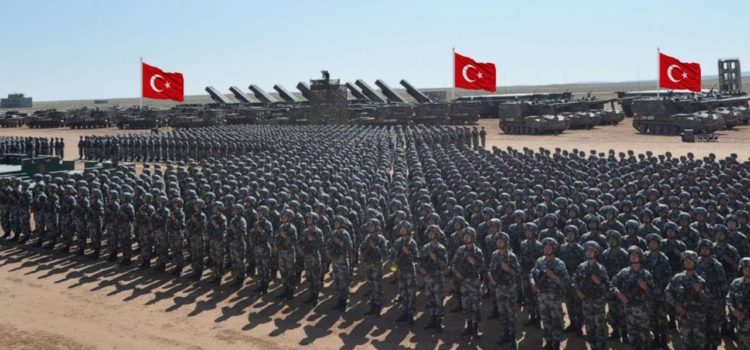
Many analysts and Arab statesmen believe that Ankara is pursuing a “neo-Ottoman” agenda in the wider Islamic world. Although it is unrealistic to imagine the Turkish Republic literally expanding its borders to incorporate any sizeable portion of foreign territory that the Ottoman state once governed, there is no denying that the leadership in Ankara sees land and cities that the Ottoman Empire once governed as areas where Turkey has natural influence to assert. The current struggle for Libya’s Tripolitania is increasingly relevant to this point.

With Libya bogged down in a nightmarish civil war that erupted in May 2014, Ankara is becoming increasingly involved in the conflict and proving that Turkey can make a significant difference in its outcome. Today, Libya’s U.N.-recognized Government of National Accord (GNA) struggles to stand on its own feet as General Khalifa Haftar’s self-styled Libyan National Army (LNA) continues its westward offensive, making Turkey the one power that is truly helping the GNA survive.

On December 19, the GNA issued an official statement confirming the cabinet’s unanimous approval of a memorandum of understanding (MoU), which Tripoli and Ankara signed in late November, that seeks to enhance bilateral military and security cooperation. Also, another accord both governments signed in November established a maritime boundary between Turkey and Libya. Late last year, Turkish President Recep Tayyip Erdogan began vowing to step up Ankara’s military support for the GNA.

On December 21, Turkey’s parliament approved the security and military MoU with Libya’s U.N.-respected government. Five days later, Erdogan announced in a speech delivered in Ankara that he will present his country’s legislators with a bill on deployment legislation. On January 2, by a vote of 325-184, Turkey’s parliament passed a bill approving the deployment of Turkish troops to Libya in defense of the GNA.

Against the backdrop of the LNA receiving strong support from Egypt, France, the United Arab Emirates (UAE) — plus mercenaries from Chad and Sudan, along with Russia’s Wagner Group — Turkey is essentially the only state providing substantial military backing to the GNA. Ankara’s view is that by coming to the GNA’s defense during this period, Turkey can prevent Haftar’s LNA forces from usurping control of Tripoli while also putting sufficient pressure on the eastern commander so that his side comes to the negotiating table. Haftar, meanwhile, would like to achieve a military victory that enables his side to avoid the need to strike a political settlement with the GNA.

Indeed, while the international community recognizes the GNA as Libya’s one legitimate government, the lack of hard-power support for militias fighting in defense of the Tripoli-based administration has served the interests of Haftar, who has successfully acquired significant backing from major foreign powers. Such external support has convinced the renegade general that a military victory is within reach.

Turkey’s Interests in Countering Haftar

Doubtless, the Turkish troop deployment to Libya is set to significantly escalate Ankara’s tensions with Cairo, Abu Dhabi, and other regional capitals along with Moscow. On December 30, French President Emmanuel Macron’s office put out a statement calling for “greatest restraint” as the world waits to see what actions the Turks take vis-à-vis Libya. One day later, the Arab League held a meeting in Cairo and passed a resolution emphasizing the need to stand against foreign (meaning Turkish) intervention in Libya’s crisis.

From Ankara’s perspective, the LNA taking over Tripoli would mark a painful setback with the Muslim Brotherhood suffering another significant loss in the region and Turkey’s regional foes — chiefly Egypt and the UAE — achieving major geopolitical gains in a conflict where Turkey has its own vested interests. Put simply, for Erdogan’s government, Tripoli is a red line.

Beyond geopolitical competition with Turkey’s rivals, other factors from dealing with refugee issues in the Mediterranean Sea to energy interests will continue to drive Ankara’s agendas in relation to Libya. Without question, when it comes to Turkish actions in Libya, energy- and commercial-related variables in the equation cannot be dismissed as insignificant.

Turkey has much at stake in Libya when it comes to unresolved disputes with Greece and Cyprus over questions about sharing the body of water’s gas wealth. With Turkey dependent on imports for nearly all the country’s energy requirements, the outcome of power struggles that are heavily shaped by energy competition among Mediterranean states will continue to concern Ankara. There are also billions in business deals that Turkey can benefit from if/when the conflict is resolved on terms friendly to Ankara, meaning that if Turkey “loses Libya,” such commercial opportunities will disappear.

Turkey realizes that the GNA is receiving virtually no hard-power support from any other country while Libya’s weak government in Tripoli is particularly vulnerable to Haftar’s offensive. Therefore, Turkey is in a strong position to secure its position as the power that it indispensable to the GNA. Naturally, this gives Ankara higher stakes in doing what is necessary to ensure the survival of Libya’s U.N.-respected administration.

Bloomberg reported last week that Ankara is prepared to send Turkish-sponsored Syrian forces, which until now have been fighting the Assad regime in northern Syria, to combat the LNA in Libya. The article said that the GNA “had initially resisted the idea of such a deployment but eventually accepted it as Haftar’s forces began to advance on Tripoli” according to an anonymous Libyan official. Naturally, such a development only contributes to growing fears in Abu Dhabi and Cairo about Ankara’s sponsorship of non-state actors which the Emirati and Egyptian governments consider extremists.

Dangerous Game of Power Politics

The Libyan conflict’s end appears nowhere in sight. As 2020 begins, the Turkish leadership will have to make major decisions about its plans, tactics, and strategies for Libya as Ankara further involves itself in this multifaceted civil war. As Turkey moves forward with plans to decisively shape the outcome of Libya’s crisis, it will be important to monitor how the Emiratis, Egyptians, and Saudis respond as the bifurcated Maghrebi country becomes an increasingly important battleground in what they perceive to be a pan-Arab struggle against “neo-Ottomanism.”

At the same time, with Russia aligning itself more closely with the UAE, Egypt, and Saudi Arabia in supporting Haftar’s side, Turkey’s bold moves will add further complications to Turkish-Russian relations. Against the backdrop of the dire crisis in Idlib, which is testing the Astana Process’s sustainability, the extent to which Ankara and Moscow will be able to find common ground vis-à-vis Libya will heavily impact bilateral affairs between Turkey and Russia at a sensitive time. Of course the U.S. and Russia are the main countries that could likely contain Turkish actions in Libya, and if either attempts to do so in any meaningful or decisive way, Turkey will almost inevitably continue trying to capitalize on Washington and Moscow’s geopolitical competition in the Middle East and Africa to suit Ankara’s own interests and agendas.

Ljubljana/Doha/Tripolis, 6 February 2020
Related Posts

ENGLISH

The View from Tirana: Navigating the Intra-European Split for Digital Sovereignty

8 June, 2026
Current Events

Rama alleges ‘hybrid war’ behind protests against Kushner-linked coastal development

5 June, 2026
ENGLISH

Pierre Nora and the institution of memory we lack in Eastern Europe

5 June, 2026

Follow US

Subscribe

Receive Argumentum Magazine by Email

Last Posts

The View from Tirana: Navigating the Intra-European Split for Digital Sovereignty

8 June, 2026

Rama alleges ‘hybrid war’ behind protests against Kushner-linked coastal development

5 June, 2026

Pierre Nora and the institution of memory we lack in Eastern Europe

5 June, 2026
BELGRADE, SERBIA - JUNE 18. 2020: Russian and Serbian flags on display during Russian Foreign Minister Sergei Lavrov's visit to the Liberators of Belgrade Memorial. Valery Sharifulin/TASS,Image: 533095429, License: Rights-managed, Restrictions: UWAGA! Zdjęcia zawierają oryginalny opis dostawcy (ITAR-TASS). Szczególnie w związku z agresją Rosji na Ukrainę mogą zawierać przekaz niezgodny z faktami. Zweryfikuj go przed publikacją, Model Release: no, Credit line: Valery Sharifulin / TASS / Forum

Balkan Maskirovka: Why Moscow’s “Distancing” Is Only an Operation for the Survival of Vučić’s Regime

5 June, 2026

The Blueprint of a Diplomatic Debacle: Analyzing Germany’s Historic UNSC Loss

4 June, 2026
Argumentum

“Argumentum”, një proces intelektual …

Contact Us

[email protected]
[email protected]
[email protected]

Follow Us

Media Partner

Register

Receive Argumentum Magazine by Email
  • Home
  • Privacy Policy
  • About Us
  • Contact

© 2022 Argumentum. All Rights Reserved. | NUIS: L91415033Q

Welcome Back!

Login to your account below

Forgotten Password? Sign Up

Create New Account!

Fill the forms bellow to register

*By registering into our website, you agree to the Terms & Conditions and Privacy Policy.
All fields are required. Log In

Retrieve your password

Please enter your username or email address to reset your password.

Log In

Add New Playlist

No Result
View All Result
  • Home
  • OP/ED
  • Interview
  • Realpolitik
  • Current Events
  • Top News
  • YOUR VOICE
  • Shqip

© 2022 Argumentum. All Rights Reserved. | NUIS: L91415033Q

This website uses cookies. By continuing to use this website you are giving consent to cookies being used. Visit our Privacy and Cookie Policy.