




















• SHQIPËRI
  • KOSOVË
  • MAQEDONIA E VERIUT
  • MALI I ZI
  • Revista në PDF
6 June, 2026
  • Home
  • OP/ED

    Pierre Nora and the institution of memory we lack in Eastern Europe

    The Blueprint of a Diplomatic Debacle: Analyzing Germany’s Historic UNSC Loss

    Cyber Attribution, Corruption, and the False-Flag Question in Albania’s 2022 Alleged Iranian Cyberattack

    Between Russia, Iran and Europe: Azerbaijan as a balancing power in the South Caucasus

    The Zero-Tariff Gate: Sovereignty as a Service in the Sino-African Corridor

    Albania vs. the Sea/ Marginal Notes on A. Leka’s Novel The Hidden Side of the Albanian Socialist Garden

    May 9 and the long shadow of a Letter: Is Europe still Schuman’s Project?

    The Arbnesh of Zadar: A living memory of Albanian identity on the Adriatic coast

    Science Diplomacy and Academic Freedom: A strategic nexus for contemporary diplomacy

  • Interview

    Exclusive Interview with Oleksandr Tyshchenko: A 40-Year Legacy of Chernobyl, Nuclear Risks, and Global Responsibility

    INTERVIEW: ZLATKO KRAMARIĆ – THOUGHTS ON THE OLD CONTINENT

    EXCLUSIVE / Ukrainian Ambassador to Albania, Volodymyr Shkurov: “Ukraine wants peace, but not at the expense of its freedom and independence”

    EXCLUSIVE| Ambassador Tayyar Kagan Atay: Türkiye and Albania, a Strategic Partnership Rooted in Shared Heritage and a Common Vision for the Future

    “Diplomacy, Not War”: Palestinian Ambassador to Albania Calls for Justice, Peace, and Global Action for Gaza

    Exclusive: “Even After Tito – Tito”/ Ambassador Zlatko Kramarić on Authoritarian Legacies and Democracy’s Future in the Balkans

    The Conclusion of the Diplomatic Mission / Ambassador Dancho Markovski: Strengthening Albania-North Macedonia Relations for a Shared European Future

    A Century of Diplomatic Relations Between Albania and Russia: Exclusive Interview with the Russian Ambassador to Albania, H.E. Alexey Zaytsev

    Exclusive/ The chairman of the Freedom Party, Ilir Meta: “The will of the citizens will triumph in Albania, as it did in North Macedonia”

  • Realpolitik

    IBAR? ”Sufficiently! Much ado about nothing! Shart contrasts in Beijing! Where is the exit?!

    Neither peace nor war! Peace with bombs?! IBAR in autumn?! Not another Hormuz in Taivan! 

    IBAR – a springing board or an obstacle? Can we catch the EU Negotiation train 2027? When the dress makes the news!  EU electoral April  ends in a draw 1:1!  

    The European Parliament building in Strasbourg, France with flags waving calmly celebrating peace of the Europe. July 12, 2020.

    EU 2027 or 2037! Even half membership failed! No exit strategy!     

    What next?

    “With diplomatic velvet“! Major question marks! In Washington yes, but  in the White House NO! A strange dinner in Brussels!

    From a great ‘apple of disaccord’ to a  point of  cooperation! A bad start! The strange absence in Davos!

    5 lessons from the American 3 January! Don’t count the chicken before they are hatched! Will NATO freeze in Greenland? Wrong diplomatic messages!

    German Chancellor Friedrich Merz, European Commission President Ursula von der Leyen, Ukraine's President Volodymyr Zelenskiy, U.S. Special Envoy Steve Witkoff and Jared Kushner, son-in-law of U.S. President Donald Trump line up for a family photo opportunity at the Chancellery in Berlin, Germany, December 15, 2025.    REUTERS/Lisi Niesner/Pool

    A Strategy that could change the world! Europe in Berlin! Why an historic compromise? Only charm diplomacy in Athens!

  • Current Events

    Rama alleges ‘hybrid war’ behind protests against Kushner-linked coastal development

    BELGRADE, SERBIA - JUNE 18. 2020: Russian and Serbian flags on display during Russian Foreign Minister Sergei Lavrov's visit to the Liberators of Belgrade Memorial. Valery Sharifulin/TASS,Image: 533095429, License: Rights-managed, Restrictions: UWAGA! Zdjęcia zawierają oryginalny opis dostawcy (ITAR-TASS). Szczególnie w związku z agresją Rosji na Ukrainę mogą zawierać przekaz niezgodny z faktami. Zweryfikuj go przed publikacją, Model Release: no, Credit line: Valery Sharifulin / TASS / Forum

    Balkan Maskirovka: Why Moscow’s “Distancing” Is Only an Operation for the Survival of Vučić’s Regime

    Serbia – China 2026: Technological partnership, geopolitical positioning and a new phase of the Chinese presence in the Western Balkans

    The Digital Protectorate: How the EU AI Act Codified Silicon Valley’s Monopoly

    The 28th MFC Annual Conference in Durrës / Sulaj: Microfinance remains a key instrument for financial inclusion

    Serbia at the Crossroads of EU Integration and Geopolitical Balancing: IFIMES Analysis

    Tirana – €20 Million EU–Banking Agreement Boosts Albanian SMEs

    The Myth of Independence: How Chinese Efficiency is Rewriting the Constitution of Modern Geopolitics!

    Europe Yesterday and Today: Why 9 May Still Matters

  • Top News

    Rama alleges ‘hybrid war’ behind protests against Kushner-linked coastal development

    No End in Sight: Trump, Netanyahu and the Expanding Middle East War

    Tirana – €20 Million EU–Banking Agreement Boosts Albanian SMEs

    “EU4Municipalities II” Project, a Strategic Investment for Strengthening Municipalities and Accelerating Albania’s Path towards the EU

    Albania, Italy deepen defence ties with naval shipbuilding deal

    U.S. Embassy: Iran-Linked Groups May Target Americans and Iranian Opposition in Albania

    The Council of Albanian Ambassadors disappointed with the voting of the draft law on the foreign service in the parliamentary committees.

    Prime Minister Edi Rama Addresses Israel’s Knesset in Historic Special Session

    Kazakhstan’s Strategic Reform Agenda: Stability, Modern Governance, and Responsible Diplomacy

  • YOUR VOICE
  • Shqip
No Result
View All Result
Argumentum
  • Home
  • OP/ED

    Pierre Nora and the institution of memory we lack in Eastern Europe

    The Blueprint of a Diplomatic Debacle: Analyzing Germany’s Historic UNSC Loss

    Cyber Attribution, Corruption, and the False-Flag Question in Albania’s 2022 Alleged Iranian Cyberattack

    Between Russia, Iran and Europe: Azerbaijan as a balancing power in the South Caucasus

    The Zero-Tariff Gate: Sovereignty as a Service in the Sino-African Corridor

    Albania vs. the Sea/ Marginal Notes on A. Leka’s Novel The Hidden Side of the Albanian Socialist Garden

    May 9 and the long shadow of a Letter: Is Europe still Schuman’s Project?

    The Arbnesh of Zadar: A living memory of Albanian identity on the Adriatic coast

    Science Diplomacy and Academic Freedom: A strategic nexus for contemporary diplomacy

  • Interview

    Exclusive Interview with Oleksandr Tyshchenko: A 40-Year Legacy of Chernobyl, Nuclear Risks, and Global Responsibility

    INTERVIEW: ZLATKO KRAMARIĆ – THOUGHTS ON THE OLD CONTINENT

    EXCLUSIVE / Ukrainian Ambassador to Albania, Volodymyr Shkurov: “Ukraine wants peace, but not at the expense of its freedom and independence”

    EXCLUSIVE| Ambassador Tayyar Kagan Atay: Türkiye and Albania, a Strategic Partnership Rooted in Shared Heritage and a Common Vision for the Future

    “Diplomacy, Not War”: Palestinian Ambassador to Albania Calls for Justice, Peace, and Global Action for Gaza

    Exclusive: “Even After Tito – Tito”/ Ambassador Zlatko Kramarić on Authoritarian Legacies and Democracy’s Future in the Balkans

    The Conclusion of the Diplomatic Mission / Ambassador Dancho Markovski: Strengthening Albania-North Macedonia Relations for a Shared European Future

    A Century of Diplomatic Relations Between Albania and Russia: Exclusive Interview with the Russian Ambassador to Albania, H.E. Alexey Zaytsev

    Exclusive/ The chairman of the Freedom Party, Ilir Meta: “The will of the citizens will triumph in Albania, as it did in North Macedonia”

  • Realpolitik

    IBAR? ”Sufficiently! Much ado about nothing! Shart contrasts in Beijing! Where is the exit?!

    Neither peace nor war! Peace with bombs?! IBAR in autumn?! Not another Hormuz in Taivan! 

    IBAR – a springing board or an obstacle? Can we catch the EU Negotiation train 2027? When the dress makes the news!  EU electoral April  ends in a draw 1:1!  

    The European Parliament building in Strasbourg, France with flags waving calmly celebrating peace of the Europe. July 12, 2020.

    EU 2027 or 2037! Even half membership failed! No exit strategy!     

    What next?

    “With diplomatic velvet“! Major question marks! In Washington yes, but  in the White House NO! A strange dinner in Brussels!

    From a great ‘apple of disaccord’ to a  point of  cooperation! A bad start! The strange absence in Davos!

    5 lessons from the American 3 January! Don’t count the chicken before they are hatched! Will NATO freeze in Greenland? Wrong diplomatic messages!

    German Chancellor Friedrich Merz, European Commission President Ursula von der Leyen, Ukraine's President Volodymyr Zelenskiy, U.S. Special Envoy Steve Witkoff and Jared Kushner, son-in-law of U.S. President Donald Trump line up for a family photo opportunity at the Chancellery in Berlin, Germany, December 15, 2025.    REUTERS/Lisi Niesner/Pool

    A Strategy that could change the world! Europe in Berlin! Why an historic compromise? Only charm diplomacy in Athens!

  • Current Events

    Rama alleges ‘hybrid war’ behind protests against Kushner-linked coastal development

    BELGRADE, SERBIA - JUNE 18. 2020: Russian and Serbian flags on display during Russian Foreign Minister Sergei Lavrov's visit to the Liberators of Belgrade Memorial. Valery Sharifulin/TASS,Image: 533095429, License: Rights-managed, Restrictions: UWAGA! Zdjęcia zawierają oryginalny opis dostawcy (ITAR-TASS). Szczególnie w związku z agresją Rosji na Ukrainę mogą zawierać przekaz niezgodny z faktami. Zweryfikuj go przed publikacją, Model Release: no, Credit line: Valery Sharifulin / TASS / Forum

    Balkan Maskirovka: Why Moscow’s “Distancing” Is Only an Operation for the Survival of Vučić’s Regime

    Serbia – China 2026: Technological partnership, geopolitical positioning and a new phase of the Chinese presence in the Western Balkans

    The Digital Protectorate: How the EU AI Act Codified Silicon Valley’s Monopoly

    The 28th MFC Annual Conference in Durrës / Sulaj: Microfinance remains a key instrument for financial inclusion

    Serbia at the Crossroads of EU Integration and Geopolitical Balancing: IFIMES Analysis

    Tirana – €20 Million EU–Banking Agreement Boosts Albanian SMEs

    The Myth of Independence: How Chinese Efficiency is Rewriting the Constitution of Modern Geopolitics!

    Europe Yesterday and Today: Why 9 May Still Matters

  • Top News

    Rama alleges ‘hybrid war’ behind protests against Kushner-linked coastal development

    No End in Sight: Trump, Netanyahu and the Expanding Middle East War

    Tirana – €20 Million EU–Banking Agreement Boosts Albanian SMEs

    “EU4Municipalities II” Project, a Strategic Investment for Strengthening Municipalities and Accelerating Albania’s Path towards the EU

    Albania, Italy deepen defence ties with naval shipbuilding deal

    U.S. Embassy: Iran-Linked Groups May Target Americans and Iranian Opposition in Albania

    The Council of Albanian Ambassadors disappointed with the voting of the draft law on the foreign service in the parliamentary committees.

    Prime Minister Edi Rama Addresses Israel’s Knesset in Historic Special Session

    Kazakhstan’s Strategic Reform Agenda: Stability, Modern Governance, and Responsible Diplomacy

  • YOUR VOICE
  • Shqip
No Result
View All Result
Argumentum
No Result
View All Result
Home ENGLISH

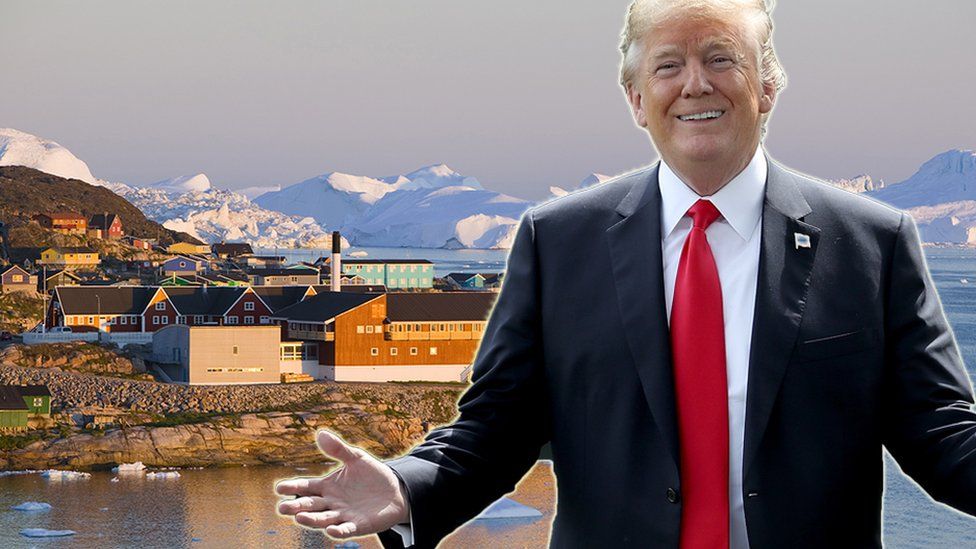
Securing Tomorrow: How Greenland Fits into Trump’s Strategic Vision for American Dominance

28 March, 2025
in ENGLISH, In Focus
A A
Share on FacebookShare on Twitter

By Philip Acey*

The discussion surrounding President Trump’s interest in acquiring Greenland, although controversial, reflects a larger pattern of great power politics. History reveals that territorial changes often occur not through the will of the people, but through the actions of powerful states. In this context, Trump’s approach to Greenland and the Arctic must be understood not as an anomaly, but as part of a global strategy to ensure the continued dominance of the United States in a world teetering between two paths: restructuring the unipolar order founded on American dominance or embracing a multipolar world in which Russia, China, and the Global South have a much greater influence in defining its values and rules.

The concept of great power politics – focused on the competition for territory, resources, and influence – is not new. Throughout history, powerful nations have expanded or reshaped borders, often through conflict or diplomacy. It’s easy to forget how Western powers redrew the borders of Africa, the Middle East, and even parts of East Asia before, during, and after the First World War, with further adjustments made following the Second World War. Europe has not been immune either, as much of the present-day borders of Eastern and Central Europe have been redrawn several times by great powers over the past century.

Do you remember the “Scramble for Africa” or the “Sykes-Picot Agreement” or the “Yalta Conference”? These were instances of territorial redrawing driven by the national interests of great powers and war victors, without any consideration for the will of the local populations. Today, we see this great power competition playing out in the Arctic, where discussion and moves to secure territory are linked to the region’s strategic value and during instances of a power vacuum.

Under Trump, the U.S. has embraced a more proactive stance to try and secure its interests in the Arctic and position American dominance in the region in a time of peace, rather than war. This includes taking steps to slow and prevent the rise of a multipolar world led by systemic challengers like China and Russia. Trump’s use of tariffs and his interest in acquiring Greenland reflect a strategy designed to restructure America and the international system to preserve U.S. hegemony for decades to come.

Trump’s proposal to acquire Greenland is not merely about territory for its own sake but about securing vital strategic interests in the Arctic. As Vice President Vance visits the U.S.-operated Pituffik Space Base in northwest Greenland and Russia holds the International Arctic Forum in Murmansk, the competition for influence and control over the Arctic is heating up.

While critics argue that the U.S. should work within the existing framework of international law and agreements in order to secure its Arctic interests, this perspective overlooks the changing nature of the international system and the history of great power competition as a major factor in redefining borders. In the view of the Trump administration, the status quo is no longer sufficient to ensure its long-term security, and Trump’s actions reflect an attempt to address future challenges before they fully materialize.

Trump recognizes Greenland’s strategic vulnerability due to its small, dispersed population spread across 2.1 million sq. km, as well as Denmark’s inability and NATO’s lack of resources (minus the U.S.) to defend it. Denmark’s symbolic investment of $1.2 billion for defence, including a few drones, two inspection ships and two dog-sled teams, does little to ensure Greenland’s security. Trump understands that defending Greenland without the U.S. is not feasible.

Therefore, the U.S. faces a choice: accept the status quo or move to acquire Greenland. Unlike past attempts to purchase the territory in 1868 and 1946, Trump’s rhetoric and stance reflect a shift in policy where the U.S. will no longer tolerate the feeling of American defence being taken for granted by allies. As such, Greenland, Denmark, and the world should view Trump’s offer to control Greenland as a serious long-term strategic move within the context of great power competition and not simply as a negotiating tactic to secure further concessions from allies.

Greenland’s current status as a semi-autonomous territory of Denmark does not provide sufficient protection against the threats posed by Russia and China. Denmark’s minimal investments in Greenland’s defence are insufficient to deter adversaries, especially considering the region’s growing strategic importance. If Greenland becomes an

independent nation or remains under Denmark’s protection without satisfactory defence, it makes the Arctic more vulnerable from the perspective of the Trump administration.

The U.S., on the other hand, views its responsibility to defend Greenland as part of a larger strategic objective. Trump argues that integrating Greenland into the U.S. would strengthen Arctic security, deter adversaries, and maintain peace by reducing the risk of conflict. If Greenland were to face an incursion or attack, the U.S. would likely be called upon to lead the defence. Should this crisis trigger Article 5 of the North Atlantic Treaty, it could escalate into a world war involving multiple fronts. In this scenario, it is highly likely that European members of NATO and Denmark would prioritize defending their eastern European border and their own nations’ territory rather than Greenland, leaving it vulnerable and dependent on U.S. protection, just as the U.S. provided during WWII when Denmark was quickly overcome and occupied by Nazi Germany.

Greenland’s status as a weak link in Arctic security poses a significant threat to U.S. interests and global stability, making U.S. action necessary in the view of the Trump administration. Its vulnerability, particularly due to the rich natural resources beneath the waters of its 2.18 million sq. km exclusive economic zone, makes it a prime target for adversaries. Similar to how countries like the Philippines and Vietnam have faced ongoing threats from Chinese incursions in the South China Sea, the Arctic is likely to encounter comparable challenges.

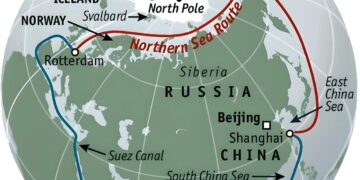
The Arctic region is on the brink of transformation. The Northern Sea Route (NSR), a key topic at the International Arctic Forum in Russia, has the potential to revolutionize global trade, while technological advancements will make resource extraction more viable. Trump’s rhetoric reflects a forward-thinking strategy, viewing the Arctic from the perspective of future threats and opportunities. He envisions a very active Arctic region shaped by increased maritime trade and adversarial military posturing, as well as the utilization of resource extraction and advanced weapon technologies that are not yet developed or financially viable: this is the world 10-100 years from now.

Trump’s interest in Greenland is part of a broader vision to secure U.S. dominance in a future where the Arctic plays a crucial role. This approach mirrors the U.S. purchase of Alaska in 1867, which was initially dismissed as “Seward’s Folly” by the American media and public because they did not see the rationale and strategic value behind it. Yet, 30- years later, a gold rush hit Alaska and no one is calling into question the strategic value of Alaska today, which was of immense strategic value during the Cold War and still is today. It was the bad optics of “Seward’s Folly” that then caused the U.S. Congress to not approve the planned purchase of Greenland and Iceland from Denmark a year later. In the same way as Alaska, Greenland’s geopolitical significance will only grow, and Trump sees securing it now could mitigate future vulnerabilities and contribute to securing international peace and security.

The discussion around Greenland is part of a larger conversation about the shifting international order. The idea that borders are permanent or that global systems are static is naïve and plain wrong. History demonstrates that nations rise and fall, and so too does the international system: since the early 20th century, the world has shifted from multipolarity to the bipolar Cold War, then to unipolarity under American dominance, and is now increasingly gravitating back toward multipolarity. As Russia and China challenge the existing international system, the U.S. sees it must take proactive steps if it is to protect its interests and maintain global dominance without resorting to war.

The idea of self-determination, enshrined in international law, is important, but modern history shows that the realities of great power politics and vital national interests often override democratic ideals. The future of Greenland may well be determined by strategic decisions made by powerful nations, not by the will of the people alone.

The international system is in flux, and the U.S. is taking steps to ensure its place within it. While many criticize Trump’s actions as provocative or unnecessary, they fail to consider the long-term strategic implications of inaction. Change is inevitable, and nations must adapt to the shifting tides of global power. Whether it is Greenland or other countries, the future of borders and international relations will be shaped by those who are willing to act, not those who wait for history to unfold.

If Trump fails to secure Greenland, who’s to say that in 80 years, amid a more volatile global landscape, people won’t look back and label it “Trump’s folly” – his missed opportunity to secure it both for America and global peace and security.

*Philip Acey is a PhD candidate from Canada and an independent political researcher and analyst who has worked on the ground for over a decade across Europe, Asia, Africa, and South America, visiting more than 50 countries. His research has been used worldwide to advise the UN Security Council, UN agencies, diplomats, and humanitarian organizations.
Related Posts

Current Events

Rama alleges ‘hybrid war’ behind protests against Kushner-linked coastal development

5 June, 2026
ENGLISH

Pierre Nora and the institution of memory we lack in Eastern Europe

5 June, 2026
BELGRADE, SERBIA - JUNE 18. 2020: Russian and Serbian flags on display during Russian Foreign Minister Sergei Lavrov's visit to the Liberators of Belgrade Memorial. Valery Sharifulin/TASS,Image: 533095429, License: Rights-managed, Restrictions: UWAGA! Zdjęcia zawierają oryginalny opis dostawcy (ITAR-TASS). Szczególnie w związku z agresją Rosji na Ukrainę mogą zawierać przekaz niezgodny z faktami. Zweryfikuj go przed publikacją, Model Release: no, Credit line: Valery Sharifulin / TASS / Forum
Current Events

Balkan Maskirovka: Why Moscow’s “Distancing” Is Only an Operation for the Survival of Vučić’s Regime

5 June, 2026

Follow US

Subscribe

Receive Argumentum Magazine by Email

Last Posts

Rama alleges ‘hybrid war’ behind protests against Kushner-linked coastal development

5 June, 2026

Pierre Nora and the institution of memory we lack in Eastern Europe

5 June, 2026
BELGRADE, SERBIA - JUNE 18. 2020: Russian and Serbian flags on display during Russian Foreign Minister Sergei Lavrov's visit to the Liberators of Belgrade Memorial. Valery Sharifulin/TASS,Image: 533095429, License: Rights-managed, Restrictions: UWAGA! Zdjęcia zawierają oryginalny opis dostawcy (ITAR-TASS). Szczególnie w związku z agresją Rosji na Ukrainę mogą zawierać przekaz niezgodny z faktami. Zweryfikuj go przed publikacją, Model Release: no, Credit line: Valery Sharifulin / TASS / Forum

Balkan Maskirovka: Why Moscow’s “Distancing” Is Only an Operation for the Survival of Vučić’s Regime

5 June, 2026

The Blueprint of a Diplomatic Debacle: Analyzing Germany’s Historic UNSC Loss

4 June, 2026

Serbia – China 2026: Technological partnership, geopolitical positioning and a new phase of the Chinese presence in the Western Balkans

1 June, 2026
Argumentum

“Argumentum”, një proces intelektual …

Contact Us

[email protected]
[email protected]
[email protected]

Follow Us

Media Partner

Register

Receive Argumentum Magazine by Email
  • Home
  • Privacy Policy
  • About Us
  • Contact

© 2022 Argumentum. All Rights Reserved. | NUIS: L91415033Q

Welcome Back!

Login to your account below

Forgotten Password? Sign Up

Create New Account!

Fill the forms bellow to register

*By registering into our website, you agree to the Terms & Conditions and Privacy Policy.
All fields are required. Log In

Retrieve your password

Please enter your username or email address to reset your password.

Log In

Add New Playlist

No Result
View All Result
  • Home
  • OP/ED
  • Interview
  • Realpolitik
  • Current Events
  • Top News
  • YOUR VOICE
  • Shqip

© 2022 Argumentum. All Rights Reserved. | NUIS: L91415033Q

This website uses cookies. By continuing to use this website you are giving consent to cookies being used. Visit our Privacy and Cookie Policy.