


'/%3E%3C/svg%3E)
REAL POLITIK NO. 103
1 – 30 APRIL 2026
Coments ” flash” on the four major diplomatic events with only 1.000 words by the well-known analist, Grand master in Diplomacy
DR. JORGJI KOTE
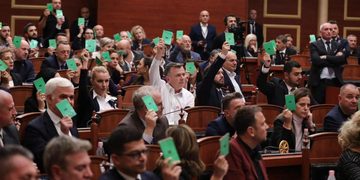
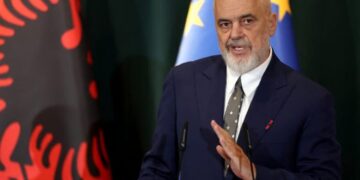
1. IBAR – a springing board or an obstacle? After the euphoria for the opening of all clusters in EU accession negotiations in 2025, this year we are stucked up with the IBAR – the Assessment Interim Report of the Benchmarks presented by the EU Commission on Albania. In the 4-5 meetings during April of COALA – the EU Group dealing with EU Enlargement and Aspiring countries there is no agreement to adopt it; apparently, discussions will continue until June with dozens of questions and explanation requests; and they are not made by one or two but from 8 EU Member States. Only one is a big country, Germany, the others are middle-sized – Poland, Greece, Sweden, Finland, Denmark Greece, Bulgaria; among these sceptical countries it is also a small state with a great name and European traditions – Luxembourg which has been historically supportive in our whole Euro-Atlantic process. Besides, the questions, doubts and requests for clarifications related to chapters 23/24 considered “ heavy artillery” for the EU and “ Achilles heel” for us, as they affect justice, judiciary, the fight against crime and corruption of high officials and other sensitive issues. They are exactly the areas where most of our troubles and problems are crying out for solution. Balluku’s case is undoubtedly not the only one but the culminating point of the EU scepticism and objections. For for them it is unimaginable and unjustifiable that the parliament does not give its consent to the Special Prosecution demand( SPAK) for her arrest. Without going further, only a few days ago, when Rama was in Athens, the Greek Parliament gave the said permission for 13 suspected MPs from “Nea Demokracia” of Prime Minister Mitsotakis. Whereas in Albania it occurs the opposite, raising many suspicions among many EU Member States. Hence, it is not surprising that both “ small and big countries” are not saying OK to IBAR of the EU Commission for Albania. Thus, instead of being a springing board, IBAR is becoming a serious obstacle in our further advancement in this historic process.
2. Can we catch the EU Negotiation Train 2027? Since April is gone, our minds and eyes are directed to June to see if we can catch up the “ EU negotiation train” 2027. Until now without promising news; on the opposite, the questions, requests and scepticism have grown up and none from the 8 above-mentioned EU states has retreated from their sceptical positions. But if do not close the first Cluster in June, i.e. ¼ of the maximum time without any closed cluster, then this would put seriously into doubt the attainment of the major goal for our EU membership 2030. Therefore, the question whether we shall catch the EU Negotiations Train 2030 remains without a clear and positive answer.
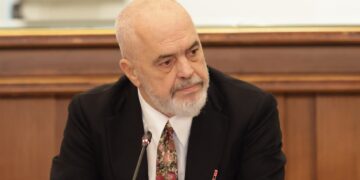
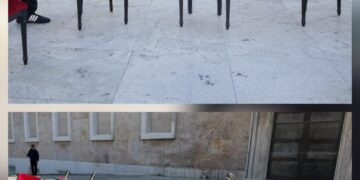
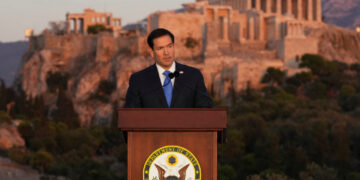
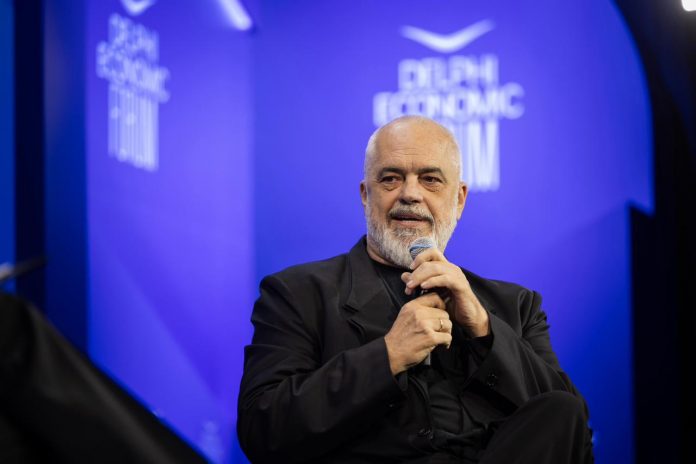
3. When the dress makes the news! On 21 – 22 April, Prime Minister Rama was in Athens to attend the Delphi Economic Forum. He was received by Prime Minister Mitsotakis in his official residence. A pozitive signal implying that finally we could start to solve the several diplomatic “ headaches” with Greece, starting with the Sea Agreement which is standing for years over our heads like the “ Sword of Damocles”. However, apart from words and promises nothing new occurred. Moreover, the news that echoed in the Greek and Albanian media was PM Rama’s improper dress. Although this is not new for him, given the seriousness of the said meeting, that dress was unacceptable. Moreover, when the government has adopted a dress code and his head ignores it! Rama blamed the State Protocol for not allegedlly telling him about the meeting venue. However, even the “owl as we say knows” that when a Prime Minister meets his counterpart, despite the venue, he should put on an official suit, a necktie, shoes and not sneakers. In this way you show to be at the helm of the duty as the top government’s representative and your respect the host. The Greek media “bombarded” our Prime Minister, indicating that even Mitsotakis pet dog was astonished to see the Albanian PM dressed like this!. We shall not enter the news denied by the Greek side on the alleged agreement to send the dossier of the Sea to the Hague although it’s five years we have been listening to this “ tale from the past”. Nevertheless, let us hoe that it would not occur as in the saying “ keep the donkey waiting until grass grows”.
4. EU electoral April ends in a draw 1:1 in the much – expected parlimentary elections on 12 and 19 April in Hungary and Bulgaria. In Hungary, after 16 years of Orban in power, it was his challenger, Peter Magyar from the reformist wing and EU friendly who won. A landsliding victory and a positive event for the EU; for among others, it put an end to the blocking of its decisions from Budapest veto, including most recently the package of 90 Billion of aids for Ukraine; but also the other troubles created due to the illiberal democracy that Hungary advocates, as an opposing alternative to the EU liberal democracy. At a time when the far right is on the offensive in Europe, Magyar’s victory is extremely important; it shows that populism without persuasive long – term alternatives has its limits and an end.
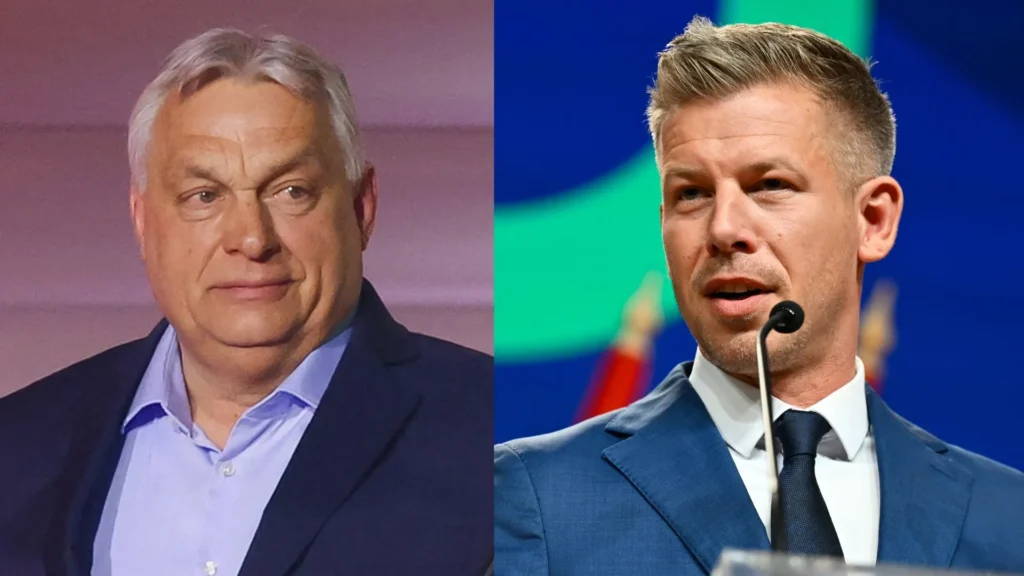
However, while the Hungarian joy was not yet over, in the elections in Bullgaria, a week later it was the former President Radev who won, a eurosceptic and very close to Russia and Putin. His victory was also landsliding, following five governmental crises there in the last five years. Some months ago, Radev took off his presidential costume and led his party successfully to power. Thus now the danger is that Radev could replace Orban, threatening again the EU with his veto, as he has affirmed before. This could affect expecially the necessary support for Ukraine. Nor is Radev’s victory t good news for our country and particulary for its accession EU negotiations; Bulgaria is part of those countries that are not still adopting IBAR for Albania. This is why we called the results of this electoral April in Europe a draw 1:1.
© 2026 Argumentu