















• SHQIPËRI
  • KOSOVË
  • MAQEDONIA E VERIUT
  • MALI I ZI
  • Revista në PDF
8 July, 2026
  • Home
  • OP/ED

    Do Not Misuse the U.S. Declaration of Independence to Justify the Narrative of Insurrection in Albania

    The visit that changed Albania’s strategic future

    Pierre Nora and the institution of memory we lack in Eastern Europe

    The Blueprint of a Diplomatic Debacle: Analyzing Germany’s Historic UNSC Loss

    Between Russia, Iran and Europe: Azerbaijan as a balancing power in the South Caucasus

    The Zero-Tariff Gate: Sovereignty as a Service in the Sino-African Corridor

    Albania vs. the Sea/ Marginal Notes on A. Leka’s Novel The Hidden Side of the Albanian Socialist Garden

    May 9 and the long shadow of a Letter: Is Europe still Schuman’s Project?

    The Arbnesh of Zadar: A living memory of Albanian identity on the Adriatic coast

  • Interview

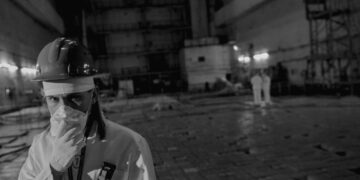
    Exclusive Interview with Oleksandr Tyshchenko: A 40-Year Legacy of Chernobyl, Nuclear Risks, and Global Responsibility

    INTERVIEW: ZLATKO KRAMARIĆ – THOUGHTS ON THE OLD CONTINENT

    EXCLUSIVE / Ukrainian Ambassador to Albania, Volodymyr Shkurov: “Ukraine wants peace, but not at the expense of its freedom and independence”

    EXCLUSIVE| Ambassador Tayyar Kagan Atay: Türkiye and Albania, a Strategic Partnership Rooted in Shared Heritage and a Common Vision for the Future

    “Diplomacy, Not War”: Palestinian Ambassador to Albania Calls for Justice, Peace, and Global Action for Gaza

    Exclusive: “Even After Tito – Tito”/ Ambassador Zlatko Kramarić on Authoritarian Legacies and Democracy’s Future in the Balkans

    The Conclusion of the Diplomatic Mission / Ambassador Dancho Markovski: Strengthening Albania-North Macedonia Relations for a Shared European Future

    A Century of Diplomatic Relations Between Albania and Russia: Exclusive Interview with the Russian Ambassador to Albania, H.E. Alexey Zaytsev

    Exclusive/ The chairman of the Freedom Party, Ilir Meta: “The will of the citizens will triumph in Albania, as it did in North Macedonia”

  • Realpolitik

    Peace with war diplomacy! The protest,  image and tourism! Why this silence from the EU Commission and Council? A deal or a pause?

    Just kind words  in Tivat! Where is the peace!? A deal yes, peace No!What is happening with USA and  EU?  5 elections but no solution!

    IBAR? ”Sufficiently! Much ado about nothing! Shart contrasts in Beijing! Where is the exit?!

    Neither peace nor war! Peace with bombs?! IBAR in autumn?! Not another Hormuz in Taivan! 

    IBAR – a springing board or an obstacle? Can we catch the EU Negotiation train 2027? When the dress makes the news!  EU electoral April  ends in a draw 1:1!  

    The European Parliament building in Strasbourg, France with flags waving calmly celebrating peace of the Europe. July 12, 2020.

    EU 2027 or 2037! Even half membership failed! No exit strategy!     

    What next?

    “With diplomatic velvet“! Major question marks! In Washington yes, but  in the White House NO! A strange dinner in Brussels!

    From a great ‘apple of disaccord’ to a  point of  cooperation! A bad start! The strange absence in Davos!

  • Current Events

    NATO Summit in Ankara: Allies Adopt Declaration Reaffirming Collective Defence and Long-Term Security Commitments

    Protection for Serbs, or Protection for Radoicic?

    The Architecture of Selective Sovereignty:Corporate Immunity, Technological Protectionism, and the Erosion of Credibility

    Montenegro’s Unfinished Transition

    The Paradox of Selective Capitalism: How Western Rule-Breaking Accelerates Its Own Systemic Demise

    A prestigious book on an emblem of Turkish state!

    The Diplomacy of Gas and Algorithms: The Nuances of Official Tirana—Is It Breaking the European Taboo with Azerbaijan?

    Council of Albanian Ambassadors Backs Civic Protests, Calls for Transparency and Protection of National Interests

    Russian Ambassador in Tirana: “Without a Strong and Sovereign Russia, the Creation of a Just World Order Is Impossible”

  • Top News

    NATO at Ankara 2026: Strategic Rebalancing Between Russia Deterrence, Turkey’s Rise, and National Interests

    Daniel Serwer: A Bad War Ending Badly May Still Be Good News

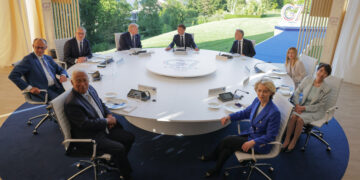
    Friedrich Merz, Keir Starmer, António Costa, Donald Trump, Emmanuel Macron, Mark Carney, Ursula von der Leyen, Giorgia Meloni and Sanae Takaichi

    G7 Leaders Gather in Évian Amid Global Uncertainty, Focus on Security, Economy and International Cooperation

    Russian Ambassador in Tirana: “Without a Strong and Sovereign Russia, the Creation of a Just World Order Is Impossible”

    “The Flamingo Revolution”: Day 10 of Protests in Albania Draws International Attention

    Rama alleges ‘hybrid war’ behind protests against Kushner-linked coastal development

    No End in Sight: Trump, Netanyahu and the Expanding Middle East War

    Tirana – €20 Million EU–Banking Agreement Boosts Albanian SMEs

    “EU4Municipalities II” Project, a Strategic Investment for Strengthening Municipalities and Accelerating Albania’s Path towards the EU

  • YOUR VOICE
  • Shqip
No Result
View All Result
Argumentum
  • Home
  • OP/ED

    Do Not Misuse the U.S. Declaration of Independence to Justify the Narrative of Insurrection in Albania

    The visit that changed Albania’s strategic future

    Pierre Nora and the institution of memory we lack in Eastern Europe

    The Blueprint of a Diplomatic Debacle: Analyzing Germany’s Historic UNSC Loss

    Between Russia, Iran and Europe: Azerbaijan as a balancing power in the South Caucasus

    The Zero-Tariff Gate: Sovereignty as a Service in the Sino-African Corridor

    Albania vs. the Sea/ Marginal Notes on A. Leka’s Novel The Hidden Side of the Albanian Socialist Garden

    May 9 and the long shadow of a Letter: Is Europe still Schuman’s Project?

    The Arbnesh of Zadar: A living memory of Albanian identity on the Adriatic coast

  • Interview

    Exclusive Interview with Oleksandr Tyshchenko: A 40-Year Legacy of Chernobyl, Nuclear Risks, and Global Responsibility

    INTERVIEW: ZLATKO KRAMARIĆ – THOUGHTS ON THE OLD CONTINENT

    EXCLUSIVE / Ukrainian Ambassador to Albania, Volodymyr Shkurov: “Ukraine wants peace, but not at the expense of its freedom and independence”

    EXCLUSIVE| Ambassador Tayyar Kagan Atay: Türkiye and Albania, a Strategic Partnership Rooted in Shared Heritage and a Common Vision for the Future

    “Diplomacy, Not War”: Palestinian Ambassador to Albania Calls for Justice, Peace, and Global Action for Gaza

    Exclusive: “Even After Tito – Tito”/ Ambassador Zlatko Kramarić on Authoritarian Legacies and Democracy’s Future in the Balkans

    The Conclusion of the Diplomatic Mission / Ambassador Dancho Markovski: Strengthening Albania-North Macedonia Relations for a Shared European Future

    A Century of Diplomatic Relations Between Albania and Russia: Exclusive Interview with the Russian Ambassador to Albania, H.E. Alexey Zaytsev

    Exclusive/ The chairman of the Freedom Party, Ilir Meta: “The will of the citizens will triumph in Albania, as it did in North Macedonia”

  • Realpolitik

    Peace with war diplomacy! The protest,  image and tourism! Why this silence from the EU Commission and Council? A deal or a pause?

    Just kind words  in Tivat! Where is the peace!? A deal yes, peace No!What is happening with USA and  EU?  5 elections but no solution!

    IBAR? ”Sufficiently! Much ado about nothing! Shart contrasts in Beijing! Where is the exit?!

    Neither peace nor war! Peace with bombs?! IBAR in autumn?! Not another Hormuz in Taivan! 

    IBAR – a springing board or an obstacle? Can we catch the EU Negotiation train 2027? When the dress makes the news!  EU electoral April  ends in a draw 1:1!  

    The European Parliament building in Strasbourg, France with flags waving calmly celebrating peace of the Europe. July 12, 2020.

    EU 2027 or 2037! Even half membership failed! No exit strategy!     

    What next?

    “With diplomatic velvet“! Major question marks! In Washington yes, but  in the White House NO! A strange dinner in Brussels!

    From a great ‘apple of disaccord’ to a  point of  cooperation! A bad start! The strange absence in Davos!

  • Current Events

    NATO Summit in Ankara: Allies Adopt Declaration Reaffirming Collective Defence and Long-Term Security Commitments

    Protection for Serbs, or Protection for Radoicic?

    The Architecture of Selective Sovereignty:Corporate Immunity, Technological Protectionism, and the Erosion of Credibility

    Montenegro’s Unfinished Transition

    The Paradox of Selective Capitalism: How Western Rule-Breaking Accelerates Its Own Systemic Demise

    A prestigious book on an emblem of Turkish state!

    The Diplomacy of Gas and Algorithms: The Nuances of Official Tirana—Is It Breaking the European Taboo with Azerbaijan?

    Council of Albanian Ambassadors Backs Civic Protests, Calls for Transparency and Protection of National Interests

    Russian Ambassador in Tirana: “Without a Strong and Sovereign Russia, the Creation of a Just World Order Is Impossible”

  • Top News

    NATO at Ankara 2026: Strategic Rebalancing Between Russia Deterrence, Turkey’s Rise, and National Interests

    Daniel Serwer: A Bad War Ending Badly May Still Be Good News

    Friedrich Merz, Keir Starmer, António Costa, Donald Trump, Emmanuel Macron, Mark Carney, Ursula von der Leyen, Giorgia Meloni and Sanae Takaichi

    G7 Leaders Gather in Évian Amid Global Uncertainty, Focus on Security, Economy and International Cooperation

    Russian Ambassador in Tirana: “Without a Strong and Sovereign Russia, the Creation of a Just World Order Is Impossible”

    “The Flamingo Revolution”: Day 10 of Protests in Albania Draws International Attention

    Rama alleges ‘hybrid war’ behind protests against Kushner-linked coastal development

    No End in Sight: Trump, Netanyahu and the Expanding Middle East War

    Tirana – €20 Million EU–Banking Agreement Boosts Albanian SMEs

    “EU4Municipalities II” Project, a Strategic Investment for Strengthening Municipalities and Accelerating Albania’s Path towards the EU

  • YOUR VOICE
  • Shqip
No Result
View All Result
Argumentum
No Result
View All Result
Home ENGLISH

Exclusive Interview with Oleksandr Tyshchenko: A 40-Year Legacy of Chernobyl, Nuclear Risks, and Global Responsibility

26 April, 2026
in ENGLISH, Interview
A A
Share on FacebookShare on Twitter

Exclusive Interview for ARGUMENTUM.al with Oleksandr Tyshchenko.

As the world marks the 40th anniversary of the Chernobyl disaster, the name itself continues to resonate with complex lessons about nuclear safety, human rights, and the delicate balance between technological advancement and its risks. In an exclusive interview with Argumentum.al, Oleksandr Tyshchenko—an advisor to Ukraine’s National Commission for Radiation Protection, a key figure in nuclear policy, and an artist—shares his profound insights into the long-lasting impact of the Chernobyl tragedy, the evolving risks of nuclear energy in today’s geopolitical climate, and how art and history intersect in times of crisis.

From his personal reflections on Chernobyl’s human, environmental, and institutional consequences to his views on the war in Ukraine and its impact on nuclear safety, Tyshchenko emphasizes the importance of truth, transparency, and global cooperation. His unique perspective as both a policy advisor and an artist gives a rare glimpse into how art can tell stories of resilience and how the world must navigate nuclear risks in the shadow of ongoing conflict.

In this conversation, Tyshchenko also touches on his recent art project filmed inside the reactor, the potential dangers posed by the war in Ukraine to nuclear facilities, and the urgent steps needed to prevent a “new Chernobyl” in an increasingly unstable world.

Interview  by:  Marjana DODA
Editor-in-Chief

–Mr. Tyshchenko, as we approach the 40th anniversary of the Chernobyl disaster, what do you believe the world still misunderstands about what happened in 1986? 

What the world still doesn’t understand about Chernobyl is that it wasn’t just a man-made disaster. It was a global catastrophe affecting the human right to the truth. 

People weren’t informed in a timely manner about what had happened. Information was delayed, distorted, and concealed. As a result, people couldn’t make basic decisions to protect themselves and their families. Radiation was dangerous, but it was the lack of truth that magnified the consequences. 

And the most difficult part of this conversation is that 40 years later, this problem hasn’t gone away. Yes, technology has changed, systems have become more complex, but behavioral patterns have largely remained the same. 

In many countries, we still see political institutions trying to tell the public that “everything is under control,” even in high-risk situations. Officials remain afraid to report bad news to their superiors, fearing for their own positions. And the media often finds itself compelled to serve political interests instead of fulfilling its key function—telling the truth. 

40 years later, the lesson remains unlearned. The system fears the truth more than disaster. 

–As an advisor to Ukraine’s National Commission for Radiation Protection, how does Chernobyl continue to influence your work and policies today? 

Chernobyl fundamentally changed attitudes toward nuclear policy, revealing not only the potential of nuclear energy as a source of relatively cheap energy but also its vulnerability. I do not view nuclear energy as an absolute good or an absolute evil. In my view, humanity still cannot abandon this form of energy without compromising technological development. 

It is important to remember that this is an area where quality management, transparency, and communication are no less important than engineering solutions. 
–From your perspective, what have been the most lasting human and environmental consequences of the disaster over these four decades? 

From a long-term perspective, the consequences of Chernobyl can be divided into three levels: human, environmental, and institutional. What makes this disaster unique is that none of these levels ended in 1986—all are still evolving. 

On the human side, the most lasting impact is not only the direct impact of radiation but also the destruction of entire communities. Hundreds of thousands of people were evacuated from the area around the plant, including the city of Pripyat, which was built specifically for the plant’s workers. This forced migration led to a long-term “uprooting” effect: people lost their homes, social connections, professions, and, in some cases, a stable identity associated with their place of residence. The health consequences are still being studied, but the most confirmed effect remains the increase in thyroid cancer cases among people who were children at the time of the accident. An equally important, but often underestimated, impact is psychological trauma and a sense of loss of control over one’s own life. 

From an ecological perspective, the consequences are paradoxical. The Chernobyl exclusion zone has essentially become one of the largest natural areas in Europe that emerged by chance. The absence of humans has allowed forests and animal populations to recover, forming a unique ecosystem. This is neither a “dead zone” nor “restored nature,” but a persistently altered ecological system where radiation remains a normal part of the environment. 

We discussed the institutional legacy above. 

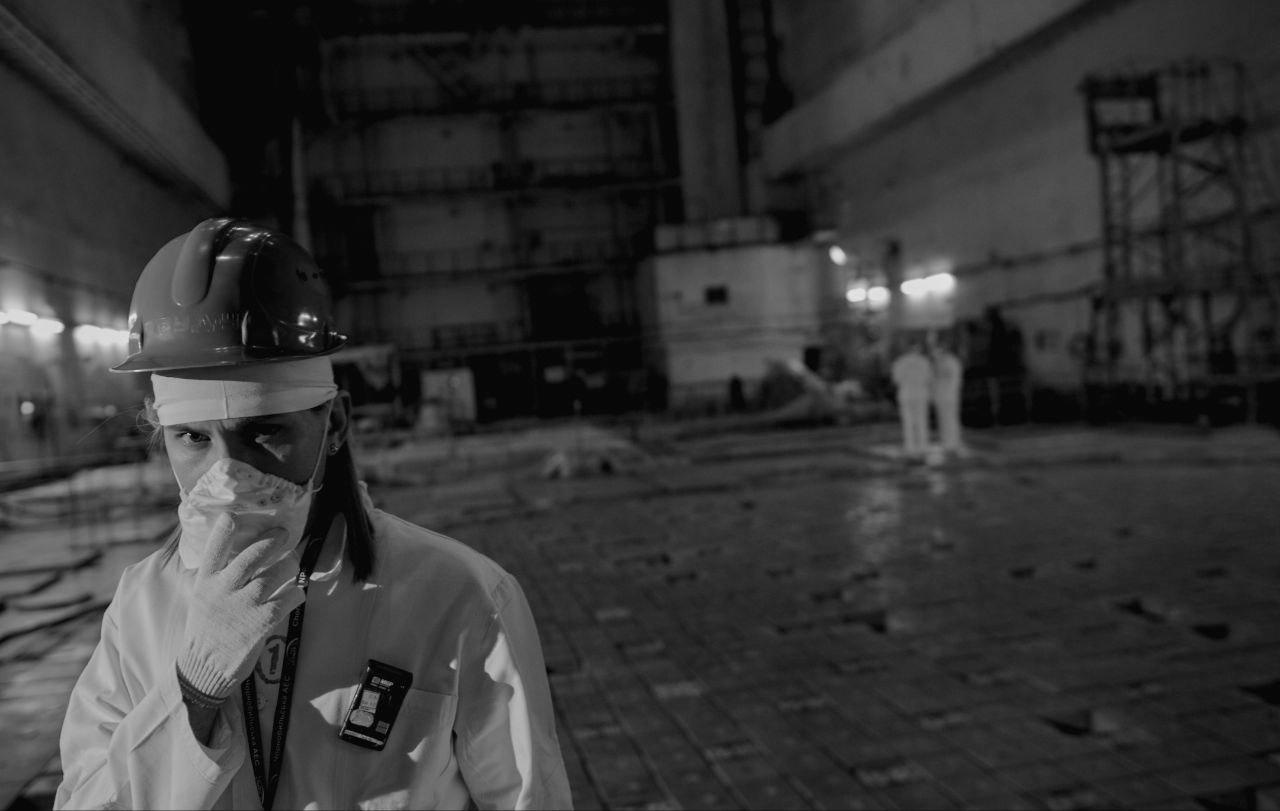
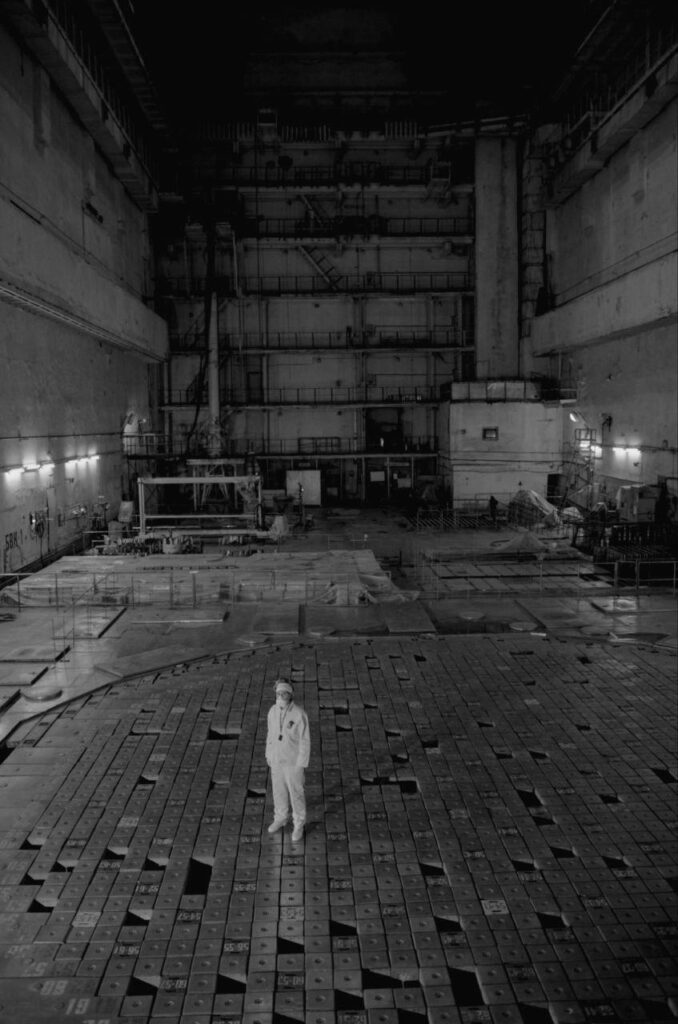
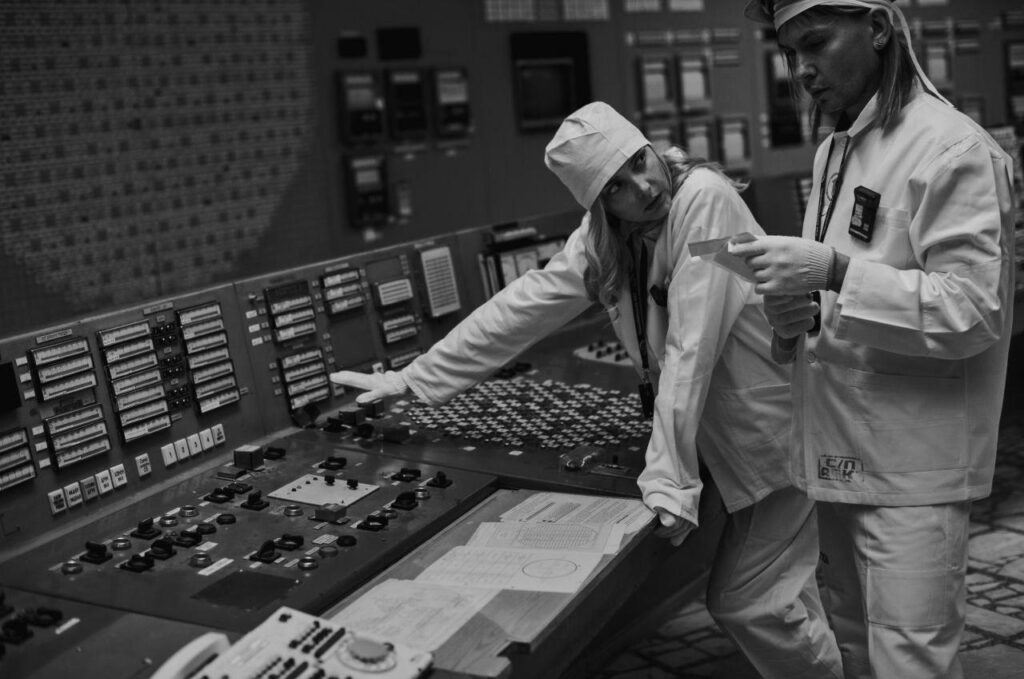
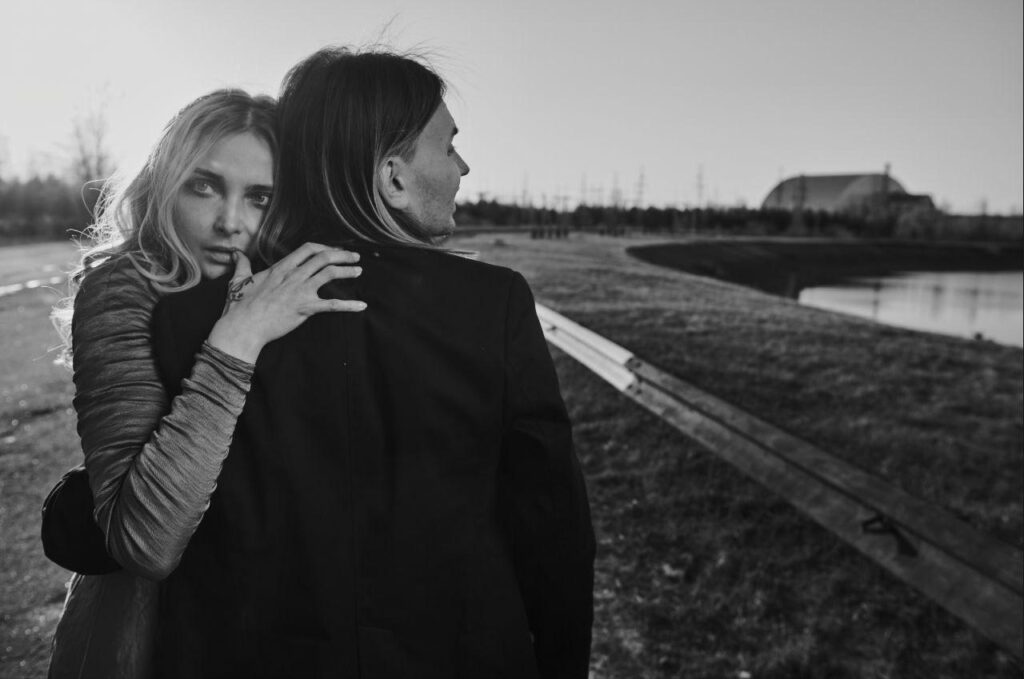
–Your recent art project was filmed inside the reactor before the war, what story were you trying to tell through this unique work, Mr. Tyshchenko? 

Initially, when I was working on a project featuring Snezhana Onopko, a Ukrainian supermodel and contemporary of the tragedy, I wanted to show that human love and energy are stronger than any catastrophe, without exception. And that even the most terrible things have their own beauty and appeal. 

With the outbreak of war in my country, meanings changed. This is a rare case where meaning itself found a work of art—if I can even call my project that. 
-How has the ongoing war in Ukraine changed the risks and global perception of nuclear safety, especially regarding sites like Chernobyl? 

The war in Ukraine has profoundly changed the global understanding of nuclear energy risks and approaches to nuclear safety. It has demonstrated that nuclear facilities in armed conflict cease to be purely civilian infrastructure. 

They effectively become part of the war—an instrument of pressure and blackmail, and in some cases, a strategic hostage, directly affecting regional and global security. 

-As you prepare to bring your exhibition to Albania, what message do you hope international audiences will take away from it? 

The exhibition in Albania is very important to me. 

Your voice could be very important for Europe. Your country, like no other, prepared for a nuclear conflict. Just a few years ago, Enver Hoxha’s bunker system evoked smiles in young people and bewilderment in foreigners. Now the planet is one step away from these bunkers being used for their intended purpose. 

I don’t want to convey any specific political or artistic message. What matters to me is the dialogue, the exchange of opinions, and the initiatives the project can spark. 

-Is it still realistic to separate civilian nuclear energy from military and geopolitical risk in the current global climate?  

That would be the shortest answer. Under current conditions, no. 

But that doesn’t mean we shouldn’t strive for it. 
-Looking ahead, what is the single most important step the international community must take to prevent a “new Chernobyl” in an era of war and nuclear tension? 

Two hours ago, we discussed this with Mark Zheleznyak, a professor at Fukushima University and a Chernobyl disaster liquidator. 

In an ideal world, the next step would be a UN resolution (or another relevant international institution) on the inadmissibility of occupying and attacking nuclear energy infrastructure facilities—preferably with the broadest possible international consensus, even unanimous. 

More realistically, the key problem is that developing and implementing an effective system of deterrence and sanctions against states for which violating international agreements has become the norm is extremely difficult. 

Nevertheless, at the moment, this very step—formalizing and internationally enshrining the absolute inviolability of nuclear infrastructure—seems the most logical and necessary direction. 

Thank you! 

/Argumentum.al

© 2026 Argumentum

Related Posts

Current Events

NATO Summit in Ankara: Allies Adopt Declaration Reaffirming Collective Defence and Long-Term Security Commitments

8 July, 2026
Balkan Overview

Protection for Serbs, or Protection for Radoicic?

6 July, 2026
ENGLISH

Do Not Misuse the U.S. Declaration of Independence to Justify the Narrative of Insurrection in Albania

5 July, 2026

Follow US

Subscribe

Receive Argumentum Magazine by Email

Last Posts

NATO Summit in Ankara: Allies Adopt Declaration Reaffirming Collective Defence and Long-Term Security Commitments

8 July, 2026

Albania will experience no development without democracy

8 July, 2026

NATO at Ankara 2026: Strategic Rebalancing Between Russia Deterrence, Turkey’s Rise, and National Interests

6 July, 2026

Protection for Serbs, or Protection for Radoicic?

6 July, 2026

Do Not Misuse the U.S. Declaration of Independence to Justify the Narrative of Insurrection in Albania

5 July, 2026
Argumentum

“Argumentum”, një proces intelektual …

Contact Us

[email protected]
[email protected]
[email protected]

Follow Us

Media Partner

Register

Receive Argumentum Magazine by Email
  • Home
  • Privacy Policy
  • About Us
  • Contact

© 2022 Argumentum. All Rights Reserved. | NUIS: L91415033Q

Welcome Back!

Login to your account below

Forgotten Password? Sign Up

Create New Account!

Fill the forms bellow to register

*By registering into our website, you agree to the Terms & Conditions and Privacy Policy.
All fields are required. Log In

Retrieve your password

Please enter your username or email address to reset your password.

Log In

Add New Playlist

No Result
View All Result
  • Home
  • OP/ED
  • Interview
  • Realpolitik
  • Current Events
  • Top News
  • YOUR VOICE
  • Shqip

© 2022 Argumentum. All Rights Reserved. | NUIS: L91415033Q

This website uses cookies. By continuing to use this website you are giving consent to cookies being used. Visit our Privacy and Cookie Policy.