



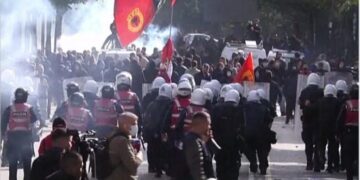


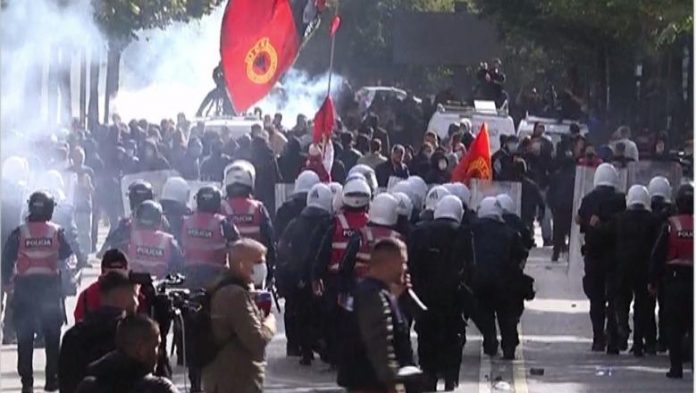
Student and high school protests in Albania entered a third day on Thursday, spreading from the capital to several other cities as clashes with police, damage to public property and school boycotts intensified.
Demonstrations were reported in Tirana, Durres, Shkoder and Korce, with tensions escalating around public institutions and raising pressure on the government of Prime Minister Edi Rama.
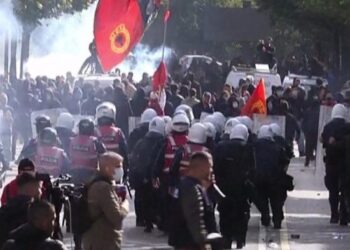
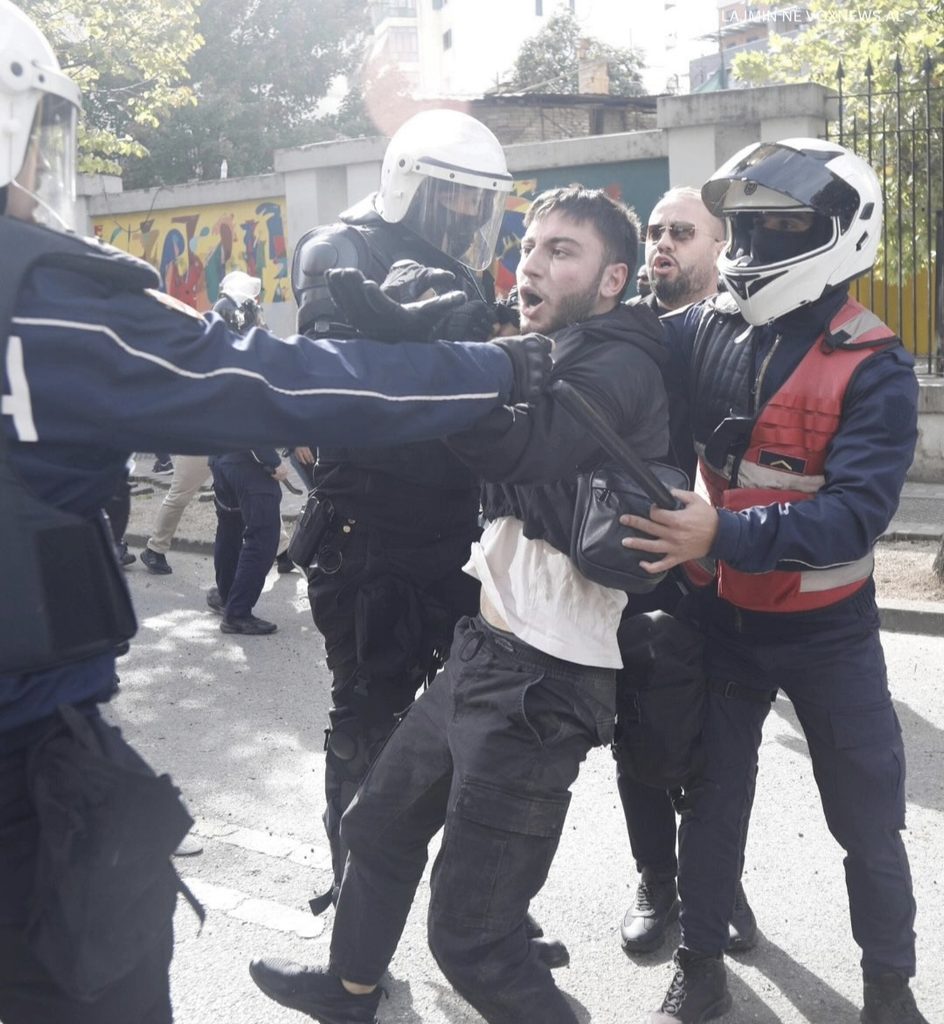
In Tirana, parliament cancelled its plenary session scheduled for 10 a.m. as police deployed in large numbers around the building ahead of the planned demonstration. Protesters gathered near the Education Ministry and parliament, while police used tear gas during renewed clashes on Durres Street, forcing demonstrators to retreat towards Skanderbeg Square.
The protests have also disrupted education, with pupils from Tirana’s Petro Nini Luarasi high school joining the demonstrations and students in Kamez leaving classes. Students at the Faculty of Foreign Languages in Shkoder also boycotted lessons and displayed banners in solidarity with protesters in the capital.
Clashes and property damage reported outside the capital
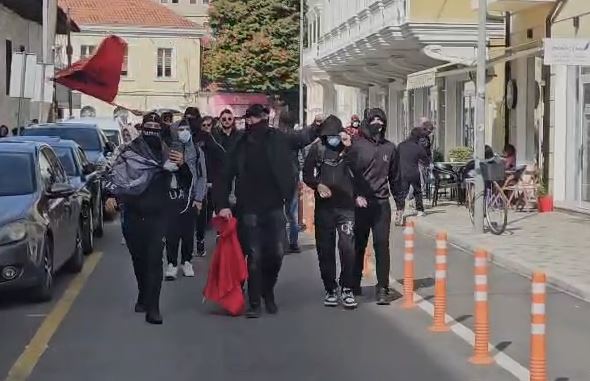
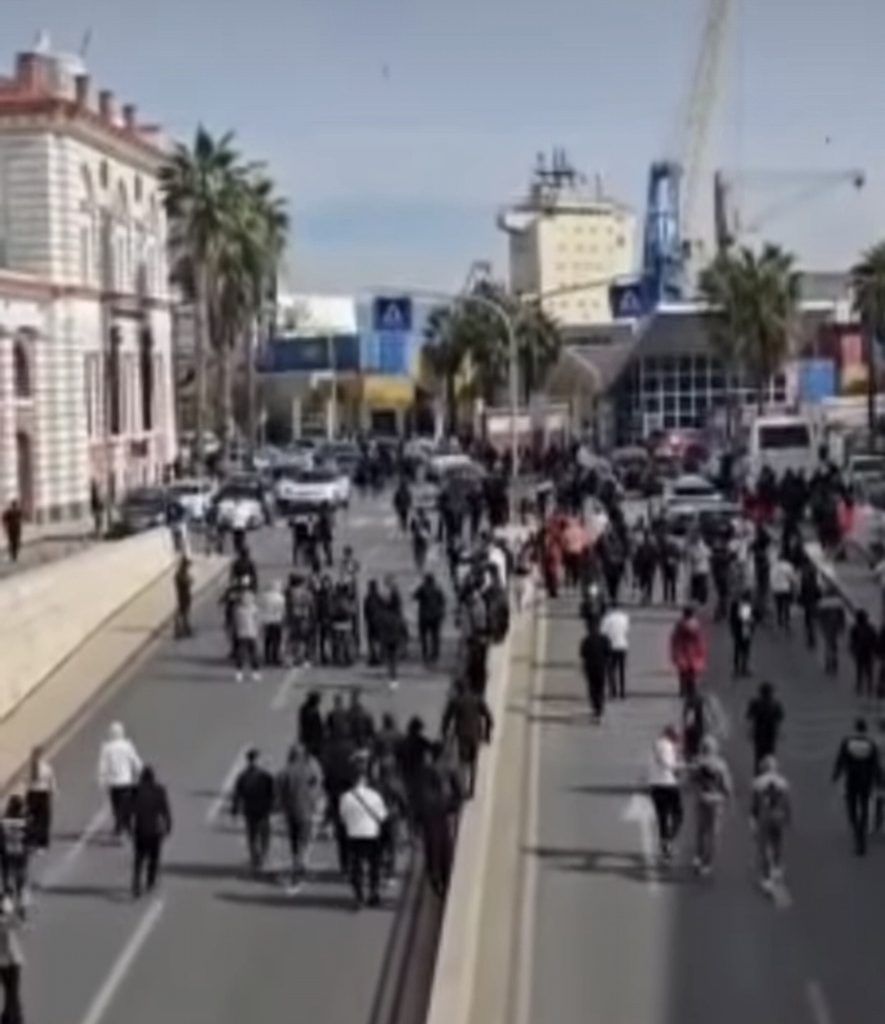
In Durres, protesters set fire to rubbish bins, broke the entrance door of the prefecture building and entered the premises, according to preliminary reports. Trees were also set on fire in the outdoor area of the municipal building.
In Shkoder, police began detaining protesters, prompting resistance from demonstrators who tried to prevent officers from taking people away. Other protesters intervened and called for those being detained to be released, shouting “Shame”.
In Korce, young demonstrators blocked the main boulevard before heading towards the municipal building and setting off firecrackers. Tensions later escalated near the regional education directorate, where windows were broken and objects thrown at the building. Police also intervened after protesters attempted to enter a high school.
The spread of demonstrations beyond the capital suggests that the unrest is no longer confined to Tirana, although the extent to which protesters share the same demands remains unclear.
89 people receive medical treatment after Wednesday’s protest
Albania’s Health Ministry said 89 people received medical treatment following Wednesday’s protest, including 61 police officers and 18 protesters treated at the University Trauma Hospital, as well as 10 patients at the Mother Teresa University Hospital Centre in Tirana.
Four police officers and two protesters remained hospitalised at the trauma facility, the ministry said. One protester and two police officers were expected to undergo medical procedures. The 10 patients treated at the university hospital had been discharged.
The figures underscore the human cost of the confrontations as authorities face growing pressure to prevent further escalation.
Rama blames opposition, offers dialogue with young people
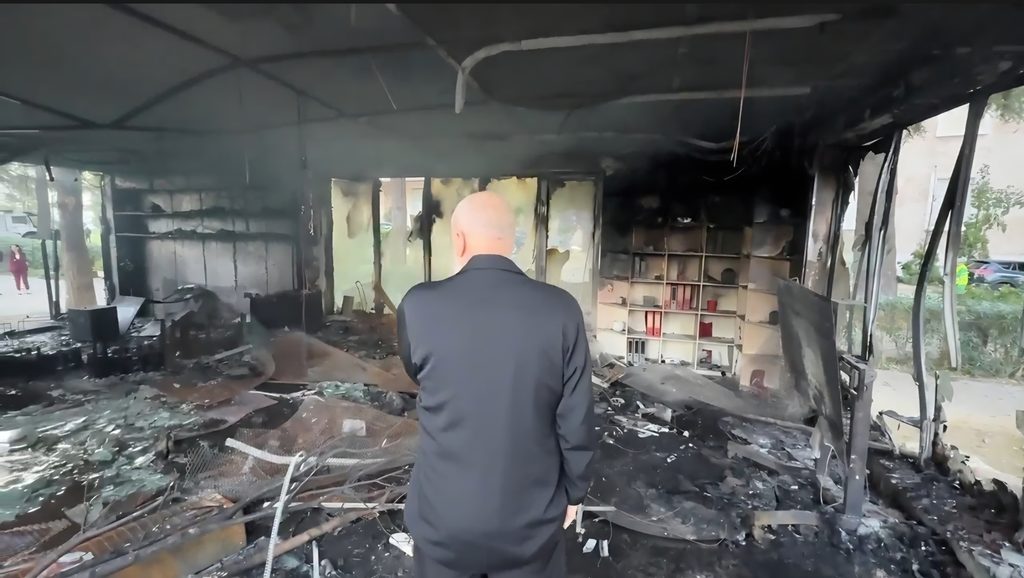
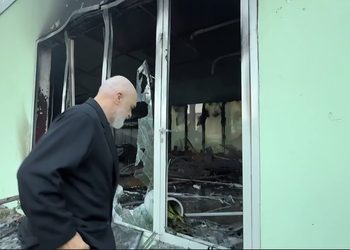
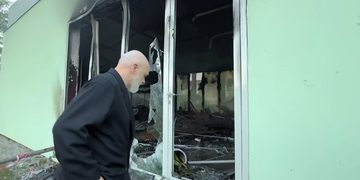
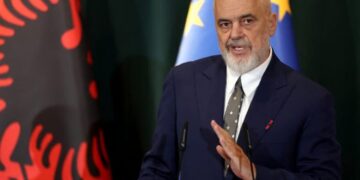
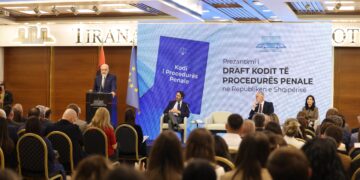
Rama made his first public response to the protests from the damaged premises of the College of Europe in Tirana, describing the building as a symbol of what he said was happening in the country.
He accused the opposition of being responsible for the violence and argued that the unrest did not represent students, while warning that those responsible for property damage would face legal consequences.
Rama also said he was willing to engage in dialogue with young people and accused the opposition of seeking to divert Albania from its European path.
The prime minister’s response has placed the confrontation within a broader political dispute, with the government blaming opposition forces for the unrest while protesters continue to demonstrate and boycott classes.
Opposition demands government’s resignation
The parliamentary group of the Democratic Party, Albania’s main opposition force, voiced support for the students and high school pupils, calling for Rama’s government to resign and for a caretaker government to oversee early, free and fair elections.
The party also called for the dissolution of the current parliament, arguing that normal parliamentary functioning was impossible amid the country’s political and social crisis.
The opposition’s demands broaden the dispute beyond the protests themselves, turning the demonstrations into part of a wider confrontation over the government’s authority and the functioning of state institutions.
EU condemns violence and calls for dialogue
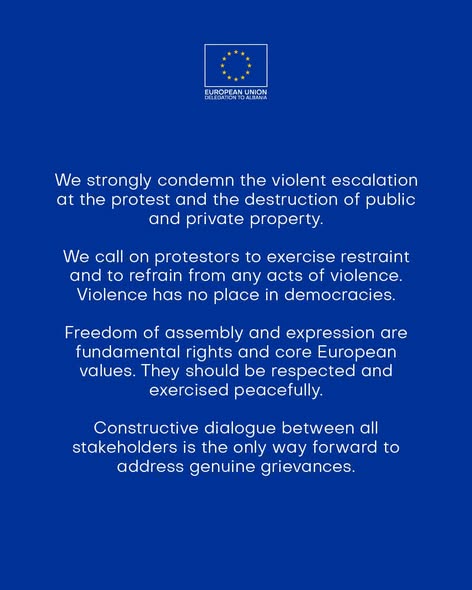
The European Union Delegation in Albania condemned the escalation of violence and damage to public and private property, urging protesters to refrain from violent acts.
It stressed that freedom of assembly and freedom of expression were fundamental rights and said constructive dialogue was the appropriate way to address grievances.
The EU’s response highlights the challenge facing Albanian authorities: maintaining public order while protecting the right to peaceful protest.
© 2026 Argumentum