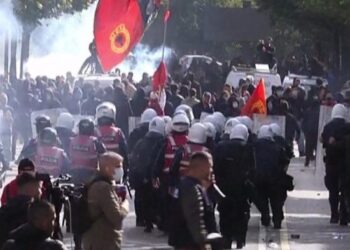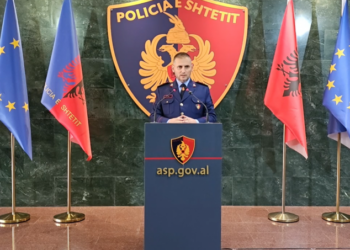





















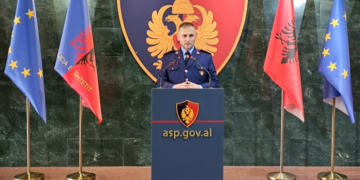




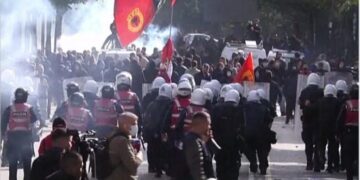





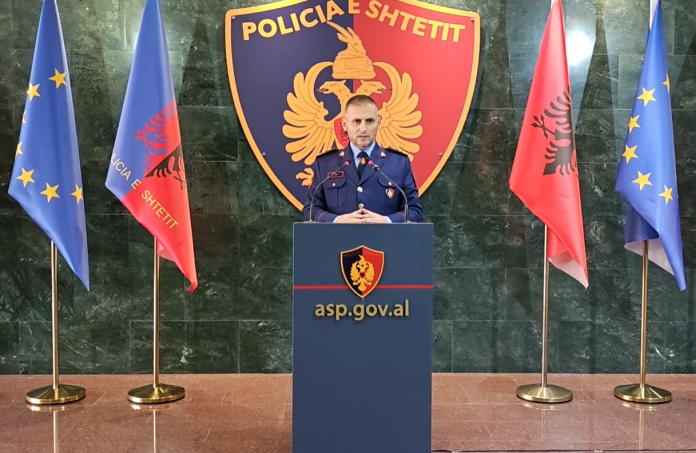
Seventy-one police officers have been injured during nearly three days of protests in the Albanian capital, some of them seriously, the country’s police chief Skender Hita said on Thursday, accusing unidentified individuals of exploiting student demonstrations to foment violence.
“Behind the masks leading the protests through violence are not students, but individuals recruited for the dark purposes of the real organisers of these protests, inside and outside the country,” Hita said in a statement to the media.
Hita said none of those detained on the first night of protests had been identified as students, while only a very small number of those detained on the second night were students. He did not provide further details or evidence to support the allegations about the organisers.
The police chief said the capital had faced a wave of violence, arson and destruction targeting state institutions and public and private property, putting the lives and safety of citizens at risk.
He said police recognised the constitutional right of citizens, students and political parties to demonstrate peacefully, but stressed that protests could not be used to justify violence or the destruction of property.
“Police will not retreat in the face of violence. Institutions will be protected. Citizens will be protected. The law will be enforced firmly and without exception,” Hita said.
He called on parents, teachers and university lecturers to prevent school pupils and students from being drawn into organised violence, and urged demonstrators to distance themselves from masked and violent individuals.
Hita also pledged full institutional support for officers carrying out their duties lawfully, saying those responsible for attacks on police or damage to public and private property would be identified and prosecuted.
The protests have raised tensions in Albania, where demonstrators have voiced demands for change and clashed with police. President Bajram Begaj on Thursday called for calm and dialogue, saying the voices of citizens, particularly young people, deserved to be heard, while warning that violence could undermine democratic coexistence and national stability.
© 2026 Argumentum