



• SHQIPËRI
  • KOSOVË
  • MAQEDONIA E VERIUT
  • MALI I ZI
  • Revista në PDF
6 June, 2026
  • Home
  • OP/ED

    Pierre Nora and the institution of memory we lack in Eastern Europe

    The Blueprint of a Diplomatic Debacle: Analyzing Germany’s Historic UNSC Loss

    Cyber Attribution, Corruption, and the False-Flag Question in Albania’s 2022 Alleged Iranian Cyberattack

    Between Russia, Iran and Europe: Azerbaijan as a balancing power in the South Caucasus

    The Zero-Tariff Gate: Sovereignty as a Service in the Sino-African Corridor

    Albania vs. the Sea/ Marginal Notes on A. Leka’s Novel The Hidden Side of the Albanian Socialist Garden

    May 9 and the long shadow of a Letter: Is Europe still Schuman’s Project?

    The Arbnesh of Zadar: A living memory of Albanian identity on the Adriatic coast

    Science Diplomacy and Academic Freedom: A strategic nexus for contemporary diplomacy

  • Interview

    Exclusive Interview with Oleksandr Tyshchenko: A 40-Year Legacy of Chernobyl, Nuclear Risks, and Global Responsibility

    INTERVIEW: ZLATKO KRAMARIĆ – THOUGHTS ON THE OLD CONTINENT

    EXCLUSIVE / Ukrainian Ambassador to Albania, Volodymyr Shkurov: “Ukraine wants peace, but not at the expense of its freedom and independence”

    EXCLUSIVE| Ambassador Tayyar Kagan Atay: Türkiye and Albania, a Strategic Partnership Rooted in Shared Heritage and a Common Vision for the Future

    “Diplomacy, Not War”: Palestinian Ambassador to Albania Calls for Justice, Peace, and Global Action for Gaza

    Exclusive: “Even After Tito – Tito”/ Ambassador Zlatko Kramarić on Authoritarian Legacies and Democracy’s Future in the Balkans

    The Conclusion of the Diplomatic Mission / Ambassador Dancho Markovski: Strengthening Albania-North Macedonia Relations for a Shared European Future

    A Century of Diplomatic Relations Between Albania and Russia: Exclusive Interview with the Russian Ambassador to Albania, H.E. Alexey Zaytsev

    Exclusive/ The chairman of the Freedom Party, Ilir Meta: “The will of the citizens will triumph in Albania, as it did in North Macedonia”

  • Realpolitik

    IBAR? ”Sufficiently! Much ado about nothing! Shart contrasts in Beijing! Where is the exit?!

    Neither peace nor war! Peace with bombs?! IBAR in autumn?! Not another Hormuz in Taivan! 

    IBAR – a springing board or an obstacle? Can we catch the EU Negotiation train 2027? When the dress makes the news!  EU electoral April  ends in a draw 1:1!  

    The European Parliament building in Strasbourg, France with flags waving calmly celebrating peace of the Europe. July 12, 2020.

    EU 2027 or 2037! Even half membership failed! No exit strategy!     

    What next?

    “With diplomatic velvet“! Major question marks! In Washington yes, but  in the White House NO! A strange dinner in Brussels!

    From a great ‘apple of disaccord’ to a  point of  cooperation! A bad start! The strange absence in Davos!

    5 lessons from the American 3 January! Don’t count the chicken before they are hatched! Will NATO freeze in Greenland? Wrong diplomatic messages!

    German Chancellor Friedrich Merz, European Commission President Ursula von der Leyen, Ukraine's President Volodymyr Zelenskiy, U.S. Special Envoy Steve Witkoff and Jared Kushner, son-in-law of U.S. President Donald Trump line up for a family photo opportunity at the Chancellery in Berlin, Germany, December 15, 2025.    REUTERS/Lisi Niesner/Pool

    A Strategy that could change the world! Europe in Berlin! Why an historic compromise? Only charm diplomacy in Athens!

  • Current Events

    Rama alleges ‘hybrid war’ behind protests against Kushner-linked coastal development

    BELGRADE, SERBIA - JUNE 18. 2020: Russian and Serbian flags on display during Russian Foreign Minister Sergei Lavrov's visit to the Liberators of Belgrade Memorial. Valery Sharifulin/TASS,Image: 533095429, License: Rights-managed, Restrictions: UWAGA! Zdjęcia zawierają oryginalny opis dostawcy (ITAR-TASS). Szczególnie w związku z agresją Rosji na Ukrainę mogą zawierać przekaz niezgodny z faktami. Zweryfikuj go przed publikacją, Model Release: no, Credit line: Valery Sharifulin / TASS / Forum

    Balkan Maskirovka: Why Moscow’s “Distancing” Is Only an Operation for the Survival of Vučić’s Regime

    Serbia – China 2026: Technological partnership, geopolitical positioning and a new phase of the Chinese presence in the Western Balkans

    The Digital Protectorate: How the EU AI Act Codified Silicon Valley’s Monopoly

    The 28th MFC Annual Conference in Durrës / Sulaj: Microfinance remains a key instrument for financial inclusion

    Serbia at the Crossroads of EU Integration and Geopolitical Balancing: IFIMES Analysis

    Tirana – €20 Million EU–Banking Agreement Boosts Albanian SMEs

    The Myth of Independence: How Chinese Efficiency is Rewriting the Constitution of Modern Geopolitics!

    Europe Yesterday and Today: Why 9 May Still Matters

  • Top News

    Rama alleges ‘hybrid war’ behind protests against Kushner-linked coastal development

    No End in Sight: Trump, Netanyahu and the Expanding Middle East War

    Tirana – €20 Million EU–Banking Agreement Boosts Albanian SMEs

    “EU4Municipalities II” Project, a Strategic Investment for Strengthening Municipalities and Accelerating Albania’s Path towards the EU

    Albania, Italy deepen defence ties with naval shipbuilding deal

    U.S. Embassy: Iran-Linked Groups May Target Americans and Iranian Opposition in Albania

    The Council of Albanian Ambassadors disappointed with the voting of the draft law on the foreign service in the parliamentary committees.

    Prime Minister Edi Rama Addresses Israel’s Knesset in Historic Special Session

    Kazakhstan’s Strategic Reform Agenda: Stability, Modern Governance, and Responsible Diplomacy

  • YOUR VOICE
  • Shqip
No Result
View All Result
Argumentum
  • Home
  • OP/ED

    Pierre Nora and the institution of memory we lack in Eastern Europe

    The Blueprint of a Diplomatic Debacle: Analyzing Germany’s Historic UNSC Loss

    Cyber Attribution, Corruption, and the False-Flag Question in Albania’s 2022 Alleged Iranian Cyberattack

    Between Russia, Iran and Europe: Azerbaijan as a balancing power in the South Caucasus

    The Zero-Tariff Gate: Sovereignty as a Service in the Sino-African Corridor

    Albania vs. the Sea/ Marginal Notes on A. Leka’s Novel The Hidden Side of the Albanian Socialist Garden

    May 9 and the long shadow of a Letter: Is Europe still Schuman’s Project?

    The Arbnesh of Zadar: A living memory of Albanian identity on the Adriatic coast

    Science Diplomacy and Academic Freedom: A strategic nexus for contemporary diplomacy

  • Interview

    Exclusive Interview with Oleksandr Tyshchenko: A 40-Year Legacy of Chernobyl, Nuclear Risks, and Global Responsibility

    INTERVIEW: ZLATKO KRAMARIĆ – THOUGHTS ON THE OLD CONTINENT

    EXCLUSIVE / Ukrainian Ambassador to Albania, Volodymyr Shkurov: “Ukraine wants peace, but not at the expense of its freedom and independence”

    EXCLUSIVE| Ambassador Tayyar Kagan Atay: Türkiye and Albania, a Strategic Partnership Rooted in Shared Heritage and a Common Vision for the Future

    “Diplomacy, Not War”: Palestinian Ambassador to Albania Calls for Justice, Peace, and Global Action for Gaza

    Exclusive: “Even After Tito – Tito”/ Ambassador Zlatko Kramarić on Authoritarian Legacies and Democracy’s Future in the Balkans

    The Conclusion of the Diplomatic Mission / Ambassador Dancho Markovski: Strengthening Albania-North Macedonia Relations for a Shared European Future

    A Century of Diplomatic Relations Between Albania and Russia: Exclusive Interview with the Russian Ambassador to Albania, H.E. Alexey Zaytsev

    Exclusive/ The chairman of the Freedom Party, Ilir Meta: “The will of the citizens will triumph in Albania, as it did in North Macedonia”

  • Realpolitik

    IBAR? ”Sufficiently! Much ado about nothing! Shart contrasts in Beijing! Where is the exit?!

    Neither peace nor war! Peace with bombs?! IBAR in autumn?! Not another Hormuz in Taivan! 

    IBAR – a springing board or an obstacle? Can we catch the EU Negotiation train 2027? When the dress makes the news!  EU electoral April  ends in a draw 1:1!  

    The European Parliament building in Strasbourg, France with flags waving calmly celebrating peace of the Europe. July 12, 2020.

    EU 2027 or 2037! Even half membership failed! No exit strategy!     

    What next?

    “With diplomatic velvet“! Major question marks! In Washington yes, but  in the White House NO! A strange dinner in Brussels!

    From a great ‘apple of disaccord’ to a  point of  cooperation! A bad start! The strange absence in Davos!

    5 lessons from the American 3 January! Don’t count the chicken before they are hatched! Will NATO freeze in Greenland? Wrong diplomatic messages!

    German Chancellor Friedrich Merz, European Commission President Ursula von der Leyen, Ukraine's President Volodymyr Zelenskiy, U.S. Special Envoy Steve Witkoff and Jared Kushner, son-in-law of U.S. President Donald Trump line up for a family photo opportunity at the Chancellery in Berlin, Germany, December 15, 2025.    REUTERS/Lisi Niesner/Pool

    A Strategy that could change the world! Europe in Berlin! Why an historic compromise? Only charm diplomacy in Athens!

  • Current Events

    Rama alleges ‘hybrid war’ behind protests against Kushner-linked coastal development

    BELGRADE, SERBIA - JUNE 18. 2020: Russian and Serbian flags on display during Russian Foreign Minister Sergei Lavrov's visit to the Liberators of Belgrade Memorial. Valery Sharifulin/TASS,Image: 533095429, License: Rights-managed, Restrictions: UWAGA! Zdjęcia zawierają oryginalny opis dostawcy (ITAR-TASS). Szczególnie w związku z agresją Rosji na Ukrainę mogą zawierać przekaz niezgodny z faktami. Zweryfikuj go przed publikacją, Model Release: no, Credit line: Valery Sharifulin / TASS / Forum

    Balkan Maskirovka: Why Moscow’s “Distancing” Is Only an Operation for the Survival of Vučić’s Regime

    Serbia – China 2026: Technological partnership, geopolitical positioning and a new phase of the Chinese presence in the Western Balkans

    The Digital Protectorate: How the EU AI Act Codified Silicon Valley’s Monopoly

    The 28th MFC Annual Conference in Durrës / Sulaj: Microfinance remains a key instrument for financial inclusion

    Serbia at the Crossroads of EU Integration and Geopolitical Balancing: IFIMES Analysis

    Tirana – €20 Million EU–Banking Agreement Boosts Albanian SMEs

    The Myth of Independence: How Chinese Efficiency is Rewriting the Constitution of Modern Geopolitics!

    Europe Yesterday and Today: Why 9 May Still Matters

  • Top News

    Rama alleges ‘hybrid war’ behind protests against Kushner-linked coastal development

    No End in Sight: Trump, Netanyahu and the Expanding Middle East War

    Tirana – €20 Million EU–Banking Agreement Boosts Albanian SMEs

    “EU4Municipalities II” Project, a Strategic Investment for Strengthening Municipalities and Accelerating Albania’s Path towards the EU

    Albania, Italy deepen defence ties with naval shipbuilding deal

    U.S. Embassy: Iran-Linked Groups May Target Americans and Iranian Opposition in Albania

    The Council of Albanian Ambassadors disappointed with the voting of the draft law on the foreign service in the parliamentary committees.

    Prime Minister Edi Rama Addresses Israel’s Knesset in Historic Special Session

    Kazakhstan’s Strategic Reform Agenda: Stability, Modern Governance, and Responsible Diplomacy

  • YOUR VOICE
  • Shqip
No Result
View All Result
Argumentum
No Result
View All Result
Home Current Events

Chauvinism Hidden Behind Religion: The Case of the Church in the Courtyard of the University of Prishtina

3 April, 2025
in Current Events, ENGLISH, English OP/ED
A A
Share on FacebookShare on Twitter

Author: Dr. Gurakuç Kuçi –

Senior Researcher at Institute for Hybrid Warfare Studies “OCTOPUS” and professor

At the onset of the former Yugoslavia’s disintegration, the year 1989 marked a dark turning point for Kosovo. Serbia, under the leadership of Slobodan Milosevic, unilaterally revoked Kosovo’s constitutional autonomy, dismantled its institutions, and imposed an oppressive system on the Albanian majority. This institutionalized repression was part of a broader Serbian nationalist-chauvinist project, which in the ensuing decade would lead to bloody wars and the genocide in Bosnia (1992–1995), shocking the international conscience.

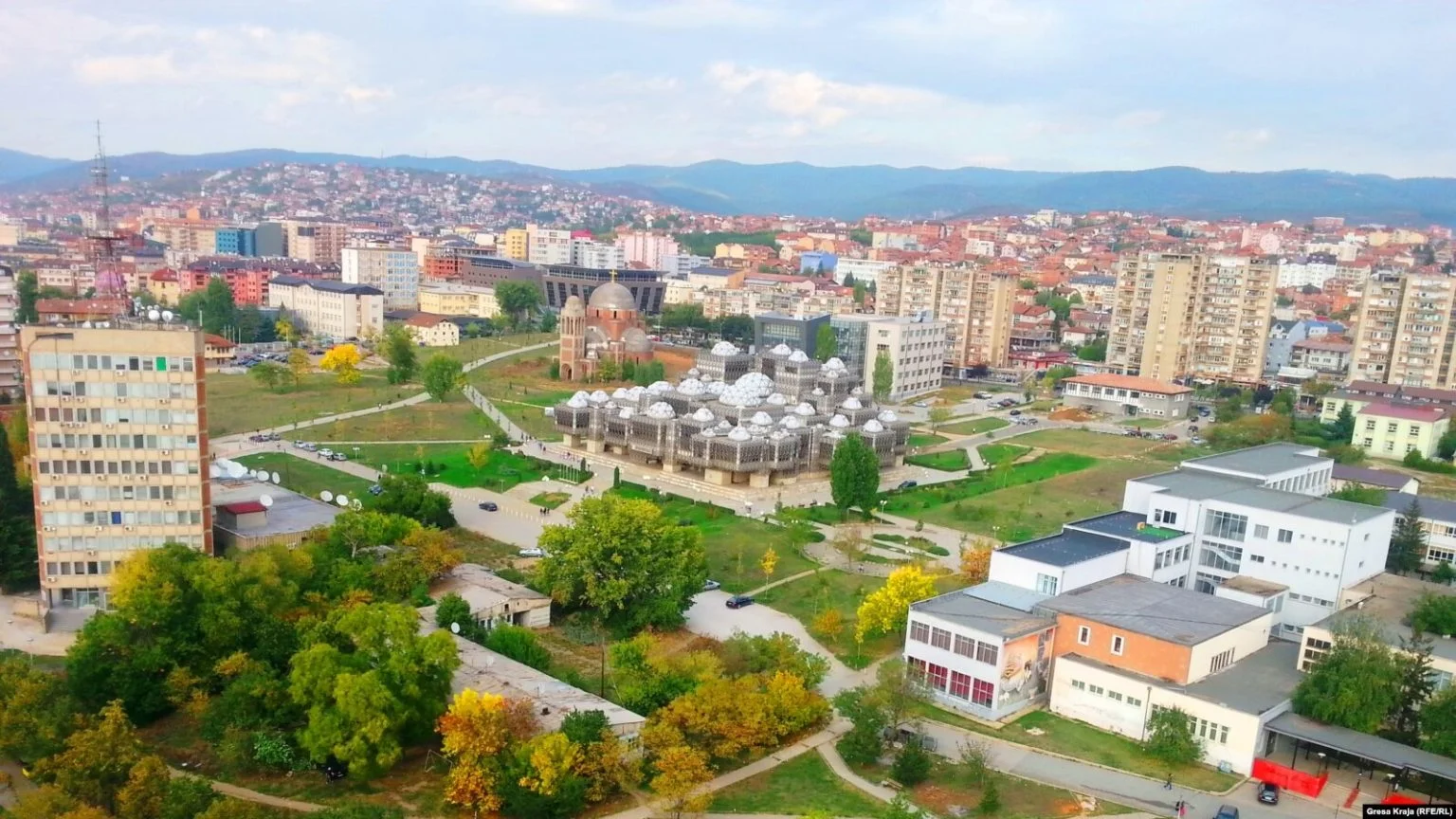
Within this climate of violence and denial, the Serbian regime began construction of the “Church of Christ the Savior” in the courtyard of the University of Prishtina in 1992. This was not a spiritual or religious initiative of the local community, but a premeditated ideological project, intended to implant Serbian presence and dominance in a space that symbolized knowledge, identity, and the resilience of Albanians in Kosovo. At a time when Albanians were forcibly excluded from education, media, and public institutions, the construction of such a religious object in the heart of the university was a clear symbolic act of ethno-political control.

Had this project been completed and Kosovo ultimately occupied, it would not have stopped at symbolism: it would have included the appropriation of the National Library of Kosovo as a church library, as well as the conversion of university facilities for the church’s needs. This would have secured the Church a strategic position in the heart of Prishtina, turning it into a religious, cultural, and political center for all of Kosovo.

This church represented the use of faith as a propagandistic instrument rather than an expression of genuine religious need. It was not constructed to serve the local Orthodox community, but to project Serbian power over public space, to normalize repression, and to impose a new historical narrative. Even the name itself “Church of Christ the Savior” was part of this propaganda: it did not evoke a universal religious value, but rather attempted to portray occupation as “salvation” and oppression as “faith.”

At its core, this church was not a place of worship but a monument of occupation, a calculated effort to strip the University of Prishtina of its Albanian identity and replace it with a symbol of Serbian political power. It was a deliberate act aimed at producing ongoing cultural and historical tension, cloaking domination in the guise of religion, and employing it as a hybrid weapon.

Instrumentalization of Religion for Occupation: The Church’s Construction in Violation of International Law

The construction of the Serbian Orthodox Church in the courtyard of the University of Prishtina in the early 1990s, at a time when Kosovo was under an oppressive regime and an institutional apartheid system against Albanians, constitutes a direct violation of numerous principles of international humanitarian law and human rights law.

According to Article 53 of the Fourth Geneva Convention (1949), any destruction or appropriation of public or private property by an occupying power is prohibited, except where such destruction is absolutely necessary for military purposes. Following the abolition of Kosovo’s autonomy in 1989, Serbia acted as a de facto occupying power and appropriated the public space of a civilian institution, the University of Prishtina, by constructing a religious building tied to its nationalist-chauvinist ideology. This act not only violated the principle of non-interference with civilian objects but also represented the appropriation of spaces ethnically cleansed of Albanian students and staff under the pretext of military necessity.

Similarly, Article 52 of Protocol I Additional to the Geneva Conventions (1977) prohibits the use of civilian objects for purposes that transform them into political or military targets. The transformation of an educational space into a tool of religious-political propaganda during a time of systematic repression clearly contravenes this provision, turning the University into a platform of ideological imposition.

Furthermore, the Hague Convention for the Protection of Cultural Property in the Event of Armed Conflict (1954), supported by UNESCO conventions, prohibits the misuse and politicization of cultural heritage sites. The construction of a religious-political structure within an educational and cultural center during a period of ethnically organized violence and discrimination violates Article 4 of this Convention, which mandates the protection of cultural property even during wartime.

From a human rights perspective, the construction of the church in a space that had been ethnically cleansed of Albanians also violates the International Covenant on Civil and Political Rights (ICCPR, 1966). Article 18 of this covenant guarantees the freedom of thought, conscience, and religion for all citizens. Meanwhile, Article 27 protects the rights of minorities to enjoy their culture and practice their religion. In this case, the Albanian majority was excluded from public institutions, while in their place was installed a symbol of a nationalized religion serving only the occupier.

Within this context, the legal evaluation must also consider two fundamental principles of international humanitarian law: jus ad bellum and jus in bello. According to jus ad bellum, Serbia’s use of force to maintain control over Kosovo after 1989 had no legitimate basis under international law. Serbia acted without the consent of the local population and without international mandate, rendering its occupation illegal. Accordingly, the construction of the church as a symbol of occupation was not an isolated act, but part of a broader aggressive action that violated the right to self-determination.

From the perspective of jus in bello, even if Serbia had held a recognized status as an occupying power, it was still obligated to preserve the civilian character of public institutions and protect cultural property. The construction of a religious-political structure on ethnically cleansed educational grounds constitutes a clear violation of these obligations, turning a civilian zone into an object of propaganda and ethnic tension.

All of these actions, undertaken as part of a broader strategy of institutional apartheid and cultural domination, represent a breach of both the spirit and the letter of international law. The construction of the Church in the courtyard of the University of Prishtina cannot be treated as a neutral or merely religious act, but as an integral part of the machinery of symbolic occupation and structural violence.

During the war in Kosovo in 1998, the Kosovo Liberation Army (KLA) undertook deliberate efforts to protect Serbian religious sites from damage and vandalism, in accordance with international humanitarian law. According to a report by Agence France-Presse (AFP), republished by Albanian Post, KLA fighters stationed guards at several Serbian Orthodox monasteries to protect them during field clashes. This conduct, contrary to narratives that portray the KLA as an exclusionary force, demonstrates a commitment to preserving cultural heritage and religious diversity in Kosovo. Such actions align with the Hague Convention (1954) and the Geneva Conventions, which prohibit targeting religious sites and mandate their protection in times of conflict. While the Serbian regime constructed religious structures as instruments of political domination, the KLA by safeguarding monuments of the other religious community affirmed the defensive and ethical character of its liberation struggle.

Deconstructing the Propaganda Surrounding the Church in the Courtyard of the University of Prishtina

In Kosovo’s post-war public discourse, one often encounters attempts to rewrite historical narratives through a refined apparatus of propaganda, operating under the guise of academic analysis or public concern. Articles published on the Kosovo Online platform by individuals with titles such as “professor,” “political analyst,” or “civil society representative” do not represent opinions built upon verifiable facts but ideologically positioned formulations designed to confuse readers and to construct a false dichotomy between “heritage protection” and “religious persecution.”

For example, in an article quoting Professor Popovic (“the most sacred symbols of the Serbian community are being targeted in Kosovo”), there is a complete lack of concrete references to events, individuals, or specific contexts. Instead of scholarly argumentation, we are presented with emotionally charged generalizations, where any criticism of the Church in the courtyard of the University of Prishtina is equated with an attack on the entire Serbian community. This is a pure example of the technique of spreading collective fear, aimed at preventing rational debate by replacing it with identity panic.

Likewise, statements by analysts such as Gudzhic, who claim that “the goal of the Albanian elites is to erase the Serbian presence in Kosovo”, reflect a simplified and dangerous form of political logic: any criticism of a politically imposed building during wartime is automatically equated with the “cleansing” of a people. This represents a direct manipulation of the word “presence”, presenting the object of conflict as the representative of an entire collective.

Particularly concerning is the involvement of academic voices in this discourse. Rather than engaging with source-based, contextual, and measurable criteria, these individuals use their titles to seal the narrative as an unquestionable truth. A university professor who engages publicly without citing a single historical, legal, or factual source, and instead relies solely on normative and dramatic statements, violates the very principles of the scientific method: skepticism, objectivity, and argumentative transparency. Such a figure is not educating but contributing to the production of an ideologized readership, erasing the boundary between science and propaganda.

This mode of communication is not neutral: it aids in consolidating a political mythology around the Church as a victim, while concealing its true nature as an instrument of cultural occupation. The fact that these statements avoid engaging with historical data (e.g., the period of the Church’s construction, its symbolic function, the exclusion of Albanians from education, violations of international law) indicates that the goal is not clarification but the creation of a monstrous worldview in which every effort at decolonization is framed as fanaticism against religion.

In this way, propagandistic discourse is not merely inaccurate but actively dangerous: it renders honest conversation impossible and incites tensions by concealing injustice under the veil of “national concern” or “heritage preservation.” Countering this type of rhetoric requires not only confrontation with facts but a denunciation of the method itself, because when science is used to conceal power, it ceases to be science.

From Imaginary Alarm to Political Agenda: The Church as a Symbol of Strategic Mobilization

The discourse constructed around the illegally built Orthodox church in the courtyard of the University of Prishtina, as promoted in certain Serbian media outlets, does not aim to preserve religious heritage, but rather to create a political narrative that frames every legal or institutional debate as an attack on religion. This form of propaganda exploits religious sensitivities to generate interethnic tensions, mobilize Serbian public opinion, and undermine the legitimacy of Kosovo’s institutions in the eyes of the international public.

Particularly problematic is the current attempt to include this issue in the Kosovo–Serbia dialogue as a “cultural heritage topic”. This effort is unfounded, as the object in question does not represent protected religious heritage, but a contested construction, built without the consent of the majority during a period of deep institutional repression.

The renewed propaganda efforts, especially during this sensitive political moment and the heightened attention to this church by Kosovo Online, indicate that Serbia is preparing an agenda aimed at mass mobilization, including the potential call for mobilization for war, with the ultimate goal of marching toward Prishtina in “defense” of the church.

No one has called for the demolition of the church, and Kosovo’s position is not one of opposition to the Orthodox faith. However, attempts to treat the Serbian Orthodox Church in Kosovo with special status or to politicize this structure violate the principle of religious equality and aim to transform a legally debatable object into a tool of political bargaining.

These are familiar tactics that Serbia has used in the past: victimization, division, and the diversion of debate from historical truth to emotionally charged narratives. For this reason, it is essential that this issue not be included in the inter-state dialogue and that Serbia’s actions, particularly those employing instruments such as the Orthodox Church for the purposes of inciting conflict and promoting victimhood, remain under close public scrutiny.

/Argumentum.al

© 2025 Argumentum

Related Posts

Current Events

Rama alleges ‘hybrid war’ behind protests against Kushner-linked coastal development

5 June, 2026
ENGLISH

Pierre Nora and the institution of memory we lack in Eastern Europe

5 June, 2026
BELGRADE, SERBIA - JUNE 18. 2020: Russian and Serbian flags on display during Russian Foreign Minister Sergei Lavrov's visit to the Liberators of Belgrade Memorial. Valery Sharifulin/TASS,Image: 533095429, License: Rights-managed, Restrictions: UWAGA! Zdjęcia zawierają oryginalny opis dostawcy (ITAR-TASS). Szczególnie w związku z agresją Rosji na Ukrainę mogą zawierać przekaz niezgodny z faktami. Zweryfikuj go przed publikacją, Model Release: no, Credit line: Valery Sharifulin / TASS / Forum
Current Events

Balkan Maskirovka: Why Moscow’s “Distancing” Is Only an Operation for the Survival of Vučić’s Regime

5 June, 2026

Follow US

Subscribe

Receive Argumentum Magazine by Email

Last Posts

Rama alleges ‘hybrid war’ behind protests against Kushner-linked coastal development

5 June, 2026

Pierre Nora and the institution of memory we lack in Eastern Europe

5 June, 2026
BELGRADE, SERBIA - JUNE 18. 2020: Russian and Serbian flags on display during Russian Foreign Minister Sergei Lavrov's visit to the Liberators of Belgrade Memorial. Valery Sharifulin/TASS,Image: 533095429, License: Rights-managed, Restrictions: UWAGA! Zdjęcia zawierają oryginalny opis dostawcy (ITAR-TASS). Szczególnie w związku z agresją Rosji na Ukrainę mogą zawierać przekaz niezgodny z faktami. Zweryfikuj go przed publikacją, Model Release: no, Credit line: Valery Sharifulin / TASS / Forum

Balkan Maskirovka: Why Moscow’s “Distancing” Is Only an Operation for the Survival of Vučić’s Regime

5 June, 2026

The Blueprint of a Diplomatic Debacle: Analyzing Germany’s Historic UNSC Loss

4 June, 2026

Serbia – China 2026: Technological partnership, geopolitical positioning and a new phase of the Chinese presence in the Western Balkans

1 June, 2026
Argumentum

“Argumentum”, një proces intelektual …

Contact Us

[email protected]
[email protected]
[email protected]

Follow Us

Media Partner

Register

Receive Argumentum Magazine by Email
  • Home
  • Privacy Policy
  • About Us
  • Contact

© 2022 Argumentum. All Rights Reserved. | NUIS: L91415033Q

Welcome Back!

Login to your account below

Forgotten Password? Sign Up

Create New Account!

Fill the forms bellow to register

*By registering into our website, you agree to the Terms & Conditions and Privacy Policy.
All fields are required. Log In

Retrieve your password

Please enter your username or email address to reset your password.

Log In

Add New Playlist

No Result
View All Result
  • Home
  • OP/ED
  • Interview
  • Realpolitik
  • Current Events
  • Top News
  • YOUR VOICE
  • Shqip

© 2022 Argumentum. All Rights Reserved. | NUIS: L91415033Q

This website uses cookies. By continuing to use this website you are giving consent to cookies being used. Visit our Privacy and Cookie Policy.