















• SHQIPËRI
  • KOSOVË
  • MAQEDONIA E VERIUT
  • MALI I ZI
  • Revista në PDF
6 June, 2026
  • Home
  • OP/ED

    Pierre Nora and the institution of memory we lack in Eastern Europe

    The Blueprint of a Diplomatic Debacle: Analyzing Germany’s Historic UNSC Loss

    Cyber Attribution, Corruption, and the False-Flag Question in Albania’s 2022 Alleged Iranian Cyberattack

    Between Russia, Iran and Europe: Azerbaijan as a balancing power in the South Caucasus

    The Zero-Tariff Gate: Sovereignty as a Service in the Sino-African Corridor

    Albania vs. the Sea/ Marginal Notes on A. Leka’s Novel The Hidden Side of the Albanian Socialist Garden

    May 9 and the long shadow of a Letter: Is Europe still Schuman’s Project?

    The Arbnesh of Zadar: A living memory of Albanian identity on the Adriatic coast

    Science Diplomacy and Academic Freedom: A strategic nexus for contemporary diplomacy

  • Interview

    Exclusive Interview with Oleksandr Tyshchenko: A 40-Year Legacy of Chernobyl, Nuclear Risks, and Global Responsibility

    INTERVIEW: ZLATKO KRAMARIĆ – THOUGHTS ON THE OLD CONTINENT

    EXCLUSIVE / Ukrainian Ambassador to Albania, Volodymyr Shkurov: “Ukraine wants peace, but not at the expense of its freedom and independence”

    EXCLUSIVE| Ambassador Tayyar Kagan Atay: Türkiye and Albania, a Strategic Partnership Rooted in Shared Heritage and a Common Vision for the Future

    “Diplomacy, Not War”: Palestinian Ambassador to Albania Calls for Justice, Peace, and Global Action for Gaza

    Exclusive: “Even After Tito – Tito”/ Ambassador Zlatko Kramarić on Authoritarian Legacies and Democracy’s Future in the Balkans

    The Conclusion of the Diplomatic Mission / Ambassador Dancho Markovski: Strengthening Albania-North Macedonia Relations for a Shared European Future

    A Century of Diplomatic Relations Between Albania and Russia: Exclusive Interview with the Russian Ambassador to Albania, H.E. Alexey Zaytsev

    Exclusive/ The chairman of the Freedom Party, Ilir Meta: “The will of the citizens will triumph in Albania, as it did in North Macedonia”

  • Realpolitik

    IBAR? ”Sufficiently! Much ado about nothing! Shart contrasts in Beijing! Where is the exit?!

    Neither peace nor war! Peace with bombs?! IBAR in autumn?! Not another Hormuz in Taivan! 

    IBAR – a springing board or an obstacle? Can we catch the EU Negotiation train 2027? When the dress makes the news!  EU electoral April  ends in a draw 1:1!  

    The European Parliament building in Strasbourg, France with flags waving calmly celebrating peace of the Europe. July 12, 2020.

    EU 2027 or 2037! Even half membership failed! No exit strategy!     

    What next?

    “With diplomatic velvet“! Major question marks! In Washington yes, but  in the White House NO! A strange dinner in Brussels!

    From a great ‘apple of disaccord’ to a  point of  cooperation! A bad start! The strange absence in Davos!

    5 lessons from the American 3 January! Don’t count the chicken before they are hatched! Will NATO freeze in Greenland? Wrong diplomatic messages!

    German Chancellor Friedrich Merz, European Commission President Ursula von der Leyen, Ukraine's President Volodymyr Zelenskiy, U.S. Special Envoy Steve Witkoff and Jared Kushner, son-in-law of U.S. President Donald Trump line up for a family photo opportunity at the Chancellery in Berlin, Germany, December 15, 2025.    REUTERS/Lisi Niesner/Pool

    A Strategy that could change the world! Europe in Berlin! Why an historic compromise? Only charm diplomacy in Athens!

  • Current Events

    Rama alleges ‘hybrid war’ behind protests against Kushner-linked coastal development

    BELGRADE, SERBIA - JUNE 18. 2020: Russian and Serbian flags on display during Russian Foreign Minister Sergei Lavrov's visit to the Liberators of Belgrade Memorial. Valery Sharifulin/TASS,Image: 533095429, License: Rights-managed, Restrictions: UWAGA! Zdjęcia zawierają oryginalny opis dostawcy (ITAR-TASS). Szczególnie w związku z agresją Rosji na Ukrainę mogą zawierać przekaz niezgodny z faktami. Zweryfikuj go przed publikacją, Model Release: no, Credit line: Valery Sharifulin / TASS / Forum

    Balkan Maskirovka: Why Moscow’s “Distancing” Is Only an Operation for the Survival of Vučić’s Regime

    Serbia – China 2026: Technological partnership, geopolitical positioning and a new phase of the Chinese presence in the Western Balkans

    The Digital Protectorate: How the EU AI Act Codified Silicon Valley’s Monopoly

    The 28th MFC Annual Conference in Durrës / Sulaj: Microfinance remains a key instrument for financial inclusion

    Serbia at the Crossroads of EU Integration and Geopolitical Balancing: IFIMES Analysis

    Tirana – €20 Million EU–Banking Agreement Boosts Albanian SMEs

    The Myth of Independence: How Chinese Efficiency is Rewriting the Constitution of Modern Geopolitics!

    Europe Yesterday and Today: Why 9 May Still Matters

  • Top News

    Rama alleges ‘hybrid war’ behind protests against Kushner-linked coastal development

    No End in Sight: Trump, Netanyahu and the Expanding Middle East War

    Tirana – €20 Million EU–Banking Agreement Boosts Albanian SMEs

    “EU4Municipalities II” Project, a Strategic Investment for Strengthening Municipalities and Accelerating Albania’s Path towards the EU

    Albania, Italy deepen defence ties with naval shipbuilding deal

    U.S. Embassy: Iran-Linked Groups May Target Americans and Iranian Opposition in Albania

    The Council of Albanian Ambassadors disappointed with the voting of the draft law on the foreign service in the parliamentary committees.

    Prime Minister Edi Rama Addresses Israel’s Knesset in Historic Special Session

    Kazakhstan’s Strategic Reform Agenda: Stability, Modern Governance, and Responsible Diplomacy

  • YOUR VOICE
  • Shqip
No Result
View All Result
Argumentum
  • Home
  • OP/ED

    Pierre Nora and the institution of memory we lack in Eastern Europe

    The Blueprint of a Diplomatic Debacle: Analyzing Germany’s Historic UNSC Loss

    Cyber Attribution, Corruption, and the False-Flag Question in Albania’s 2022 Alleged Iranian Cyberattack

    Between Russia, Iran and Europe: Azerbaijan as a balancing power in the South Caucasus

    The Zero-Tariff Gate: Sovereignty as a Service in the Sino-African Corridor

    Albania vs. the Sea/ Marginal Notes on A. Leka’s Novel The Hidden Side of the Albanian Socialist Garden

    May 9 and the long shadow of a Letter: Is Europe still Schuman’s Project?

    The Arbnesh of Zadar: A living memory of Albanian identity on the Adriatic coast

    Science Diplomacy and Academic Freedom: A strategic nexus for contemporary diplomacy

  • Interview

    Exclusive Interview with Oleksandr Tyshchenko: A 40-Year Legacy of Chernobyl, Nuclear Risks, and Global Responsibility

    INTERVIEW: ZLATKO KRAMARIĆ – THOUGHTS ON THE OLD CONTINENT

    EXCLUSIVE / Ukrainian Ambassador to Albania, Volodymyr Shkurov: “Ukraine wants peace, but not at the expense of its freedom and independence”

    EXCLUSIVE| Ambassador Tayyar Kagan Atay: Türkiye and Albania, a Strategic Partnership Rooted in Shared Heritage and a Common Vision for the Future

    “Diplomacy, Not War”: Palestinian Ambassador to Albania Calls for Justice, Peace, and Global Action for Gaza

    Exclusive: “Even After Tito – Tito”/ Ambassador Zlatko Kramarić on Authoritarian Legacies and Democracy’s Future in the Balkans

    The Conclusion of the Diplomatic Mission / Ambassador Dancho Markovski: Strengthening Albania-North Macedonia Relations for a Shared European Future

    A Century of Diplomatic Relations Between Albania and Russia: Exclusive Interview with the Russian Ambassador to Albania, H.E. Alexey Zaytsev

    Exclusive/ The chairman of the Freedom Party, Ilir Meta: “The will of the citizens will triumph in Albania, as it did in North Macedonia”

  • Realpolitik

    IBAR? ”Sufficiently! Much ado about nothing! Shart contrasts in Beijing! Where is the exit?!

    Neither peace nor war! Peace with bombs?! IBAR in autumn?! Not another Hormuz in Taivan! 

    IBAR – a springing board or an obstacle? Can we catch the EU Negotiation train 2027? When the dress makes the news!  EU electoral April  ends in a draw 1:1!  

    The European Parliament building in Strasbourg, France with flags waving calmly celebrating peace of the Europe. July 12, 2020.

    EU 2027 or 2037! Even half membership failed! No exit strategy!     

    What next?

    “With diplomatic velvet“! Major question marks! In Washington yes, but  in the White House NO! A strange dinner in Brussels!

    From a great ‘apple of disaccord’ to a  point of  cooperation! A bad start! The strange absence in Davos!

    5 lessons from the American 3 January! Don’t count the chicken before they are hatched! Will NATO freeze in Greenland? Wrong diplomatic messages!

    German Chancellor Friedrich Merz, European Commission President Ursula von der Leyen, Ukraine's President Volodymyr Zelenskiy, U.S. Special Envoy Steve Witkoff and Jared Kushner, son-in-law of U.S. President Donald Trump line up for a family photo opportunity at the Chancellery in Berlin, Germany, December 15, 2025.    REUTERS/Lisi Niesner/Pool

    A Strategy that could change the world! Europe in Berlin! Why an historic compromise? Only charm diplomacy in Athens!

  • Current Events

    Rama alleges ‘hybrid war’ behind protests against Kushner-linked coastal development

    BELGRADE, SERBIA - JUNE 18. 2020: Russian and Serbian flags on display during Russian Foreign Minister Sergei Lavrov's visit to the Liberators of Belgrade Memorial. Valery Sharifulin/TASS,Image: 533095429, License: Rights-managed, Restrictions: UWAGA! Zdjęcia zawierają oryginalny opis dostawcy (ITAR-TASS). Szczególnie w związku z agresją Rosji na Ukrainę mogą zawierać przekaz niezgodny z faktami. Zweryfikuj go przed publikacją, Model Release: no, Credit line: Valery Sharifulin / TASS / Forum

    Balkan Maskirovka: Why Moscow’s “Distancing” Is Only an Operation for the Survival of Vučić’s Regime

    Serbia – China 2026: Technological partnership, geopolitical positioning and a new phase of the Chinese presence in the Western Balkans

    The Digital Protectorate: How the EU AI Act Codified Silicon Valley’s Monopoly

    The 28th MFC Annual Conference in Durrës / Sulaj: Microfinance remains a key instrument for financial inclusion

    Serbia at the Crossroads of EU Integration and Geopolitical Balancing: IFIMES Analysis

    Tirana – €20 Million EU–Banking Agreement Boosts Albanian SMEs

    The Myth of Independence: How Chinese Efficiency is Rewriting the Constitution of Modern Geopolitics!

    Europe Yesterday and Today: Why 9 May Still Matters

  • Top News

    Rama alleges ‘hybrid war’ behind protests against Kushner-linked coastal development

    No End in Sight: Trump, Netanyahu and the Expanding Middle East War

    Tirana – €20 Million EU–Banking Agreement Boosts Albanian SMEs

    “EU4Municipalities II” Project, a Strategic Investment for Strengthening Municipalities and Accelerating Albania’s Path towards the EU

    Albania, Italy deepen defence ties with naval shipbuilding deal

    U.S. Embassy: Iran-Linked Groups May Target Americans and Iranian Opposition in Albania

    The Council of Albanian Ambassadors disappointed with the voting of the draft law on the foreign service in the parliamentary committees.

    Prime Minister Edi Rama Addresses Israel’s Knesset in Historic Special Session

    Kazakhstan’s Strategic Reform Agenda: Stability, Modern Governance, and Responsible Diplomacy

  • YOUR VOICE
  • Shqip
No Result
View All Result
Argumentum
No Result
View All Result
Home ENGLISH

Trump’s Threat of U.S. Intervention in Iran Exposes Roots of Critics’ Fears

19 June, 2025
in ENGLISH, English OP/ED
A A
Share on FacebookShare on Twitter

 By Philip Acey |Argumentum

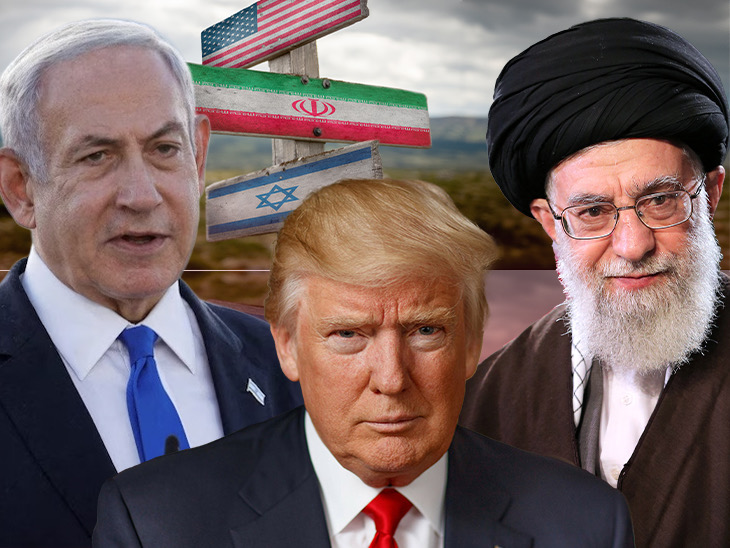
Trump’s strategic ambiguity in regards to an overt U.S. intervention in Iran to strike nuclear and military facilities as well as eliminate high-value Iranian figures has the world on edge, especially critics of U.S. foreign policy.

On one side, there are foreign critics such as the Russian government. On the other are so-called anti-war figures within the U.S. from both the Republicans and Democrats.

Whether or not Trump decides to intervene militarily against the Iranian government has nevertheless highlighted the roots of critics’ fears and exposed their interests.

Let’s take a step back and observe what has taken place in the Middle East over the past year, which presents the regional context from the perspective of Israel and the U.S. Through a broad lens, Iran’s arc of influence that stretched from Iran through Iraq to Syria, Lebanon, the Gaza Strip, and Yemen has been greatly weakened by Israel over the past year.

Israel has assassinated many of the top leadership of Hamas and Hezbollah – and is directly engaged in Gaza to remove Hamas from power – significantly weakening the capabilities of both groups. In Yemen, Israel (along with the U.S. and UK) has conducted multiple strikes against the military and strategic infrastructure of the Iran-aligned Houthi militants. In Syria, the Iran-allied Bashar al-Assad government collapsed with help from years of covert and overt operations by Israel, which also simultaneously eliminated the threat posed to it by Iran-allied militias active along the Israel-Syria border.

In short, actions and pressure from Israel over the past few years has led to a significant realization of results over the past year to seriously weaken the influence of the Iranian government to project its interests in the Middle East, alongside weakening the capabilities of the Iran’s militant allies that conduct activities contrary to Israeli, U.S., and EU interests.

As a result of weakening Iran’s proxies, the governments of Israel and the U.S. feel momentum is on their side to focus efforts on the sponsor of these proxies: the Iranian government.

Whether their end goal is simply to significantly reduce the capabilities of Iran’s nuclear and ballistic missile programs and/or take actions to facilitate regime change remains to be stated publicly.

Yet, it is this trend of Israeli successes and the potential of regime change in Iran that has opponents worried. On June 18, Russia’s Foreign Ministry’s Spokesperson Maria Zakharova stated, “Whether you like a regime or you don’t, if it doesn’t attack you, and if it doesn’t do or say anything that from the point of view of international law creates a direct threat to people or a state, you have no right to change the regime. You have no right to say that since you don’t like it it has to be destroyed.”

However, even according to the Russian Foreign Ministry’s own standards, the regime of Iran since 1979 has been an actor contributing to destabilization in the region, which includes but is not limited to sponsoring terrorist groups that have repeatedly committed attacks on Israeli and American targets throughout the Middle East and globally; attempting to export its Shiite theocratic revolution throughout the Middle East (which kick-started the Iran-Iraq war from 1980-1988); attacking Israel; interdicting freedom of navigation in the Gulf of Hormuz, Gulf of Oman, the Red Sea, and Bab el Mandeb Strait either directly or by proxy; and enriching significant amounts of uranium well beyond the level needed for a civilian nuclear program while displaying dissonance between their official rhetoric and activities on the ground.

The position of the Russian government exposes their concerns and their national interest. Russia is pushing back against escalation because they fear losing Iran, just like Syria, to a more pro-West/Israel regime. Their opposition has little to do with nuclear weapons or international law. They fear a stronger strategic position for the U.S. in Iran and the wider region. Note that Syria under President Assad was a very close Russian ally. Since it was toppled, Russian influence there has significantly diminished and this has been a major frustration covered in Russian media ever since to the point that even everyday Syrians are complaining over the cut of Russian programs that previously helped Syrians.

Russia fears that regime change in Iran would lead to the loss of their main ally in the Middle East and return a pro-West government to power on the borders of the former Soviet states and the Caspian Sea. Yet the Kremlin hides this fear under the guise of fear-mongering about a “potential nuclear disaster” if Iran’s nuclear infrastructure is continually targeted. By focusing on the nuclear weapons issue and asking open-ended questions without presenting answers themselves, the Russian government is trying to cast doubt in people’s minds by drawing parallels to America’s intervention in Iraq in 2003. The goal of this narrative is simply to undermine trust in Western governments, weaken alliances, and build public pressure to influence the U.S. government to act in a way that stops short of regime change, which is in the Russian national interest.

Just like Iraq in 2003, the U.S. did not intervene over a sole issue – possession of nuclear weapons. It is not strategically necessary to provide proof of whether or not the Iranian regime is currently producing a nuclear weapon because the roots of the current Israeli and potential U.S. intervention is much broader than that, taking into account momentum, opportunity, and Iran’s history of being a destabilizing actor towards Western interests in the region. From an even broader perspective, Iran – a BRICS member – is a major proponent for the demise of the unipolar world order led by the U.S. and the realization of a multipolar world order, which for obvious reasons poses a systemic threat to U.S. interests.

In regards to opposition from those within the U.S., opponents are saying that this is not America’s fight and that Iran does not harm U.S. interests, such as stated by Congresswoman llhan Omar. Media personality Tucker Carlson has been spouting that Israeli Prime Minister Netanyahu has been saying for 30 years that Iran was on the verge of developing nuclear weapons, yet has never done so. However, what such critics fail to raise is the covert war and diplomatic moves that Israel, the U.S., and much of Europe has been waging against Iran and its nuclear weapons program over many years, which has directly contributed towards preventing Iran from developing a nuclear weapon plus deterring them from reaching that threshold.

Think back to the Stuxnet cyber attack in 2010 that set back the program and destroyed many centrifuges, the many assassinations of Iranian nuclear scientists conducted by Israel over the years, and the Iran nuclear deal (officially “Joint Comprehensive Plan of Action”) enacted in 2015 precisely to keep Iran from developing a nuclear weapon.

Without these actions by Israel, the U.S. and UN Security Council members, Iran could well have already obtained a nuclear weapon many years ago.

Tucker Carlson also argues that the U.S. doesn’t know anything about Iran and this risks the U.S. getting caught up in another forever-war like Afghanistan, which could lead to the fracturing of the MAGA movement. What Carlson seems to misunderstand is that the MAGA movement is not anti-war but only against war within the strict context of waging war not in the U.S. national interest and without a realistic and achievable end goal. Iran will not become another Libya or Iraq, but that is entirely another article to write.

Just like the Russian government, Tucker Carlson is trying to create a wedge in the MAGA movement to alter Trump’s behavior to focus more on alleged internal party dissent rather than harming the Iranian regime’s and Russia’s national interest and advancing America’s own interests. These critics are also critical of the strong U.S.-Israel alliance and see America as a force that has done more harm than good on the world stage. There is no doubt that America has its share of failures but to quote President Putin from June 18, “Let he who is without sin among you throw the first stone at me”.

Since 1979, regime change in Iran has been a U.S. national interest regardless of political leader or party, whether or not it has actually been pursued. At the very least, it would be welcomed.

What is clear is that Israeli and American actions over the past many years have changed the Middle East and brought the region to where it is now: a point where Iran is weak and vulnerable with its proxy-allies significantly hamstrung.

This may be the opportunity that the U.S. will take advantage of, but nevertheless, it has U.S. opponents very worried, and for that the U.S. and Israel know they are doing something right.

*Philip Acey is a PhD candidate from Canada and an independent political researcher and analyst who has worked on the ground for over a decade across Europe, Asia, Africa, and South America, visiting more than 50 countries. His research has been used worldwide to advise the UN Security Council, UN agencies, diplomats, and humanitarian organizations

/Argumentum.al

© 2025 Argumentum

Related Posts

Current Events

Rama alleges ‘hybrid war’ behind protests against Kushner-linked coastal development

5 June, 2026
ENGLISH

Pierre Nora and the institution of memory we lack in Eastern Europe

5 June, 2026
BELGRADE, SERBIA - JUNE 18. 2020: Russian and Serbian flags on display during Russian Foreign Minister Sergei Lavrov's visit to the Liberators of Belgrade Memorial. Valery Sharifulin/TASS,Image: 533095429, License: Rights-managed, Restrictions: UWAGA! Zdjęcia zawierają oryginalny opis dostawcy (ITAR-TASS). Szczególnie w związku z agresją Rosji na Ukrainę mogą zawierać przekaz niezgodny z faktami. Zweryfikuj go przed publikacją, Model Release: no, Credit line: Valery Sharifulin / TASS / Forum
Current Events

Balkan Maskirovka: Why Moscow’s “Distancing” Is Only an Operation for the Survival of Vučić’s Regime

5 June, 2026

Follow US

Subscribe

Receive Argumentum Magazine by Email

Last Posts

Rama alleges ‘hybrid war’ behind protests against Kushner-linked coastal development

5 June, 2026

Pierre Nora and the institution of memory we lack in Eastern Europe

5 June, 2026
BELGRADE, SERBIA - JUNE 18. 2020: Russian and Serbian flags on display during Russian Foreign Minister Sergei Lavrov's visit to the Liberators of Belgrade Memorial. Valery Sharifulin/TASS,Image: 533095429, License: Rights-managed, Restrictions: UWAGA! Zdjęcia zawierają oryginalny opis dostawcy (ITAR-TASS). Szczególnie w związku z agresją Rosji na Ukrainę mogą zawierać przekaz niezgodny z faktami. Zweryfikuj go przed publikacją, Model Release: no, Credit line: Valery Sharifulin / TASS / Forum

Balkan Maskirovka: Why Moscow’s “Distancing” Is Only an Operation for the Survival of Vučić’s Regime

5 June, 2026

The Blueprint of a Diplomatic Debacle: Analyzing Germany’s Historic UNSC Loss

4 June, 2026

Serbia – China 2026: Technological partnership, geopolitical positioning and a new phase of the Chinese presence in the Western Balkans

1 June, 2026
Argumentum

“Argumentum”, një proces intelektual …

Contact Us

[email protected]
[email protected]
[email protected]

Follow Us

Media Partner

Register

Receive Argumentum Magazine by Email
  • Home
  • Privacy Policy
  • About Us
  • Contact

© 2022 Argumentum. All Rights Reserved. | NUIS: L91415033Q

Welcome Back!

Login to your account below

Forgotten Password? Sign Up

Create New Account!

Fill the forms bellow to register

*By registering into our website, you agree to the Terms & Conditions and Privacy Policy.
All fields are required. Log In

Retrieve your password

Please enter your username or email address to reset your password.

Log In

Add New Playlist

No Result
View All Result
  • Home
  • OP/ED
  • Interview
  • Realpolitik
  • Current Events
  • Top News
  • YOUR VOICE
  • Shqip

© 2022 Argumentum. All Rights Reserved. | NUIS: L91415033Q

This website uses cookies. By continuing to use this website you are giving consent to cookies being used. Visit our Privacy and Cookie Policy.