







• SHQIPËRI
  • KOSOVË
  • MAQEDONIA E VERIUT
  • MALI I ZI
  • Revista në PDF
19 August, 2026
  • Home
  • OP/ED

    Between Political Calculation and Retreat: Croatian Communists at the End of an Era

    The West is buying time, but to whom is it giving it?

    27 July 1941 – A Site of Memory Between War, Revolution and Europe

    The cult of Saint Veneranda / Saint Pren(d)a / Saint Premte / Saint Paraskeva among Albanians

    The Self-Inflicted Decoupling: How U.S. Immigration Policy Is Ceding the Tech Edge to China

    The Blueprint Does Not Stop at the Drina

    The Underlying Logic behind China’s Economic Success

    Do Not Misuse the U.S. Declaration of Independence to Justify the Narrative of Insurrection in Albania

    The visit that changed Albania’s strategic future

  • Interview

    Exclusive Interview with Oleksandr Tyshchenko: A 40-Year Legacy of Chernobyl, Nuclear Risks, and Global Responsibility

    INTERVIEW: ZLATKO KRAMARIĆ – THOUGHTS ON THE OLD CONTINENT

    EXCLUSIVE / Ukrainian Ambassador to Albania, Volodymyr Shkurov: “Ukraine wants peace, but not at the expense of its freedom and independence”

    EXCLUSIVE| Ambassador Tayyar Kagan Atay: Türkiye and Albania, a Strategic Partnership Rooted in Shared Heritage and a Common Vision for the Future

    “Diplomacy, Not War”: Palestinian Ambassador to Albania Calls for Justice, Peace, and Global Action for Gaza

    Exclusive: “Even After Tito – Tito”/ Ambassador Zlatko Kramarić on Authoritarian Legacies and Democracy’s Future in the Balkans

    The Conclusion of the Diplomatic Mission / Ambassador Dancho Markovski: Strengthening Albania-North Macedonia Relations for a Shared European Future

    A Century of Diplomatic Relations Between Albania and Russia: Exclusive Interview with the Russian Ambassador to Albania, H.E. Alexey Zaytsev

    Exclusive/ The chairman of the Freedom Party, Ilir Meta: “The will of the citizens will triumph in Albania, as it did in North Macedonia”

  • Realpolitik

    The Summit of Unity! Think of peace and prepare for war! It’s only the start to the end! Just a pause between two wars!

    Peace with war diplomacy! The protest,  image and tourism! Why this silence from the EU Commission and Council? A deal or a pause?

    Just kind words  in Tivat! Where is the peace!? A deal yes, peace No!What is happening with USA and  EU?  5 elections but no solution!

    IBAR? ”Sufficiently! Much ado about nothing! Shart contrasts in Beijing! Where is the exit?!

    Neither peace nor war! Peace with bombs?! IBAR in autumn?! Not another Hormuz in Taivan! 

    IBAR – a springing board or an obstacle? Can we catch the EU Negotiation train 2027? When the dress makes the news!  EU electoral April  ends in a draw 1:1!  

    The European Parliament building in Strasbourg, France with flags waving calmly celebrating peace of the Europe. July 12, 2020.

    EU 2027 or 2037! Even half membership failed! No exit strategy!     

    What next?

    “With diplomatic velvet“! Major question marks! In Washington yes, but  in the White House NO! A strange dinner in Brussels!

  • Current Events

    Democracy Cannot Be Governed by Noise

    Council of Albanian Ambassadors Raises Concern Over Serbian Plan to Alter the Ibër River

    Digitalisation in the modern era as a “Trojan horse” for hybrid warfare

    The four days that changed history

    Bury Those You Killed

    The Serbian Consulate in Shkodra: A Diplomatic Step or a Project with Political Implications?

    Chinese Embassy in Albania Marks PLA’s 99th Anniversary, Reaffirms Commitment to Peace and Bilateral Cooperation

    Croatian Foreign Minister’s Visit to Tirana/Albania and Croatia Strengthen Their Strategic Partnership as Zagreb Reaffirms Support for Albania’s European Union Membership

    Albanian Parliament Approves $302 Million U.S. Military Financing Loan, Opposition Boycotts Session

  • Top News

    Council of Albanian Ambassadors Raises Concern Over Serbian Plan to Alter the Ibër River

    Rama: Foreign Information Manipulation Has Become One of the Greatest Threats to Democracy and European Security

    The Council of Albanian Ambassadors condemns chauvinistic rhetoric by Serbian officials and calls for diplomatic action

    NATO at Ankara 2026: Strategic Rebalancing Between Russia Deterrence, Turkey’s Rise, and National Interests

    Daniel Serwer: A Bad War Ending Badly May Still Be Good News

    Friedrich Merz, Keir Starmer, António Costa, Donald Trump, Emmanuel Macron, Mark Carney, Ursula von der Leyen, Giorgia Meloni and Sanae Takaichi

    G7 Leaders Gather in Évian Amid Global Uncertainty, Focus on Security, Economy and International Cooperation

    Russian Ambassador in Tirana: “Without a Strong and Sovereign Russia, the Creation of a Just World Order Is Impossible”

    “The Flamingo Revolution”: Day 10 of Protests in Albania Draws International Attention

    Rama alleges ‘hybrid war’ behind protests against Kushner-linked coastal development

  • YOUR VOICE
  • Shqip
No Result
View All Result
Argumentum
  • Home
  • OP/ED

    Between Political Calculation and Retreat: Croatian Communists at the End of an Era

    The West is buying time, but to whom is it giving it?

    27 July 1941 – A Site of Memory Between War, Revolution and Europe

    The cult of Saint Veneranda / Saint Pren(d)a / Saint Premte / Saint Paraskeva among Albanians

    The Self-Inflicted Decoupling: How U.S. Immigration Policy Is Ceding the Tech Edge to China

    The Blueprint Does Not Stop at the Drina

    The Underlying Logic behind China’s Economic Success

    Do Not Misuse the U.S. Declaration of Independence to Justify the Narrative of Insurrection in Albania

    The visit that changed Albania’s strategic future

  • Interview

    Exclusive Interview with Oleksandr Tyshchenko: A 40-Year Legacy of Chernobyl, Nuclear Risks, and Global Responsibility

    INTERVIEW: ZLATKO KRAMARIĆ – THOUGHTS ON THE OLD CONTINENT

    EXCLUSIVE / Ukrainian Ambassador to Albania, Volodymyr Shkurov: “Ukraine wants peace, but not at the expense of its freedom and independence”

    EXCLUSIVE| Ambassador Tayyar Kagan Atay: Türkiye and Albania, a Strategic Partnership Rooted in Shared Heritage and a Common Vision for the Future

    “Diplomacy, Not War”: Palestinian Ambassador to Albania Calls for Justice, Peace, and Global Action for Gaza

    Exclusive: “Even After Tito – Tito”/ Ambassador Zlatko Kramarić on Authoritarian Legacies and Democracy’s Future in the Balkans

    The Conclusion of the Diplomatic Mission / Ambassador Dancho Markovski: Strengthening Albania-North Macedonia Relations for a Shared European Future

    A Century of Diplomatic Relations Between Albania and Russia: Exclusive Interview with the Russian Ambassador to Albania, H.E. Alexey Zaytsev

    Exclusive/ The chairman of the Freedom Party, Ilir Meta: “The will of the citizens will triumph in Albania, as it did in North Macedonia”

  • Realpolitik

    The Summit of Unity! Think of peace and prepare for war! It’s only the start to the end! Just a pause between two wars!

    Peace with war diplomacy! The protest,  image and tourism! Why this silence from the EU Commission and Council? A deal or a pause?

    Just kind words  in Tivat! Where is the peace!? A deal yes, peace No!What is happening with USA and  EU?  5 elections but no solution!

    IBAR? ”Sufficiently! Much ado about nothing! Shart contrasts in Beijing! Where is the exit?!

    Neither peace nor war! Peace with bombs?! IBAR in autumn?! Not another Hormuz in Taivan! 

    IBAR – a springing board or an obstacle? Can we catch the EU Negotiation train 2027? When the dress makes the news!  EU electoral April  ends in a draw 1:1!  

    The European Parliament building in Strasbourg, France with flags waving calmly celebrating peace of the Europe. July 12, 2020.

    EU 2027 or 2037! Even half membership failed! No exit strategy!     

    What next?

    “With diplomatic velvet“! Major question marks! In Washington yes, but  in the White House NO! A strange dinner in Brussels!

  • Current Events

    Democracy Cannot Be Governed by Noise

    Council of Albanian Ambassadors Raises Concern Over Serbian Plan to Alter the Ibër River

    Digitalisation in the modern era as a “Trojan horse” for hybrid warfare

    The four days that changed history

    Bury Those You Killed

    The Serbian Consulate in Shkodra: A Diplomatic Step or a Project with Political Implications?

    Chinese Embassy in Albania Marks PLA’s 99th Anniversary, Reaffirms Commitment to Peace and Bilateral Cooperation

    Croatian Foreign Minister’s Visit to Tirana/Albania and Croatia Strengthen Their Strategic Partnership as Zagreb Reaffirms Support for Albania’s European Union Membership

    Albanian Parliament Approves $302 Million U.S. Military Financing Loan, Opposition Boycotts Session

  • Top News

    Council of Albanian Ambassadors Raises Concern Over Serbian Plan to Alter the Ibër River

    Rama: Foreign Information Manipulation Has Become One of the Greatest Threats to Democracy and European Security

    The Council of Albanian Ambassadors condemns chauvinistic rhetoric by Serbian officials and calls for diplomatic action

    NATO at Ankara 2026: Strategic Rebalancing Between Russia Deterrence, Turkey’s Rise, and National Interests

    Daniel Serwer: A Bad War Ending Badly May Still Be Good News

    Friedrich Merz, Keir Starmer, António Costa, Donald Trump, Emmanuel Macron, Mark Carney, Ursula von der Leyen, Giorgia Meloni and Sanae Takaichi

    G7 Leaders Gather in Évian Amid Global Uncertainty, Focus on Security, Economy and International Cooperation

    Russian Ambassador in Tirana: “Without a Strong and Sovereign Russia, the Creation of a Just World Order Is Impossible”

    “The Flamingo Revolution”: Day 10 of Protests in Albania Draws International Attention

    Rama alleges ‘hybrid war’ behind protests against Kushner-linked coastal development

  • YOUR VOICE
  • Shqip
No Result
View All Result
Argumentum
No Result
View All Result
Home ENGLISH

Arabic Translation as a Tool of Cultural Diplomacy and its Role in Shaping Cultural Diversity in International Relations

18 December, 2025
in ENGLISH, In Focus
A A
Share on FacebookShare on Twitter

Arben Cici

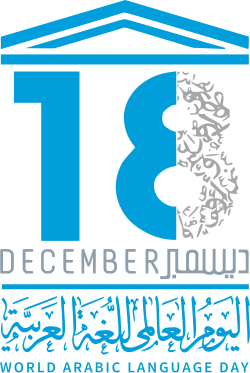
World Arabic Language Day is celebrated annually on December 18. The decision was taken by the United Nations Educational, Scientific and Cultural Organization (UNESCO) in 2012 with the aim of “celebrating multilingualism and cultural diversity, as well as promoting the equal use of all six official working languages ​​throughout the organization”. December 18 was chosen because in 1973 the General Assembly adopted Arabic as one of the six official languages ​​of the UN”.

Every civilization that has opened itself to the world has done so through translation. Translation is not merely a technical act of transferring meaning from one language to another; it is a diplomatic act, a negotiation between cultures. Through translation, societies not only communicate but also reinterpret one another.

In this context, Arabic today, as one of the six official languages of the United Nations and spoken by over 400 million people across more than 25 countries, holds a strategic position in international relations.

It plays a key role in multilateral diplomacy and in addressing issues such as international security, geopolitical fragmentation, interfaith dialogue, crisis management, human rights and migration as well.

The Arabic language, particularly from the 8th to the 13th centuries, was not only the medium of Islam but also the lingua franca of science, philosophy, and intercultural exchange. The Arab world was not an isolated sphere; it was an open, vibrant laboratory of knowledge. And translation, systematic, institutional, and diplomatic, was its main instrument.

The heart of this phenomenon lies in what historians call the Abbasid Translation Movement, centered in Baghdad during the 9th century. Institutions like Bayt al-Hikma, the House of Wisdom, became centers of organized translation, bringing into Arabic the works of Greek philosophers, Persian scholars, and Indian mathematicians.

What is remarkable about this enterprise is not only its intellectual ambition but also its diplomatic function. Translators were often emissaries, intermediaries, or cultural ambassadors. They negotiated texts as envoys negotiate treaties. Figures like Hunayn ibn Ishaq were not simply translators; they were mediators between civilizations.

Through this process, the Abbasids built not merely a public academy, but an institution of cultural diplomacy that predated our modern understanding of the term by more than a millennium. It projected the prestige of the Arab-Islamic civilization while at the same time absorbing and reinterpreting the knowledge of others.

In this sense, Arabic translation was not passive reception but active cultural negotiation. The Arabic versions of Aristotle, Galen, or Euclid were not mere reproductions, they were reinterpretations within a new worldview. This cultural synthesis gave rise to an intellectual ecology that later nourished Europe’s Renaissance.

Another important dimension of Arabic translation is the spiritual diplomacy. The translation of Quran into European languages created the first channel of interfaith interaction, influenced the shaping of political, and religious European perceptions of Islam, contributing to build a common ground for tolerance, understanding and interfaith dialogue.   

Thus, during this “golden age of human intellect” Arabic became both a language of faith and a language of science, diplomacy, and culture.

Arabic language, in this period, also served as a mechanism of knowledge diplomacy. Caliphs used it as a way to attract scholars from distant regions, exchange manuscripts, and build alliances beyond religious or ethnic lines. This network of scholarly communication extended from Baghdad to Córdoba, from Cairo to Samarkand.

The exchange of texts was equivalent to the exchange of embassies. It created a cosmopolitan space where cultural prestige was measured not by military conquest but by intellectual sophistication.

If we look closely, this is one of the earliest examples of what Joseph Nye, in the late twentieth century, would call soft power, the ability to influence others through culture, ideas, and attraction rather than coercion. Arabic translation thus became a precursor to modern cultural diplomacy: it offered a model of how cultural exchange could produce influence, legitimacy, and respect.

As Arabic translation spread westward through Al-Andalus, it became a cross-Mediterranean dialogue between Islam and Christendom. In places like Toledo and Palermo, the twelfth-century translators, many of them bilingual Arab-Christians or Jews, rendered Arabic scientific and philosophical texts into Latin. This transmission laid the foundations of European humanism.

Therefore, the diplomacy of Arabic translation was also a diplomacy of coexistence. It created contact zones, intellectual borderlands, where ideas circulated more freely than armies.

This translational legacy continues to hold relevance in modern and postmodern times. The translation of Arabic literature into Western languages, such as the works of Nobel laureate Naguib Mahfouz or Palestinian poet Mahmoud Darwish, has contributed to the deconstruction of stereotypes and the development of a more nuanced and humanized understanding of the Arab world.

Through these cultural exports, Arab countries do not merely disseminate texts, they actively shape new narratives and reframe their global identity through non-violent means, consistent with Nye’s theory of soft power (Nye, 2004).

This shows that Arabic language has always functioned as a double-edged instrument: it imports knowledge but also defines identity; it opens cultures to dialogue but also helps them defend their uniqueness. Thus, Arabic translation is not merely a linguistic act but a strategic and civilizational process.

Translation allowed the Arab-Islamic world to project influence across Asia, Africa, and Europe without direct domination. It built prestige through learning, not through empire. It created what we might call a diplomacy of admiration, where others were drawn to the civilization’s intellectual and moral authority.

In the modern Middle East, translation continues to perform a similar function. Institutions like the Kalima Project in Abu Dhabi or the King Abdullah Center for Translation and Arabization in Riyadh seek to reestablish cultural dialogue through translated works.

The Abdulaziz Saud Albabtain Cultural Foundation, non-profit cultural organization based in Kuwait, established the Abdulaziz Saud Albabtain Chair for Arabic Culture and Language at the Mediterranean University of Albania in 2022. This initiative aims to foster collaboration in delivering programs that promote the Arabic language and culture. Activities include periodic courses on Arabic language and literature, as well as translations and lectures exploring the mutual influences between Arabic and Albanian cultures and the manifestations of their cultural interaction.

These efforts are not simply academic; they are diplomatic acts of mutual recognition, affirming that cultural understanding remains essential to peace and cooperation, mediating difference, reducing misunderstanding, and creating a shared narrative space among nations.

Therefore, the challenge today is to revive the spirit, not just the form, of the Abbasid translation movement, a spirit of curiosity, humility, and collaboration. Bayt al-Hikma (The House of Wisdom) was not built on conquest, but on dialogue. It thrived on the conviction that truth is not owned by one people or faith, but discovered through shared inquiry.

On the contemporary dimension, in a world marked by geopolitical tensions, migration, and technological acceleration, Arabic translation once again emerges as a strategic necessity. It is indispensable not only for communication but for mutual recognition as the foundation of diplomacy itself. As digital globalization accelerates, translation determines how ideas circulate, how narratives are constructed, and how values are negotiated.

Institutions such as UNESCO and the United Nations Alliance of Civilizations emphasize translation as a core instrument of intercultural understanding. The UNESCO Universal Declaration on Cultural Diversity (2001) explicitly connects linguistic pluralism with world peace, echoing the very principles that animated the Abbasid and Andalusian traditions.

Summarizing historically, Arabic language through translation served as a structured, institutionalized form of cultural diplomacy that connected civilizations and transferred scientific knowledge across continents and redefined philosophically the concept of power: replacing conquest with intellectual influence.

Arabic language was politically a key asset by creating early models of coexistence between faiths and cultures, prefiguring modern pluralism, and diplomatically, it established the principle that communication and understanding are the foundation of stable relations among nations.

This legacy continues today through modern Arabic translation programs, international cooperation, and the digital circulation of knowledge.

Thus, the story of Arabic translation is not a chapter of the past, but a living dialogue between civilizations. It teaches us that diplomacy does not only happen in embassies or negotiations, but also in academies, libraries, classrooms, and translation desks.

As historians and scholars, our responsibility is to keep this dialogue alive.

In a time when cultural misunderstandings can easily escalate into conflict, translation remains the most humane and powerful antidote. It transforms difference into dialogue and diversity into a shared strength.

To conclude, the legacy of Arabic translation reminds us that the bridge between cultures is built not by domination, but by understanding; not by power, but by dialogue. This is why studying its history is not only an academic exercise but also a guide for the future of international relations.

In a fragmented world, the spirit of Bayt al-Hikma (the House of Wisdom), its curiosity, openness, and generosity, still offers a model for our global future.

/Argumentum.al

© 2025 Argumentum

Related Posts

Current Events

Democracy Cannot Be Governed by Noise

19 August, 2026
ENGLISH

In Search of Lost Childhood and Land [1]

17 August, 2026
ENGLISH

The Ibar River Should Carry Water, Not Nationalist Politics

12 August, 2026

Follow US

Subscribe

Receive Argumentum Magazine by Email

Last Posts

Democracy Cannot Be Governed by Noise

19 August, 2026

In Search of Lost Childhood and Land [1]

17 August, 2026

The Ibar River Should Carry Water, Not Nationalist Politics

12 August, 2026

Between Political Calculation and Retreat: Croatian Communists at the End of an Era

10 August, 2026

The West is buying time, but to whom is it giving it?

10 August, 2026
Argumentum

“Argumentum”, një proces intelektual …

Contact Us

[email protected]
[email protected]
[email protected]

Follow Us

Media Partner

Register

Receive Argumentum Magazine by Email
  • Home
  • Privacy Policy
  • About Us
  • Contact

© 2022 Argumentum. All Rights Reserved. | NUIS: L91415033Q

Welcome Back!

Login to your account below

Forgotten Password? Sign Up

Create New Account!

Fill the forms bellow to register

*By registering into our website, you agree to the Terms & Conditions and Privacy Policy.
All fields are required. Log In

Retrieve your password

Please enter your username or email address to reset your password.

Log In

Add New Playlist

No Result
View All Result
  • Home
  • OP/ED
  • Interview
  • Realpolitik
  • Current Events
  • Top News
  • YOUR VOICE
  • Shqip

© 2022 Argumentum. All Rights Reserved. | NUIS: L91415033Q

This website uses cookies. By continuing to use this website you are giving consent to cookies being used. Visit our Privacy and Cookie Policy.