
































By Zlatko Kramarić*|ARGUMENTUM
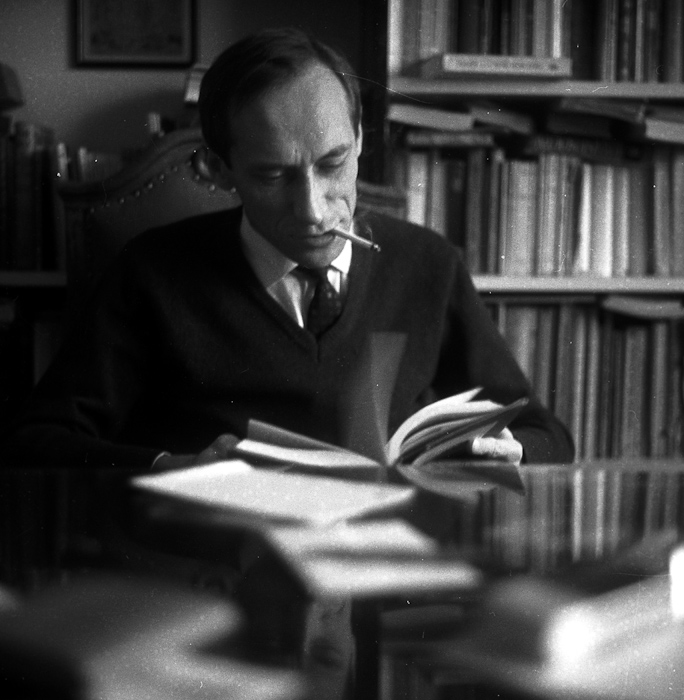
The intellectual trajectory of Leszek Kołakowski stands as one of the clearest expressions of the inner drama of the European spirit in the twentieth century. This drama did not arise primarily from Europe’s geopolitical division, but from a deeper conflict between promises of historical redemption and the moral limits of human action. Kołakowski was a European thinker precisely because he refused to resolve this conflict through easy answers, choosing instead to think it through—and to live with its consequences.
In the Polish context of the 1960s, Kołakowski emerged as a central figure of Marxist revisionism. After the political “thaw” of 1956, it appeared possible to conceive socialism as an ethical project compatible with Europe’s tradition of critical reason and moral responsibility. Gradually, however, Kołakowski came to see that the problem lay not merely in the deformation of the system, but in the very structure of an ideology that claimed historical necessity and a monopoly on truth.
For Kołakowski, the European spirit did not mean faith in inevitable progress, but the capacity for self-doubt and the acceptance of limits to power. His departure from Marxism was neither abrupt nor opportunistic; it was the outcome of a profound civilizational judgment. An ideology that permits the suspension of morality in the name of the future, he argued, inevitably generates violence—even when it speaks the language of emancipation.
This philosophical position intersected with the political reflections of the Polish revisionist milieu, which included Jacek Kuroń and Adam Michnik. The Open Letter to the Party (1965) by Kuroń and Modzelewski articulated politically the same dilemma that Kołakowski radicalized philosophically: the crisis of socialism was not a deviation, but the consequence of a system that allowed moral responsibility to be suspended in the name of history.
The year 1968 marked a decisive rupture. Poland—like much of Eastern Europe—demonstrated that there was no space for autonomous, plural intellectual life within the existing system. Kołakowski was already in exile; others were imprisoned or marginalized. Yet exile, particularly in England, did not lead Kołakowski to adopt a new ideological certainty. Instead, it enabled a radical deepening of self-criticism.
His major work, Main Currents of Marxism, is neither a polemic nor a triumphalist reckoning, but an analytical autopsy of a great intellectual tradition. Crucially, Kołakowski did not spare his own youthful illusions. He did not replace one faith with another; rather, he accepted that the European spirit is marked by permanent uncertainty and an awareness of the limits of knowledge and power. It is precisely this capacity for retrospective self-critique that secures his lasting relevance.
Kołakowski’s influence on Polish opposition movements of the 1970s and 1980s—including the Workers’ Defense Committee and later Solidarity—was therefore ethical rather than doctrinal. It was grounded in a politics of truth, responsibility, and dignity, not in a project of seizing power or replacing one ideology with another.
Conclusion: Kołakowski and Europe Today
If I return today to Leszek Kołakowski, it is not out of historical nostalgia, but from a need to clarify the limits of the European experience at a time of renewed certainties and recurring illusions. His willingness to abandon his own youthful convictions without embracing a new dogma reminds us that the European spirit does not rest on correct answers, but on responsibility for the consequences of ideas.
In a Europe once again confronted with ideological simplifications, technocratic confidence, and moral absolutisms, Kołakowski teaches us how to live with the tension between freedom and restraint, pluralism and responsibility. His thought offers no comfort of final solutions, but precisely for that reason it remains indispensable: it preserves the space in which Europe can remain faithful to itself—as a civilization of self-criticism rather than historical certainty. This is a lesson of the twentieth century that still awaits its full recognition in the twenty-first.
*Zlatko Kramarić is a Croatian publicist, author, and diplomat, currently serving as Ambassador to Albania. Formerly a university professor and politician, he is known for his work in literature, cultural studies, and regional history.
© 2025 Argumentum