







• SHQIPËRI
  • KOSOVË
  • MAQEDONIA E VERIUT
  • MALI I ZI
  • Revista në PDF
19 August, 2026
  • Home
  • OP/ED

    Between Political Calculation and Retreat: Croatian Communists at the End of an Era

    The West is buying time, but to whom is it giving it?

    27 July 1941 – A Site of Memory Between War, Revolution and Europe

    The cult of Saint Veneranda / Saint Pren(d)a / Saint Premte / Saint Paraskeva among Albanians

    The Self-Inflicted Decoupling: How U.S. Immigration Policy Is Ceding the Tech Edge to China

    The Blueprint Does Not Stop at the Drina

    The Underlying Logic behind China’s Economic Success

    Do Not Misuse the U.S. Declaration of Independence to Justify the Narrative of Insurrection in Albania

    The visit that changed Albania’s strategic future

  • Interview

    Exclusive Interview with Oleksandr Tyshchenko: A 40-Year Legacy of Chernobyl, Nuclear Risks, and Global Responsibility

    INTERVIEW: ZLATKO KRAMARIĆ – THOUGHTS ON THE OLD CONTINENT

    EXCLUSIVE / Ukrainian Ambassador to Albania, Volodymyr Shkurov: “Ukraine wants peace, but not at the expense of its freedom and independence”

    EXCLUSIVE| Ambassador Tayyar Kagan Atay: Türkiye and Albania, a Strategic Partnership Rooted in Shared Heritage and a Common Vision for the Future

    “Diplomacy, Not War”: Palestinian Ambassador to Albania Calls for Justice, Peace, and Global Action for Gaza

    Exclusive: “Even After Tito – Tito”/ Ambassador Zlatko Kramarić on Authoritarian Legacies and Democracy’s Future in the Balkans

    The Conclusion of the Diplomatic Mission / Ambassador Dancho Markovski: Strengthening Albania-North Macedonia Relations for a Shared European Future

    A Century of Diplomatic Relations Between Albania and Russia: Exclusive Interview with the Russian Ambassador to Albania, H.E. Alexey Zaytsev

    Exclusive/ The chairman of the Freedom Party, Ilir Meta: “The will of the citizens will triumph in Albania, as it did in North Macedonia”

  • Realpolitik

    The Summit of Unity! Think of peace and prepare for war! It’s only the start to the end! Just a pause between two wars!

    Peace with war diplomacy! The protest,  image and tourism! Why this silence from the EU Commission and Council? A deal or a pause?

    Just kind words  in Tivat! Where is the peace!? A deal yes, peace No!What is happening with USA and  EU?  5 elections but no solution!

    IBAR? ”Sufficiently! Much ado about nothing! Shart contrasts in Beijing! Where is the exit?!

    Neither peace nor war! Peace with bombs?! IBAR in autumn?! Not another Hormuz in Taivan! 

    IBAR – a springing board or an obstacle? Can we catch the EU Negotiation train 2027? When the dress makes the news!  EU electoral April  ends in a draw 1:1!  

    The European Parliament building in Strasbourg, France with flags waving calmly celebrating peace of the Europe. July 12, 2020.

    EU 2027 or 2037! Even half membership failed! No exit strategy!     

    What next?

    “With diplomatic velvet“! Major question marks! In Washington yes, but  in the White House NO! A strange dinner in Brussels!

  • Current Events

    Democracy Cannot Be Governed by Noise

    Council of Albanian Ambassadors Raises Concern Over Serbian Plan to Alter the Ibër River

    Digitalisation in the modern era as a “Trojan horse” for hybrid warfare

    The four days that changed history

    Bury Those You Killed

    The Serbian Consulate in Shkodra: A Diplomatic Step or a Project with Political Implications?

    Chinese Embassy in Albania Marks PLA’s 99th Anniversary, Reaffirms Commitment to Peace and Bilateral Cooperation

    Croatian Foreign Minister’s Visit to Tirana/Albania and Croatia Strengthen Their Strategic Partnership as Zagreb Reaffirms Support for Albania’s European Union Membership

    Albanian Parliament Approves $302 Million U.S. Military Financing Loan, Opposition Boycotts Session

  • Top News

    Council of Albanian Ambassadors Raises Concern Over Serbian Plan to Alter the Ibër River

    Rama: Foreign Information Manipulation Has Become One of the Greatest Threats to Democracy and European Security

    The Council of Albanian Ambassadors condemns chauvinistic rhetoric by Serbian officials and calls for diplomatic action

    NATO at Ankara 2026: Strategic Rebalancing Between Russia Deterrence, Turkey’s Rise, and National Interests

    Daniel Serwer: A Bad War Ending Badly May Still Be Good News

    Friedrich Merz, Keir Starmer, António Costa, Donald Trump, Emmanuel Macron, Mark Carney, Ursula von der Leyen, Giorgia Meloni and Sanae Takaichi

    G7 Leaders Gather in Évian Amid Global Uncertainty, Focus on Security, Economy and International Cooperation

    Russian Ambassador in Tirana: “Without a Strong and Sovereign Russia, the Creation of a Just World Order Is Impossible”

    “The Flamingo Revolution”: Day 10 of Protests in Albania Draws International Attention

    Rama alleges ‘hybrid war’ behind protests against Kushner-linked coastal development

  • YOUR VOICE
  • Shqip
No Result
View All Result
Argumentum
  • Home
  • OP/ED

    Between Political Calculation and Retreat: Croatian Communists at the End of an Era

    The West is buying time, but to whom is it giving it?

    27 July 1941 – A Site of Memory Between War, Revolution and Europe

    The cult of Saint Veneranda / Saint Pren(d)a / Saint Premte / Saint Paraskeva among Albanians

    The Self-Inflicted Decoupling: How U.S. Immigration Policy Is Ceding the Tech Edge to China

    The Blueprint Does Not Stop at the Drina

    The Underlying Logic behind China’s Economic Success

    Do Not Misuse the U.S. Declaration of Independence to Justify the Narrative of Insurrection in Albania

    The visit that changed Albania’s strategic future

  • Interview

    Exclusive Interview with Oleksandr Tyshchenko: A 40-Year Legacy of Chernobyl, Nuclear Risks, and Global Responsibility

    INTERVIEW: ZLATKO KRAMARIĆ – THOUGHTS ON THE OLD CONTINENT

    EXCLUSIVE / Ukrainian Ambassador to Albania, Volodymyr Shkurov: “Ukraine wants peace, but not at the expense of its freedom and independence”

    EXCLUSIVE| Ambassador Tayyar Kagan Atay: Türkiye and Albania, a Strategic Partnership Rooted in Shared Heritage and a Common Vision for the Future

    “Diplomacy, Not War”: Palestinian Ambassador to Albania Calls for Justice, Peace, and Global Action for Gaza

    Exclusive: “Even After Tito – Tito”/ Ambassador Zlatko Kramarić on Authoritarian Legacies and Democracy’s Future in the Balkans

    The Conclusion of the Diplomatic Mission / Ambassador Dancho Markovski: Strengthening Albania-North Macedonia Relations for a Shared European Future

    A Century of Diplomatic Relations Between Albania and Russia: Exclusive Interview with the Russian Ambassador to Albania, H.E. Alexey Zaytsev

    Exclusive/ The chairman of the Freedom Party, Ilir Meta: “The will of the citizens will triumph in Albania, as it did in North Macedonia”

  • Realpolitik

    The Summit of Unity! Think of peace and prepare for war! It’s only the start to the end! Just a pause between two wars!

    Peace with war diplomacy! The protest,  image and tourism! Why this silence from the EU Commission and Council? A deal or a pause?

    Just kind words  in Tivat! Where is the peace!? A deal yes, peace No!What is happening with USA and  EU?  5 elections but no solution!

    IBAR? ”Sufficiently! Much ado about nothing! Shart contrasts in Beijing! Where is the exit?!

    Neither peace nor war! Peace with bombs?! IBAR in autumn?! Not another Hormuz in Taivan! 

    IBAR – a springing board or an obstacle? Can we catch the EU Negotiation train 2027? When the dress makes the news!  EU electoral April  ends in a draw 1:1!  

    The European Parliament building in Strasbourg, France with flags waving calmly celebrating peace of the Europe. July 12, 2020.

    EU 2027 or 2037! Even half membership failed! No exit strategy!     

    What next?

    “With diplomatic velvet“! Major question marks! In Washington yes, but  in the White House NO! A strange dinner in Brussels!

  • Current Events

    Democracy Cannot Be Governed by Noise

    Council of Albanian Ambassadors Raises Concern Over Serbian Plan to Alter the Ibër River

    Digitalisation in the modern era as a “Trojan horse” for hybrid warfare

    The four days that changed history

    Bury Those You Killed

    The Serbian Consulate in Shkodra: A Diplomatic Step or a Project with Political Implications?

    Chinese Embassy in Albania Marks PLA’s 99th Anniversary, Reaffirms Commitment to Peace and Bilateral Cooperation

    Croatian Foreign Minister’s Visit to Tirana/Albania and Croatia Strengthen Their Strategic Partnership as Zagreb Reaffirms Support for Albania’s European Union Membership

    Albanian Parliament Approves $302 Million U.S. Military Financing Loan, Opposition Boycotts Session

  • Top News

    Council of Albanian Ambassadors Raises Concern Over Serbian Plan to Alter the Ibër River

    Rama: Foreign Information Manipulation Has Become One of the Greatest Threats to Democracy and European Security

    The Council of Albanian Ambassadors condemns chauvinistic rhetoric by Serbian officials and calls for diplomatic action

    NATO at Ankara 2026: Strategic Rebalancing Between Russia Deterrence, Turkey’s Rise, and National Interests

    Daniel Serwer: A Bad War Ending Badly May Still Be Good News

    Friedrich Merz, Keir Starmer, António Costa, Donald Trump, Emmanuel Macron, Mark Carney, Ursula von der Leyen, Giorgia Meloni and Sanae Takaichi

    G7 Leaders Gather in Évian Amid Global Uncertainty, Focus on Security, Economy and International Cooperation

    Russian Ambassador in Tirana: “Without a Strong and Sovereign Russia, the Creation of a Just World Order Is Impossible”

    “The Flamingo Revolution”: Day 10 of Protests in Albania Draws International Attention

    Rama alleges ‘hybrid war’ behind protests against Kushner-linked coastal development

  • YOUR VOICE
  • Shqip
No Result
View All Result
Argumentum
No Result
View All Result
Home ENGLISH

When elections approach, Serbia chooses weapons out of fear of its own citizens

6 February, 2026
in ENGLISH, English OP/ED
A A
Share on FacebookShare on Twitter

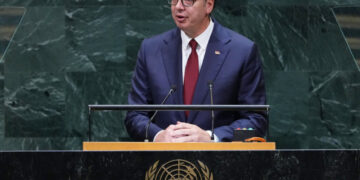
The upcoming elections in Serbia are revealing the Vučić regime’s real fear of losing power. When power feels threatened, weapons, fear, and the external enemy turn into political tools. Serbia is being militarized not because it is under threat, but because it is being used as an instrument of influence by Russia. In this game, peace in the Western Balkans is not being protected, but is being turned into a tool of pressure and geopolitical bargaining.

Author: Dr. Gurakuç Kuçi – Professor at Universum College and external collaborator at the Institute for Hybrid Warfare Studies “OCTOPUS”

Militarization as a false “necessity”

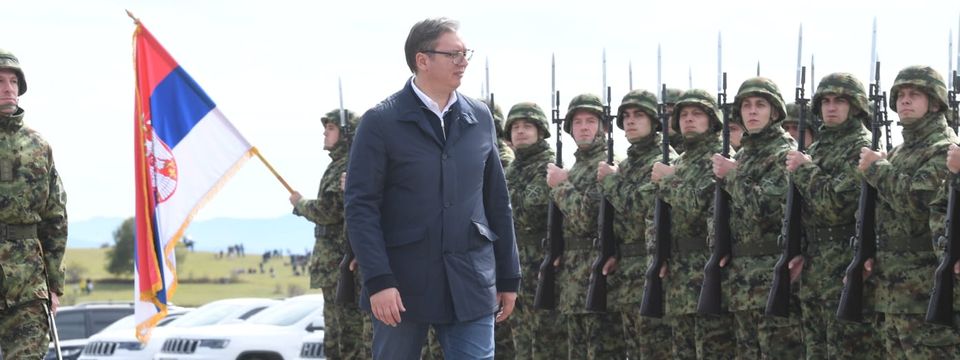
Serbia has begun an accelerated militarization, where according to statements by Aleksandar Vučić, President of Serbia, this state will double its military capacities within a year and a half, creating a sense of urgency among the Serbian people due to strategic encirclement. This militarization becomes even more comprehensive with Serbia’s plans to reinstate compulsory military service and centralize the army.

To legitimize this course, Vucic’s foreign minister, Marko Djuric, has declared that Serbia acts on the principles of “realpolitik,” that is, according to its state interests. In political discourse, this approach relativizes international norms in order to present Serbia’s militarization as a necessary response to an assumed danger. In other words, the invention of the enemy.

To carry out militarization and the total mobilization of society, Serbia has also constructed a justificatory narrative toward international politics and the public. The narrative is consistently built on the military agreement between Croatia, Albania, and Kosovo, elevating this agreement within the framework of propaganda as an alliance against Serbia.

Russian–Serbian synchronization against the Balkans

The acceleration of militarization by Serbia and the construction of the narrative of military encirclement by Croatia, Albania, and Kosovo have diplomatic and practical support from Russia. Russia’s Minister of Foreign Affairs, Sergei Lavrov, has stated to the media that they are in talks with Washington about the Balkans, specifically mentioning Bosnia and Herzegovina and the region. At the same time, he has called on Serbia to reconsider its relations with the European Union due to pressure to recognize Kosovo. Yet, simultaneously, he continues to keep alive the narrative that NATO, through its intervention in Yugoslavia, and Kosovo’s independence are violations of international law.

This narrative is continuously reinforced by the spokesperson of the Russian Ministry of Foreign Affairs, Maria Zakharova, who in her statements repeatedly accuses the authorities in Kosovo of ethnic cleansing against Serbs, an identical claim to that made by Petar Petković, director of the so-called Office for Kosovo and “Metohija,” and Aleksandr Botsan-Kharchenko, Russia’s ambassador to Serbia, stated a few weeks ago. Likewise, in line with her superior Lavrov, Zakharova continues to insist that NATO’s intervention in Yugoslavia and Kosovo’s independence constitute violations of international law.

These positions are not detached from the Kremlin’s political line, but directly reflect statements by Vladimir Putin, who in December 2025 declared that NATO had “destroyed Yugoslavia and the Serbs.”

This diplomatic protection of Serbia by Russia creates a vectorial system of action, in which the global-diplomatic dimension intertwines with the regional-military one. The hardening of this approach has intensified following the adoption of the U.S. National Defense Authorization Act (NDAA), which has made clear the strategic importance of the Western Balkans and the limits of geopolitical changes in the region. In this context, Russia and Serbia are acting in sync: either they secure their interests in the Balkans, or they prepare for a broader confrontation in the event of any global escalation, deliberately sidelining the European Union in “bargains.”

Militarization of Serbia ahead of electoral elections

Serbia is expected to hold parliamentary elections in October, November, or December 2026, according to Vucic’s statement. These elections are taking place in a tense political context, following a wave of anti-government protests and documented state violence against protesters, including the use of sonic weapons. This situation has placed the electoral process under the shadow of fear and pressure rather than competition and political freedom.

Vucic has at no point ruled out the possibility of returning to the post of prime minister, using constitutional maneuvers similar to the Putin–Medvedev model. However, in authoritarian regimes the formal position is secondary; what matters is real control over the state apparatus. In this sense, the preservation of power for Vučić is the primary objective, regardless of the office he holds.

It is precisely here that the militarization of society and the state acquires political meaning. The invention of the external enemy and the construction of the narrative of strategic encirclement serve as two parallel vectors: one is used to exert pressure and control over internal opposition, while the other keeps the public mobilized and fearful. These two mechanisms function in a complementary manner, and whenever one weakens, the other is activated to balance and protect the regime’s interests.

That the preservation of Vucis’s regime is also institutionally supported by Russia is evidenced by the December 2021 agreement, according to which Moscow commits to assisting Serbia against so-called “color revolutions” and external interventions. This agreement makes it clear that militarization and internal repression are not merely choices of Belgrade, but part of a broader authoritarian security architecture.

Militarization of Serbia and Russia’s geopolitics within the security architecture

The analysis shows that the militarization of Serbia and Russia’s diplomatic support are not random or reactive actions, but part of a coordinated strategy with three main objectives.

First, the fundamental goal is the preservation of Aleksandar Vucic’s regime. The current regime no longer enjoys sufficient political and societal support through democratic mechanisms. For this reason, power increasingly relies on force, fear, and propaganda. The militarization of the state and society, together with the construction of a narrative of encirclement and permanent crisis, serve as tools for neutralizing internal opposition and maintaining political control.

Second, the preservation of Vucic’s regime enables the preservation of Russia’s current influence in Serbia. In the absence of an alternative political actor equally strong and reliable for Moscow, Vučić remains the key actor for guaranteeing Russian interests in Belgrade. Any uncontrolled change of power would endanger this influence; therefore, the stability of the current regime is a direct Russian strategic interest.

Third, this situation creates conditions for the expansion of Russian–Serbian influence in the Balkans. A militarized Serbia serves as an instrument of regional pressure and as a negotiating tool in Russia’s relations with the United States and the West. By keeping the Western Balkans unstable and potentially escalatory, Moscow retains the ability to impose its interests at global negotiation tables.

In this context, the militarization of Serbia is not only an internal mechanism for political survival, but also a strategic component of Russia’s authoritarian security architecture. In the event of a deterioration of geopolitical circumstances or a global escalation, Russia has at its disposal a ready and controllable actor in the Balkans, turning Serbia into an active lever of regional influence and destabilization. Thus, peace and instability are becoming strategic factors, while the sidelining of the European Union in this process is part of the strategy. This does not place the region directly on the brink of war, but in a state of sustained tension in which peace is always under negotiation.

/Argumentum.al

© 2026 Argumentum

Related Posts

ENGLISH

In Search of Lost Childhood and Land [1]

17 August, 2026
ENGLISH

The Ibar River Should Carry Water, Not Nationalist Politics

12 August, 2026
ENGLISH

Between Political Calculation and Retreat: Croatian Communists at the End of an Era

10 August, 2026

Follow US

Subscribe

Receive Argumentum Magazine by Email

Last Posts

Democracy Cannot Be Governed by Noise

19 August, 2026

In Search of Lost Childhood and Land [1]

17 August, 2026

The Ibar River Should Carry Water, Not Nationalist Politics

12 August, 2026

Between Political Calculation and Retreat: Croatian Communists at the End of an Era

10 August, 2026

The West is buying time, but to whom is it giving it?

10 August, 2026
Argumentum

“Argumentum”, një proces intelektual …

Contact Us

[email protected]
[email protected]
[email protected]

Follow Us

Media Partner

Register

Receive Argumentum Magazine by Email
  • Home
  • Privacy Policy
  • About Us
  • Contact

© 2022 Argumentum. All Rights Reserved. | NUIS: L91415033Q

Welcome Back!

Login to your account below

Forgotten Password? Sign Up

Create New Account!

Fill the forms bellow to register

*By registering into our website, you agree to the Terms & Conditions and Privacy Policy.
All fields are required. Log In

Retrieve your password

Please enter your username or email address to reset your password.

Log In

Add New Playlist

No Result
View All Result
  • Home
  • OP/ED
  • Interview
  • Realpolitik
  • Current Events
  • Top News
  • YOUR VOICE
  • Shqip

© 2022 Argumentum. All Rights Reserved. | NUIS: L91415033Q

This website uses cookies. By continuing to use this website you are giving consent to cookies being used. Visit our Privacy and Cookie Policy.