






















By Zlatko Kramarić*|ARGUMENTUM
Ambassador of Croatia to Albania
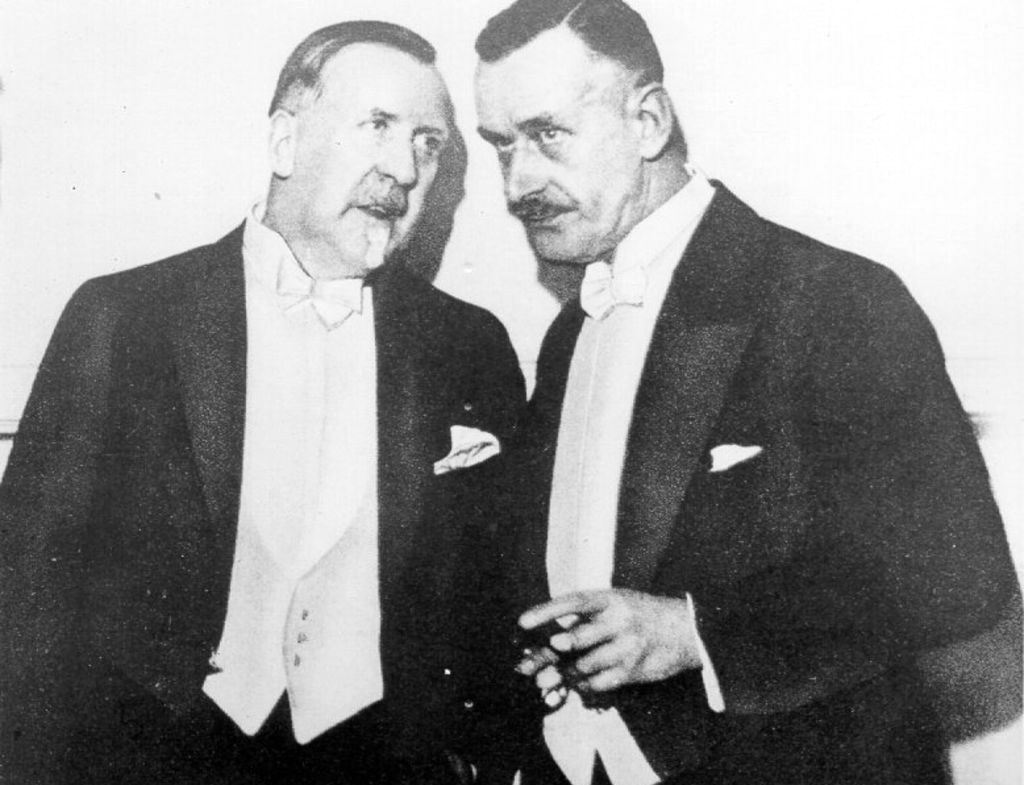
In the intellectual history of Europe, we rarely find such a symbolic conflict as that between two brothers – Heinrich Mann and Thomas Mann. Their dispute was not only family or literary. It represented a deeper conflict between two traditions of the European spirit: political liberalism, which actively engages in the defense of democracy, and cultural humanism, which believes in the autonomy of the spirit, aesthetics and intellectual distance. In this sense, the dispute between the Mann brothers can be read as a small intellectual drama of Europe in the first half of the 20th century.
It is known that Heinrich Mann was a more radical republican. Even before the First World War, he criticized the authoritarian mentality of the German Empire, and in the novel Der Untertan he exposed the psychology of subservience, the kind of social conformity that, in his opinion, created fertile ground for later authoritarian regimes. Heinrich believed that the intellectual must be politically engaged and that literature cannot remain neutral in the face of historical evil. When the Weimar Republic emerged, he became one of its most vocal defenders.
His younger brother Thomas Mann had a different path. During the First World War, he wrote the famous work Betrachtungen eines Unpolitischen, in which he defends the idea of German culture against Western liberalism. That book was a kind of manifesto of cultural conservatism. In it, Thomas Mann speaks from the perspective of an esthete who shies away from the politicization of culture. For him, culture was deeper and more complex than daily politics, and the artist had to keep a certain distance from political passions.
This is exactly where the conflict between the brothers arises. Heinrich saw in Thomas’s position a dangerous tendency towards political passivity, while Thomas saw in Heinrich’s activism an excessive politicization of literature. Their controversy was not just a family debate; it reflected a deep division in European culture between political engagement and aesthetic autonomy.
History, however, has shown that none of these positions was sufficient by itself. The rise of Nazism and the rise to power of Adolf Hitler in 1933 forced Thomas Mann to make a moral and political choice. He gradually abandoned his earlier cultural conservatism and became one of the most important voices of the German emigration against Nazism. His radio speeches to the Germans during the war represented a strong attempt to defend what he considered the true heritage of German culture.
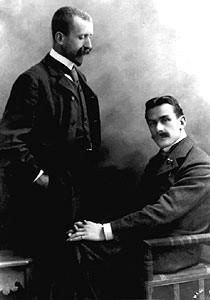
In this sense, Thomas Mann went from aesthetic distance to political engagement. Heinrich Mann, on the other hand, believed from the beginning that the defense of democracy was the moral duty of the intellectual. The destinies of the brothers thus meet at one point: in the realization that culture cannot be completely separated from politics.
But this intellectual drama does not belong only to German history. It has its echoes in contemporary debates about European identity, as well as in the Croatian public space. In recent decades, in Croatia, we often encounter a paradoxical situation: a part of the political and cultural scene that calls itself anti-fascist sometimes shows a tendency towards excessive moral alarmism. In such an atmosphere, almost any conservative or traditionalist position can be declared a covert form of Ustasia. This creates a paradox: the rhetoric that should defend democracy sometimes ends up in the form of ideological rigidity.
Such a situation is reminiscent of the old dispute between Heinrich and Thomas Mann. Heinrich’s position, which at the time was justified by the fight against authoritarianism, today sometimes turns into a moralistic reflex that declares any criticism of the liberal consensus politically suspect. Thomas’s position, on the other hand, reminds us of the importance of cultural distance and the fact that the European spirit is not reducible to political labels.
In this context, a perspective that embraces both the political engagement of Heinrich Mann and the cultural autonomy of Thomas Mann seems particularly relevant to understanding the European spirit today.
© 2026 Argumentum