








• SHQIPËRI
  • KOSOVË
  • MAQEDONIA E VERIUT
  • MALI I ZI
  • Revista në PDF
19 August, 2026
  • Home
  • OP/ED

    Between Political Calculation and Retreat: Croatian Communists at the End of an Era

    The West is buying time, but to whom is it giving it?

    27 July 1941 – A Site of Memory Between War, Revolution and Europe

    The cult of Saint Veneranda / Saint Pren(d)a / Saint Premte / Saint Paraskeva among Albanians

    The Self-Inflicted Decoupling: How U.S. Immigration Policy Is Ceding the Tech Edge to China

    The Blueprint Does Not Stop at the Drina

    The Underlying Logic behind China’s Economic Success

    Do Not Misuse the U.S. Declaration of Independence to Justify the Narrative of Insurrection in Albania

    The visit that changed Albania’s strategic future

  • Interview

    Exclusive Interview with Oleksandr Tyshchenko: A 40-Year Legacy of Chernobyl, Nuclear Risks, and Global Responsibility

    INTERVIEW: ZLATKO KRAMARIĆ – THOUGHTS ON THE OLD CONTINENT

    EXCLUSIVE / Ukrainian Ambassador to Albania, Volodymyr Shkurov: “Ukraine wants peace, but not at the expense of its freedom and independence”

    EXCLUSIVE| Ambassador Tayyar Kagan Atay: Türkiye and Albania, a Strategic Partnership Rooted in Shared Heritage and a Common Vision for the Future

    “Diplomacy, Not War”: Palestinian Ambassador to Albania Calls for Justice, Peace, and Global Action for Gaza

    Exclusive: “Even After Tito – Tito”/ Ambassador Zlatko Kramarić on Authoritarian Legacies and Democracy’s Future in the Balkans

    The Conclusion of the Diplomatic Mission / Ambassador Dancho Markovski: Strengthening Albania-North Macedonia Relations for a Shared European Future

    A Century of Diplomatic Relations Between Albania and Russia: Exclusive Interview with the Russian Ambassador to Albania, H.E. Alexey Zaytsev

    Exclusive/ The chairman of the Freedom Party, Ilir Meta: “The will of the citizens will triumph in Albania, as it did in North Macedonia”

  • Realpolitik

    The Summit of Unity! Think of peace and prepare for war! It’s only the start to the end! Just a pause between two wars!

    Peace with war diplomacy! The protest,  image and tourism! Why this silence from the EU Commission and Council? A deal or a pause?

    Just kind words  in Tivat! Where is the peace!? A deal yes, peace No!What is happening with USA and  EU?  5 elections but no solution!

    IBAR? ”Sufficiently! Much ado about nothing! Shart contrasts in Beijing! Where is the exit?!

    Neither peace nor war! Peace with bombs?! IBAR in autumn?! Not another Hormuz in Taivan! 

    IBAR – a springing board or an obstacle? Can we catch the EU Negotiation train 2027? When the dress makes the news!  EU electoral April  ends in a draw 1:1!  

    The European Parliament building in Strasbourg, France with flags waving calmly celebrating peace of the Europe. July 12, 2020.

    EU 2027 or 2037! Even half membership failed! No exit strategy!     

    What next?

    “With diplomatic velvet“! Major question marks! In Washington yes, but  in the White House NO! A strange dinner in Brussels!

  • Current Events

    Democracy Cannot Be Governed by Noise

    Council of Albanian Ambassadors Raises Concern Over Serbian Plan to Alter the Ibër River

    Digitalisation in the modern era as a “Trojan horse” for hybrid warfare

    The four days that changed history

    Bury Those You Killed

    The Serbian Consulate in Shkodra: A Diplomatic Step or a Project with Political Implications?

    Chinese Embassy in Albania Marks PLA’s 99th Anniversary, Reaffirms Commitment to Peace and Bilateral Cooperation

    Croatian Foreign Minister’s Visit to Tirana/Albania and Croatia Strengthen Their Strategic Partnership as Zagreb Reaffirms Support for Albania’s European Union Membership

    Albanian Parliament Approves $302 Million U.S. Military Financing Loan, Opposition Boycotts Session

  • Top News

    Council of Albanian Ambassadors Raises Concern Over Serbian Plan to Alter the Ibër River

    Rama: Foreign Information Manipulation Has Become One of the Greatest Threats to Democracy and European Security

    The Council of Albanian Ambassadors condemns chauvinistic rhetoric by Serbian officials and calls for diplomatic action

    NATO at Ankara 2026: Strategic Rebalancing Between Russia Deterrence, Turkey’s Rise, and National Interests

    Daniel Serwer: A Bad War Ending Badly May Still Be Good News

    Friedrich Merz, Keir Starmer, António Costa, Donald Trump, Emmanuel Macron, Mark Carney, Ursula von der Leyen, Giorgia Meloni and Sanae Takaichi

    G7 Leaders Gather in Évian Amid Global Uncertainty, Focus on Security, Economy and International Cooperation

    Russian Ambassador in Tirana: “Without a Strong and Sovereign Russia, the Creation of a Just World Order Is Impossible”

    “The Flamingo Revolution”: Day 10 of Protests in Albania Draws International Attention

    Rama alleges ‘hybrid war’ behind protests against Kushner-linked coastal development

  • YOUR VOICE
  • Shqip
No Result
View All Result
Argumentum
  • Home
  • OP/ED

    Between Political Calculation and Retreat: Croatian Communists at the End of an Era

    The West is buying time, but to whom is it giving it?

    27 July 1941 – A Site of Memory Between War, Revolution and Europe

    The cult of Saint Veneranda / Saint Pren(d)a / Saint Premte / Saint Paraskeva among Albanians

    The Self-Inflicted Decoupling: How U.S. Immigration Policy Is Ceding the Tech Edge to China

    The Blueprint Does Not Stop at the Drina

    The Underlying Logic behind China’s Economic Success

    Do Not Misuse the U.S. Declaration of Independence to Justify the Narrative of Insurrection in Albania

    The visit that changed Albania’s strategic future

  • Interview

    Exclusive Interview with Oleksandr Tyshchenko: A 40-Year Legacy of Chernobyl, Nuclear Risks, and Global Responsibility

    INTERVIEW: ZLATKO KRAMARIĆ – THOUGHTS ON THE OLD CONTINENT

    EXCLUSIVE / Ukrainian Ambassador to Albania, Volodymyr Shkurov: “Ukraine wants peace, but not at the expense of its freedom and independence”

    EXCLUSIVE| Ambassador Tayyar Kagan Atay: Türkiye and Albania, a Strategic Partnership Rooted in Shared Heritage and a Common Vision for the Future

    “Diplomacy, Not War”: Palestinian Ambassador to Albania Calls for Justice, Peace, and Global Action for Gaza

    Exclusive: “Even After Tito – Tito”/ Ambassador Zlatko Kramarić on Authoritarian Legacies and Democracy’s Future in the Balkans

    The Conclusion of the Diplomatic Mission / Ambassador Dancho Markovski: Strengthening Albania-North Macedonia Relations for a Shared European Future

    A Century of Diplomatic Relations Between Albania and Russia: Exclusive Interview with the Russian Ambassador to Albania, H.E. Alexey Zaytsev

    Exclusive/ The chairman of the Freedom Party, Ilir Meta: “The will of the citizens will triumph in Albania, as it did in North Macedonia”

  • Realpolitik

    The Summit of Unity! Think of peace and prepare for war! It’s only the start to the end! Just a pause between two wars!

    Peace with war diplomacy! The protest,  image and tourism! Why this silence from the EU Commission and Council? A deal or a pause?

    Just kind words  in Tivat! Where is the peace!? A deal yes, peace No!What is happening with USA and  EU?  5 elections but no solution!

    IBAR? ”Sufficiently! Much ado about nothing! Shart contrasts in Beijing! Where is the exit?!

    Neither peace nor war! Peace with bombs?! IBAR in autumn?! Not another Hormuz in Taivan! 

    IBAR – a springing board or an obstacle? Can we catch the EU Negotiation train 2027? When the dress makes the news!  EU electoral April  ends in a draw 1:1!  

    The European Parliament building in Strasbourg, France with flags waving calmly celebrating peace of the Europe. July 12, 2020.

    EU 2027 or 2037! Even half membership failed! No exit strategy!     

    What next?

    “With diplomatic velvet“! Major question marks! In Washington yes, but  in the White House NO! A strange dinner in Brussels!

  • Current Events

    Democracy Cannot Be Governed by Noise

    Council of Albanian Ambassadors Raises Concern Over Serbian Plan to Alter the Ibër River

    Digitalisation in the modern era as a “Trojan horse” for hybrid warfare

    The four days that changed history

    Bury Those You Killed

    The Serbian Consulate in Shkodra: A Diplomatic Step or a Project with Political Implications?

    Chinese Embassy in Albania Marks PLA’s 99th Anniversary, Reaffirms Commitment to Peace and Bilateral Cooperation

    Croatian Foreign Minister’s Visit to Tirana/Albania and Croatia Strengthen Their Strategic Partnership as Zagreb Reaffirms Support for Albania’s European Union Membership

    Albanian Parliament Approves $302 Million U.S. Military Financing Loan, Opposition Boycotts Session

  • Top News

    Council of Albanian Ambassadors Raises Concern Over Serbian Plan to Alter the Ibër River

    Rama: Foreign Information Manipulation Has Become One of the Greatest Threats to Democracy and European Security

    The Council of Albanian Ambassadors condemns chauvinistic rhetoric by Serbian officials and calls for diplomatic action

    NATO at Ankara 2026: Strategic Rebalancing Between Russia Deterrence, Turkey’s Rise, and National Interests

    Daniel Serwer: A Bad War Ending Badly May Still Be Good News

    Friedrich Merz, Keir Starmer, António Costa, Donald Trump, Emmanuel Macron, Mark Carney, Ursula von der Leyen, Giorgia Meloni and Sanae Takaichi

    G7 Leaders Gather in Évian Amid Global Uncertainty, Focus on Security, Economy and International Cooperation

    Russian Ambassador in Tirana: “Without a Strong and Sovereign Russia, the Creation of a Just World Order Is Impossible”

    “The Flamingo Revolution”: Day 10 of Protests in Albania Draws International Attention

    Rama alleges ‘hybrid war’ behind protests against Kushner-linked coastal development

  • YOUR VOICE
  • Shqip
No Result
View All Result
Argumentum
No Result
View All Result
Home ENGLISH

A US Kosovo Pull-Out? The Wrong Move at a Bad Time

19 March, 2026
in ENGLISH, In Focus
A A
Share on FacebookShare on Twitter

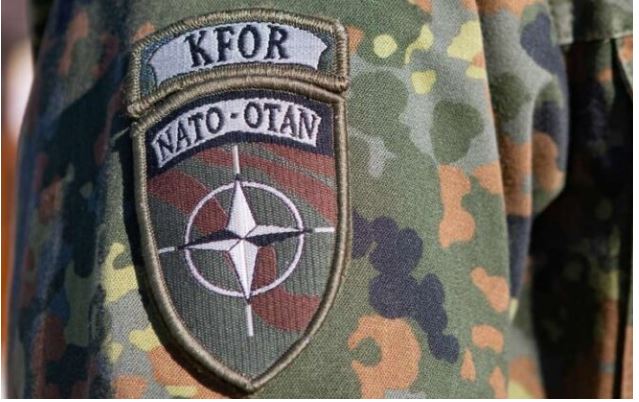
Reports say Washington is considering the withdrawal of US forces from the NATO-led Kosovo Force (KFOR), sparking pushback in Washington and across Europe.

By David J. Kostelancik*

Lawmakers from both parties in Congress, NATO allies, and regional governments responded to the report by warning that a premature withdrawal could destabilize the fragile security of the Western Balkans and embolden Russia and Serbia.

The US currently contributes about 600 troops to KFOR, a multinational peacekeeping force of between 4,500 and 4,800 personnel, and leads Regional Command East from Camp Bondsteel, near the city of Ferizaj. The base, built in 1999, is one of the largest US military installations in Europe and a vital logistics and operations hub for NATO in the region.

US personnel in Kosovo provide a wide range of capabilities, including intelligence, logistics, and command support. They also participate in joint exercises and regular rotations involving US National Guard units, reflecting the mission’s ongoing operational role in maintaining stability and readiness in the region. It remains a hotly contested space since Serbia’s eviction by NATO in 1999. Belgrade does not recognize its Balkan neighbor, and there are regular troop movements and civil disorder.

KFOR operates under the authority of NATO and maintains a mandate to ensure a “safe and secure environment” and freedom of movement for all communities in Kosovo. The legal framework for the force was provided by UN Security Council Resolution 1244, which authorized an international security presence after the end of the war.

At the start of the mission in 1999, KFOR consisted of nearly 50,000 multinational troops, including a large US contingent. American forces played a central role in stabilizing the territory in the immediate postwar period when Kosovo lacked functioning institutions or security structures.

The mission gradually shifted from active conflict management to long-term peacekeeping, and troop levels declined as the security situation improved. The US role has remained strategically significant due to its leadership in the NATO command structure and its operational capabilities.

The Trump administration’s internal policy discussions about Kosovo are part of a broader review of global military commitments, which was expected last year but has still not been published. Officials have emphasized the need to allocate resources more efficiently and encourage allies to shoulder greater responsibility for regional security.

Secretary of State Marco Rubio has indicated Washington is reassessing overseas deployments to determine where US military assets are most needed. The review reflects a strategic shift to deterrence against major powers and reinforces NATO’s core mission of defending treaty members.

One argument focuses on burden sharing. European nations contribute about 65% of KFOR’s troops (Italy currently supplies the largest number), and US officials believe they should assume a larger share of the remaining responsibilities. Advocates for reducing the US role say European countries have the resources and geographic proximity to manage stability in the Western Balkans.

Yet the possibility of withdrawal has generated notable bipartisan concern in the US Congress. On March 12, a dozen lawmakers from both parties warned Rubio that a premature reduction of US forces could have knock-on effects across the region.

They argued that the American presence remains a critical deterrent against renewed ethnic flare-ups between Kosovo Albanians and Serbs. They also warned that a withdrawal could create an opportunity for external powers, particularly Russia, to expand their influence in the Western Balkans.

European allies have expressed similar fears. Officials across NATO say a reduced American presence could embolden nationalist movements in northern Kosovo, where ethnic Serbs maintain close ties to Serbia.

Analysts also warn that instability in Kosovo could spill into neighbors like Bosnia and Herzegovina, where political tensions remain high. For many European governments, the US role in KFOR symbolizes Washington’s long-term commitment to Balkan security.

The debate comes at a particularly sensitive time. Kosovo is experiencing a major constitutional crisis, involving a dispute between President Vjosa Osmani and Prime Minister Albin Kurti, and relations with Washington have cooled.

The US suspended its strategic dialogue with Kosovo late last year as a result of actions by Kurti’s government, which it said had “increased tensions and instability.” In a statement announcing the suspension, the US Embassy in Pristina said Kurti’s actions had “posed challenges to progress made over many years” without giving specific details.

Despite the ongoing debate, NATO officials have downplayed reports of an imminent withdrawal. Spokespeople for KFOR and the alliance said no major changes to the mission are under consideration, and troop levels will continue to be determined by evolving security conditions. Kosovo’s defense ministry also rejected claims that a US withdrawal is imminent.

Nevertheless, even the possibility of a drawdown highlights broader questions about the future of NATO’s peacekeeping missions and the changing role of the US in European security. As policymakers weigh strategic priorities, the debate over KFOR underscores the continuing importance and fragility of the Western Balkans.

In light of the increased trilateral cooperation between Albania, Croatia, and Kosovo, a reduction in KFOR might be interpreted by Serbia and Russia as a sign of Western disapproval of the “minilateral” of the three countries.

On the other hand, if the US pulls back from KFOR while demonstrating support for cooperation between Albania, Croatia, and Kosovo, allies might still be reassured, and regional troublemakers deterred from exploiting any reduction in US military presence.

David J. Kostelancik is a Nonresident Senior Fellow at the Center for European Policy Analysis (CEPA). He was a career member of the US Senior Foreign Service, holding the rank of Minister Counselor. David served as deputy coordinator for terrorism prevention and detention in the State Department’s Bureau of Counterterrorism from 2024 to 2025. From 2021 to 2023, he was foreign policy adviser to the chairman of the Joint Chiefs of Staff. His overseas postings as deputy chief of mission and chargé d’affaires at the US Embassy in Hungary and two postings to Russia. He holds a bachelor’s degree in mathematics and political science from Northwestern University, a master’s degree in Russian and East European studies from the University of Michigan, and a Master of Science degree in national security strategy from the National War College.

Europe’s Edge is CEPA’s online journal covering critical topics on the foreign policy docket across Europe and North America. All opinions expressed on Europe’s Edge are those of the author alone and may not represent those of the institutions they represent or the Center for European Policy Analysis. CEPA maintains a strict intellectual independence policy across all its projects and publications.
*https://cepa.org/

Related Posts

Current Events

Democracy Cannot Be Governed by Noise

19 August, 2026
ENGLISH

In Search of Lost Childhood and Land [1]

17 August, 2026
ENGLISH

The Ibar River Should Carry Water, Not Nationalist Politics

12 August, 2026

Follow US

Subscribe

Receive Argumentum Magazine by Email

Last Posts

Democracy Cannot Be Governed by Noise

19 August, 2026

In Search of Lost Childhood and Land [1]

17 August, 2026

The Ibar River Should Carry Water, Not Nationalist Politics

12 August, 2026

Between Political Calculation and Retreat: Croatian Communists at the End of an Era

10 August, 2026

The West is buying time, but to whom is it giving it?

10 August, 2026
Argumentum

“Argumentum”, një proces intelektual …

Contact Us

[email protected]
[email protected]
[email protected]

Follow Us

Media Partner

Register

Receive Argumentum Magazine by Email
  • Home
  • Privacy Policy
  • About Us
  • Contact

© 2022 Argumentum. All Rights Reserved. | NUIS: L91415033Q

Welcome Back!

Login to your account below

Forgotten Password? Sign Up

Create New Account!

Fill the forms bellow to register

*By registering into our website, you agree to the Terms & Conditions and Privacy Policy.
All fields are required. Log In

Retrieve your password

Please enter your username or email address to reset your password.

Log In

Add New Playlist

No Result
View All Result
  • Home
  • OP/ED
  • Interview
  • Realpolitik
  • Current Events
  • Top News
  • YOUR VOICE
  • Shqip

© 2022 Argumentum. All Rights Reserved. | NUIS: L91415033Q

This website uses cookies. By continuing to use this website you are giving consent to cookies being used. Visit our Privacy and Cookie Policy.