



















Author: Dr. Gurakuç Kuçi – Professor at Universum College and External Associate at ISLH “OCTOPUS”
Electoral processes have now evolved into a geopolitical fact, not merely a democratic one, particularly in Southeast Europe. This is reflected in a series of interventions in electoral processes by Russia and Serbia. In some cases, this has been documented, while in others there have been attempts to influence the creation of a political reality aligned with their interests. This has been observed in Moldova, Georgia, North Macedonia, Montenegro, and Kosovo, and now, together with Hungary, elements are emerging that suggest influence even in the April 12 elections.
This sequence of events is as follows:
- On March 21, The Washington Post reported that Russian intelligence (SVR) had prepared a “false flag” assassination scenario targeting Orban. In an electoral context, this aligns with known patterns of constructing an external threat and mobilizing internal political support.
- On March 29, local elections were held in ten municipalities in Serbia, with reports indicating manipulation by the ruling party and Serbian President Aleksandar Vucic.
- On March 30, Vucic held a phone call with Vladimir Putin regarding cooperation in energy, gas, and the nuclear sector. According to media reports, discussions also included Kosovo, UN Security Council Resolution 1244, Bosnia and Herzegovina, developments in the Middle East, and the Croatia–Albania–Kosovo military agreement.
- During the same period, Croatian President Zoran Milanovic canceled the Brdo-Brijuni meeting, signaling a refusal to be part of these developments.
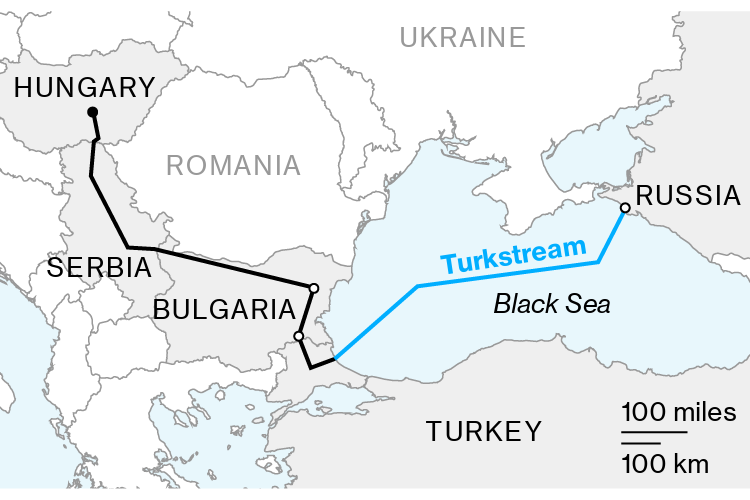
- On April 5, one week before the elections in Hungary, it was reported that explosives had been discovered near the TurkStream gas pipeline in northern Serbia. The news was immediately framed as a security threat by Vucic, while Viktor Orbán also reacted by convening the Security Council.
The opposition in Hungary described the incident as a “false flag,” but Hungarian Foreign Minister Péter Szijjártó directly accused Ukraine, stating: “In recent days and weeks, the Ukrainians organized an oil blockade against us and then attempted to place us under a total energy blockade… and now we have today’s incident.”
Ukraine, through its Ministry of Foreign Affairs, denied any involvement, adding that “(it is highly likely that this was) a Russian ‘false flag’ operation, as part of Moscow’s heavy interference in the Hungarian elections.”
- All these developments are occurring in the run-up to the April 12 elections in Hungary.
Conclusions:
All these developments suggest that the preservation of the Moscow–Budapest–Belgrade axis remains a geopolitical project sustained through the continuity of the same political actors. Under different circumstances, this axis would likely cease to exist; it is precisely this dynamic that has transformed elections into not only an electoral matter, but also a geopolitical and geostrategic one. President Milanović has already clearly understood this dynamic and, by canceling the Brdo-Brijuni meeting, has publicly signaled—even to the West—that he will not allow any form of “appeasement policy” or “stabilitocracy” toward axes that are waiting for shifts in geopolitical circumstances to expand into the Western Balkans.
Instability, institutional capture, fragmentation, and propaganda are among the most powerful elements of hybrid warfare. The application of these elements within such a short timeframe indicates an intensified level of activity by the pro-Russian axis. In the new geopolitical context, particularly following developments in the Middle East, a more advanced phase of this warfare is observable. The distinction is fundamental: whereas until 2023–2024 the actions were more direct, including terrorist operations such as those seen in Kosovo, there is now a discernible effort to relativize that period—reframing themselves as victims while simultaneously refining public diplomacy to justify actions on the ground.
© 2026 Argumentum