







• SHQIPËRI
  • KOSOVË
  • MAQEDONIA E VERIUT
  • MALI I ZI
  • Revista në PDF
18 August, 2026
  • Home
  • OP/ED

    Between Political Calculation and Retreat: Croatian Communists at the End of an Era

    The West is buying time, but to whom is it giving it?

    27 July 1941 – A Site of Memory Between War, Revolution and Europe

    The cult of Saint Veneranda / Saint Pren(d)a / Saint Premte / Saint Paraskeva among Albanians

    The Self-Inflicted Decoupling: How U.S. Immigration Policy Is Ceding the Tech Edge to China

    The Blueprint Does Not Stop at the Drina

    The Underlying Logic behind China’s Economic Success

    Do Not Misuse the U.S. Declaration of Independence to Justify the Narrative of Insurrection in Albania

    The visit that changed Albania’s strategic future

  • Interview

    Exclusive Interview with Oleksandr Tyshchenko: A 40-Year Legacy of Chernobyl, Nuclear Risks, and Global Responsibility

    INTERVIEW: ZLATKO KRAMARIĆ – THOUGHTS ON THE OLD CONTINENT

    EXCLUSIVE / Ukrainian Ambassador to Albania, Volodymyr Shkurov: “Ukraine wants peace, but not at the expense of its freedom and independence”

    EXCLUSIVE| Ambassador Tayyar Kagan Atay: Türkiye and Albania, a Strategic Partnership Rooted in Shared Heritage and a Common Vision for the Future

    “Diplomacy, Not War”: Palestinian Ambassador to Albania Calls for Justice, Peace, and Global Action for Gaza

    Exclusive: “Even After Tito – Tito”/ Ambassador Zlatko Kramarić on Authoritarian Legacies and Democracy’s Future in the Balkans

    The Conclusion of the Diplomatic Mission / Ambassador Dancho Markovski: Strengthening Albania-North Macedonia Relations for a Shared European Future

    A Century of Diplomatic Relations Between Albania and Russia: Exclusive Interview with the Russian Ambassador to Albania, H.E. Alexey Zaytsev

    Exclusive/ The chairman of the Freedom Party, Ilir Meta: “The will of the citizens will triumph in Albania, as it did in North Macedonia”

  • Realpolitik

    The Summit of Unity! Think of peace and prepare for war! It’s only the start to the end! Just a pause between two wars!

    Peace with war diplomacy! The protest,  image and tourism! Why this silence from the EU Commission and Council? A deal or a pause?

    Just kind words  in Tivat! Where is the peace!? A deal yes, peace No!What is happening with USA and  EU?  5 elections but no solution!

    IBAR? ”Sufficiently! Much ado about nothing! Shart contrasts in Beijing! Where is the exit?!

    Neither peace nor war! Peace with bombs?! IBAR in autumn?! Not another Hormuz in Taivan! 

    IBAR – a springing board or an obstacle? Can we catch the EU Negotiation train 2027? When the dress makes the news!  EU electoral April  ends in a draw 1:1!  

    The European Parliament building in Strasbourg, France with flags waving calmly celebrating peace of the Europe. July 12, 2020.

    EU 2027 or 2037! Even half membership failed! No exit strategy!     

    What next?

    “With diplomatic velvet“! Major question marks! In Washington yes, but  in the White House NO! A strange dinner in Brussels!

  • Current Events

    Council of Albanian Ambassadors Raises Concern Over Serbian Plan to Alter the Ibër River

    Digitalisation in the modern era as a “Trojan horse” for hybrid warfare

    The four days that changed history

    Bury Those You Killed

    The Serbian Consulate in Shkodra: A Diplomatic Step or a Project with Political Implications?

    Chinese Embassy in Albania Marks PLA’s 99th Anniversary, Reaffirms Commitment to Peace and Bilateral Cooperation

    Croatian Foreign Minister’s Visit to Tirana/Albania and Croatia Strengthen Their Strategic Partnership as Zagreb Reaffirms Support for Albania’s European Union Membership

    Albanian Parliament Approves $302 Million U.S. Military Financing Loan, Opposition Boycotts Session

    The cult of Saint Veneranda / Saint Pren(d)a / Saint Premte / Saint Paraskeva among Albanians

  • Top News

    Council of Albanian Ambassadors Raises Concern Over Serbian Plan to Alter the Ibër River

    Rama: Foreign Information Manipulation Has Become One of the Greatest Threats to Democracy and European Security

    The Council of Albanian Ambassadors condemns chauvinistic rhetoric by Serbian officials and calls for diplomatic action

    NATO at Ankara 2026: Strategic Rebalancing Between Russia Deterrence, Turkey’s Rise, and National Interests

    Daniel Serwer: A Bad War Ending Badly May Still Be Good News

    Friedrich Merz, Keir Starmer, António Costa, Donald Trump, Emmanuel Macron, Mark Carney, Ursula von der Leyen, Giorgia Meloni and Sanae Takaichi

    G7 Leaders Gather in Évian Amid Global Uncertainty, Focus on Security, Economy and International Cooperation

    Russian Ambassador in Tirana: “Without a Strong and Sovereign Russia, the Creation of a Just World Order Is Impossible”

    “The Flamingo Revolution”: Day 10 of Protests in Albania Draws International Attention

    Rama alleges ‘hybrid war’ behind protests against Kushner-linked coastal development

  • YOUR VOICE
  • Shqip
No Result
View All Result
Argumentum
  • Home
  • OP/ED

    Between Political Calculation and Retreat: Croatian Communists at the End of an Era

    The West is buying time, but to whom is it giving it?

    27 July 1941 – A Site of Memory Between War, Revolution and Europe

    The cult of Saint Veneranda / Saint Pren(d)a / Saint Premte / Saint Paraskeva among Albanians

    The Self-Inflicted Decoupling: How U.S. Immigration Policy Is Ceding the Tech Edge to China

    The Blueprint Does Not Stop at the Drina

    The Underlying Logic behind China’s Economic Success

    Do Not Misuse the U.S. Declaration of Independence to Justify the Narrative of Insurrection in Albania

    The visit that changed Albania’s strategic future

  • Interview

    Exclusive Interview with Oleksandr Tyshchenko: A 40-Year Legacy of Chernobyl, Nuclear Risks, and Global Responsibility

    INTERVIEW: ZLATKO KRAMARIĆ – THOUGHTS ON THE OLD CONTINENT

    EXCLUSIVE / Ukrainian Ambassador to Albania, Volodymyr Shkurov: “Ukraine wants peace, but not at the expense of its freedom and independence”

    EXCLUSIVE| Ambassador Tayyar Kagan Atay: Türkiye and Albania, a Strategic Partnership Rooted in Shared Heritage and a Common Vision for the Future

    “Diplomacy, Not War”: Palestinian Ambassador to Albania Calls for Justice, Peace, and Global Action for Gaza

    Exclusive: “Even After Tito – Tito”/ Ambassador Zlatko Kramarić on Authoritarian Legacies and Democracy’s Future in the Balkans

    The Conclusion of the Diplomatic Mission / Ambassador Dancho Markovski: Strengthening Albania-North Macedonia Relations for a Shared European Future

    A Century of Diplomatic Relations Between Albania and Russia: Exclusive Interview with the Russian Ambassador to Albania, H.E. Alexey Zaytsev

    Exclusive/ The chairman of the Freedom Party, Ilir Meta: “The will of the citizens will triumph in Albania, as it did in North Macedonia”

  • Realpolitik

    The Summit of Unity! Think of peace and prepare for war! It’s only the start to the end! Just a pause between two wars!

    Peace with war diplomacy! The protest,  image and tourism! Why this silence from the EU Commission and Council? A deal or a pause?

    Just kind words  in Tivat! Where is the peace!? A deal yes, peace No!What is happening with USA and  EU?  5 elections but no solution!

    IBAR? ”Sufficiently! Much ado about nothing! Shart contrasts in Beijing! Where is the exit?!

    Neither peace nor war! Peace with bombs?! IBAR in autumn?! Not another Hormuz in Taivan! 

    IBAR – a springing board or an obstacle? Can we catch the EU Negotiation train 2027? When the dress makes the news!  EU electoral April  ends in a draw 1:1!  

    The European Parliament building in Strasbourg, France with flags waving calmly celebrating peace of the Europe. July 12, 2020.

    EU 2027 or 2037! Even half membership failed! No exit strategy!     

    What next?

    “With diplomatic velvet“! Major question marks! In Washington yes, but  in the White House NO! A strange dinner in Brussels!

  • Current Events

    Council of Albanian Ambassadors Raises Concern Over Serbian Plan to Alter the Ibër River

    Digitalisation in the modern era as a “Trojan horse” for hybrid warfare

    The four days that changed history

    Bury Those You Killed

    The Serbian Consulate in Shkodra: A Diplomatic Step or a Project with Political Implications?

    Chinese Embassy in Albania Marks PLA’s 99th Anniversary, Reaffirms Commitment to Peace and Bilateral Cooperation

    Croatian Foreign Minister’s Visit to Tirana/Albania and Croatia Strengthen Their Strategic Partnership as Zagreb Reaffirms Support for Albania’s European Union Membership

    Albanian Parliament Approves $302 Million U.S. Military Financing Loan, Opposition Boycotts Session

    The cult of Saint Veneranda / Saint Pren(d)a / Saint Premte / Saint Paraskeva among Albanians

  • Top News

    Council of Albanian Ambassadors Raises Concern Over Serbian Plan to Alter the Ibër River

    Rama: Foreign Information Manipulation Has Become One of the Greatest Threats to Democracy and European Security

    The Council of Albanian Ambassadors condemns chauvinistic rhetoric by Serbian officials and calls for diplomatic action

    NATO at Ankara 2026: Strategic Rebalancing Between Russia Deterrence, Turkey’s Rise, and National Interests

    Daniel Serwer: A Bad War Ending Badly May Still Be Good News

    Friedrich Merz, Keir Starmer, António Costa, Donald Trump, Emmanuel Macron, Mark Carney, Ursula von der Leyen, Giorgia Meloni and Sanae Takaichi

    G7 Leaders Gather in Évian Amid Global Uncertainty, Focus on Security, Economy and International Cooperation

    Russian Ambassador in Tirana: “Without a Strong and Sovereign Russia, the Creation of a Just World Order Is Impossible”

    “The Flamingo Revolution”: Day 10 of Protests in Albania Draws International Attention

    Rama alleges ‘hybrid war’ behind protests against Kushner-linked coastal development

  • YOUR VOICE
  • Shqip
No Result
View All Result
Argumentum
No Result
View All Result
Home Current Events

Serbia and Kosovo between new regional alliances and old geopolitical patterns

22 April, 2026
in Current Events, ENGLISH, English OP/ED
A A
Share on FacebookShare on Twitter

IFIMES*

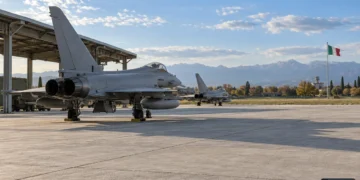
Relations between Serbia and Kosovo are entering a phase of heightened security tensions and a reassessment of strategic positions, amid rapid changes in the European and global geopolitical landscape. The establishment of new forms of military and security cooperation between Croatia, Albania and Kosovo represents a significant signal of political and military rapprochement[2], which, while ostensibly not aimed at any third party, is perceived in Belgrade as a distinct strategic challenge.

Perception of threat, security realities and historical parallels: the Balkan Pact and contemporary arrangements

Albanian Minister of Defence Ermal Nufi recently emphasised in Zagreb that Albania and Croatia are fully aligned with NATO and that all their activities will be undertaken in accordance with that framework. At the same time, he underlined that this does not preclude the readiness of these states to act in the defence of Kosovo. The declaration between Croatia, Kosovo and Albania, as he noted, reflects the political will of both the Albanian and Croatian peoples. In this context, Kosovo remains firmly committed to integration into the EU, NATO and broader security mechanisms, while Zagreb and Tirana view regional security as a shared interest of all countries in Southeast Europe.[3]

In Serbia, however, this has further strengthened the belief that such cooperation is implicitly directed against it. While these messages are primarily intended as a deterrent, they also deepen mistrust and raise political temperature across the region.

In a broader context, this military arrangement should be understood as part of a NATO-dominated security architecture: Croatia and Albania are full members, while Kosovo remains under an international security umbrella.

A comparison with the Balkan Pact[4] of 1953 – concluded between Yugoslavia, Greece and Turkey – allows for a deeper analysis. The agreement, signed in Ankara on 28 February 1953, contained an explicit collective defence clause: an armed attack against one member was to be treated as an attack against all, with an obligation to provide assistance, including the use of military force, in line with Article 51 of the United Nations Charter.

Formed under the leadership of Josip Broz Tito, the alliance had a clearly defined objective – collective defence against a potential threat from the Soviet Union at the height of Cold War confrontation. It represented a formalised military-political alliance with significant strategic depth and a clearly defined adversary.

By contrast, the current arrangement between Zagreb, Tirana and Pristina is characterised by markedly different features: it lacks a formal defence treaty with binding provisions, functions within an established NATO framework, and carries a predominantly political and symbolic, but also deterrent, dimension.

Whether Kosovo’s Prime Minister Albin Kurti has taken a step comparable to that once taken by Tito calls for a more nuanced assessment. While there are certain similarities in the logic of ensuring security through regional alignment, the differences are substantial in terms of context, capacities and the degree of strategic autonomy. Whereas Kurti operates within a clearly defined Western security system, Tito pursued a policy of balancing and building a relatively independent position between opposing blocs.

Nevertheless, the crucial fact remains that a potential attack on any one of the states involved would carry wider implications: two are NATO members, which could potentially draw the Alliance itself into an escalation of the conflict.

Serbia: military neutrality, European ambitions and emerging Central European dynamics (“Visegrad Plus”)

Serbia’s status as a militarily neutral state remains one of the central pillars of its foreign and security policy. Such an orientation allows Belgrade to maintain balanced relations with Western partners, while also engaging with actors such as Russia and China—Serbia being one of the few European nations to have signed a free trade agreement with Beijing. At the same time, this position inherently limits deeper integration into Western security structures.

Serbia’s strategic commitment to EU membership entails gradual alignment with the EU’s common foreign and security policy, giving rise to internal strategic tensions between competing priorities: military neutrality versus political alignment with the EU, balancing between East and West, and a pragmatic approach versus the need for long-term strategic clarity.

This ambivalence is further compounded by the fact that nearly all neighbouring countries are NATO members, which affects the perception of the security environment and Serbia’s overall strategic positioning in the region. Within this framework, relations with Bosnia and Herzegovina remain particularly sensitive, especially between Serbs and Bosniaks, which call for direct and institutional dialogue between Belgrade and Sarajevo, free from additional political mediation that complicates the process.

The victory of Péter Magyar (Tisza) in Hungary and his initiative to redefine and potentially expand the Visegrad Group to include additional states, such as Austria, Slovenia, Croatia and Romania, may be seen as an effort to reinforce a Central European political and economic bloc within the European Union. 

Yet this process also carries wider geopolitical implications: it could further distance Serbia from the EU’s main integration pathways, contribute to the emergence of an informal “inner core” within the Union, and deepen the sense of political and strategic marginalisation across the Western Balkans.

Against this backdrop, Serbia is confronted with an increasingly complex challenge – to simultaneously preserve military neutrality, accelerate European integration and navigate new regional bloc and quasi-bloc structures that are once again taking shape across Europe.

Strategy “Serbia 2030” – looking to the future

The recently unveiled “Serbia 2030” strategy reflects a clear ambition of the authorities in Belgrade to position the country as a regional hub of economic and technological development over the coming decades. At the same time, the document outlines three key directions: continuing the EU integration process while pragmatically balancing international partnerships; bolstering internal stability through infrastructure investments, energy security and the preservation of military neutrality; and transforming the economic model through the development of digital technologies and artificial intelligence.

Nevertheless, significant challenges remain – primarily in the areas of institutional reforms, adverse demographic trends and the region’s persistent geopolitical instability. Ultimately, the strategy’s success hinges on the capacity of state institutions to implement substantial reforms to the rule of law, improve the education system and strengthen the efficiency of public administration.

Consequently, the “Serbia 2030” strategy represents both a forward-looking orientation and an ambitious development vision, serving as a critical test of Serbia’s political resolve and institutional maturity in translating declared objectives into measurable and sustainable long-term outcomes.

Global context and implications for the Western Balkans

Contemporary geopolitical shifts are significantly shaping relations between Serbia and Kosovo. Russia’s invasion of Ukraine has accelerated the militarisation of the European continent and redefined security priorities, while the growing strategic rivalry between the United States and China is further transforming the global balance of power. At the same time, the European Union is seeking to consolidate its own security and political space in response to these geopolitical realities.

The Western Balkans is once again emerging as a zone of overlapping great power interests, with regional security dynamics no longer viewed in isolation but rather through the lens of a wider global context.

The new military and security arrangement between Croatia, Albania and Kosovo does not constitute a formal military alliance modelled on the Balkan Pact, but it nonetheless serves a clear political and psychological purpose as a form of deterrence and strategic signalling.

For Serbia, such developments further entrench the perception of strategic encirclement and complicate the balancing act between a policy of military neutrality and the European integration process. For Kosovo, they simultaneously represent an instrument for bolstering its international security and political standing.

A key strategic message is that Serbia continues to see its long-term future in European Union membership, with the possibility of accession projected by 2035. At the same time, President Aleksandar Vučić has expressed a measure of pragmatism and scepticism regarding the European Union’s capacity to make major strategic decisions under the current circumstances.

This approach points to Belgrade’s effort to reconcile European integration with a policy of multi-vector partnerships. Serbia has signalled its interest in access to the single market and the free movement of goods and people, even in a scenario of partial integration ahead of full membership. The joint call by Serbian President Aleksandar Vučić and Prime Minister Edi Rama for the accelerated integration of candidate countries into the EU single market and the Schengen Area, without veto rights, constitutes a constructive proposal that deserves serious consideration within the European Union.

This stance underscores the continuity of Serbia’s long-standing strategy of balancing relations with the European Union, China, Russia and other global actors, which has for years underpinned its foreign policy doctrine.

Geopolitical realism and the policy of military neutrality

Serbia’s strategy clearly affirms its commitment to military neutrality, while at the same time developing a broad spectrum of cooperation both with NATO member states and with other international partners. Belgrade seeks to build flexible forms of military and security cooperation without formally acceding to existing military alliances, thus preserving room for strategic manoeuvre in a complex international environm ent.

Historical parallels with the era of Josip Broz Tito are only partially applicable: the contemporary Balkans is no longer defined by rigid bloc divisions, but it remains a highly sensitive geopolitical arena in which the interests of regional actors and global powers continue to intersect.

Against this backdrop, without stronger and more coherent engagement by the European Union, as well as the consistent continuation of dialogue between Belgrade and Pristina, there is a real risk that new security arrangements may, rather than contributing to stability, lead to further political fragmentation and increased security polarisation across the Western Balkans.

Ljubljana/Washington/Brussels/Belgrade, 22 April 2026

*https://www.ifimes.org/en/researches/serbia-and-kosovo-between-new-regional-alliances-and-old-geopolitical-patterns/5829

[1] IFIMES – International Institute for Middle East and Balkan Studies, based in Ljubljana, Slovenia, has a special consultative status with the United Nations Economic and Social Council ECOSOC/UN in New York since 2018, and it is the publisher of the international scientific journal “European Perspectives.” Available at: https://www.europeanperspectives.org/en

[2] TV N1: John Bolton: Any military alliance other than NATO in Europe is a security risk. Available at: https://n1info.rs/svet/dzon-bolton-bilo-kakav-vojni-savez-sem-nato-a-u-evropi-je-bezbednosni-rizik/ 

[3] Dnevnik.hr: Anušić responds to what Croatia will do if Kosovo is attacked, also reflects on Vučić. Available at: https://dnevnik.hr/vijesti/hrvatska/anusica-ne-zabrinjava-naoruzavanje-srbije—974757.html 

[4] The Balkan Pact, signed on 28 February 1953 in Ankara, was a treaty of friendship and cooperation between the FPR of Yugoslavia, Greece, and Turkey. Its main goal was defence against the Soviet threat and the territorial ambitions of the Bulgarian regime following the Tito-Stalin split. The alliance was viewed as an alignment with the Western bloc, although Yugoslavia remained non-aligned.
Related Posts

ENGLISH

In Search of Lost Childhood and Land [1]

17 August, 2026
ENGLISH

The Ibar River Should Carry Water, Not Nationalist Politics

12 August, 2026
ENGLISH

Between Political Calculation and Retreat: Croatian Communists at the End of an Era

10 August, 2026

Follow US

Subscribe

Receive Argumentum Magazine by Email

Last Posts

In Search of Lost Childhood and Land [1]

17 August, 2026

The Ibar River Should Carry Water, Not Nationalist Politics

12 August, 2026

Between Political Calculation and Retreat: Croatian Communists at the End of an Era

10 August, 2026

The West is buying time, but to whom is it giving it?

10 August, 2026

Council of Albanian Ambassadors Raises Concern Over Serbian Plan to Alter the Ibër River

10 August, 2026
Argumentum

“Argumentum”, një proces intelektual …

Contact Us

[email protected]
[email protected]
[email protected]

Follow Us

Media Partner

Register

Receive Argumentum Magazine by Email
  • Home
  • Privacy Policy
  • About Us
  • Contact

© 2022 Argumentum. All Rights Reserved. | NUIS: L91415033Q

Welcome Back!

Login to your account below

Forgotten Password? Sign Up

Create New Account!

Fill the forms bellow to register

*By registering into our website, you agree to the Terms & Conditions and Privacy Policy.
All fields are required. Log In

Retrieve your password

Please enter your username or email address to reset your password.

Log In

Add New Playlist

No Result
View All Result
  • Home
  • OP/ED
  • Interview
  • Realpolitik
  • Current Events
  • Top News
  • YOUR VOICE
  • Shqip

© 2022 Argumentum. All Rights Reserved. | NUIS: L91415033Q

This website uses cookies. By continuing to use this website you are giving consent to cookies being used. Visit our Privacy and Cookie Policy.