























History, Memory and Responsibility in the European Context
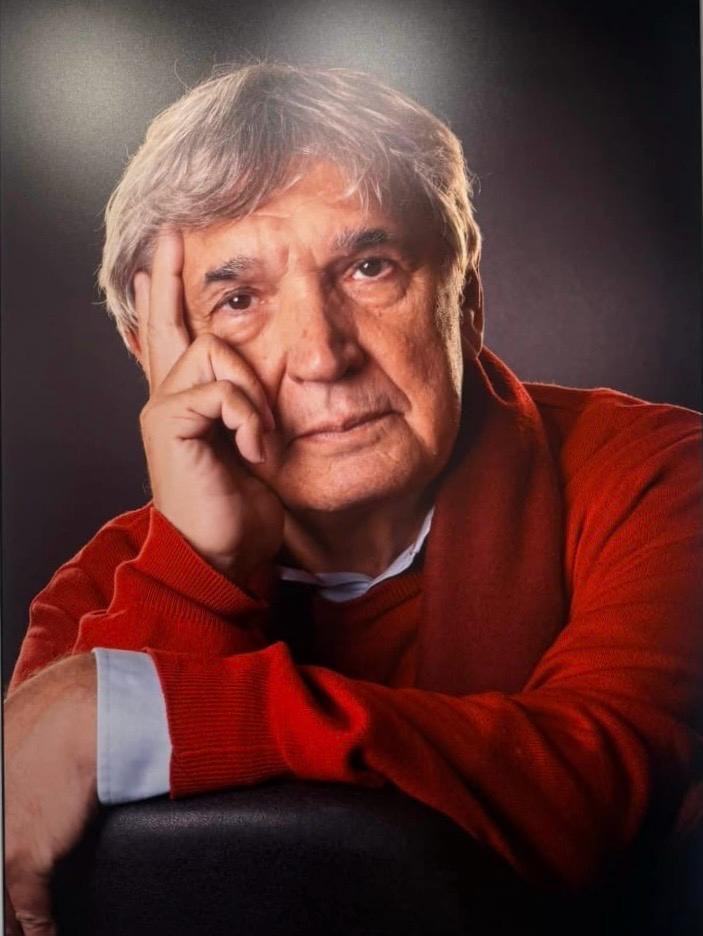
By Zlatko Kramarić*
There are dates that cease to be mere moments in time. They become sites of memory—points around which collective identities, political interpretations, and moral questions are shaped. One such date is undoubtedly 27 July 1941.
In socialist Yugoslavia, this date was officially commemorated as the beginning of the uprising of the peoples of Croatia against fascism. It became embedded in the state’s official narrative of the anti-fascist struggle, the ideology of “Brotherhood and Unity,” and the creation of the new socialist Yugoslavia. The memory of the war thus became one of the principal foundations of the legitimacy of the new political order.
Following the disintegration of Yugoslavia and the emergence of new independent states in the 1990s, the interpretation of 27 July underwent a profound transformation. In part of the Croatian public sphere, emphasis shifted towards the Chetnik component of the uprising and the crimes committed against Croatian (and Muslim) civilians.
The real problem, however, arises when the new interpretation merely becomes a mirror image of the old one. If the Yugoslav socialist narrative reduced the event to the “beginning of the anti-fascist uprising,” contemporary nationalist interpretations at times reduce it to nothing more than a “Chetnik rebellion.”
Serious historiography cannot simply replace one political narrative with another. Its primary task is to understand how a single historical event came to acquire such different meanings and interpretations. For 27 July 1941 is not merely another date in the catalogue of wartime events in this region. Rather, it represents a point at which nearly all the major dilemmas of twentieth-century Europe intersect: the collapse of states, the rise of totalitarian ideologies, ethnic violence, civil war, revolution, and the later efforts of victorious regimes to establish absolute control over historical memory.
The Independent State of Croatia (NDH), Repression, and the Conditions for Rebellion
To understand the events of the summer of 1941, one must first understand the character of the state that emerged following the collapse of the Kingdom of Yugoslavia.
The Independent State of Croatia (NDH) was a creation of the Axis powers, whose legitimacy rested upon a rigid Ustaša ideology. Through the introduction of racial legislation, persecution, and systematic repression directed against Serbs, Jews, and Roma, the regime established a political order that placed large segments of the population in a state of existential insecurity.
The situation was particularly severe in the regions of Lika, Kordun, Banovina, and northern Dalmatia, where local violence, repression, and the collapse of legal order created an atmosphere of pervasive fear.
Without this context, the emergence of armed resistance cannot be fully understood.
Yet historical analysis cannot end with the question of why part of the Serbian population in the NDH took up arms. Equally important is the question of how this resistance was politically shaped and how the principal political forces of the time sought to direct and exploit it.
Srb 1941: Between Rebellion, Resistance, and Revolution
The events that unfolded in Srb on 27 July 1941 emerged in a setting where several distinct political and historical forces converged and clashed. Part of the local population reacted out of an immediate sense of fear and existential insecurity. For many people, the initial motivation was not adherence to any grand—let alone fully developed—ideological programme, but rather the defence of their lives, their families, and their local communities.
At the same time, it would be equally misleading to ignore the fact that the area was also home to individuals who were strongly influenced by the dominant political ideas of the former Kingdom of Yugoslavia.
The Communist Party of Yugoslavia sought to incorporate this spontaneous resistance into its broader strategy of a nationwide uprising against the occupying forces and of revolutionary social transformation.
For this reason, 27 July should be understood as the meeting point of several different political motivations: resistance to the violence of the NDH, the self-defence of an endangered population, Serbian national mobilisation under the slogan “Serbs, Unite!”, and the efforts of a relatively small number of Communists—many of them ethnic Croats—to impose their own revolutionary agenda upon the uprising.
Reducing these events to only one of these dimensions would therefore be historically misleading. They represented the simultaneous interaction of several different—and often conflicting—political projects.
The Communist Movement: Anti-Fascism and Revolution
One of the defining characteristics of the Yugoslav Partisan movement was its dual nature.
On the one hand, the Communists gradually developed into the best organised force of armed resistance against the Axis occupation and their domestic collaborators. Their struggle against the Nazi and Fascist order forms an integral part of the broader European history of anti-fascist resistance, although during the first years of the war the movement remained under the considerable influence of the Soviet Union, the Comintern, and Stalin. In other words, the Partisan movement was deeply imbued with Bolshevik political practice.
On the other hand, the Partisan movement did not seek merely to liberate the country from occupation. Its objective was also to bring about a radical revolutionary transformation of society.
The ultimate goal of the Yugoslav Communists was to establish an entirely new political community, create a new social order, and fundamentally break with the monarchical Yugoslav state.
This close relationship between anti-fascist resistance and revolutionary politics explains why later interpretations of particular historical episodes have differed so profoundly.
One interpretation emphasised liberation and victory over fascism, while another focused on the revolutionary nature of the new communist regime and on the harsh repression that followed its victory. Indeed, it is quite possible that the number of people imprisoned or killed after the war exceeded those who suffered the same fate during the war itself.
Any serious historical understanding of these events must therefore incorporate both dimensions.
Ironically, this revolutionary break with the old order did not apply to the Communist leadership itself. Immediately after the liberation of Belgrade in October 1944, Josip Broz Tito moved into the White Palace (Beli Dvor)—the very residence previously occupied by the much-reviled Karađorđević royal family.
The Serbian National Element and the Development of the Chetnik Movement
Nor can developments in the predominantly Serbian regions during 1941 be understood outside the broader context of the collapse of the Yugoslav state.
During the first months of the war, the various groups within the Serbian community did not share identical political objectives. Some local formations were primarily concerned with the survival and protection of the civilian population. Yet it would be equally mistaken to underestimate the existence of groups closely connected with monarchist and Chetnik traditions.
It is high time for Croatian historiography to devote greater scholarly attention to the role of the Serbian Cultural Club (Srpski kulturni klub – SKK) and to examine its influence on political developments in Croatia before 1941, as well as the ways in which this influence shaped the events of that year.
It is well established that following the creation of the Banovina of Croatia in 1939, the Serbian Cultural Club adopted a strongly critical position towards its constitutional status. Within intellectual circles associated with the SKK, ideas emerged advocating the political unification of all Serbs within a single state framework, while the slogan “Serbs, Unite!” became one of the principal symbols of Serbian national mobilisation.
A significant number of former Yugoslav Army officers who later joined the Chetnik movement shared precisely these political and national convictions.
By the summer of 1941, these ideas had become an important component of the political atmosphere in regions such as Lika and Kordun—areas within the NDH where a large part of the Serbian population rose in rebellion.
The subsequent evolution of the Chetnik movement clearly demonstrated the consequences of this ideological influence, which manifested themselves in numerous atrocities committed against non-Serb civilians in various parts of Croatia during the war.
At the same time, historical scholarship cannot legitimately equate every form of Serbian resistance in the summer of 1941 with the Chetnik project. The distinction between the spontaneous resistance of an endangered population and a fully developed political programme must remain analytically clear.
There is little doubt that the Serbian Cultural Club articulated many of the political and ideological objectives later associated with the Chetnik movement. Likewise, it significantly influenced the political formation of a number of Serbian intellectuals active within the territory of the NDH.
The summer of 1941 was therefore not a period of political confusion but rather a moment when already existing Greater Serbian political concepts, stimulated by the collapse of the Kingdom of Yugoslavia, converged with wartime conditions, Ustaša atrocities, and local uprisings.
From this convergence emerged a highly complex reality in which the Chetnik national programme, the Communist revolutionary strategy, and Italian occupation interests became deeply intertwined.
The post-war Yugoslav regime deliberately reduced this complexity to the simplified myth of a unified anti-fascist uprising.
Crimes, Victims, and the Limits of Historical Justification
One of the most sensitive issues surrounding the events of the summer of 1941 concerns the violence committed against civilians, particularly the Croatian population living in the areas affected by the uprising.
Historians face a twofold responsibility in addressing this subject.
The first is to acknowledge the historical fact that the Serbian population within the Independent State of Croatia (NDH) was subjected to irrational state terror, persecution, and the irresponsible policies of the Croatian government, as well as the actions of certain military formations and their commanders, who in many instances acted independently and contrary to the broader interests of the state. This experience of fear and existential insecurity constituted one of the principal reasons why a segment of the Serbian population resorted to armed resistance.
The second responsibility is to recognise that crimes committed against Croatian civilians cannot be justified by crimes previously committed against Serbs. History, like ethics, recognises no hierarchy of victims. Acknowledging the suffering of one people does not diminish another people’s right to remember its own victims.
Yet it was precisely this right to remembrance that was largely denied to the Croatian people after the end of the Second World War.
The European experience of the twentieth century demonstrates that societies which attempt to construct their identity exclusively upon their own suffering, while ignoring the suffering of others, remain trapped within the past. Such entrapment, however, does not mean that the suppressed past has disappeared. On the contrary, it often re-emerges under new historical circumstances.
From History to Myth: 27 July After 1945
Following the end of the Second World War, socialist Yugoslavia established an official narrative portraying 27 July as the beginning of the uprising of the (primarily Serbian) people of Croatia against fascism.
This narrative served a clear political and moral purpose.
A country devastated by mass atrocities, civil war, and profound ethnic divisions sought, through this simplified interpretation, to overcome these painful traumas and interethnic conflicts. Anti-fascism and the ideology of Brotherhood and Unity became the central pillars of the new Yugoslav identity—a symbolic new beginning.
Even after the establishment of democratic Croatia, certain Croatian presidents continued to repeat this narrative almost mechanically. One of them even declared during a commemoration of 27 July that “the Partisan cap looks good on me.” Such statements were made despite the fact that previously inaccessible historical documents had by then become available, including the Otrić Agreement, signed by representatives of the Italian Fascist authorities, Chetnik commanders, and the Communist leader Đoko Jovanić.
These documents cast an entirely new light upon the tragic events of 27 July 1941 in Srb.
According to this interpretation, the events in Srb were not a genuine popular anti-fascist uprising but rather a brutal Chetnik campaign during which innocent Croatian civilians were murdered. The massacre of entire Croatian families and the exceptionally brutal killing of Catholic priests cannot reasonably be regarded as the beginning of an anti-fascist struggle.
A legitimate historical question therefore arises: why did these self-proclaimed anti-fascist insurgents not attack Italian or Ustaša military units?
Not only did they refrain from attacking them, but they also maintained open cooperation with the Italian occupation authorities.
Every official culture of memory, however, has its limits.
Today it is widely recognised that during the socialist period many historical subjects were either insufficiently researched or deliberately suppressed. Little attention was paid to the diverse political motivations of those who participated in the uprising or to the tensions between Communist ideology and competing Serbian nationalist and monarchist projects.
Likewise, crimes committed against Croatian and Muslim civilians that did not fit the official narrative were systematically ignored.
Nor was it permissible to question the repression—the so-called Red Terror—carried out by the new Communist authorities against both real and imagined opponents after the war.
With the collapse of Yugoslavia, the opposite process occurred.
Subjects that had long been suppressed finally received scholarly attention, yet they often became incorporated into new political narratives which, although ideologically different, displayed a similar tendency to simplify and instrumentalise the past.
As a result, the events of 27 July 1941 have remained trapped between two competing models of historical memory.
The real problem does not lie in the fact that societies remember the past differently. Such diversity is entirely natural.
The problem arises when political actors attempt to claim exclusive ownership of historical memory.
In such circumstances, one side sees 27 July solely as the beginning of the anti-fascist victory, while the other reduces it exclusively to a Serbian rebellion dominated by the Chetnik movement.
Historical truth, however, invariably requires a more nuanced and complex understanding than either of these black-and-white interpretations can provide.
One striking example of ideological blindness among certain Croatian historians is the way some of them interpret the Otrić Agreement. According to their reading, the agreement merely marked the beginning of the political division within the Serbian community in the NDH, arguing that only in early 1942 did a clear ideological differentiation emerge between the Partisan and Chetnik factions.
Thus, the Croatian historian Hrvoje Klasić argues that the majority of the Serbian population in the summer of 1941 was politically disoriented and uncertain about which side to support.
There is certainly nothing objectionable in acknowledging that, in turbulent and uncertain times, it is often difficult to identify the “right side” of history. However, intellectual consistency requires that the same principle be applied to members of the Croatian community.
There can be little doubt that many Croats welcomed 10 April 1941—the proclamation of the Independent State of Croatia—as an act of national liberation, while having no possibility of foreseeing the subsequent evolution of the regime or the crimes that would follow.
Unfortunately, we have never received a satisfactory explanation of the political and ideological motives that led Đoko Jovanić, together with Rašeta and Mileusnić, to sign the Otrić Agreement.
Equally puzzling is the question of why the Communist Party ultimately forgave Jovanić for this act.
Not only was he never sanctioned, but he went on to become one of the most influential political and military figures in socialist Croatia and Yugoslavia. Between 1967 and 1974, he was arguably the most powerful political and military authority in socialist Croatia.
He also stood behind the military exercise Freedom ’71 (Sloboda ’71), conducted in October 1971 at the height of the Croatian Spring. That exercise sent a clear political message regarding how the Yugoslav People’s Army (JNA) intended to respond whenever it believed its position within the state to be threatened.
Barely two months later, the JNA was prepared to suppress the student demonstrations in Zagreb by force.
In the 1990s, it went even further by openly siding with Slobodan Milošević’s political project and actively participating in the aggression against Croatia, Slovenia, and Bosnia and Herzegovina.
Đoko Jovanić was among the principal advocates of that policy.
I would welcome a well-argued scholarly refutation of my thesis that there was no essential difference between Jovanić’s political conduct during the summer of 1941 and his later political career.
Throughout his life, he consistently pursued a political line rooted in Greater Serbian nationalism—a line that, in my view, enjoyed the support of both the Communist Party of Yugoslavia and Josip Broz Tito throughout the socialist period.
Nor was the situation fundamentally different in 1971, during the commemoration of this “sacred” date in the historical memory of the Serbian community in Croatia.
The memoirs of Savka Dabčević-Kučar vividly describe the atmosphere surrounding those commemorations.
According to her account, overt displays of Serbian nationalism took place with the tacit approval of the Croatian Communist leadership, which remained silent in the face of these demonstrations.
Indeed, many Croatian Communist officials reportedly feared for their own safety.
Savka herself recalled attempting to hide behind Jakov Blažević.
The principal guest at that year’s commemoration—held during one of the most politically sensitive years in modern Croatian history—was Draža Marković, a senior member of the Serbian Communist Party.
27 July and the European Culture of Memory
For precisely these reasons, 27 July should be examined within the broader framework of European historical memory.
Post-war Europe was not built upon forgetting its catastrophes.
Rather, it emerged from the determination to draw political and moral lessons from them.
In this respect, Karl Jaspers’ seminal work The Question of German Guilt remains particularly relevant.
Germany’s painful confrontation with its Nazi past, France’s debates over the true nature of the Vichy regime, Poland’s struggle to confront both the Katyn massacre and difficult questions concerning its own wartime treatment of the Jewish population, together with the broader post-communist debates throughout Central and Eastern Europe, all belong to the same great European discussion concerning the relationship between history and moral responsibility.
Every society possesses its own difficult sites of memory.
What distinguishes democratic societies from non-democratic ones is not the absence of painful history, but their willingness to confront even the most uncomfortable questions openly.
They understand that no stable collective identity can be built upon systematic forgetting.
In other words, we are condemned to remember.
The Culture of Memory: From Assmann to Derrida
Contemporary theories of cultural memory offer important insights into why certain historical events continue to provoke intense public debate long after they have occurred.
Jan Assmann argues that societies transmit the past not only through historical scholarship but also through rituals, monuments, symbols, commemorations, and collective narratives. Cultural memory therefore shapes not merely what societies know about their past, but also how they understand themselves.
Paul Ricoeur reminds us that every relationship with the past involves a permanent tension between memory and forgetting. The problem does not lie solely in what societies choose to forget. It also lies in selective remembrance—remembering certain events while consciously or unconsciously ignoring others. Every culture of memory therefore raises difficult ethical questions about whose suffering is acknowledged, whose voices are heard, and whose experiences remain excluded.
Jacques Derrida, reflecting upon inheritance and the “spectres” of history, emphasises that the past never simply disappears. It continues to haunt the present through unresolved questions, unfinished injustices, and inherited political conflicts.
The continuing debates surrounding 27 July illustrate precisely this enduring presence of the past.
In this sense, 27 July is no longer merely a question about 1941.
It is equally a question for contemporary Europe.
It compels us to ask several fundamental questions:
- Can we acknowledge our own historical mistakes without experiencing them as national humiliation?
- Can we recognise the suffering of others without fearing the loss of our own identity?
- Can we understand history not as a battlefield of competing memories, but as a space of shared moral responsibility?
These are not only historical questions. They are questions concerning the future of European democracy itself.
27 July 1941 remains one of the most complex and contested dates in both Croatian and Yugoslav history.
It encompasses the terror of the Independent State of Croatia (NDH), the fear and rebellion of part of the Serbian population, anti-fascist resistance, the harsh Communist revolution that showed little mercy towards its opponents, ideological divisions within the Serbian community, the long tradition of Greater Serbian political projects—some of which sections of the Serbian political elite in Croatia never entirely abandoned—and the subsequent political struggles over what should constitute the authentic memory of these events.
The significance of 27 July should not be reduced solely to the question of what actually happened in Srb on that day.
Its deeper importance lies in how contemporary Croatian society chooses to understand those events today.
We are fully aware that Europe has not been built upon a single, universally accepted interpretation of every historical episode.
For that reason, it is probably unrealistic to expect that present-day Croatia will soon achieve even a basic consensus regarding what precisely occurred in Srb on 27 July 1941.
Europe was built upon something different.
It was built upon the capacity to ensure that differing interpretations of painful historical events would not inevitably lead to new political conflicts.
Croatia has not yet fully reached that stage.
This does not mean that the culture of memory should become an obstacle to reconciliation.
On the contrary, an honest and inclusive culture of memory should constitute one of the essential preconditions for genuine reconciliation.
It has even been possible, in the Croatian Parliament, to hear claims that the victors after 1945 had been “rather careless” because they had failed to complete their task.
Nothing happened to the politicians who uttered such monstrous statements.
One of them was, for a time, even regarded as a serious candidate for the post of Croatian Ambassador to Albania.
It is difficult to imagine anything comparable occurring in the Israeli Knesset—for example, a member of parliament calmly lamenting that Hitler had been insufficiently thorough in implementing the Final Solution to the Jewish question.
Such a statement would rightly provoke universal condemnation.
Finally, 1991 represented, in many respects, a reprise of 27 July 1941.
A section of the Serbian community in Croatia—particularly in rural areas and often encouraged, albeit more discreetly, by segments of the urban Serbian political elite—proved unwilling to accept the existence of an independent Croatian state.
Not only was this reality rejected, but many were prepared to oppose the Croatian state through every available means.
Within this political framework, the easiest strategy was to portray every manifestation of Croatian statehood as nothing more than a continuation of the Independent State of Croatia (NDH) established in 1941.
Reducing every Croatian state to the image of the NDH became a convenient political alibi for those who continued to challenge Croatia’s legitimacy—including certain political representatives of the Serbian community, politicians of the left, journalists, historians, and university professors.
It is therefore hardly surprising that the historian Dragan Markovina has publicly expressed the hope that a new Gabriele D’Annunzio might one day appear in Rijeka, believing that such a development would confirm his own historical and political theses.
Such claims are so absurd that they are not even amusing.
Yet similar observations continue to appear throughout the Croatian public sphere.
Nations do not become mature because they lack dark chapters in their history.
They become mature only when they possess sufficient courage to confront those chapters honestly, responsibly, and with intellectual integrity.
If we are to live together, we must first learn how to remember together.
Regrettably, it is evident that Croatian society has not yet reached that level of historical maturity.
Far greater effort should therefore be invested in constructing an adequate historical narrative capable of acknowledging the complexity of the past rather than reducing it to ideological slogans.
Unfortunately, some Croatian historians—particularly those associated with the Faculty of Humanities and Social Sciences in Zagreb—have done little to contribute to such an approach.
__________________________
*Zlatko Kramarić is a Croatian publicist, author, and diplomat, currently serving as Ambassador to Albania. Formerly a university professor and politician, he is known for his work in literature, cultural studies, and regional history.
© 2026 Argumentum