

























The International Institute for Middle East and Balkan Studies (IFIMES)[1], based in Ljubljana, regularly monitors and analyses developments in the Middle East, the Balkans, Europe and across the world. Its analysis, “Serbia ahead of the 2026 elections: Foreign influence, electoral integrity and challenges to sovereignty”, examines Serbia’s early parliamentary elections, scheduled for 25 October 2026, in the context of concerns over potential foreign influence, transparency in campaign financing, regional relations and state sovereignty. It places particular emphasis on verifiable facts, the impartial conduct of public institutions and the consistent application of the same standards to all political actors – fundamental requirements for protecting electoral integrity and national security.
Serbia ahead of the 2026 elections:
Foreign influence, electoral integrity and challenges to sovereignty
As Serbia’s early parliamentary elections on 25 October 2026 draw closer, the campaign is entering its final stretch against a backdrop of deep political polarisation. The closing days have been further charged by allegations of possible interference by actors from Podgorica, Zagreb and Pristina in Serbia’s political affairs, alongside growing debate over the origins and transparency of election campaign funding.
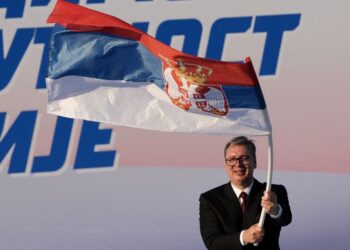
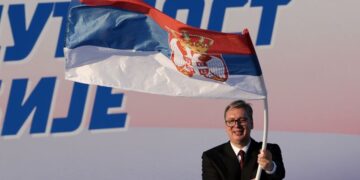
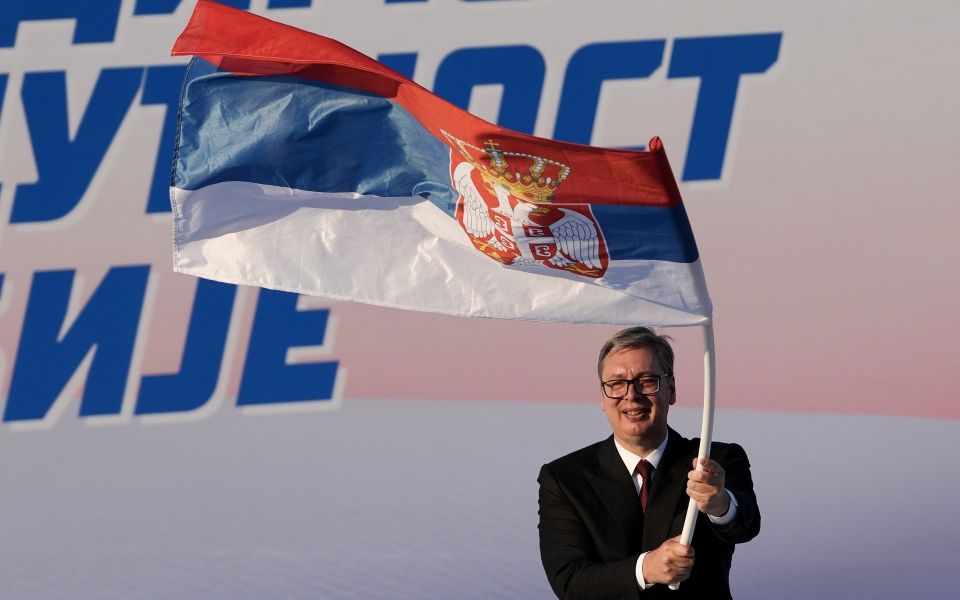
Former Serbian President Aleksandar Vučić (SNS), who stepped down on 27 September 2026, has turned his attention to the parliamentary race. He heads the “Aleksandar Vučić – United Serbia” electoral list, with a possible return to the premiership. In public remarks, he has implicated former Montenegrin President Milo Đukanović (DPS), Radoje Zvicer and Miloš Medenica in alleged activities targeting Serbia.
Đukanović, for his part, has denied any connection to Ilija Srdanović, who heads the “Student List – Students Win”, insisting that he has never even met him.[2]
Beyond the government–opposition divide: state sovereignty and electoral integrity
The 25 October elections are about more than the customary contest between political parties. After nearly two years of social unrest and student-led protests, a new political force has entered the electoral arena – the “Student List – Students Win”. It has unveiled its full slate of 250 candidates for the National Assembly, although available information indicates that not a single student features among them. The ruling Serbian Progressive Party (SNS), meanwhile, is seeking to frame the elections as a choice over continuity in power, political stability and the future direction of state policy. Against this backdrop, any issue capable of shaping public perceptions of political legitimacy becomes part of the wider electoral battle.
The controversy surrounding possible influence from Podgorica, Zagreb and Pristina therefore has at least two distinct dimensions. The first relates to security: are there concrete attempts to exert foreign or cross-border influence on the electoral process? The second is political: are allegations of foreign interference being used to mobilise voters?
Substantiating the first claim requires verifiable evidence, often difficult to obtain given the sophistication and clandestine nature of intelligence operations. The second can be assessed by examining how an issue enters public discourse, who chooses to invoke it and at what stage of the campaign.
The “Montenegrin factor” takes centre stage in Serbia’s election campaign
While campaigning across Serbia on 29 September 2026, Aleksandar Vučić claimed that Milo Đukanović had “directly meddled in Serbia’s elections”, specifically naming Radoje Zvicer and Miloš Medenica, and signalling that further action concerning Zvicer might follow.[3] Vučić reiterated similar accusations at a campaign rally in Sremska Mitrovica on 1 October 2026. His remarks bring to the fore the wider relationship between Serbia and Montenegro, still overshadowed by the political legacy of the years leading up to the change of government in Serbia in 2000. The role played by Montenegro’s leadership during that period, including Milo Đukanović, continues to loom large in Serbia’s political and historical memory.
Such accusations carry serious political and security implications. Given the secrecy surrounding intelligence operations, it is essential to distinguish political and personal ties from intelligence and criminal connections. Blurring these distinctions risks distorting the true nature of the relationships involved.
Any suggestion of Montenegrin involvement in the elections should therefore be evaluated against documented financial, communications and organisational links and evidence of specific activities, rather than the ethnic or national background of the individuals concerned.
Campaign financing at the centre of the debate over electoral transparency and integrity
Another critical issue highlighted by Vučić is the funding of his political opponents’ campaigns. He alleged that his opponents had substantial sums of money at their disposal from unidentified sources, singling out the campaign spending of the “Student List – Students Win”. Scrutiny of campaign financing is both legitimate and vital to safeguarding electoral integrity. Yet allegations of this gravity must be backed by verifiable evidence. Where cash transactions are concerned, establishing the facts can prove particularly challenging.
Any indications that an electoral list is receiving funding from unlawful sources warrant an examination of where the money comes from, who provides it, the sums involved and how the funds are declared. Such scrutiny must also extend to the possible involvement of intermediaries, the financing of media and other campaign activities, the use of public resources and any coordination with domestic or foreign actors. Cash transactions may complicate efforts to follow the money trail, but they do not necessarily prevent irregularities from being substantiated.
Serbia has received repeated recommendations from international election observers in this area over the years. The OSCE/ODIHR has called for stronger oversight of political financing, greater transparency in reporting income and expenditure, measures to prevent the misuse of public resources and the enforcement of effective sanctions. Cash-based transactions present particular difficulties when tracing the origin of funds and uncovering potential irregularities. ODIHR has also identified shortcomings that require further attention, notably in ensuring effective oversight, imposing deterrent sanctions and protecting public funds against misuse.[4]
Far from being a peripheral concern, campaign financing lies at the heart of electoral integrity.
Diplomatic tensions and challenges to regional security
A diplomatic row between Belgrade and Zagreb has added to the tensions surrounding Serbia’s election campaign, following Belgrade’s decision to send Croatia a formal diplomatic note of protest over alleged interference in its domestic politics and electoral process. Serbia also voiced objections to the way certain Croatian media outlets have covered political developments in the country.[5] Croatian Prime Minister Andrej Plenković dismissed the accusations of interference, defending the media’s freedom to report independently. However, Plenković’s decision to present Montenegro with eight demands[6] as part of its EU accession process illustrates Croatia’s willingness to assert its interests in regional affairs. Several Croatian officials have also made public statements indicating opposition to Aleksandar Vučić’s policies and his continued tenure at the helm of Serbia, among them the European Parliament’s rapporteur for Serbia, Tonino Picula (SDPH/S&D), himself a Croatian national. These positions reflect the wider political dynamics at play in the region.
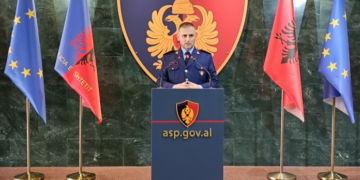
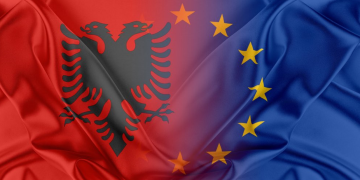
Adding another layer of complexity is the military and political cooperation between Croatia, Albania and Kosovo, taking the form of a military-political alliance that some Serbian officials and political figures view as a potential security challenge or threat. Such regional security arrangements should not automatically be construed as a strategy directed against Serbia. They can, however, legitimately be scrutinised in light of their documented objectives, military capabilities and possible repercussions for regional stability.
Serbia’s security concerns and the positions of other countries in the region should be addressed through dialogue, transparency and established international mechanisms. Turning security assessments into campaign accusations risks further inflaming regional tensions and narrowing the space for reasoned debate.
Seen in this light, Serbia’s diplomatic note of protest to Croatia takes on wider political significance, as allegations of foreign interference become entangled with questions of sovereignty, regional relations and Serbia’s foreign policy autonomy in the run-up to the parliamentary elections.[7] Weighed down by historical grievances and a complex bilateral legacy, neither Serbia nor Croatia can rule out any scenario from the outset. Any definitive conclusions, however, must rest on verifiable facts rather than politically driven (re)interpretations.
Foreign influence and the challenges to geopolitical autonomy and national security
The prominence given to Podgorica, Zagreb and Pristina, foreign security and intelligence agencies, criminal networks and overseas funding in the closing stages of the election campaign reflects a broader trend towards the securitisation of political discourse around regional influence. Allegations concerning the footprint of various foreign actors in Serbia and the broader region have long permeated public debate. Germany, the United Kingdom, Russia and other countries frequently appear in political and media narratives, with claims that certain developments in Serbia bear the unmistakable “fingerprints” of foreign intelligence services. Yet the Balkans have been a battleground for competing external interests and influences for more than 150 years, and Serbia is no exception.
In this narrative, political rivalry is no longer framed simply as a contest of competing programmes, economic policies and approaches to governance. Instead, political opponents are increasingly portrayed as potential conduits for foreign influence, destabilisation or threats to the state.
Vučić has warned of attempts to sway Serbia’s domestic and foreign policy through regional centres of political influence. He sees Zagreb, Podgorica and Pristina as part of a wider campaign of pressure designed to alter Serbia’s political course.[8] Meanwhile, public statements by certain regional officials suggest opposition to Aleksandar Vučić’s policies and his continued leadership of Serbia, further entwining the question of who governs the country with the wider dynamics of regional relations.
Vučić’s message is unequivocal: Serbia must safeguard its political autonomy and retain the right to pursue an independent foreign policy guided by its national interests, free from external pressure. This rhetoric casts Vučić as a champion of Serbia’s political independence, although the credibility of that position must be assessed against his actual foreign policy decisions and dealings with international actors.[9]
Serbia’s foreign policy stance has also featured prominently in the final stretch of the campaign, particularly regarding its relations with Russia and its refusal to impose sanctions on Moscow. Vučić portrays this position as an assertion of independent decision-making and a defence of national interests, while linking alleged foreign pressure to attempts to oust the government in Serbia.
Such claims form part of the ruling establishment’s broader political narrative alleging the existence of a coordinated international security and intelligence operation designed to bring down the government. Nevertheless, Serbia’s foreign policy orientation remains central to understanding Belgrade’s relations with the European Union, the United States, Russia, China and other regional and international actors.
Throughout his campaign speeches, Vučić has repeatedly stressed that “we serve our own people and no one else”, framing sovereign policy-making as a defining distinction between his government and its political rivals.[10] The message serves a dual purpose, both domestically and internationally: it ties Serbia’s geopolitical standing directly to voter mobilisation and the outcome at the ballot box.
As the campaign draws to a close, foreign policy independence and national sovereignty have become powerful rallying cries. The true extent of external pressure, along with any unlawful activities by foreign actors, must be assessed on the basis of completed investigations and verifiable evidence.
On the eve of the vote, concerns over foreign intelligence operations, possible interference in political processes and the protection of Serbia’s security, intelligence and defence systems have resurfaced in public debate. Some political messages link these concerns to claims that activities directed against the government have entered their final stages.
Claims are mounting about a possible intelligence operation aimed at ousting Aleksandar Vučić or destabilising the government in Serbia. References have also emerged to the so-called “shock doctrine” – the prospect of a sudden event capable of influencing the course and outcome of the elections. Further claims suggest that Serbia’s security and intelligence apparatus was breached several years ago, with the consequences reportedly dealt with in the intervening period.
Should such a security breach have occurred, the authorities’ response must rest on a professional investigation, the safeguarding of state institutions and appropriate public disclosure. Such incidents risk intensifying political hostility and turning national security into a weapon in the election campaign.
The essential distinction is between defending the state against genuine security and intelligence threats and depicting every serious challenge to those in power as part of a plot to remove them. The former is a legitimate and necessary responsibility of the state; the latter demands compelling, verifiable evidence.
Montenegro and Vojvodina: political mobilisation and challenges to state stability
Serbia and Montenegro share profound familial, social, cultural, economic and political bonds. A significant number of Serbian citizens trace their roots to Montenegro, and communities on both sides of the border maintain longstanding ties.
It would therefore be wrong to automatically attribute the political activities or influence of individuals to the Montenegrin state, its citizens or the Montenegrin community in Serbia, irrespective of those individuals’ origins. By the same token, any alleged connections to criminal networks must be substantiated on a case-by-case basis, rather than linked to national identity. Responsibility is individual, not collective.
Vojvodina, meanwhile, is emerging as a potentially sensitive flashpoint for Serbia’s domestic stability. Aleksandar Vučić’s assertions that certain figures within the student movement favour Vojvodina’s secession from Serbia must, at this stage, be regarded as political claims requiring credible evidence. Nevertheless, in light of the Kosovo experience, with its status still contested internationally, Belgrade’s concerns over Serbia’s territorial integrity should not be dismissed outright.
Any debate over Serbia’s future constitutional arrangements must be conducted openly and democratically, in full accordance with the country’s constitutional order and established legal procedures.
Post-election challenges: government formation and public trust in institutions
Whatever the election outcome, three questions will be particularly consequential:
First, will the electoral process be sufficiently transparent for the results to earn public acceptance as legitimate?
Second, will the responsible authorities thoroughly and transparently examine allegations surrounding campaign financing, including possible third-party funding and contributions from unlawful sources?
Third, will political actors commit to resolving any disputes through democratic institutions rather than taking their battles to the streets?
The answers to these questions will ultimately determine whether the 25 October elections go down as yet another snap parliamentary contest or become a watershed moment in the reshaping of Serbia’s political landscape.
Conclusion: electoral integrity and state sovereignty – a test of Serbia’s institutional maturity
Serbia’s snap parliamentary elections on 25 October 2026 are unfolding in a political climate where electoral rivalry is becoming ever more entangled with questions of national security, regional relations and the country’s international standing. Allegations of interference by actors from Podgorica, Zagreb and Pristina, controversy over the funding of the “Student List – Students Win”, diplomatic tensions and disputes surrounding Vojvodina have pushed the campaign well beyond competing political programmes, transforming it into a wider debate about sovereignty, state stability and the future course of Serbia.
Ensuring transparency in campaign financing is paramount. This requires scrutiny of the sources of funding, declared income and expenditure, potential intermediary channels and any misuse of public resources. All political actors must be held to the same standards, irrespective of their position or political allegiance. Claims of foreign influence must be subjected to rigorous investigation and tested against concrete evidence, while diplomatic disputes should be settled through dialogue, established international mechanisms and recognised good practice.
Questions of national unity, territorial integrity and Vojvodina’s constitutional status likewise demand a responsible and measured approach. Any breaches of the constitutional order must be dealt with in accordance with the law, without stifling legitimate democratic debate. State stability and democratic freedoms are not mutually exclusive goals.
Once the elections are over, the challenge will lie not only in securing a parliamentary majority but also in ensuring that Serbia’s institutions can impartially examine complaints, investigate potential irregularities and uphold public confidence in the electoral process. Sovereignty, after all, is measured not merely by a state’s prerogative to make its own decisions, but by the capacity of its institutions to carry them out lawfully, responsibly and on the strength of verifiable facts.
Particular attention must be paid to assessments of the risks associated with the potential deployment of a “shock doctrine” aimed at swaying the outcome, alongside advance warnings of possible incidents on the night of 25–26 October. Such security threats must be taken seriously without being presented as foregone conclusions. Early detection of threats, decisive action by the competent authorities and responsible conduct by all political actors will be crucial to preventing escalation and safeguarding peace and public safety.
The ultimate test of Serbia’s democratic maturity will lie in its ability to shield the electoral process from genuine attacks and abuses. The interplay of evidence, institutional impartiality and political accountability will determine whether the elections help strengthen public trust in the state or deepen existing political divisions. In the longer term, Serbia’s stability will rest above all on the credibility of its institutions and their ability to uphold the law without fear or favour.
Source: International Institute for Middle East and Balkan Studies (IFIMES), “Serbia Ahead of the 2026 Elections: Foreign Influence, Electoral Integrity and Challenges to Sovereignty,” published October 21, 2026.
© 2026 Argumentum