









Albania aims to complete the technical phase of its European Union accession negotiations by December 2027, as the government seeks to advance its EU membership bid while strengthening regional cooperation, Euro-Atlantic security and economic diplomacy.
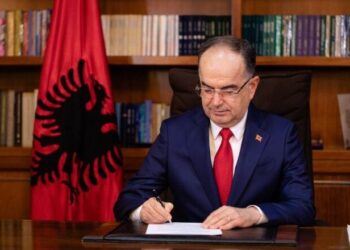
The priorities were outlined by Albania’s Minister for Europe and Foreign Affairs, Ferit Hoxha, during a parliamentary committee hearing on the draft 2027 state budget. Hoxha said the proposed budget was intended not merely to finance the ministry’s operations, but to strengthen the country’s international standing and prepare its institutions for EU membership.
“We are not proposing a budget simply to ensure the functioning of the Ministry’s administration or the diplomatic service. We are proposing an investment in Albania’s international capacity and its preparation, approaching this process with the mindset of a country that is already a member of the European Union,” Hoxha said.
European integration remains the central priority of Albania’s foreign policy. The government’s objective is to conclude the technical phase of accession negotiations by the end of 2027, before moving on to the remaining political stage, with the broader ambition of joining the EU before the end of the decade.
Hoxha stressed that meeting this target would require stronger institutional capacities and a diplomatic service prepared to operate in line with the responsibilities of future EU membership.
Beyond European integration, the minister identified Euro-Atlantic security and Albania’s contribution to NATO as key priorities. Tirana intends to maintain its participation in Alliance missions and operations while expanding cooperation in defence, intelligence and cybersecurity, as well as efforts to counter hybrid threats, particularly disinformation.
These efforts, he said, would be pursued in close coordination with NATO allies.
Western Balkans and regional engagement
Albania also intends to maintain an active role in the Western Balkans, with particular attention to the rights and interests of ethnic Albanians across the region and the stability of neighbouring countries.
Hoxha reaffirmed Tirana’s commitment to Kosovo, pledging to strengthen cooperation, coordination and support in all possible forms.
He also highlighted Albania’s engagement in support of the rights of Albanians in Montenegro, the Preševo Valley in southern Serbia and North Macedonia, alongside continued backing for the European integration of neighbouring countries.
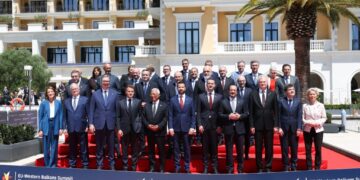
The minister referred to Albania’s participation in approximately 70 regional initiatives, including the Berlin Process, as part of its broader commitment to regional cooperation and European integration.
Strategic partnerships and international diplomacy
Albania’s strategic partnerships with the United States, Italy, Germany, France, the United Kingdom, Türkiye and Greece will remain another important component of its foreign policy agenda.
Hoxha said Tirana was pursuing deeper dialogue and coordination with these partners, with the aim of addressing outstanding issues on bilateral agendas and advancing shared interests.
He also underlined the importance of multilateral diplomacy for a small country such as Albania, arguing that international cooperation and respect for international law remain essential safeguards for states with limited geopolitical weight.
Albania will continue its engagement within the United Nations and the Organization for Security and Co-operation in Europe (OSCE), while seeking to promote the country’s candidacies and the participation of Albanian experts in international institutions.
Public, digital and cultural diplomacy will also be strengthened as instruments for promoting Albania’s international image and visibility.
Economic diplomacy as a foreign policy instrument
Another major priority for 2027 will be the closer integration of economic objectives into Albania’s diplomatic activities.
Hoxha said economic diplomacy should move beyond policy declarations and become a practical component of the daily work of the Ministry and Albanian diplomatic missions abroad.
“Economic diplomacy is no longer simply a slogan or an element in our work plans. We want to meaningfully link diplomacy and our daily activities, as well as the work of our diplomatic missions, to the country’s economic development interests,” he said.
The strategy will place particular emphasis on promoting Albanian exports, developing new economic partnerships and ensuring that diplomatic representations abroad are more closely connected to the country’s economic needs.
The priorities outlined in the 2027 budget reflect Albania’s ambition to combine its EU accession drive with a more active regional role, stronger strategic partnerships and the use of diplomacy as an instrument of economic development.
© 2026 Argumentum