




































Zlatko Kramarić*
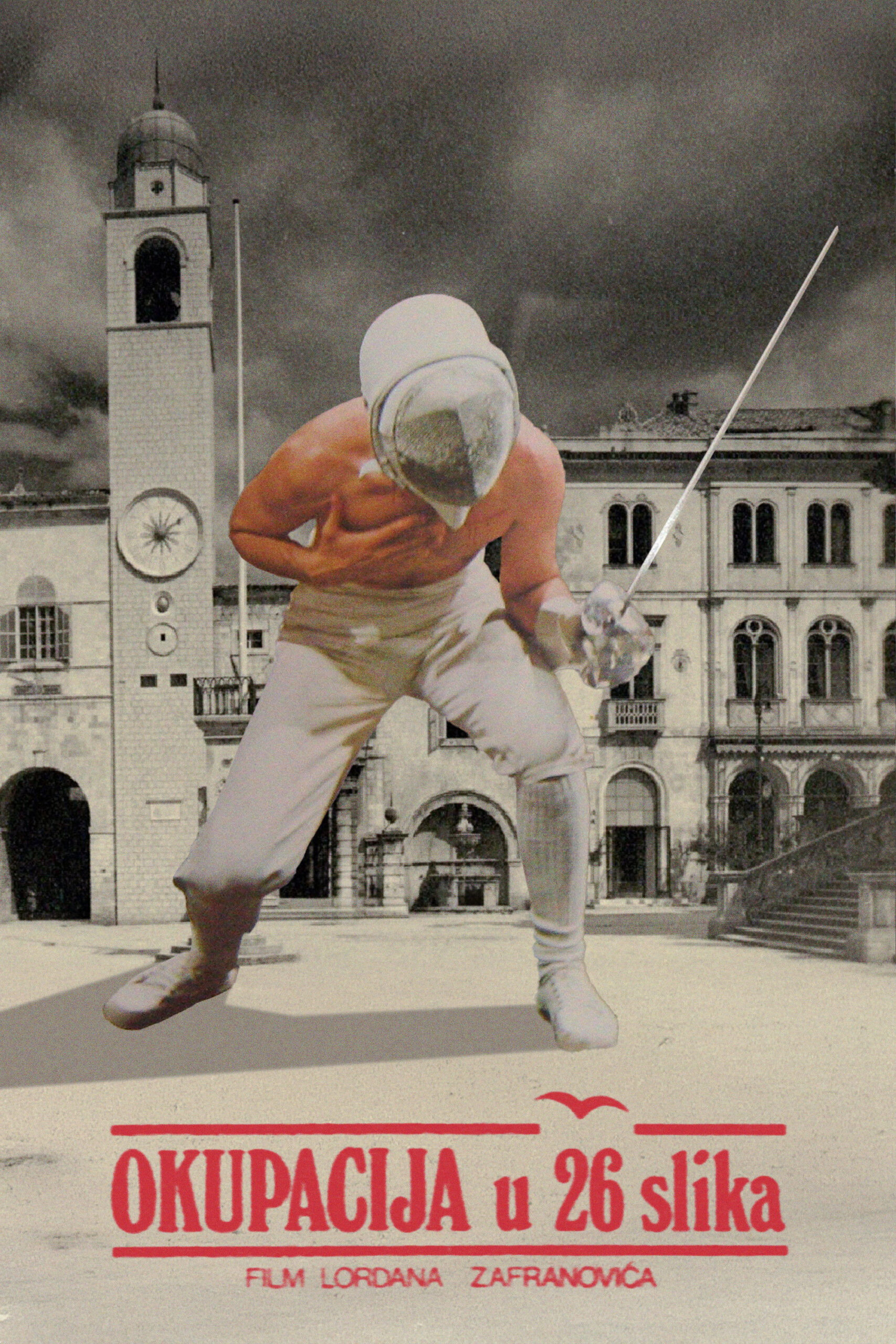
The film “Occupation in 26 Images” problematizes the relationship between historical truth and the artistic representation of that truth. This relationship boils down to one very simple question: what is depicted in a film from that historical truth, and what is (consciously, intentionally, tendentiously…) omitted? In other words, which historical events are given a certain symbolic weight in the film, and which events, for some reason, remain outside the scope of the film’s, and therefore also political, narrative.
With this introductory question/dilemma, we do not want to in any way dispute the horrific reality of the Ustasha crimes, which in some (un)times really happened, but with this text, we would also like to question whether the film representation of violence in this film encompassed historical reality in its complexity or, on the other hand, consciously pushed some of its equally horrific parts into the background, by simply ignoring them. Here, we are primarily thinking of that horrific scene of Ustasha violence against Dubrovnik civilians (the famous scene of bestial violence on a bus, for which there is not a single solid proof that it actually happened), while [2]the director does not mention another liquidation of Dubrovnik citizens on the island of Daksi at all . All the more so, since this is a crime that really happened, which does not belong to any artistic fiction and whose credibility is confirmed by serious documents.
With this incidental objection, we do not want to question the artistic freedom of the director and screenwriter in any way, but this does not mean that it is not permissible to ask whether there is a consistent criterion for condemning political violence in this film, regardless of the ideology in whose name it is committed, or whether moral condemnation stops at the limits of a certain historical and ideological perspective, which is sensitive exclusively to the crimes of the other side, while applying some other criteria for its own crimes. And if some people treat unpleasant topics from the (recent) past so sloppily and inconsistently, then it must be clear to us that such a selective approach does not enable a sincere confrontation with the past. Because, no one has the right to be exempt from this process of confrontation. There are no amnestied in advance in this process!
We repeat, the historical reality of the Ustasha crimes against civilians in Dubrovnik is not in question. (The director and screenwriter reportedly consulted General Mato Jakšić, referred to one of his booklets, had access to some documents, photographs, but even these unreliable documentary traces do not confirm every detail of that truly horrific film scene, the bestial killing of civilians on a bus. And when we watch that scene several times, it becomes clearer to us what those authors are talking about when they talk about “secondary humiliation of the victim”. And this type of humiliation of the victim occurs every time her suffering is depicted /too/long and in detail, where her body is then reduced to an object, but this time not of the perpetrator’s violence but of the audience’s gaze). Admittedly, this still does not mean that every single event depicted in the film must be a faithful reconstruction of a real historical event, but the aesthetics of depicting evil must also face the question: at what point does the depiction of a crime cease to be a testimony and confrontation with horror, and become its mere aesthetic exploitation? Or, how long and how explicitly can the camera dwell on violence without starting to produce some kind of fascination with evil?[3]
In October 1944 , after the partisan forces entered Dubrovnik, numerous prominent Dubrovnik citizens were killed. About fifty of them! Among the victims of the liquidations on Daksa were prominent Dubrovnik citizens, the mayor and deputy mayor of the city, journalists, professors, political leaders, and Catholic priests. (One of the seven murdered priests was Father Petar Perica, a Jesuit, known among the people of Dubrovnik as Padre Perica. He is the author of the famous Marian poem “Rajska Djevo, Kraljice Hrvata”). These people were killed without a procedure that would have provided them with the elementary right to defense. The recorded history of this event, as well as the existing documentation of this terrible crime, confirm that these were post-war extrajudicial liquidations of civilians, where this case was not an exception but one of the fundamental principles of the communist revolutionary government. And against that unpleasant fact, that for some time after the end of the war, the practice of “red terror” was a normal phenomenon, which was never officially condemned by any leader of the communist/social democratic party. No one has ever been convicted by a court of law for such revolutionary/anarchic activity in which a large number of innocent citizens died. At a party plenum in the early fifties, A. Ranković said that during that peaceful phase of the revolution, more than half a million people died?![4]
Here we must certainly avoid those political strategies that would use the fact that people were killed without trial to relativize previously committed Ustasha crimes because the Partisan authorities after liberation behaved in almost the same way. But, equally, it would be unacceptable to ignore Partisan crimes because they were committed in the name of the anti-fascist struggle. The anti-fascist character of the movement cannot be a retroactive justification for killings without trial, just as crimes committed in the name of some other ideology cannot be justified by its political goals.
However, this does not mean that we cannot ask the question: what should be the meaning of the conscious omission/silence of those crimes that took place on the island of Daksa in 1944 from this film? That event, for some reason, remained out of the frame in this film. There is not a single scene that would suggest that such things happened in those (un)times.
Does this fact mean that the authors, director and screenwriter, have nothing against a selective approach to history? If a film depicts Ustasha violence with great expressive power, but does not raise the issue of extrajudicial killings that took place in Dubrovnik at the end of October 1944, after the liberation of the city, the question arises of the limits of its historical representation. We do not want to claim that every film must encompass all the events that took place at that time, but the selection of events can become the subject of legitimate criticism when the artistic depiction begins to be perceived as a complete moral condemnation of a regime, an era.
Does this mean that the authors of the film prefer an asymmetric approach to ideologies? The Ustaše crime in the film is shown as a manifestation of the dehumanization and moral breakdown of a criminal regime. However, the same principle should apply to the liquidations committed by the victorious revolutionary authorities. And that already in the first days after “liberation”!? If in the first case violence is shown as inadmissible, and in the second case it does not enter the field of view of the film-political narrative, the question remains whether it is only about the limits of the film’s theme or about an ideologically structured image of the past.
And, finally, how do we determine the universality of moral judgment? The most important question is not whether all historical actors were equal, but whether there is a principle that applies regardless of who wields political power. The murder of a person without trial remains a crime regardless of whether it is committed by a fascist, Ustasha, or communist regime. Differences between ideologies, their goals, and historical consequences must be explored, but they cannot abolish the fundamental principle of individual responsibility.
The film “Occupation in 26 Images” can also be seen as a work of art that exposes the mechanisms of violence and the breakdown of civic norms. However, the (questionable) artistic power does not exempt the film from critical questioning of its asymmetrical and selective relationship to history.
That is why it is not enough to ask whether the film strongly depicted evil. It is also necessary to ask how this understanding of evil is structured in the film, which historical events it made visible and which it left outside its interpretative horizon. The absence of Daksa in itself does not prove that the film is a historically untrue work or that its author consciously intended to cover up post-war crimes. However, the visible absence of Daksa legitimately raises the question of the political and ideological boundaries (and intentions) of this film. The problem arises when the condemnation of crime ceases to be a universal principle and becomes a selective moral judgment, dependent on who is the perpetrator and who is the victor. But, as history itself has shown, these categories are also extremely arbitrary and (relatively easily) changeable!
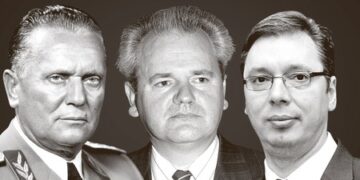
[1]Since we haven’t seen L. Zafranović’s latest film , Golden Cut 42 – Children of Kozara, and we don’t usually write about books and films that we haven’t read or watched, we “remembered” another, equally controversial film by this director, because we have the impression that, in the meantime, the author’s poetics about evil in this region have only become more radicalized. However, it would be desirable if the author, in the meantime, explained to us how he is making a film about Croatian fascism with the state and financial support of Serbian fascists, A. Vučić! Or, he thinks that this “detail” is completely irrelevant in this whole story!
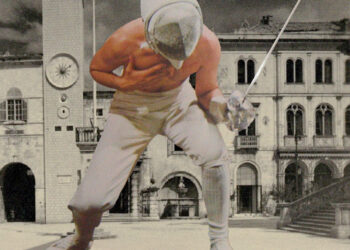
[2] Occupation in 26 Pictures, a film shot in 1978 based on a screenplay by Mirko Kovač, depicts the disintegration of the pre-war, somewhat decadent, Dubrovnik bourgeois world during the occupation, the establishment of the NDH, and the irrational emergence of Ustasha violence. Its most famous scene, the unmotivated massacre of civilians on a bus, has become the focal point of discussions about the relationship between film fiction and historical truth. It would be necessary to further determine which historical sources the director of this film relies on and what these sources actually confirm. We are not sure how credible the records of a Partisan general are, in all their details, because no other source confirms these records of a Partisan general. This is an important difference between the historical truth of a crime and the artistic construction of a crime scene. A film can convincingly present a historical type of violence without reconstructing a single documented event. And if one of the intentions of this film was to show the collapse of the pre-war Dubrovnik bourgeois world, the world of worldly sailors, rich merchants, the “golden youth”, that is, a world that practices all the bourgeois virtues, that flirts with all the ideologies of the time, that is exceptionally educated, that can play musical instruments, recite poetry, but that can also swordsmanship and, equally, participates in the hunt for city prostitutes, then that world was definitely liquidated precisely on Daksa .
[3]We think we should distinguish three things:
- bearing witness to evil – the depiction of violence is necessary in order to understand the scale of the crime and prevent its relativization;
- aestheticization of evil – when the direction, photography, editing and duration of the scene begin to produce an almost aesthetic experience of violence;
- pornography of evil – when violence is offered to the viewer again and again in its most brutal forms, and additional explicitness no longer deepens understanding but produces shock, disgust, and even morbid fascination.
It is precisely this third possibility that raises a serious question about the ethical and political responsibility of the director. Namely, the problem is not that violence is repeated in a film, but the problem arises at the moment when repetition ceases to produce new meaning. Spielberg was very aware of this very fact in the film ” Schindler’s List”. In that film, the repetition of violence produces a new meaning each time, which cannot be said for the film “Occupation in 26 Images”. Spielberg, unlike Zafranovć , was quite clear that depicting evil is not the same as making evil watchable. Namely, art must find a way to confront the viewer with horror, but it must not enjoy its own ability to reproduce that horror! It is always important to find the right measure (paradoxically, in the title of the latest film “Golden Section 42 – Children of Kozara”, the director, aware of this fact, explicitly mentions the Renaissance/ Leonardo’s ideal of harmony and beauty, but when it comes to the cinematic realization of that ideal, then it is not so simple) of depicting crime. Depicting evil must in no way become its reproduction. No film camera has the right to participate in the production of the spectacle of violence. It is precisely for these reasons that S. Spielberg’s film poetics in depicting the horrors of the Holocaust is based on: suggestion, fragment, individual human destiny, the gaze of the victim, and silence!
[4]In the context of transitional justice, it can be said that it does not seek to equate historical movements, ideologies or regimes. It seeks, above all, the universalization of moral and legal criteria. Just as anti-fascism cannot be an alibi for a crime, so too the condemnation of communist crimes cannot be an alibi for the rehabilitation of fascism.
Daksa case is therefore not just a question of the relationship to the recent past of Dubrovnik/Croatia. This case is, above all, a question of the ability of Croatian society to build a democratic political community that will have neither privileged victims nor untouchable perpetrators.
And, perhaps most importantly: reconciliation does not begin with forgetting, but with acknowledging the truth. And the truth belongs neither to the victors nor the vanquished, but to the victims and future generations.
**Zlatko Kramarić is a Croatian publicist, author, and diplomat, currently serving as Ambassador to Albania. Formerly a university professor and politician, he is known for his work in literature, cultural studies, and regional history.
© 2026 Argumentum