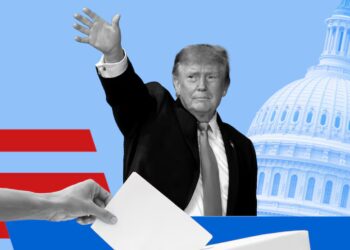

























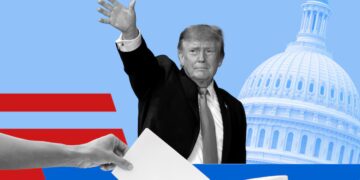



















Americans are voting in midterm elections that could reshape the balance of power in Washington, determine how much room President Donald Trump has to pursue his domestic agenda and influence the direction of US foreign policy over the next two years.
The elections, held halfway through the presidential term, will determine all 435 seats in the House of Representatives and 35 of the 100 seats in the Senate, alongside several governorships and state and local offices.
Although the vote will not determine the presidency, it is widely seen as a political test of Trump’s second administration and a measure of public support for his policies since returning to the White House in January 2025.
The central question is whether Republicans can retain control of both chambers of Congress or whether Democrats can secure a majority in at least one, potentially forcing the president to govern under a divided government.
Trump’s political authority at stake
The economy, the cost of living, immigration and the administration’s foreign policy have emerged as major issues shaping the electoral debate.
A Reuters/Ipsos poll published on election day found that 48% of registered voters identified the cost of living as the main issue influencing their vote. The survey also pointed to dissatisfaction over the administration’s handling of key political and international issues.
For Trump, the outcome will carry consequences beyond the composition of Congress. A Republican victory would strengthen his political position and provide greater legislative support for the remainder of his term.
A Democratic takeover of the House, however, would give the opposition greater authority to investigate the administration, scrutinise federal spending and challenge its policy decisions through congressional oversight.
If Democrats also gain control of the Senate, they would have greater influence over presidential nominations, including judicial and senior administrative appointments.
Even under a divided Congress, Trump would retain substantial executive powers, particularly in foreign affairs, immigration and trade. However, passing legislation, securing funding and advancing major domestic initiatives could become more difficult.
Foreign policy: Ukraine, NATO, Iran and China
The implications of the elections extend well beyond the United States. Governments in Europe, the Middle East and Asia are watching closely, as changes in congressional control could affect the political and financial framework supporting American foreign policy.
Ukraine and Russia
US support for Ukraine and Washington’s approach to Moscow could become subjects of renewed congressional debate.
A Democratic-controlled chamber could demand greater scrutiny of the administration’s negotiations with Russia and its decisions on military and financial assistance to Kyiv. Republican control, meanwhile, would give Trump greater parliamentary support in pursuing his diplomatic approach.
However, congressional control alone will not determine the outcome of the war or the direction of US-Russia relations.
NATO and European security
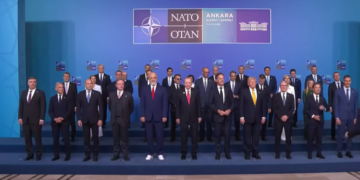
European allies are also watching for signs of continuity in Washington’s commitment to NATO.
Debates over defence spending, burden-sharing and the future of the transatlantic security relationship are likely to remain central to US-European relations.
A change in congressional control could influence defence funding and oversight of the administration’s decisions, although it would not automatically alter US commitments to the alliance.
Iran and the Middle East
The conflict involving Iran has added another international dimension to the election.
A more critical Congress could demand greater oversight of military operations, their costs and the administration’s strategy in the region.
The debate could also affect Washington’s relations with regional allies and its approach to future diplomatic negotiations with Tehran.
China and global trade
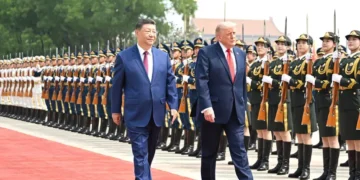
Strategic competition with China is likely to remain a central feature of US foreign policy regardless of the election outcome.
Trade tariffs, technology restrictions, supply chains and industrial policy could become areas of sharper congressional debate.
A change in the balance of power could affect how these policies are scrutinised and funded, but is unlikely to remove the bipartisan concerns surrounding China’s economic and geopolitical influence.
Economic uncertainty and global markets
The elections could also have implications for international financial markets.
Investors are watching whether a divided Congress could lead to prolonged disputes over federal spending, taxation, government funding and the national debt.
Such tensions could increase uncertainty around US economic policy, with potential consequences for the dollar, investment decisions and global trade.
The scale of any market reaction will depend not only on the election results but also on how the White House and Congress manage their differences.
The road to 2028
The midterm elections will also shape the political landscape ahead of the 2028 presidential race.
For Democrats, the results will provide an indication of whether they can rebuild support and develop a broader political alternative to Trump.
For Republicans, the vote will test the strength of Trump’s political movement and the party’s ability to maintain support beyond the president’s personal electoral base.
A significant Republican setback could intensify internal debates over the party’s political direction, while a strong performance would reinforce Trump’s influence over the Republican agenda.
A domestic vote with global consequences
The November 3 elections will not decide who occupies the White House, but they could determine how effectively Donald Trump can govern during the final two years of his presidency.
A Democratic victory in either chamber would introduce stronger congressional scrutiny and potentially greater institutional confrontation. A Republican victory would give the president more room to pursue his legislative priorities.
For the rest of the world, the broader question is whether Washington will maintain a consistent international course amid competing pressures at home and growing geopolitical tensions abroad.
From Ukraine and NATO to the Middle East, China and the Western Balkans, the consequences of the vote will be measured not only by which party controls Congress, but also by how the resulting balance of power shapes America’s ability to act on the global stage.
The midterms are therefore more than a referendum on Trump’s presidency. They are a test of the political constraints, strategic priorities and international role of the United States in an increasingly uncertain world.
© 2026 Argumentum