










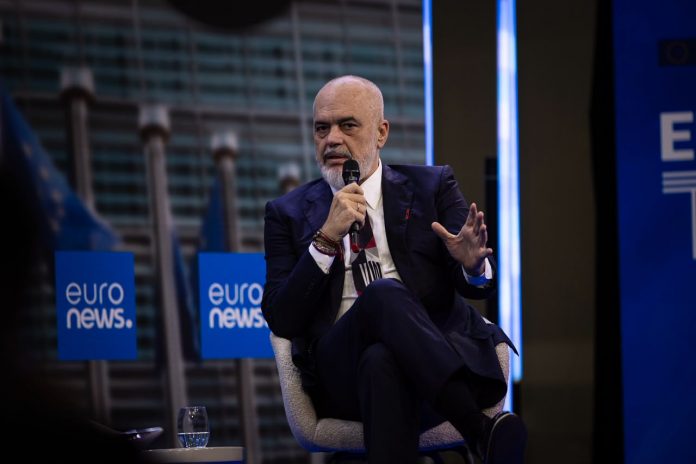
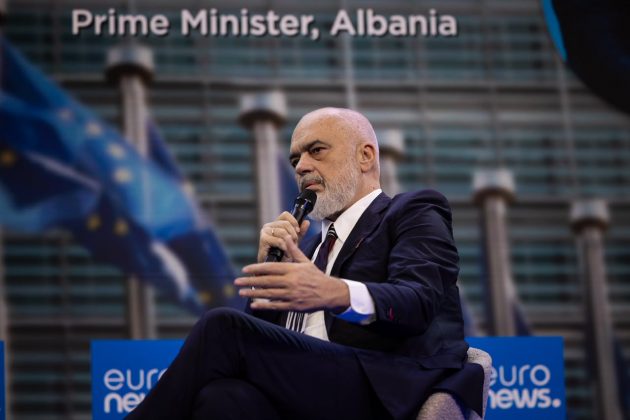
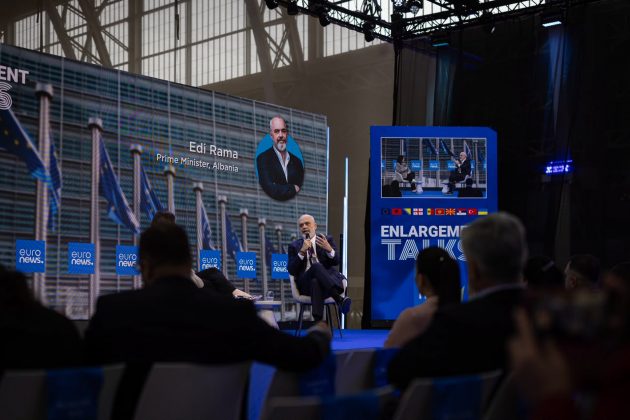
Prime Minister Edi Rama says Albania is working to conclude its EU accession negotiations by the end of 2027, while avoiding a firm commitment to membership in 2030. In an interview with Euronews at the Enlargement Summit in Brussels, he also addressed protests in Albania, Serbia’s European path, Kosovo’s recognition and the need for closer integration of candidate countries into EU decision-making.
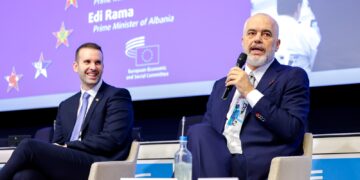
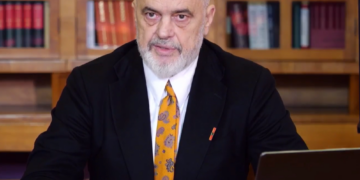
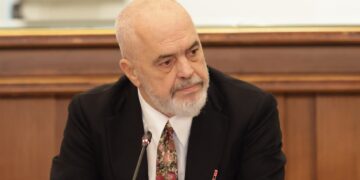
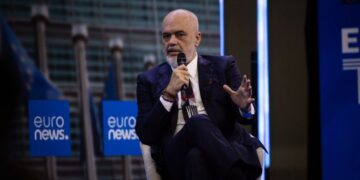
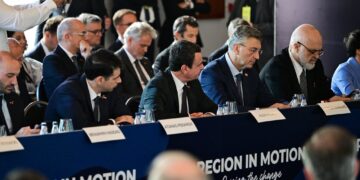
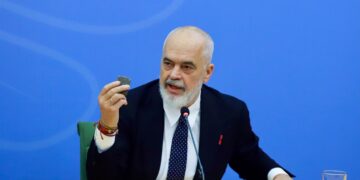
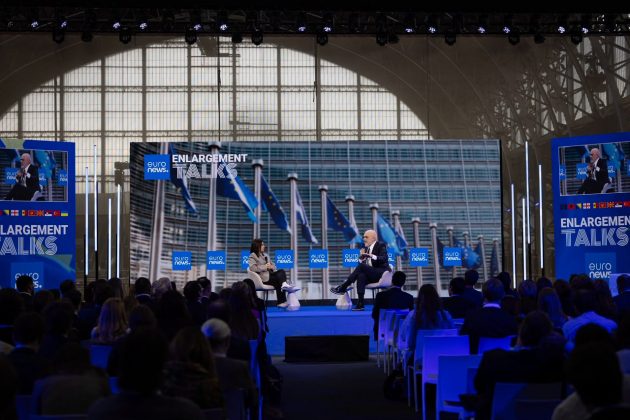
BRUSSELS – Albania is working towards concluding its European Union accession negotiations by the end of 2027, Prime Minister Edi Rama said during an interview with Euronews at the Enlargement Summit in Brussels.
Asked whether Albania could become an EU member in 2030, following Montenegro’s stated ambition to join in 2028, Rama stopped short of offering a guarantee, pointing to the unpredictability of the enlargement process and the EU’s previous delays in delivering on its commitments.
“I have seen deadlines fade along the way. I have seen how the EU has failed to deliver on its promises,” Rama said.
He stressed, however, that Albania is working under a joint plan fully supported by the European Commission, with the objective of completing negotiations by the end of 2027.
“As we speak, everything is moving in line with the plan,” he said, adding that concluding the negotiations would represent a crucial achievement for Albania. The subsequent decision, he noted, would be more complicated, as it would require agreement among all 27 EU member states.
Serbia, Kosovo and the European perspective
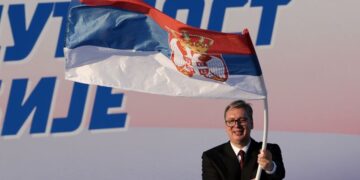
A significant part of the interview focused on Serbia and its role in the EU enlargement process in the Western Balkans.
Rama expressed scepticism about the prospect of a change in Belgrade’s approach towards Kosovo, arguing that Serbia’s current political leadership has shown no openness towards recognising Kosovo’s independence.
“They are entirely closed to this issue, which means that the music in Belgrade will not change,” he said.
Nevertheless, Rama described Serbia as an important part of the Western Balkans and argued that the country should not be allowed to abandon its European path.
He identified Serbia’s position towards Russia and its reluctance to align with EU sanctions against Moscow, alongside the unresolved issue of Kosovo, as significant obstacles to its European integration.
“Serbia needs to be with us, but it must demonstrate results and fully deserve its place by delivering on what is non-negotiable in its relations with the EU,” Rama said.
Protests in Albania and the role of social media
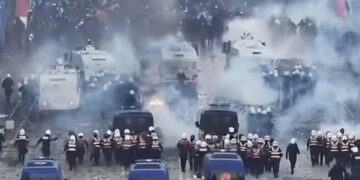
Asked about the protests that have taken place in Albania in recent months and their potential impact on the country’s EU accession process, Rama described the situation as more complex than a simple confrontation between democratic expression and political dissatisfaction.
He argued that Albania has entered a new phase in which citizens’ expectations have risen alongside economic development. The country, he said, has moved from addressing basic needs to facing increasingly demanding public expectations.
Rama also highlighted the influence of social media, arguing that it creates a growing divide between events on the ground and how they are perceived by the public.
Referring to clashes between protesters and police, the prime minister claimed that twice as many police officers as protesters had been injured. He cited this as an example of what he described as a distorted portrayal of events on social media and television.
Asked whether the protests could influence government policies, Rama acknowledged that they had affected him, prompting reflection on how the government could do more and perform better.
“It is important to listen to people, not to start by pointing out who is to blame, but to understand what is not working, what is happening and what these people want,” he said.
He added that Albania was performing well in terms of economic indicators, its European integration process and tourism, while acknowledging that citizens wanted a greater share of the benefits generated by economic growth.
Rama calls for candidate countries to be brought closer to the EU table
One of the most notable parts of the interview concerned Rama’s proposal for a new approach to European enlargement, under which candidate countries would be gradually integrated into EU mechanisms and decision-making structures before obtaining full membership.
The prime minister insisted that accession must remain merit-based, stressing that no country should receive shortcuts or special treatment in meeting the required criteria.
However, he argued that the EU should bring candidate countries closer to its institutions and decision-making processes rather than keeping them outside until all accession conditions have been fulfilled.
To illustrate his proposal, Rama referred to former German Chancellor Helmut Kohl and German reunification, arguing that Eastern European countries were not simply left outside the European family until they had fulfilled every requirement.
He also used a family metaphor, describing the candidate countries as the “seven children” of European Commission President Ursula von der Leyen: the five Western Balkan countries in the accession process, together with Ukraine and Moldova.
According to Rama, keeping these countries around the European table would help preserve their strategic orientation and reduce the risk of other international actors expanding their influence in the region.
“The EU should be able to bring everyone around the table as part of the same family,” he said.
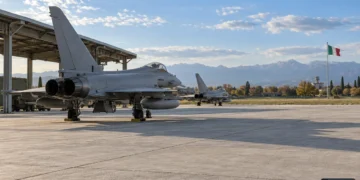
Migration agreement with Italy
The migration agreement between Albania and Italy was another topic addressed during the interview, particularly in relation to the possibility of Albania joining the EU in 2030.
Asked whether the agreement could remain in force after Albania’s potential accession, Rama played down the issue, saying he did not consider it a major challenge for Europe.
He argued that migration would not disappear simply through stronger border controls or bilateral agreements, describing it as a broader challenge that is also used in domestic political debates across European countries.
Rama avoided giving a detailed explanation of how EU membership might affect the legal framework of the agreement, but said it would remain in force for as long as necessary.
Albania’s European future
Towards the end of the interview, Rama acknowledged that Albania still faces significant domestic challenges and is not yet ready for full EU membership.
He nevertheless described the accession process as a transformative mechanism for building functional institutions and strengthening democracy, arguing that the European perspective provides Albania with tools it would otherwise not have.
The prime minister also made ironic remarks about the United Kingdom’s position outside the EU following Brexit, suggesting that Britain would now have to wait behind Albania and Montenegro in the enlargement queue. He later clarified that his comments were intended as a joke and stressed that Albania would welcome any progress by London towards closer European integration.
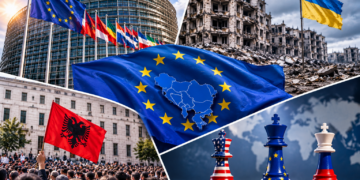
The Brussels interview comes at a time when EU enlargement has returned to the centre of the European political debate, with Montenegro and Albania widely regarded as among the leading candidates for membership, while both continue to face demanding conditions on their paths towards accession.
For Albania, Rama’s statements convey two central messages: the government’s ambition to conclude accession negotiations by the end of 2027 and its call for the EU to develop more advanced forms of integration for candidate countries before they achieve full membership.
© 2026 Argumentum