














TIRANA – Albania has made significant progress on its path towards European Union membership, but continues to face challenges in the functioning of democratic institutions, the fight against corruption, judicial independence and media freedom, according to the European Commission’s 2026 Progress Report on Albania.
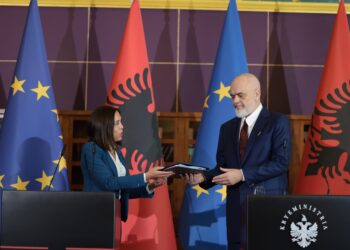
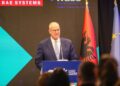
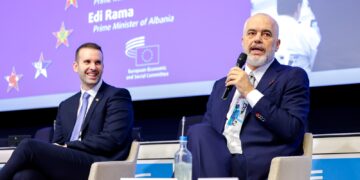
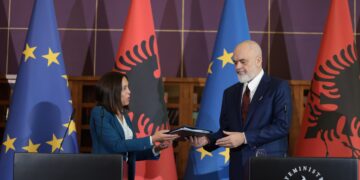
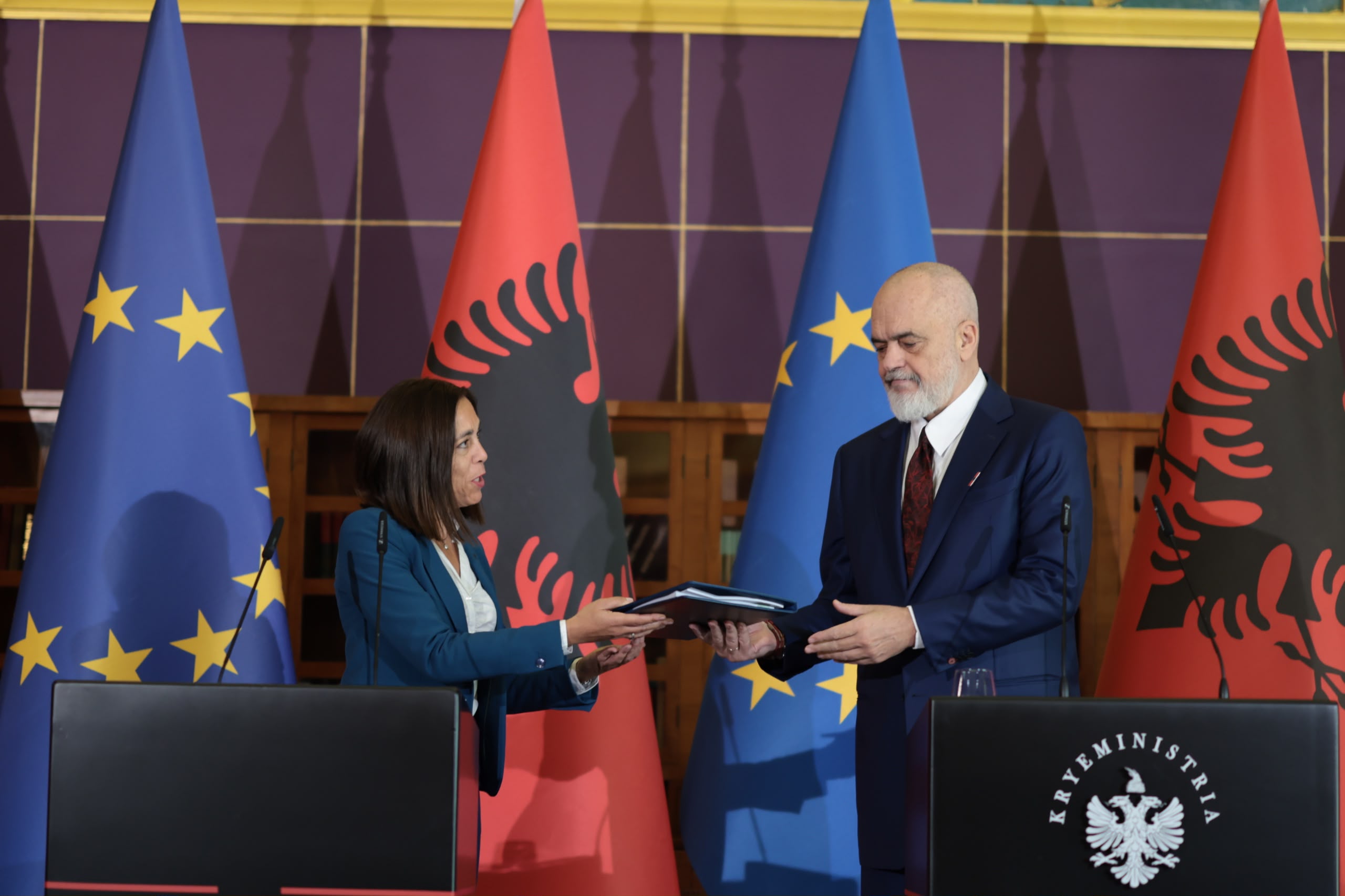
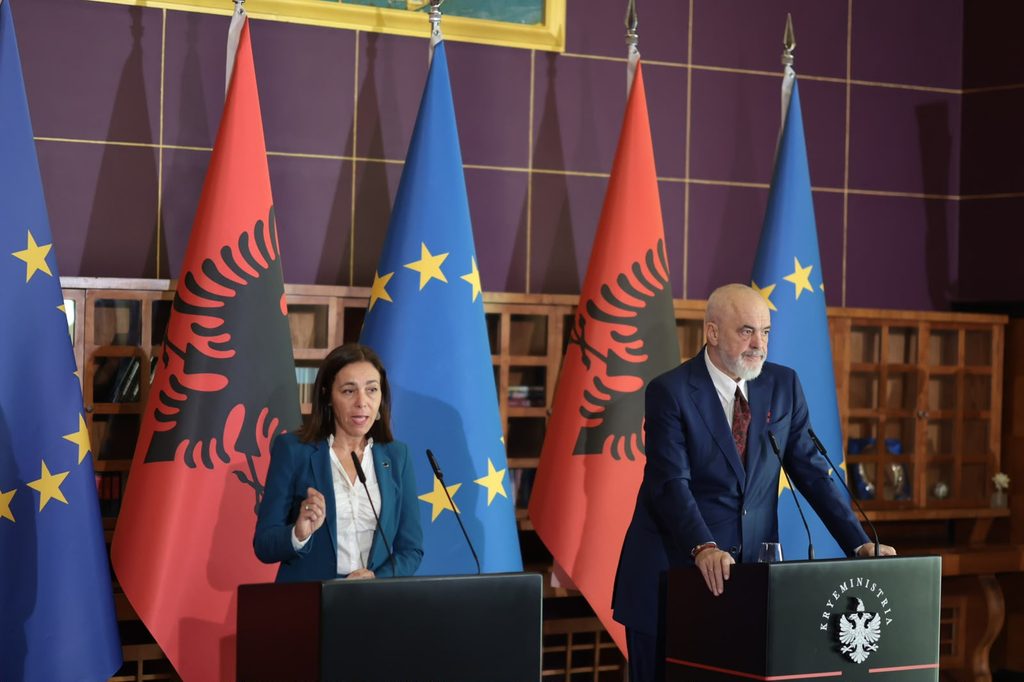
The report was presented to Prime Minister Edi Rama by the EU Ambassador to Albania, Sofia Moreira de Sousa, during a joint press conference in Tirana, following their meeting.
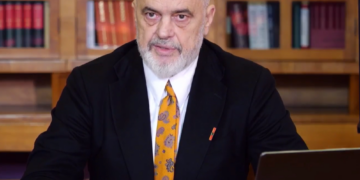
Rama described the document as the best progress report Albania has ever received, stressing that the country is entering the final stage of its EU accession negotiations. He said Albania’s level of readiness had increased significantly in at least 20 negotiating chapters and highlighted progress in the economy, digital transformation, energy, education and the alignment of legislation with EU standards.
The Prime Minister also welcomed the Commission’s assessment of the judiciary and the fight against corruption, particularly its recognition of the independence and results achieved by Albania’s Special Prosecution Office against Corruption and Organized Crime (SPAK).
However, the report also identifies persistent shortcomings in the justice system, including court delays, the need for more final convictions in corruption-related cases and attempts to exert undue influence on justice institutions.
On democratic governance, the European Commission points to a deeply polarised political climate, limited parliamentary oversight of the government and insufficient meaningful public consultation. It also stresses the urgency of electoral reform and calls for an inclusive process involving political forces beyond the two main parties.
Media freedom remains another area of concern. While the partial decriminalisation of defamation-related provisions is considered a step in the right direction, the Commission notes that media funding remains opaque and that a comprehensive media reform is still needed. Reports of disproportionate police force against journalists must also be addressed as a priority.
The report also raises concerns over environmental protection, noting that legislative changes introduced in 2024 concerning protected areas, together with repeated extensions of the strategic investment law, have weakened nature protection. The EU Ambassador specifically referred to major projects, including the planned development in Zvërnec, which will be assessed against EU standards.
Protests, political polarisation and the need for dialogue
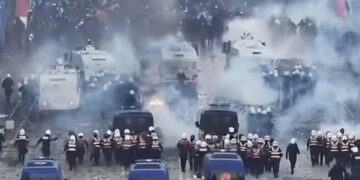
The European Commission also addresses the protests that began at the end of May and developed into a broader civic mobilisation, with demands for transparency, accountability, anti-corruption measures and good governance.
Ambassador Moreira de Sousa described the demonstrations as an important expression of civic engagement, underlining that peaceful protest is a fundamental democratic right, while violence has no place in democratic life.
“What’s missing today is dialogue,” she said, calling on all sides, without exception, to make a genuine effort to overcome political polarisation through democratic institutions and meaningful engagement.
She also stressed that any response to violence must remain proportionate and lawful, and that citizens’ grievances must be heard and addressed.
2027 target: Ambitious but feasible
A central issue at the press conference was Albania’s objective of concluding EU accession negotiations by the end of 2027.
The new roadmap presented by the European Commission provides a clearer framework for the work ahead. According to the Ambassador, it introduces no new conditions or deadlines, but translates into practical steps Albania’s own ambition to complete the negotiations by 2027.
Moreira de Sousa described the objective as feasible but challenging, emphasising that the final stage of the process requires sustained reforms, effective implementation and broad public consultation.
“Speed cannot come at the expense of quality and inclusiveness,” she said, adding that accession is not simply a technical exercise or a matter of passing legislation, but a process involving Albanian society as a whole.
Asked whether the current political climate and protests could affect the country’s EU integration prospects, the Ambassador reiterated that the way Albania addresses polarisation, public grievances and democratic dialogue would be reflected in its accession process.
Rama rejects comparison with Serbia and rules out resignation
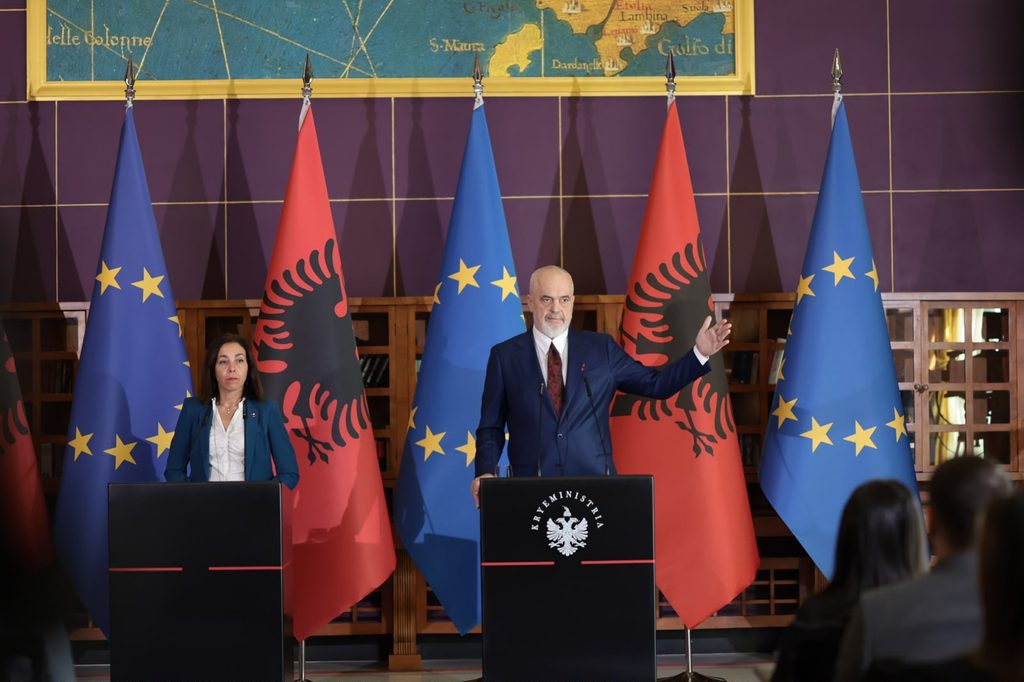
Responding to questions about the protests and possible similarities with the student-led movement in Serbia, Rama rejected the comparison, arguing that the two countries are facing fundamentally different political realities.
He distinguished between the large civic demonstrations of early June and subsequent protests, which he described as violent. He maintained that the government had taken steps to address citizens’ concerns, pointing to increased transparency regarding the Zvërnec and Sazan projects and new economic measures, including a reduction in VAT on basic food products and changes to fuel taxation.
Rama also reiterated that the resignation of a democratically elected prime minister cannot be imposed through street protests. He accused foreign actors of attempting to destabilise Albania through what he described as hybrid warfare, referring to alleged Iranian involvement in online activities linked to the demonstrations.
The Prime Minister did not directly address a journalist’s question about alleged pressure on Tirana Mayor Erion Veliaj to relinquish his mandate or whether Veliaj was behind the protests. Instead, he described the political controversy as secondary to the country’s EU integration objective.
At the end of the press conference, Rama announced the opening of a new channel for dialogue with students and citizens, inviting them to engage directly with him and the government on issues they consider important.
The 2026 Progress Report therefore presents a dual picture of Albania’s European integration: significant advances in the accession negotiations and a potentially achievable 2027 target, alongside persistent challenges in democratic governance, the rule of law, media freedom, environmental protection and political dialogue.
© 2026 Argumentum