



By Genc Mlloja
Senior Diplomatic Editor
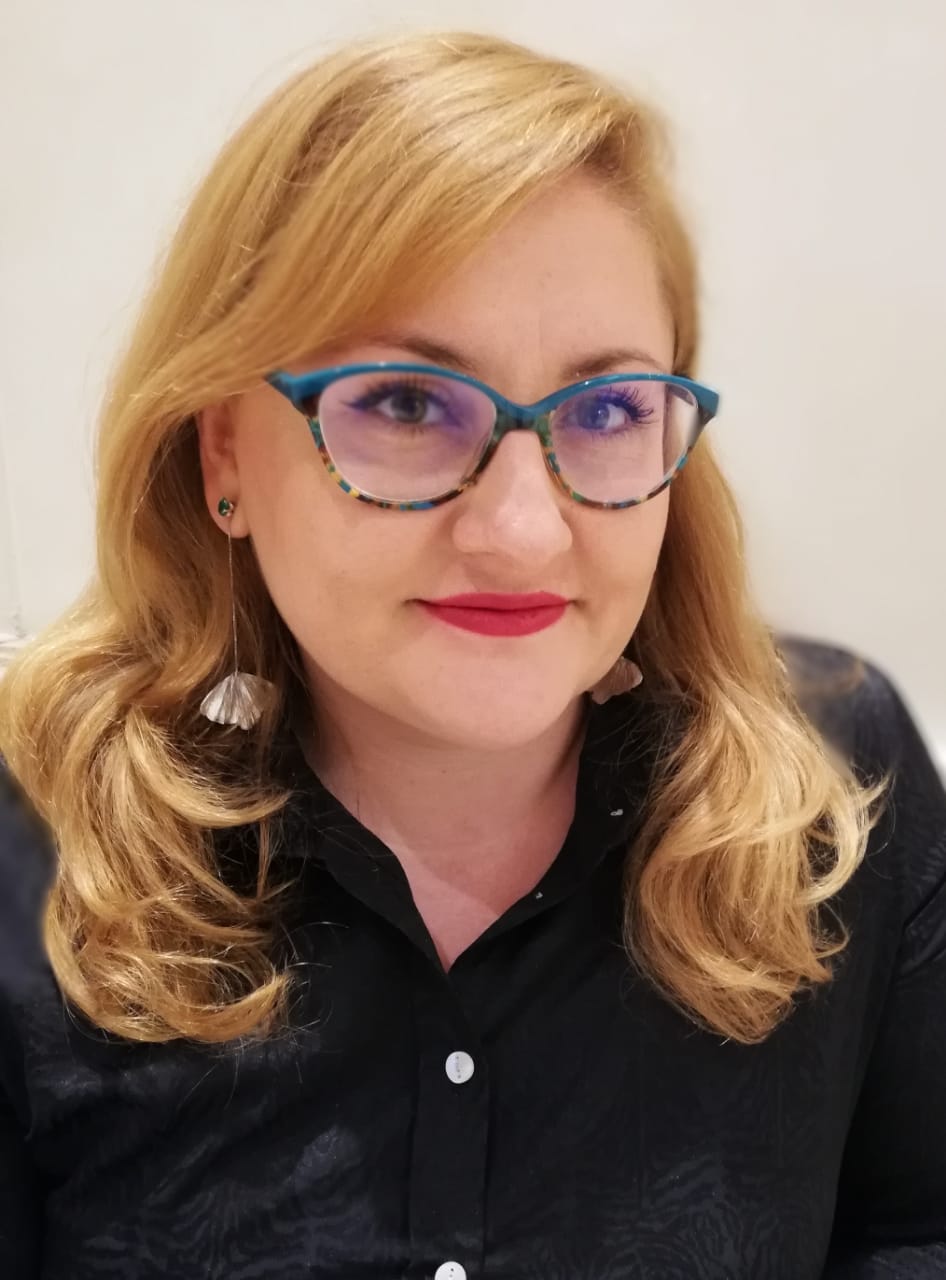
“The First Intergovernmental Conference between the European Union and Albania and North Macedonia may be held in December 2020. I believe that the process needs to respect the announced calendar and a delay will not be a good sign,” has said Dr. Miruna Butnaru- Troncota, Ph.D in an exclusive interview with Albanian Daily News during which she expressed the expectation the German EU Presidency should be able to organize the first ICCs with both countries in December. A Lecturer and postdoctoral researcher in the Department of International Relations and European Studies of the National University of Political Science and Public Administration (SNSPA) since 2016 and representative for Romania of Linking Europe at the Periphery (LEAP) , Dr. Troncota has a direct research interest in EU integration, Europeanization and post-conflict reconstruction of the Western Balkans. She dwelt at length on the pandemic situation in Romania, parliamentary elections due on 6th of December this year believing that they will not be postponed because of the pandemic.
According to her, the recent Trump mediated relations with both Kosovo and Serbia will have a positive impact also on the EU mediated Dialogue. “Even if they don’t want to admit it publicly, some EU countries prefer US leadership on this topic (not specifically on surrealist scenarios like land swaps) but US diplomacy leverage is clearly needed also to advance things in the benefit of the EU processes.”
Dr. Troncota thought that Romania is in a very good position to offer its lessons learnt from its own journey towards EU membership to Albania. “Romania and Albania have also strong historical ties that will make the know-how transfer much easier and more efficient. I think Romania should be more engaged in offering its expertise to Albania,” Romanian Lecturer Miruna Butnaru- Troncota, Ph.D said in the following interview:
–Thank you for this opportunity to have you as a guest to Albanian Daily News and in the first place, Madame Professor, it would be interesting for ADN’s readers to learn something more on your research interest and engagement in the LEAP network as the main coordinator of activities for Romania…
– Linking Europe at the Periphery (LEAP) is a Jean Monnet Academic Network funded by the Erasmus + programme of the European Commission. It is coordinated by the Center for European Studies at METU University in Ankara (Turkey), and aims to explore the correlation between academic knowledge and everyday information on European integration adapted to current topics and challenges. In this respect, the main research question of the LEAP project is: ‘How is the EU integration taught, learned, experienced and contested at ‘the periphery’?’ The notion ‘periphery’ for the aims of the LEAP entails candidate (Turkey), potential candidate (Kosovo) and neighbourhood countries (Georgia and Ukraine) as well as member countries (Romania) – the countries where the main partners in the project come from. This underlines the need to assess the multifarious nature of the complexities/challenges attached to the EU integration in current times. I am very proud to be the representative for Romania in this project with the Center of European Studies of the National University of Political Science and Public Administration (SNSPA) in Bucharest. We plan to problematize the Centre-periphery dichotomy with respect to the EU integration process, both in geographical and geopolitical terms, in terms of regional disparities and economic asymmetries between core ‘Europe’ and its ‘periphery’ from its neighborhood. We will develop activities until 2022 such as conferences, academic debates, simulations of EU decision making processes for students and edit a series of books assessing citizens opinions on EU integration in the partner countries, so check them out online: http://www.leapjmnetwork.com
–It is almost unanimous the opinion of the specialists on a second wave of the pandemic across Europe. First, which were the repercussions of the first 9 months of the health crisis in Romania, and secondly, which is the perspective for keeping the pandemic under control in the future, and how much has your country’s membership in the EU helped to ease its economic and social impact?
– I believe that in the first months Romania was able to face the crisis with strong measures – state of urgency and total lockdown, which indeed have hit parts of the economy very hard, but were successful in keeping the virus under control. We were just like everyone else taken by surprise. One of the main challenges that we have is the public health system that still suffers from severe under-funding, and little state investments, similar with the education system. And if governments have invested little in these systems, and taking into consideration also the impact of corrosive corrupt practices on the health system – it is easy to understand that a reason for this heavy measures what to gain time for hospitals to be able to face the crisis. In fact, a great weakness of the entire governance system has been revealed by this sanitary crisis – a crisis of public funding, a lack of well trained personal, but also a lack of social trust, which led to polarization and spread of conspiracy theories and disinformation. During the summer citizens started not to respect the COVID measures anymore and this is when the number of cases started to increase in a very worrying way. Another reason was that authorities started to be a bit laid back and with less control, no fees and penalties for those that don’t respect rules and restrictions. A reason for this was that we also had local elections all over Romania in 27th of September. So we might actually say that COVID virus circulated freely also because of political gains and electoral interests this autumn. And the result is very tragic – now unfortunately Romania has some of the highest rates of infection in Europe and strong measures started to be imposed again and emergency wards are almost at their full capacity. I believe that the fact that Romania was part of the EU proved to be a great advantage during the pandemic, because we have benefited of consistent aid and assistance from EU level, but also because we showed solidarity to other states that were in need – Romania was the first country to offer help to Italy when the country was hardly hit by the pandemic. European Commission has purposed an EUR 2.4 trillion economic recovery package for all EU states and economic sectors affected by the COVID pandemic and Romania is one of the beneficiaries of these funds. Indeed these measures have strong positive economic but also social impact and it is a moment when you realize the great advantages for being part of EU – you are not alone in front of crises.
– Romania is scheduled to hold parliamentary elections on December 6 this year. Besides the pandemic impact, the European Commission has drawn attention to problems on the functioning of the justice system in the country questioning judicial independence ahead of the polls. What can you tell us more on such a situation, and does any risk exist for the postponement of the elections?
– There are indeed debates about postponing the Parliamentary elections on the 6th of December, both due to the risks of the pandemic and to internal political problems. Only if we will be confronted with more than 5,000 cases of infections per day there is a high probability to cancel these elections. At the political level also, opposition parties in the Parliament, only based on a solid majority could also propose to postpone these elections, mainly based on their own political agenda to fight against the Government. But I personally believe that there are little chances for this to happen. I would have more worries regarding the worsening situation of the pandemic. Indeed, on the 30th of September the Commission published its first report on rule of law situation in all 27 member states, and it is very critical against Poland and Hungary, mentioning also worrying situation in Romania, Bulgaria, Croatia and Slovakia. The report actually shows a progress compared to tensions in the judicial system from the period 2017-2019, and it mentioned the important contribution of civil society. Moreover the report mentions the visible progress in terms of fight against corruption but mentions the need for further measures in this field.
– Given your expertise on EU integration, Europeanization and post-conflict reconstruction of the Western Balkans, please can you unveil your opinion on what has been achieved in this direction, and how would you assess the general atmosphere in the region?
– I believe that the EU integration process is stalled for more than 5 years already and the Berlin process initiative was a form of trying to keep the process alive even despite lack of results. Most of the problems that block the process of Europeanization in the Balkans have more to do with politics and less with technical details of EU conditionality. Unless something will change fundamentally in this political bargain between EU member states in the Council on one hand, and between the Commission and the candidate countries on the other hand, the situation will remain the same for many years. We should also see that the Berlin process (an intergovernmental initiative proposed by Germany to solve bilateral issues among candidate countries and help the EU integration process move forward) had some very tangible results – most notably the establishment of the Regional Youth Cooperation Office (RYCO), and the signing of the Declaration on Regional Cooperation and the Solution of Bilateral Disputes as well as facilitating other economic investments. Why the current model of enlargement is not fulfilling expectations?
First of all, countries successfully undergoing the technical process prescribed by the Commission cannot be guaranteed accession solely on the basis of their track record. Second of all in the EU enlargement debates have been shaped and dominated by Eurosceptics since the advent of so- called enlargement fatigue. In the Western Balkans, enlargement questions are addressed by political elites committed to both ethnopolitics and European integration, aiming to be as I called them in one of my books – “ethnocrats” and “eurocrats” at the same time – which is a contradiction in terms. I personally believe that in order to change this toxic “business as usual” in the EU integration process with the Western Balkans there is a need to project enlargement simply as what it is – a political bargain between different actors with complex and ambivalent agendas. And I believe that the Conference for the Future of Europe that will be organized in the next 2 years as a wide consultation process on the main citizen’ concerns regarding the political future of the Union, in all EU member states, should include the Enlargement discussion and citizens in the candidate countries. This will be a sign of trust and a confirmation that the “Balkans are Europe” and so they are included in its future. This might raise important and difficult questions that were avoided until now: how should the EU enlarge in the next wave – with individual countries or as a group? What type of economic/ structural model of state transformation should the candidates adopt to fulfill EU conditionality? And in fact, towards what type of EU will the Western Balkans want to become members for the next 10 or 20 years? Unfortunately, in Ursula von der Leyen’s State of the Union (SOTEU) speech from 16th of September these questions were not raised in this way so there are chances that “business as usual” will still postpone any advancement in accession for the next 5 years. In my view, politicization of the enlargement process should be accepted as a reality and both EU and the candidate countries in the region should fight for enlargement as a political battle and this would imply political mobilization similar to the Greece-North Macedonia dispute, around other bilateral disputes such as Kosovo-Serbia or Kosovo-Montenegro that are entangled with other bilateral issues.
– Some analysts say the lack of effective commitment of the EU to WB leaves the door open for other countries – such as Russia – to interfere in a negative way. According to you, should the EU work harder to show that it is greatly committed to the region’s integration and the mood of EU ‘fatigue’ towards the region is over?
– Yes, I believe EU should work differently, not harder. EU should act as an actor with more coherent goals as an entity, and we all saw hard this is when decisions are taken in the Council and some member countries show to have more “enlargement fatigue” than others – like France or the Netherlands which vetoed against starting negotiations with Albania and North Macedonia. In many ways this whole “enlargement fatigue” is a deed to avoid a clear position and to justify postponing indefinitely a decision and proves a bit ‘unfair’ for the countries in the Balkans. The new Commission presented its ambitions for a new enlargement strategy at the beginning of this year – that tries to be a bit more flexible and the EU tries not to repeat with Albania and North Macedonia the mistakes it did with Serbia and Montenegro when opening chapters. I think that the EU realizes now that different countries come with different obstacles but also with different opportunities for policy learning and this might be a positive element for the future of the process. If France manages to impose its own perception on enlargement over Germany in a post- Merkel era, I believe this will be a big game changer and it will stall enlargement talks for many years to come. But other more pleasant surprises may come along the way.
– There is unanimity that Kosovo and Serbia need to reach a final settlement to their dispute that will allow them to have normal neighborly relations. But the ‘one-million dollar’ question is how to reach a final deal, and it has led to a lot of division in the two involved countries and the mediators of the dialogue, too. Do you think that the US ‘energetic’ involvement in the process (for some a surprising move) will change the situation although some EU countries do not see eye-to-eye on some approaches of the US?
– Yes, I believe that the recent Trump mediated relations with both Kosovo and Serbia will have a positive impact also on the EU mediated Dialogue. Even if they don’t want to admit it publicly, some EU countries prefer US leadership on this topic (not specifically on surrealist scenarios like land swaps) but US diplomacy leverage is clearly needed also to advance things in the benefit of the EU processes. Also, high expectations in this Dialogue come from a possible visa liberalization decision on Kosovo for the December Council at the end of Germany’s Presidency. This decision would also be a big game changer, and a reward for all of Kosovo’s efforts to reform in the last 12 years after independence, but the strong positions of all 5 non-recognizer countries, Romania included, are still an obstacle in the way. I could make a prediction for such a prediction, knowing that there will be a lot of pressure put on non-recognizers to accept such a decision, but also knowing how much they oppose any decision on Kosovo, each for very different reasons. Negotiations between closed doors are still taking place on this subject and unfortunately citizens in Kosovo are the ones suffering the most out of this problem, being the only country in the region that is banned from traveling without visa in EU member states.
– In the meantime, Albania is expecting for the launch of the first intergovernmental session with the Union this year but no final date has been set. The same situation is with North Macedonia, too. Do you think the EU needs more time to be sure that the 15 ‘home works’ related among others to judicial reform set for Albania have been done and reforms have been put into action?
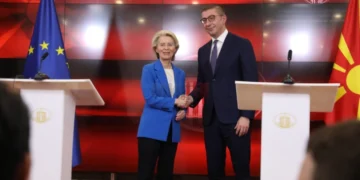
-The First Intergovernmental Conference between the European Union and Albania and North Macedonia may be held in December 2020. I believe that the process needs to respect the announced calendar and a delay will not be a good sign. The German EU Presidency should be able to organize the first ICCs with both countries in December. Where there is desire, there is a way. This will offer an evaluation for the efforts already put in the process by some countries, and an extra-motivation for others.
– Let me turn specifically to Romania as a traditional supporter of Albania’s EU integration. Do you think official Bucharest can help more Albania in this stage of the accession process given its past experience?
– Yes, I believe Romania is in a very good position to offer its lessons learnt from its own journey towards EU membership. Even if the situation of each country is different, there are many similar structural problems and Romania and Albania have also strong historical ties that will make the know-how transfer much easier and more efficient. I think Romania should be more engaged in offering its expertise to Albania.
– The occasion of the 75th anniversary of the founding of the UN was an opportunity to emphasize the urgency for a global fight against the pandemic at a time when uncertainty has increased people’s anxiety around the world. Is the world at a breaking point when the pandemic has unsettled all countries – big and small, developed and underdeveloped? In your view, how much weight has the appeal for multilateralism echoed in the Summit of September 21, 2020 to take the world out of the abyss?
– Multilateralism should be the only way for us to fight the pandemic together, with more solidarity than a fight for national interests. Unfortunately not all state leaders understand this. So that is why mentioning multilateralism as a goal still to be achieved at the UN level in the troubled world, which is heavily harmed by this pandemic, remains a very important part of the solution to current problems. When the world is faced with disinformation, trolls, populism, fake news, investment in nuclear weapons and nationalist policies and extremism, we can clearly see that the 75 years of UN principles were not enough for us to avoid wars and destruction. More needs to be done to accept multilateralism and interdependence as “the only game in town” in front of authoritarian rulers that show no understanding of our past mistakes back in history./ADN