













By Genc Mlloja
Senior Diplomatic Editor
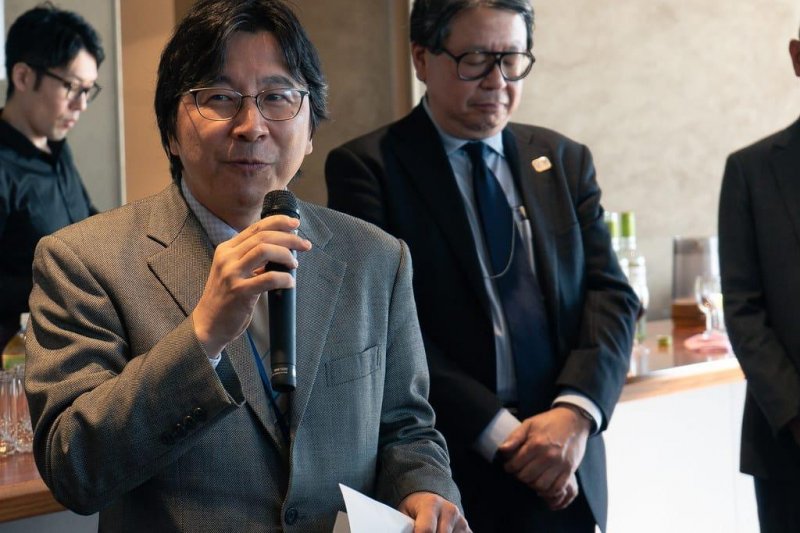
“It is difficult to say what kind of world order will be formed in the future, but this pandemic, which has had a great impact on the whole world, allows people to have chances to rethink about their health and daily lives, and eventually about the importance of bonds and exchanges with people,” has said the Deputy Director General of the European Affairs Bureau at the Ministry of Foreign Affairs of Japan, Kawazu Kunihiko.
In an exclusive interview with Albanian Daily News, Mr. Kunihiko, who is also Ambassador in charge of the Western Balkans, dwelt at length on Japan’s drive to prevent the novel coronavirus infection which has had a major impact on the Japanese economy, but affected the most tourism and transportation. According to him, under Prime Minister Suga, the Government of Japan has not changed its stance of prioritizing the measures against the coronavirus. “Prime Minister Suga said that the highest-priority issue we must take on is responding to the novel coronavirus, protect the lives and health of the public, and at the same time, aim to balance these measures with socioeconomic activities,” the Ambassador said, adding that in addition there are many issues such as economic recovery and resumption of international travel, but it is important to tackle each one firmly.
Asked about the challenges of the new PM, Ambassador Kunihiko quoted him as saying that “we must not allow under any circumstances a political vacuum as we confront this national crisis.” As specific issues, he mentioned: economic revival, regional revitalization, measures against declining birthrate, regulatory reform and of course the fight against coronavirus.
In a comment on foreign policy of Japan, it is meaningful the fact that Foreign Minister Motegi has remained part of the Suga administration and the Minister is determined to move forward diplomacy with both tolerance and strength.
With regards to Japan-Albania bilateral relations, the Ambassador pointed out that visits of VIPs have become more frequent in recent years, and in addition he noted that since the Embassy of Japan in Albania was established in 2017, the Embassy under the direction of Mr. ITO Makoto has been actively engaged in promoting dialogue with Albanian counterparts, implementing cultural exchange activities and developing cooperation projects to promote the Japan-Albania relations.
The Ambassador noted that the novel coronavirus has changed the circumstance of the world and human beings are facing many difficulties and many things that were taken for granted before have become impossible to do now. In conclusion Ambassador Kawazu Kunihiko conveyed the following message: “The Ministry of Foreign Affairs of Japan will continue to contribute to international friendship and goodwill, aiming to create an international environment where the Japanese people and the people of other countries who have a relationship with Japan can feel irreplaceable value.”
Albanian Daily News: In the first place let me thank you, Sir, for this opportunity to have this interview for Albanian Daily News sharing your opinions on some of the main developments in Japan and aspects of its foreign policy against the backdrop of two major events: resignation of PM Shinzo Abe and Covid-19 pandemic. First, which have been some of the main economic and social repercussions of the pandemic in your country?
Ambassador KAWAZU Kunihiko: I am Deputy Director General of the European Affairs Bureau, Ministry of Foreign Affairs of Japan. Thank you for inviting me for this interview. As Ambassador in charge of the Western Balkans, I am very happy to talk about Japan’s recent circumstances regarding COVID-19, the change of the Prime Minister, and Japan-Albania relations.
In Japan, a state of emergency was declared to seven prefectures on April 7 to prevent the spread of the coronavirus, and the state of emergency expanded to a nationwide scale on April 16. Based on this, each prefecture requested the residents to cooperate in preventing infection and refraining from going out. Although Japan did not take any strict measures such as prohibiting citizens from going out and suspending restaurant business, it still caused great inconvenience to daily life and economic activities. With the cooperation of the public and the introduction of the telework system in companies, the epidemic was almost eliminated. As a result, the state of emergency was lifted throughout Japan on May 25th.
The novel coronavirus has had a major impact on the Japanese economy, but affected the most tourism and transportation. To address this impact, Prime Minister Suga mentions the use of the “Go To Travel” campaign, which, aims to stimulate domestic travel demand by covering part of the travel cost in Japan for residents in Japan, while taking proper measures against infection. This campaign is expected to revitalize the economy in fields affected by the coronavirus, such as tourism, transportation, and food-service.
– How much has the departure of PM Abe impacted the ongoing struggle of Japan to deal with Covid-19, and what can you say about the general mood of the people given the fact that he has been the longest-serving prime minister in the country’s history?
– Under Prime Minister Suga, the Government of Japan has not changed its stance of prioritizing the measures against the coronavirus. Prime Minister Suga said that the highest-priority issue we must take on is responding to the novel coronavirus, protect the lives and health of the public, and at the same time, aim to balance these measures with socioeconomic activities.
In addition to fight against the infectious diseases, there are many issues such as economic recovery and resumption of international travel, but it is important to tackle each one firmly.
In the media coverage of the resignation of former Prime Minister Abe, there were various reactions such as voices thanking for Prime Minister Abe’s long-term service and regretting his resignation due to physical condition problems.
– The new prime minister has taken over at a tough time. Which are some of the major challenges of Abe’s successor?
– At a press conference held after his appointment, Prime Minister Suga said, “we must not allow under any circumstances a political vacuum as we confront this national crisis. In order to overcome the crisis and enable all citizens to restore their daily lives with peace of mind, we must thoroughly carry on with the initiatives the Abe Administration has promoted and advance them further. I recognize that as the mission given to me”. As specific issues, he mentioned: economic revival, regional revitalization, measures against declining birthrate, regulatory reform and of course, the fight against the coronavirus. In addition to these issues that the Japanese government under Prime Minister Abe has been working on for a long time, countermeasures against the coronavirus have become an urgent issue, and the role that the government should play continues to be significant.
–With respect to foreign policy will there be any expected shift in Japan’s approach particularly in regard to its position in the region with some conflicts going on, and its relations with major powers like the US, China and Russia?
-At the same press conference mentioned above, Prime Minister Suga said “In the field of diplomacy and national security, the environment surrounding Japan is becoming increasingly severe. Against that background, I intend to deploy policies that place a well-functioning Japan-US alliance as their linchpin. In order to defend our national interests to the end, I intend to strategically implement the free and open Indo-Pacific while also building stable relations with neighboring countries, including China and Russia”. Foreign Minister Motegi remains part of the Suga administration and the Minister is determined to move forward diplomacy with both tolerance and strength. The Ministry of Foreign Affairs of Japan will continue to promote the foreign policy of the Suga administration under the direction of Minister Motegi.
–Please let me turn to the European Continent. How do you assess Japan’s relations with the EU and the expectations for the future relationship in view of the impact of Covid-19 as well as Brexit?
-The EU is Japan’s important partner, as we share fundamental values, and have cooperation in various fields.
Not long after his appointment to the office, on September 22, Prime Minister Suga held a telephone talk with H.E. Mr. Charles Michel, President of the European Council and on October 6 Prime Minister Suga held a telephone talk with H.E. Dr. Ursula von der Leyen, President of the European Commission. Looking ahead to the suppression of COVID-19, Prime Minister Suga stated his willingness to deepen the cooperation with the EU for the stability and prosperity of the international community as a whole, especially for realizing the “Free and Open Indo-Pacific”. In this context, Prime Minister Suga and the two leaders agreed to work together closely with respect to international situations including on East Asia. Prime Minister Suga and the two leaders shared the view to deepen the discussions for further cooperation in various areas such as free trade, climate change, and digital transformation. Japan’s policy to work on further enhancing the cooperation between Japan and the EU remains unchanged.
– It was Prime Minister Shinzo Abe who launched in January 2018 the Western Balkans Cooperation Initiative with the ambition of strengthening its position in this region of southwestern Europe at a time when its countries have embarked in the drive to join the EU. What can you say on the progress of this Initiative and which are some of its achievements and expectations?
– In February this year, the “Western Balkans Civil Society Summit” was held in Tirana in cooperation with the Western Balkans Foundation within the framework of the “Western Balkans Cooperation Initiative”. The summit was successful with active discussions by many participants. In addition, we also invite young people and journalists to Japan from countries in the Western Balkan region.
A few years ago, Prime Minister Abe also announced the establishment of a new “Ambassador in Charge of the Western Balkans” at the Ministry of Foreign Affairs of Japan. As I mentioned at the beginning, I am currently serving as this ambassador, working to develop relations with the Western Balkan countries.
Currently, it is difficult to carry out exchange programs as usual due to the influence of the coronavirus. However, we will continue to support the regional cooperation and economic and social reforms in the Western Balkan region. We will also continue to support for EU accession through these.
Furthermore, the Albanian OSCE Chairmanship will host the OSCE Ministerial Council in December this year. Japan is a partner of this Organization, and we will cooperate with Albania for the success of this meeting.
– Albania and Japan have a significant heritage of their relationship with a past experience of diplomatic ties established in 1921 and restored in 1981. Although distant geographically Albania has seen Japan as a potential partner. Which is your assessment of the current bilateral relationship between the two countries and how much can Japan contribute to Albania’s economic development but also to the aspect of its further democratization and strengthening of the rule of law?
– With regards to Japan-Albania bilateral relations, visits of VIPs have become more frequent in recent years, as seen by the visits of H.E. Mr. Ilir Meta, President of the Republic of Albania last year and H.E. Mr. Ditmir Bushati, the Minister for Europe and Foreign Affairs two years ago. In addition, since the Embassy of Japan in Albania was established in 2017, the Embassy under the direction of H.E. Mr. ITO Makoto, the first resident Ambassador of Japan to Albania, has been actively engaged in promoting dialogue with Albanian counterparts, implementing cultural exchange activities and developing cooperation projects to promote the Japan-Albania relations. Furthermore, H.E. Mr. Gjergj Teneqexhiu, the Albanian Ambassador to Tokyo, has also been active and working closely with the Ministry of Foreign Affairs of Japan.
Currently, there is a limit to what we can do due to the coronavirus, but we will continue to support the Albania’s equitable growth and sustainable economic development, and the consolidation of the rule of law and democracy through implementing development cooperation projects through JICA and the Grant Assistance for Grassroots and Human Security, human exchanges, and the “Western Balkans Cooperation Initiative”.
– Japan’s assistance has been appreciated in Albania being very effective and helpful. As Covid-19 pandemic has hit it hard with its impact on health system among others how much has your country been able to come to its help?
– As I mentioned earlier, the novel coronavirus is unfortunately affecting the Japan-Albania relations as well. However, Japan continues to expand the economic cooperation as much as possible through the Embassy of Japan in Albania. For example, the Grant Assistance for Grassroots Human Security Projects are still being implemented in 2020. “The Project for Improvement of Infrastructure of Disaster Protection for Kamza Municipality” and “The Project for Improving Parks and Green Areas in Elbasan Municipality” were completed this year. In the above mentioned project, Japan provided one fire truck and fire-fighting equipment to Kamza Municipality which, before this project, did not own any fire engines and had to borrow them from Tirana Municipality. I hope that this project will contribute to strengthening disaster prevention measures in Kamza. Regarding future projects, the Embassy is continuing its work on project formulation mainly focusing in the field of health care, but not only.
Regarding COVID-19, in Japan, there are active efforts to introduce the infection prevention measures to the citizens in fun and familiar ways, which may be helpful for people in Albania as well. For example, a Japanese comedian named Pikotaro, who gained popularity with “PPAP” in 2016, posted a video clip titled “PPAP-2020” to encourage people to wash their hands. There are also many other videos that show you how to spend your time “staying home” in a healthy and stress-free way, such as enjoying exercise, music and cooking at home. I hope that Japanese ideas and experiences will help the Albanians to overcome this difficult time.
– To conclude with the severest multifaceted challenges because of Covid-19 the world is faced with since World War II, please, let me refer to the UN Secretary-General’s appeal on a new social contract for a new era made in July this year. As one the major world powers, how does Japan see the future of mankind in the post COVID-19 era, and the perspective of a new global order?
-The novel coronavirus has changed the circumstance of the world and human beings are facing many difficulties. Many things that were taken for granted before have become impossible to do now, but on the other hand, a new lifestyle has been adapted, by introducing the telework system and the holding of video meetings. In the international community as well, while cross border travel is severely restricted, exchanges continue by holding international conferences in video formats.
It is difficult to say what kind of world order will be formed in the future, but this pandemic, which has had a great impact on the whole world, allows people to have chances to rethink about their health and daily lives, and eventually about the importance of bonds and exchanges with people. The Ministry of Foreign Affairs of Japan will continue to contribute to international friendship and goodwill, aiming to create an international environment where the Japanese people and the people of other countries who have a relationship with Japan can feel irreplaceable value./ADN