










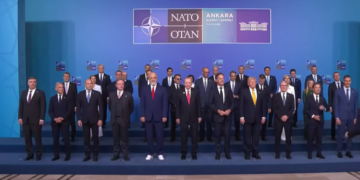
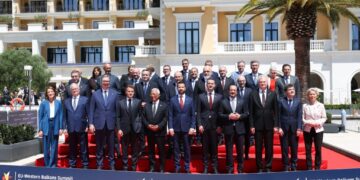


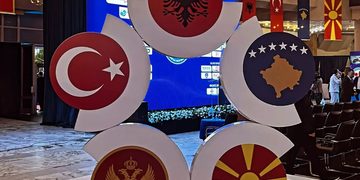

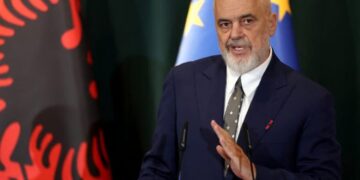
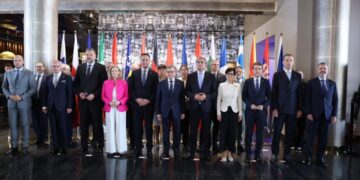
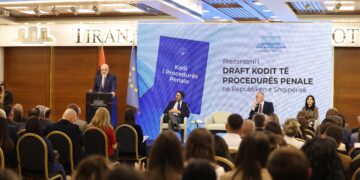



The summit of the European Union (EU) and Western Balkans states will be organized on 6 December 2022 in Tirana. The summit is being organized within the framework of strategic cooperation of the EU with the Western Balkans and will be the first summit since the Russian invasion on Ukraine. Namely, the first informal EU 27 summit and meetings within the framework of the European Political Community were organized in Prague on 6 October 2022. The European Political Community brings together all countries of the European continent that share common democratic values. The summit was attended by 44 leaders from European countries, except Russia and Belarus. In the Western Balkans region, there are more than 30 initiatives underway that involve countries of the region. The strategic commitment of all the countries is membership in the EU and NATO, whereas Serbia insists on military neutrality. The leading regional initiatives are the Berlin Process and Open Balkan[2].
Western Balkans between Berlin Process and Open Balkan
Once again Europe has focused on the importance of peace, which has long been overshadowed by other issues and taken for granted. The Russian aggression on Ukraine is treated as the first European war after World War II, because the wars in the Western Balkans were considered local wars. The European Political Community is an attempt to preserve peace and bring together heads of states that cultivate the same democratic values. Judging by everything, a gathering of the kind would not be successful or massive had there been no Russian invasion on Ukraine. At the same time, the Western Balkans region is facing the consequences of the Russian invasion on Ukraine. The actual fighting and Ukrainian resistance in Kiev and other places in Ukraine is also a fight for peace and stability of the Western Balkans, because there were operational plans in place and if Russia would succeed in the aggression and defeat Ukraine, the situation in the Western Balkans region would be destabilized. In the Western Balkans a twist occurred in 2014, when two European countries, Germany and United Kingdom, launched an initiative that changed the approach to the implementation of the integration process. On the basis of the UK-German initiative the Reform Agenda for Bosnia and Herzegovina was adopted in 2015. Political reforms, such as implementation of the judgements of the European Court for Human Rights in the Sejdić-Finci case and other judgements, were postponed for some other time in the future and have still not been implemented. This initiative allowed for the Stabilization and Accession Agreement (SAA) between the EU and Bosnia and Herzegovina to enter into force. The Berlin Process is an initiative that was launched in 2014, that is at the time of the peak of Euroscepticism within the EU, which was linked to the future enlargement of the EU. It was aimed to revitalize multilateral connections between the countries of the Western Balkans region and the EU, as well as improve regional cooperation among Western Balkans countries in the area of infrastructure and economic development. In early November this year the leaders of the six Western Balkans countries met at a summit organized within the framework of the Berlin Process and signed agreements on mutual recognition of identification cards, university diplomas and professional qualifications among the countries. This means that the visa regime between Kosovo and Bosnia and Herzegovina will be abolished, which constitutes a major breakthrough in regional relations. Ratification of the three agreements would prove that the Berlin Process has received a new momentum. Open Balkan is an autochthone regional initiative, initially named “mini-Schengen”. It was launched at a meeting between Serbian President Aleksandar Vučić, Prime Ministers of Albania and North Macedonia, Edi Rama and Zoran Zaev, respectively, in October 2019 in Novi Sad. In addition to the listed founding countries, Bosnia and Herzegovina and Montenegro also participate at some summits, but have not become full-fledged members of the initiative yet. Furthermore, although the Washington Agreement between Serbia and Kosovo from September 2020 envisages that Kosovo will also join the initiative, this has not yet happened. The US strongly supports the Open Balkan initiative.Open Balkan is not an alternative to membership in the EU but is an accelerated way for the countries to faster rebuild trust and prepare for membership in the EU, as well as utilize the untapped opportunities for synergy and cooperation. Economy of scale is an important element of regional cooperation. Open Balkan is becoming an embryo of new economic clusters that will be created in the region and constitute the competitive advantage of the countries and the region. It is necessary to end the harmful and inflammatory political rhetoric and squarely face the recent tragic history of the region. The Western Balkans countries have to established stronger political, economic, scientific, cultural, sport and every other form of cooperation and approach EU together, as a group of countries with clearly defined goals, requests and interests. The IFIMES international institute has warned on a number of occasions already that international arrest warrants and secret lists of suspected war crimes are not acceptable within the Open Balkan initiative, that criminals should be tried where they had committed the crime and with the agreement of states, which in this specific case would also be more effective and purposeful. Analysts believe that the Berlin Process and Open Balkan initiative are not incompatible, because both are directed towards membership in the EU. The Berlin Process is primarily in the function of achievement of German interests in the region, while the Open Balkan initiative is a genuine idea of the leaders in the region, who need to rebuild the impaired trust, devise new forms of future cooperation and tap the available resources, primarily led by their national interests.
Normalization of relations between Serbia and Kosovo – peace preservation is an imperative
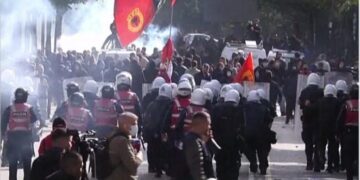
The current developments at the north of Kosovo remind of the events from the nineties of the last century. The situation is the worst in the last 10 years, which is of no benefit to anyone. Serbian President Aleksandar Vučić and Kosovo Prime Minister Albin Kurti, assisted by official Brussels, were not able to reach an agreement on how to overcome the existing situation. As a result, the State Department has urged all sides to work on a fair compromise and make concessions in order to ensure that decades of hard-won peace in an already fragile region are not jeopardized. The State Department also joined the EU in calling on Kosovo to immediately suspend any planned measures that would escalate tensions, including the imposition of vehicle fines. Serbian President Vučić was ready to agree to compromise solutions and in the talks with the Kosovo Serbs he plead with them to try to preserve peace, to do everything within their power, in terms of their conduct and stances, not to be the party that would be blamed. The imperative is to preserve peace. Josep Borrell, EU High Representative for Foreign Affairs and Security Policy, stated that no agreement had been reached between Belgrade and Pristina on license plates and that European mediators had put forward a proposal to Vučić and Kurti that could have avoided the risky situation at the north of Kosovo, which Vučić accepted, but Kurti did not. Christopher Hill, US Ambassador to Serbia, stated that Serbian President Aleksandar Vučić had a “constructive engagement” in the attempt to find a solution to the license plates problem in Kosovo. Reports of EU institutions emphasize that Serbia is the engine of normalization of the Western Balkans, as well as the engine of European integration of the Western Balkans countries. The process of progression of Serbia towards membership in the EU has been particularly intensified in the last couple of years. The fact that EU postpones opening of new negotiation chapters (clusters) with Serbia brings into question the intents and plans of EU regarding its enlargement. The Brussels talks have shown that Serbia is not a retrograde factor but the regional engine of European integration of all six Western Balkans countries and the epicenter of developments in the region. Analysts believe that Serbia has the strongest and most developed personnel resources and logistic infrastructure with which in a relatively short period of time it can respond to the challenges and requirements of the negotiations process, and thus justify the attribute of being the engine of European integration in the Western Balkans. Simultaneous signing of a comprehensive and legally binding agreement on normalization of relations between Serbia and Kosovo should actually also mean an agreement on membership of Serbia and Kosovo in the EU. That would be the right path towards normalization of relations. Recently, information about the existence of the so-called French-German proposal, which should open the path to normalization of relations between Kosovo and Serbia, was publicized. The proposal is based on an agreement from 1972 between the two Germanys, which should be seriously considered and modified to the existing circumstances. The key question is do EU and NATO want to see Serbia in an alliance with Russia and China, which are ushering Serbia into their geopolitical, military and economic interests outside of EU and NATO, or does EU wish to assist Serbia to become a full-fledged member of the European Union. In this case, the decision is on the EU, which should assist Serbia and stop with the constant conditioning of this Balkans state. Numerous moves of the EU have encouraged and strengthened the anti-European forces in Serbia and played well for EU’s rivals. This practice needs to be ended to the benefit of pro-European forces.
Candidate status for Bosnia and Herzegovina
In its recent report on Bosnia and Herzegovina, the European Commission assessed and recommended that at the December summit the EU Council gives Bosnia and Herzegovina a candidate status for membership in the EU. If the EU grants the candidate status to Bosnia and Herzegovina, it will still, lag behind other Western Balkans countries (Serbia, Montenegro, North Macedonia and Albania) in the integration process with respect to the timelines. The statement by the newly elected member of the Presidency of Bosnia and Herzegovina, Denis Bećirović, at the inauguration was encouraging. “My vision of BiH is a European BiH and development of a common identity. Let’s strengthen the security of BiH, because we know first-hand that peace and economic development require all of us, while a conflict does not. Politicians in BiH must not be selfish and work in their own interest. Let’s work in the interest of destitute people. We must not sow hatred for the purposes of being popular … Lets increase cooperation with the friendly counties. Regional cooperation with neighboring countries is also important for peace, stability, establishment of trade relations and cultural cooperation.”Analysts believe that for the sake of stability and peace in the Western Balkans, but also in Europe, in light of the Ukraine crisis it is of historical importance to grant the candidate status to Bosnia and Herzegovina, because at the last EU summit the status was awarded to Ukraine and Moldova for the same reason.
Solution–imminent membership in EU of all Western Balkans countries
As long as the EU has an unstable and turbulent Western Balkans region in its neighborhood, it will not be able to deal with and resolve key issues and challenges or establish its long-term strategic position in international relations and respond to challenges of regional globalization. EU members must demonstrate vision with respect to the enlargement process, because had there been no enlargement of the EU in the past it would have never evolved into such a respectable regional integration. As the EU has 27 members, there is always the possibility of various conditionings and blockades, although member countries should refrain from such options and find institutional solutions to such issues. This is particularly important in the situation in which Russia, China, Turkey and other countries are trying to increase their influence in the Balkans. The indecisiveness of the EU can have strategic consequences in the Western Balkans, as there are real threats that due to the uncertainty of the EU enlargement process and pressure of the local public some countries could change their geopolitical orientation. It is necessary to finalize the dialogue between the official Belgrade and Pristina with the signing of a comprehensive legally binding agreement on normalization of relations, as well as that countries in the region intensively work on the initiated regional cooperation, and particularly the Open Balkan initiative. Analysts warn that while the EU sets new conditions and criteria for membership, there are EU member countries that could not fully met the membership conditions set to Western Balkans. In the recent history, EU “turned a blind eye” in the case of Bulgaria and Rumania, as well as Croatia, when it granted them full-fledged membership. Another testimony of unprincipledness of the EU is the fact that in 2004 no less than 9.5 countries were coopted into the EU, as only half of Cyprus became a member. References are often made to the examples of the French province of Corsica and the Italian province of Sicily, where the EU legislation does not function at all in line with EU standards, regulations and directives. Some 19 million residents of Western Balkans will definitely not and cannot endanger an integration including 450 million residents. It is necessary to define whether there will be enlargement of the EU and when, as the enlargement of the EU cannot be postponed indefinitely. The uncertainty of the EU enlargement process actually plays into the hands of the part of the public in the Western Balkans that opposes membership of their countries in the EU and is to the benefit of the rivals and adversaries of the EU, while regional cooperation is a path to accelerated membership in the EU. /IFIMES