

































An audio recording of Fehim Sali in Kosovo and a criminal complaint against the BIA’s director, Vladimir Orlić, in Serbia highlight the reported involvement of Serbian intelligence in gathering electoral support for the SNS. Both cases raise concerns about the use of intelligence capabilities to serve party-political interests, while in Kosovo they also reveal the risk of political data and community networks being exploited as instruments of hybrid influence.
Assistant Professor Dr Gurakuç Kuçi – Professor at Universum College and External Associate at ISLH OCTOPUS
Fehim Sali’s communications with a Serbian intelligence official concerning the collection of votes among the Gorani community in Kosovo, together with the criminal complaint filed on 2 November 2026 against the director of the BIA, Vladimir Orlić, and seven other senior officials in Serbia, represent two developments linking the Serbian intelligence service to the organisation of electoral support for the Serbian Progressive Party (SNS). In the first case, Sali reported on individuals who agreed or refused to support the SNS, while in the second, senior BIA officials are accused of imposing the collection of votes for the same party as a compulsory duty on intelligence personnel.
The connection between these cases raises concerns that extend beyond conventional electoral organisation, as the involvement of intelligence structures in identifying political supporters and opponents creates opportunities for gathering information, exerting pressure and expanding networks of influence. In Kosovo, where information about citizens’ political views was being reported to a BIA official, such activities also acquire a national security dimension, involving hybrid influence exercised through electoral mechanisms.
Gathering Electoral Support for the SNS Through Links to the BIA
In an audio recording published on 4 September 2026, Fehim Sali explained to Želimir Matović, identified by Kosovo’s Special Prosecution Office as a BIA official, how signatures were being collected in support of the SNS. He referred to documents provided to him by an individual named “Nikolla” and explained that he had separately recorded the names of those who had said “NO”, turning their refusal to offer political support into information to be reported.
In electoral activities, lists are used to identify and mobilise voters, but recording those who refuse to provide support also serves as a means of mapping political attitudes within a community. When such information is passed to a foreign intelligence official, it goes beyond party organisation, as it can be used to identify influential individuals, understand social relationships and select people who may be subjected to pressure.
During the same conversation, Sali referred to the use of “dajak” (beatings) to secure electoral support, the sending of documents to Belgrade and his concern that the materials might be discovered while he was crossing the border. These details link the collection of votes to methods of coercion and the cross-border transfer of information, shifting attention away from the number of signatures towards those responsible for requesting, managing and receiving the lists.
From Kosovo’s national security perspective, the concern is not citizens’ support for a political party, but the recording of their political attitudes and the reporting of such information through communications with a foreign intelligence service. This distinction is also essential to protecting the Gorani community from political pressure and the exploitation of community relationships for political purposes.
“Moja Gora” and Organisation Through Local Contacts
Part of the organisational dimension of the case concerns the association “Udruženje Moja Gora”, registered in Serbia on 2 April 2024 under registration number 28379404. Verification of public registers, cross-referenced with information from CompanyWall, identifies Fehim Sali as its representative. The association was mentioned in reports concerning efforts to gather support for the SNS among the Gorani community during 2024.
Sali’s connection to this organisation broadens the scope of the analysis beyond his individual communications with the BIA to the contacts and structures through which electoral mobilisation may have been organised. Community networks possess knowledge of local relationships and access to individuals, making them potential intermediaries for political mobilisation. Information gathered through these networks can also serve an intelligence function when passed on to intelligence structures.
Sali’s reported activities are linked both to 2024 and to preparations for the 2026 elections, raising the possibility that the same individuals, forms and communication channels were used during both periods.
The Criminal Complaint Against Orlić and the Political Use of Intelligence
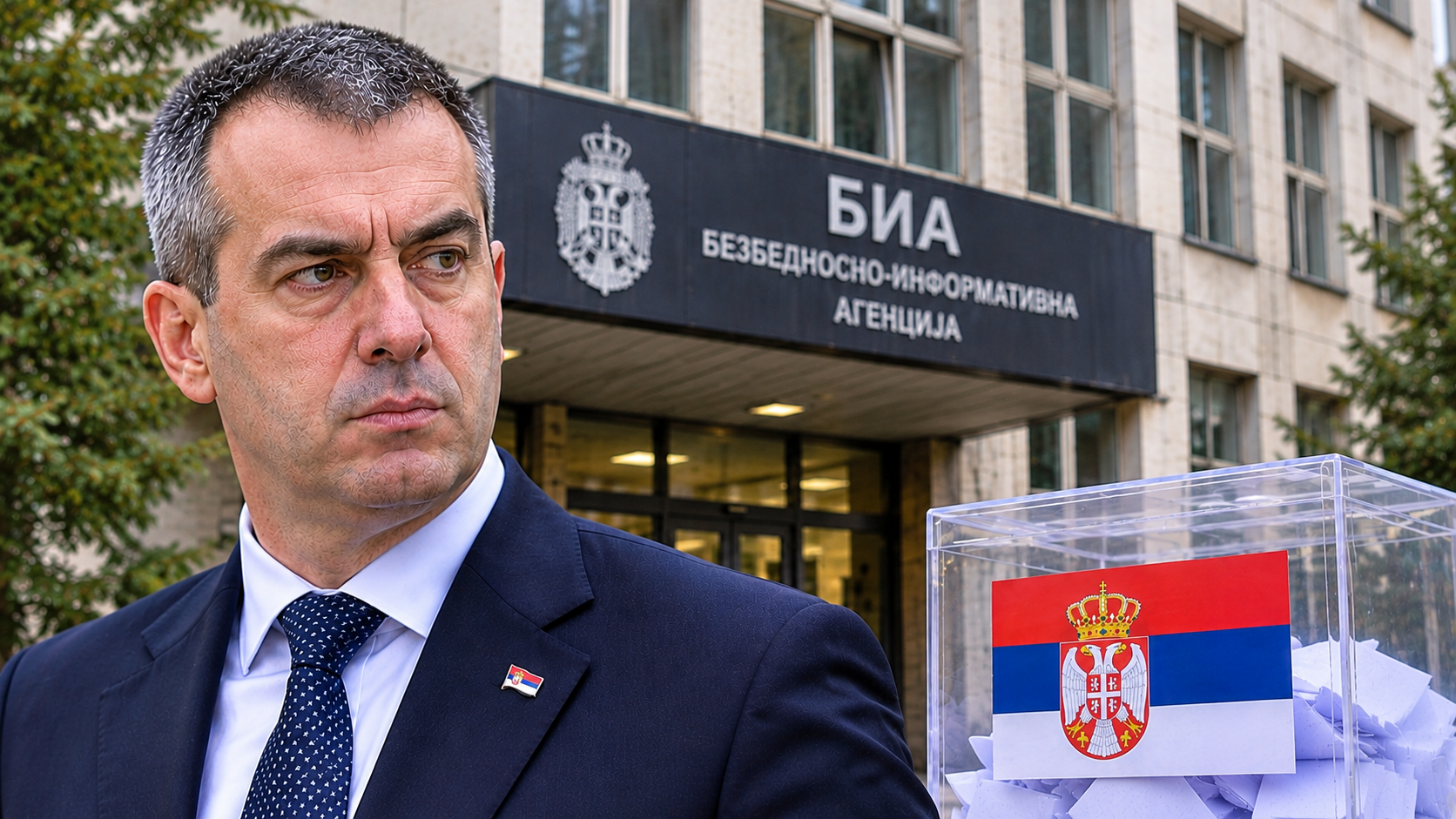
On 2 November 2026, lawyer Ivan Ninić filed a criminal complaint with the Prosecutor’s Office for Organised Crime in Belgrade against the director of the BIA, Vladimir Orlić, and seven other senior officials of the agency. According to the criminal complaint, in late May, intelligence personnel in Belgrade, Kragujevac, Smederevo and Paraćin were compelled by their superiors to collect so-called “capillary votes” for the SNS using party forms.
The collection of so-called “capillary votes” is a method of identifying potential supporters in advance and reporting their engagement within an electoral network. The significance of the complaint lies not in the use of this method by political parties, but in the allegation that intelligence personnel were required to gather support for the SNS as part of their official duties, placing the staff and hierarchical structure of a state institution at the service of electoral interests.
Before his appointment as head of the BIA in June 2024, Orlić had been a senior SNS official and President of the National Assembly of Serbia. This political connection forms part of the context of the complaint, which calls for an examination of how institutional powers and lines of authority within the intelligence service under his leadership were used.
The criminal complaint became public following Serbia’s parliamentary elections on 25 October 2026, in which, according to preliminary results, the Student List secured 52.71 per cent of the vote, compared with 39.17 per cent for the SNS-led list. In its assessment of 26 October, the OSCE Office for Democratic Institutions and Human Rights (ODIHR) identified the misuse of state resources and electoral pressure. These findings describe the broader electoral environment, while the complaint against the BIA leadership separately raises the question of intelligence involvement in party-political mobilisation.
The Sali and Orlić Cases: From Electoral Organisation to Hybrid Influence
The case of Fehim Sali in Kosovo and the criminal complaint against Vladimir Orlić in Serbia are linked by a common activity: the organised collection of electoral support for the SNS involving BIA structures. In Kosovo, Sali collected signatures, recorded the names of individuals who refused to provide support and reported this information to Serbian intelligence official Želimir Matović. In Serbia, according to Ninić’s criminal complaint, senior BIA officials had engaged agency personnel in collecting so-called “capillary votes” using SNS forms. The complaint against Orlić therefore gives Sali’s activities a broader institutional dimension, as it indicates that the practice of gathering party-political support, identified in communications between Serbian intelligence officials and individuals in Kosovo, was allegedly also being carried out within the agency’s own structures in Serbia.
From the perspective of hybrid warfare, the significance of this connection lies in the use of electoral mobilisation as a mechanism for gathering information and exerting political influence. Lists of supporters and those who refused to provide support represented not only information about the SNS’s electoral potential, but also data on political orientations, community relationships and individuals who could become targets of pressure. Intelligence involvement in this process creates opportunities for information collected for party-political purposes to be exploited for political profiling and the expansion of influence networks, combining electoral interests with the intelligence capabilities of a state institution.
For Kosovo, these activities represent a direct security concern, as the collection of political information about its citizens and its reporting to the BIA create opportunities for foreign influence over community relationships and political processes. Kosovo’s institutions must therefore establish not only who organised the collection of votes, but also the chain through which the lists were managed and transmitted, the links to Serbian intelligence structures and the potential use of this information to exert political pressure.
The strategic significance of these two cases extends beyond elections and their outcomes, as networks of contacts and the information gathered through them may retain their value even after political changes in Serbia. The intersection of electoral organisation and intelligence activities creates a mechanism of influence that can be used at different times and for other political objectives. For Kosovo, identifying and neutralising this mechanism is a matter of protecting its sovereignty and institutional resilience against hybrid interference by Serbian intelligence.
____________________________________________________
Note: Illustrative image generated using artificial intelligence (AI).
© 2026 Argumentum