

















Asst. Prof. Dr. Gurakuç Kuçi – Professor at UNI College and External Associate at ISLH OCTOPUS
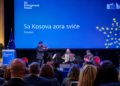
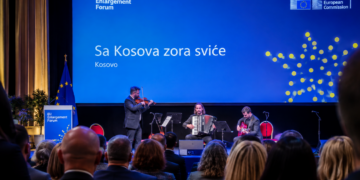
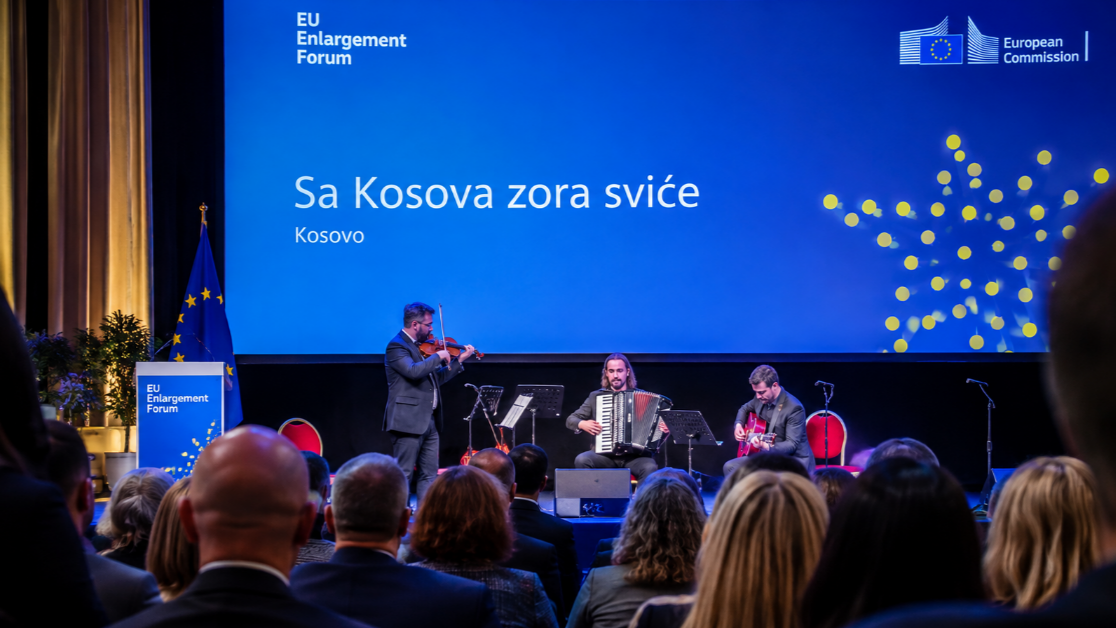
The performance of the Serbian nationalist song “Oj Kosovo, Kosovo” at the opening of the EU Enlargement Forum in Brussels goes far beyond a cultural scandal. It raises serious political and security concerns that directly affect the European Union’s credibility and its approach towards Kosovo and Serbia.
Written and released in 1989, amid a wave of Serbian nationalist-chauvinist mobilisation, the song contains explicit territorial claims over Kosovo. It is precisely this kind of historical and political narrative that has been used to justify Serbia’s genocidal policies against Kosovo.
How can the European Union, which funds programmes to combat discrimination and hate speech, while promoting tolerance and regional reconciliation, allow such a narrative to be promoted at one of its own official events? Indeed, the EU also finances specific projects in Kosovo aimed at combating discrimination and hatred. The contradiction is even more striking given that this occurred at the Enlargement Forum, where the region’s European future is being discussed, while Kosovo has no governmental representation listed in the high-level programme.
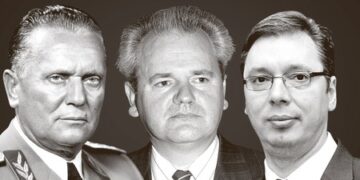
This incident cannot be viewed in isolation from the EU’s longstanding policy of stabilitocracy towards Vučić’s Serbia, which has prioritised short-term stability over confronting Belgrade’s destabilising policies. The message conveyed by such a performance in the heart of Brussels is deeply troubling: Serbian territorial claims are being given a platform even at European events, while politically accommodating Serbia continues to be treated as an instrument for preserving regional stability.
This approach carries real security costs. Tolerating territorial narratives creates the conditions for their normalisation, undermines reconciliation efforts and risks turning EU enlargement into a mechanism for accommodating Belgrade’s political demands, rather than a process governed by rules and equal obligations.
Moreover, the EU itself mediates the 2023 Agreement, which includes respect for territorial integrity, equality and good-neighbourly relations. These principles cannot be demanded at the negotiating table while messages that contradict them are given a platform at European Commission events.
European Commissioner Marta Kos must publicly distance herself from this performance, apologise for allowing the song to be performed at a European Commission event, and explain who authorised such a repertoire.
The European Union must make clear whether enlargement remains a process grounded in the rule of law, security and respect for territorial integrity, or whether the logic of stabilitocracy continues to shape its relations with Serbia, undermining the credibility of EU policy towards Kosovo.
Reconciliation that tolerates territorial claims does not build lasting peace; it creates the conditions for future crises.
© 2026 Argumentum