


'/%3E%3C/svg%3E)

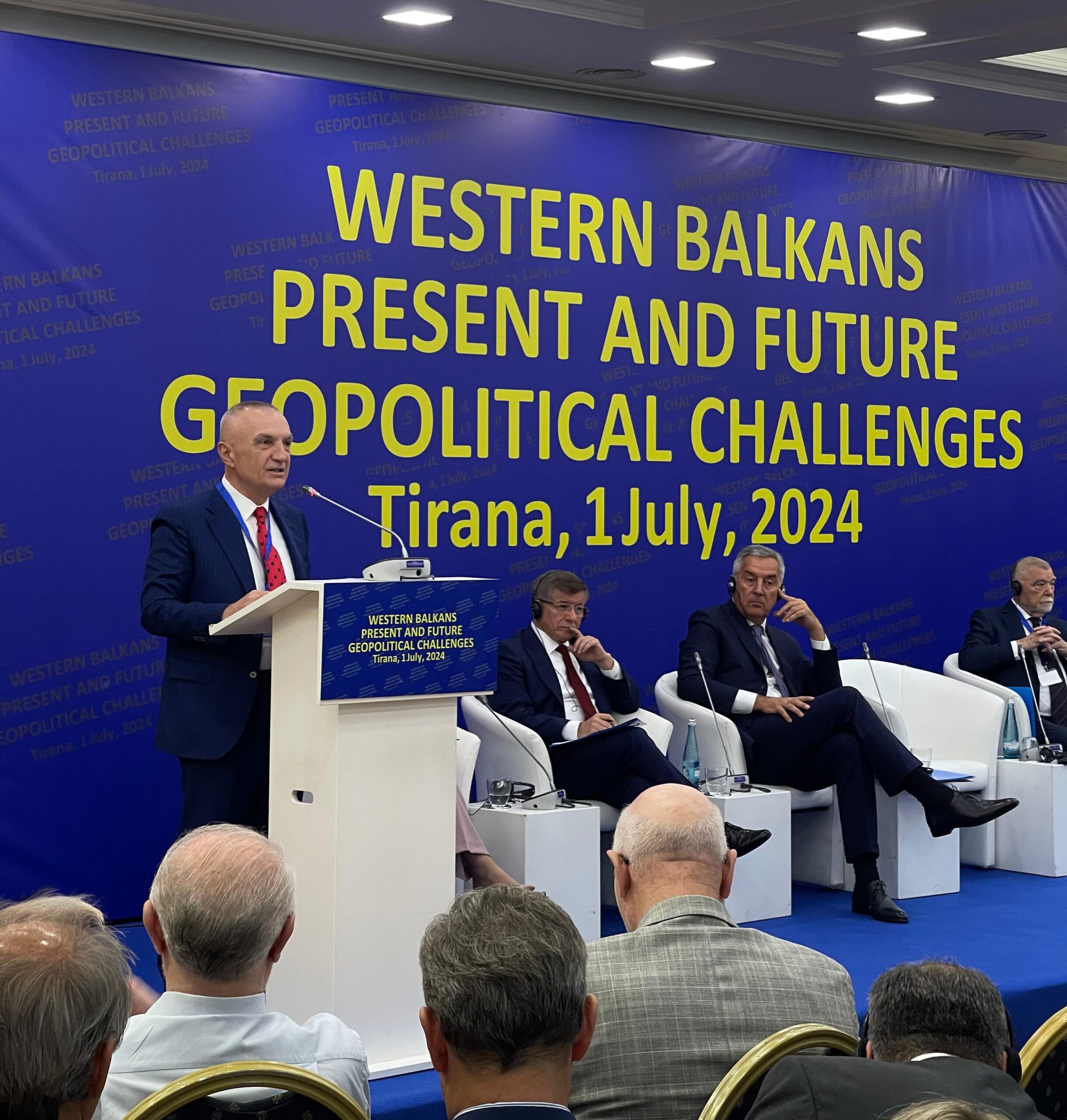
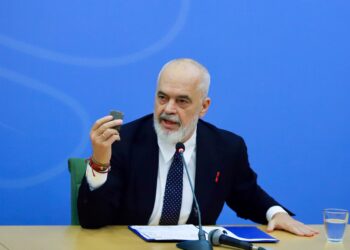
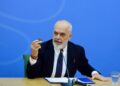
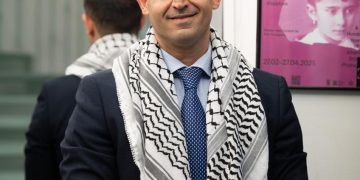
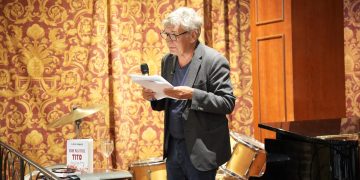
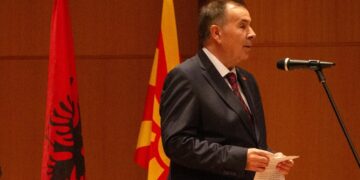
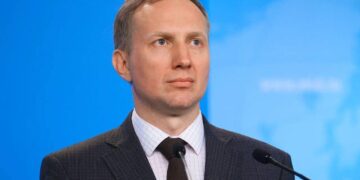
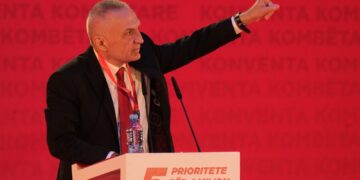
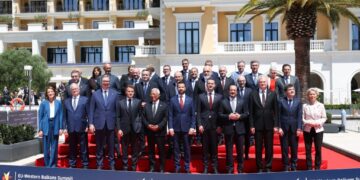
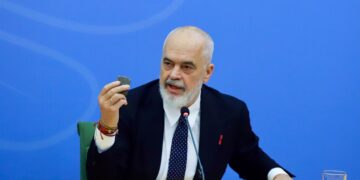
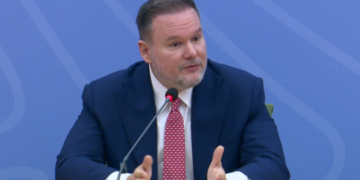
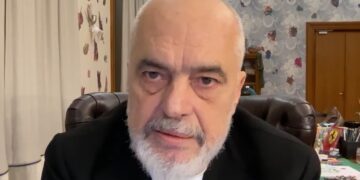
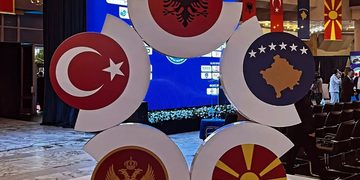
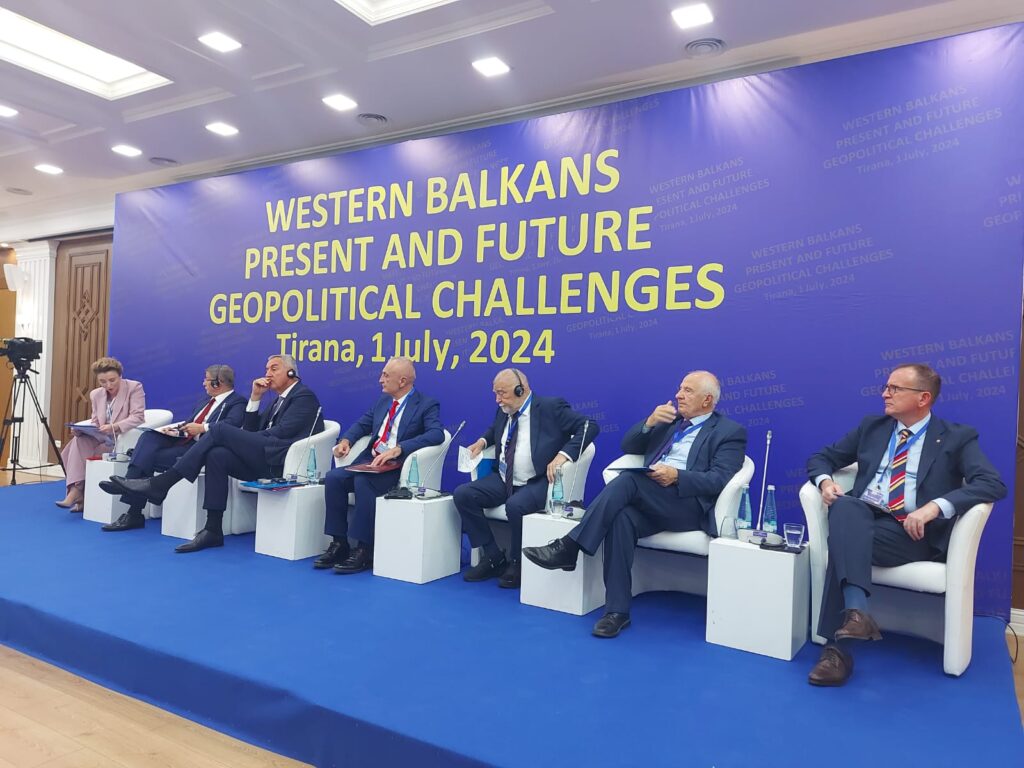
Under the auspices of the former president of Albania, Mr. Ilir Meta, the regional forum “Western Balkans, Present and Future Geopolitical Challenges” was held in Tirana.
In his speech, Meta says that “the challenges of the region require not only vision and clarity, but also, courage and cooperation”.
“Russia’s war against Ukraine opened the eyes of many Western politicians, who until then had been sleepwalking, under the illusion that the danger of war in Europe had been ruled out forever. Those who predicted that Putin’s ambition would stop in Crimea and return to “business as usual” had to recognize the political reality and review the European and Euro-Atlantic policies in accordance with this reality”, emphasized Mr. Meta in his speech in the forum.
Mr. Meta said that NATO placed Russia in its security strategy as the main threat to peace.
Our region was included on the map of danger hotspots, predicting that Russia’s proxy countries and actors would promote instability, insisting on the same old fable aimed at changing the borders between the Balkan countries.
Meanwhile, at the global level, it is observed that democracies are shrinking while the number of autocratic countries is increasing, he underlined.
At the Regional Forum “The Balkans and the geopolitical challenges of today and the future”, the President of the PL, Ilir Meta, highlighted the serious political situation in Albania, as a result of the justice led by Prime Minister Edi Rama.
During his speech, Meta emphasized that in Albania for the first time an MEP is politically imprisoned, while the DP leader is politically isolated.
There is a clear correlation between hybrid regimes and the threat they pose to the security environment.
For example, it is enough to see the OSCE/ODIHR reports to clearly identify that Albania and Serbia have major problems with elections and with the extreme limitation of spaces for the opposition and freedom of expression.
In Albania today, a newly elected MEP, Mr. Fredi Beleri, continues to suffer political imprisonment for the first time.
Just because he was an opposition candidate in the last elections in the Municipality of Himara, he was kidnapped by the police two nights before the elections and won again.
It has been a year since he was unable to take the oath in respect of the voters, which is a very ordinary bureaucratic procedure.
This happens because he had denounced the occupation of community properties by clients near the Prime Minister to build resorts for the purpose of money laundering.
Meanwhile, Elmar Brok, a politician very well known by all of you and in the EU, decided that for his birthday he would visit the house of the historic leader of the Democratic Party, Professor Sali Berisha, who is unconstitutionally kept in political isolation to prevent him from fulfilling of his obligations as a deputy and as a leader.
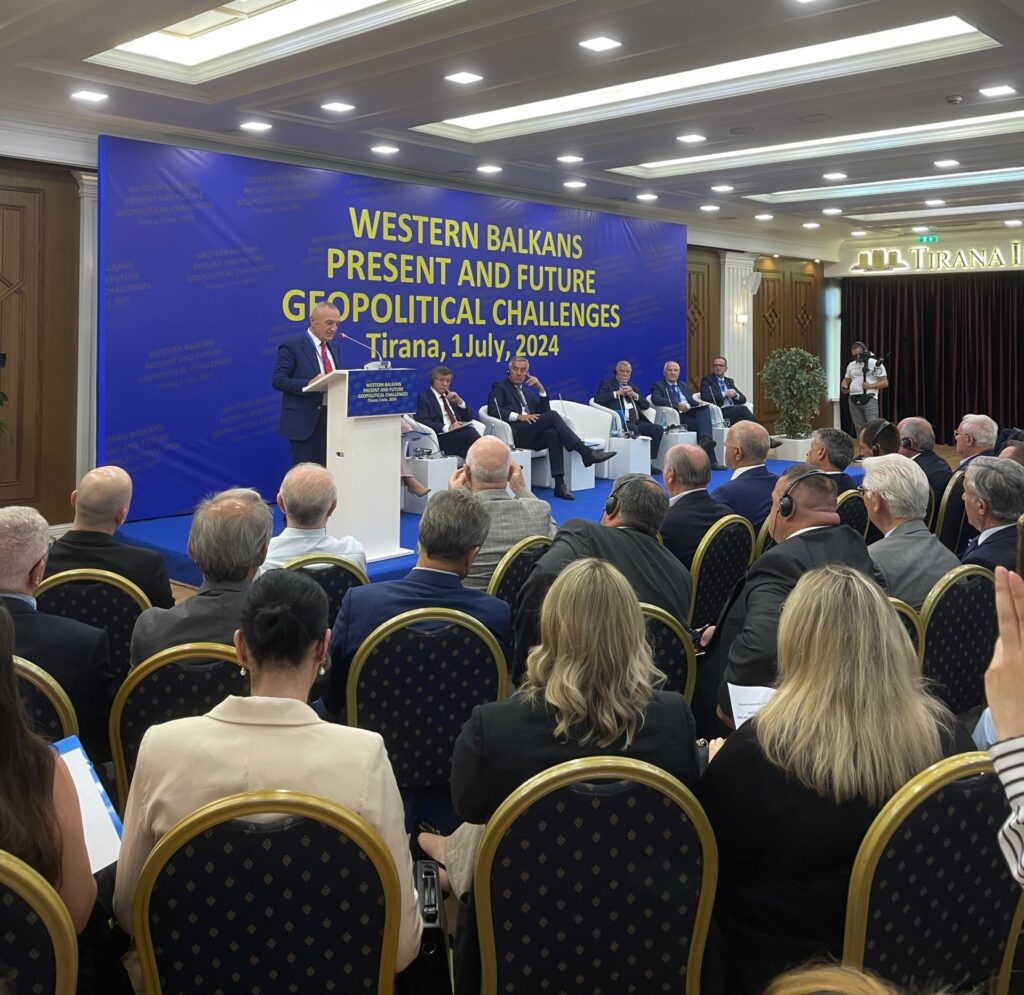
The full speech of former president Ilir Meta at the Forum: “Western Balkans, Present and Future Geopolitical Challenges”
Dear friends,
Dear President, Stjepan Mesić, a dear friend of all Albanians around the world,
Dear President, Milo Đukanović, the historical leader who achieved everything unimaginable 27 years ago by accomplishing the Independence of Montenegro, its membership in NATO and who has brought it so close to the EU,
Dear Professor Ahmet Davutoğlu, an outstanding supporter of Kosovo’s Independence, but also of many recognitions on all continents,
Dear President Fatmir Sejdiu or otherwise known as the President of Independence,
I am grateful to all of you for accepting the invitation to gather today here in Tirana, to discuss a very important issue related to the future of our region “The Balkans and the geopolitical challenges of today and of the future”.
You, dear friends, are among those leaders who have shown that the great challenges of our peoples and the region as a whole for peace and development, for dignified integration among themselves and in the European and Trans-Atlantic community, require not only vision and clarity, but the solutions before us also require courage and cooperation.
Russia’s war against Ukraine opened the eyes of many Western politicians who until then had been sleepwalking, with the illusion that the risk of war in Europe had been ruled out forever.
Those who predicted that Putin’s ambition would stop in Crimea and return to “business as usual” had to recognize the political reality and revise European and Euro-Atlantic policies in line with this reality.
This means first and foremost redefining the risks.
NATO placed Russia in its security strategy as the main threat to peace.
Our region was included on the map of danger hotspots, predicting that Russia’s proxy countries and actors would promote instability, insisting on the same old fable aimed at changing the borders between the Balkan countries.
Meanwhile, at the global level, it is observed that democracies are shrinking while the number of autocratic countries are increasing.
There is a clear correlation between hybrid regimes and the threat they pose to the security environment.
For example, it is enough to see the OSCE/ODIHR reports to clearly identify that Albania and Serbia have major problems with elections and with the extreme limitation of spaces for the opposition and freedom of expression.
In Albania today, for the first time ever, a newly elected MEP, Mr. Fredi Beleri, continues to suffer political imprisonment.
Just because he was an opposition candidate in the last elections in the Municipality of Himara, he was kidnapped by the police two nights before the elections, and yet he won again his mandate.
It has been a year since he was unable to take the oath in respect to the voters, which is a very ordinary bureaucratic procedure.
This happens because he had denounced the occupation of community properties by clients near the Prime Minister to build resorts for the purpose of money laundering.
Meanwhile, Elmar Brok, a politician very well known by all of you and in the EU, decided that for his birthday he would visit the house of the historic leader of the Democratic Party, Professor Sali Berisha, who is unconstitutionally kept in political isolation with the aim at preventing him from fulfilling his obligations as a Member of Parliament and as a leader.
It is not surprising how turning a blind eye to the capture of the state and justice by autocrats in exchange for assumed “stability,” produces the opposite effects.
The autocrats brought back to the European political table through dubious lobbying the proposal for changing the borders, shifted attention from the EU membership process to the creation of the “Open Balkans”, where European and non-European influences mix and collide at high cost to the region itself, for Europe and for NATO.
The consequences of this policy led to the failure of the conclusion of the Kosovo-Serbia dialogue, the attempted coup in Montenegro, the threats of dissolution of Bosnia-Herzegovina, up to the first physical clash with KFOR troops, and the terrorist attack in Banjska, Kosovo.
There are many politicians, analysts and journalists in the US and the EU who have warned that a wrong approach was being followed in the region by both the EU and the US.
Today, even more than yesterday, an urgent return to the tracks of classical foreign policy is needed, and not an experimental one, or in the “business for peace” format.
We need to recognize the realities, return to the pillars of principles and strengthen conditioning.
In our countries, more work was done and more progress was made when the EU and the US spoke louder, more openly and in one voice.
Meaningful and genuine reforms within each country produced visa-free movement to Europe and within the region, expanded the perimeter of the NATO border within us, strengthened economies, institutions, reduced tensions between peoples and increased natural exchanges in all areas.
There was more accountability, more enthusiasm, more trust from citizens, just as there was a stronger EU and US leverage.
Today, the authority of the EU and the US is also undermined by the corrupt relationships that autocratic leaders have built with certain high officials, among where McGonigal’s case has become a worldwide example of how autocrats bribe even the highest officials of the FBI to eliminate political opposition and pluralism.
Similarly, the inclusion and imposition of diplomacy agendas by non-state actors, who do not know who and what interests they represent, while sitting at high political decision-making tables.
The Balkans, likewise, cannot be the place where narrow and short-term interests are traded, such as, for example, the bin where illegal immigrants are thrown, because the Balkans cannot be the Rwanda of the EU.
Countries that do not protect and respect the basic rights of their citizens and where institutions stand as a facade to serve the government, do not offer any guarantee for the rights of immigrants escaping cruel regimes.
On the contrary, they risk becoming victims of the networks of traffickers who have already built the transit corridors, while our region is within the geographical border of Europe.
Therefore, the sooner this policy-making course changes, the closer it is set to reality, the more the risk of instability for our countries, the region, the European Union itself and the Euro-Atlantic area will be curbed.
Therefore, we need vision, courage, willingness and cooperation on all fronts, for strengthening functional democracy in each of our countries, in accelerating the pace of integration in the EU, as well as in resisting any influence that diverts our countries from the Trans-Atlantic path.
The autocrats, in accomplishing the capture of the state, do everything in order to serve their agendas and do not hesitate to block those who have clear tasks and objectives for democracy, development, and integration.
The autocrats are ready to “ignite” the region with territory exchanges and border changes, just to capitalize on the electoral support they need to consolidate their autocracy and avoid attention from responsibility for the extraordinary corruption and connections with international organized crime.
The democratization of our countries is a necessity and a cornerstone of the objectives for the peace and development of the region and of every country.
Only the strengthening of democracy will make it possible to replace the autocratic regimes that have captured the state, disrupted the balance of power and seized the judicial system, restoring trust in institutions and guaranteeing accountability.
The promotion of democracy is a task not only of the Balkan societies but also a necessity that our allies must seriously understand that this is the only way to ensure lasting stability in the region.
The pragmatic attitudes of some partners so far to cooperate unconditionally with those who rig elections, undermine political pluralism, media freedom and kill democracy come against the interests of our peoples and the strategic interests of the EU and NATO.
Kissinger said that it is not the Balkan countries that create conflicts, but the great powers that play for influence in the Balkans.
Even worse when they turn a blind eye to the narcotics-state which can become a breeding ground for international terrorism.
And we have seen these growing influences in Bosnia-Herzegovina or Montenegro to destabilize the situation, or to remove pro-Western leaders to bring back pro-Russian influences in the region.
Meanwhile, the speed of the region’s rapprochement with Europe has slowed down a lot, although the process of integration of the countries of the region has began since 30 years ago.
And again it is them, the autocrats, who do not want more Europe, more democratic standards, more accountability and who slow down these processes because they do not want to give up their privileges and state capture.
That is why forms of cooperation like “Open Balkan” are “invented”, while the “Berlin Process” has long been a safe and solid path with European standards.
Therefore, since its conception, I have considered the “Open Balkan” as a perverting, divisive, defocusing and harmful path for each and all of the countries of our region.
But, in the meantime, the region must take more responsibility to move towards a deeper integration according to the European model.
We need to strengthen the sense of common purpose and objective, that the more we cooperate with one another, the more our countries and peoples benefit, the more the well-being of the citizens of our countries increases, the more the region as a whole benefits, but also the entire Europe itself.
The region as a whole must promote the conditions of development, infrastructure, energy, attracting and promoting investments, but also education, in order to form generations freed from the prejudices of the past.
Also, we must work together to attract investments that connect our infrastructure and energy.
We must ease and remove further, the non-physical boundaries.
We can use the best models we have in the region or nearby, to face the challenges of demographic development, to stop depopulation, immigration, to guarantee sustainable economic growth, to fight the phenomena that often hold hostage our societies and development, such as trafficking, corruption, money laundering and international organized crime.
The program of the new Government of North Macedonia demonstrates an excellent vision of how to achieve comprehensive economic development, how to work for an economy model based on production and exports, how to improve the business climate, how to attract foreign investments, how agriculture, livestock and rural areas can be supported.
The level of North Macedonia’s exports today is at the level of 57% of GDP, while at the regional level it is 32%.
Meanwhile, Albania is the last with only 8%. That is why we rank first at the depopulation.
Dear friends,
Finally, allow me to give some thoughts on what needs to be done immediately in our region.
Firstly, our region has long embraced the Wilsonian concept of a world order embodied in norms and international law, on which today’s world order is built, not the Westphalian principles of the balance of forces and spheres of influence.
Therefore, we must promote this embodied approach to our EU integration and NATO membership, as well as strengthen cohesion and resolve to face major challenges close to our region, such as the war in Ukraine.
Secondly, we need to fight in strengthening democracy in our countries, since autocracy is a bed of penetration of interests and harmful influences for every country in the region.
Not the status quo, not the false stability that the autocratic methods of governance bring, but the strengthening of democracy and accountability is and should be the expectation of our partners the USA and the EU.
Thirdly, development lies at the foundation of peace.
We must understand this very well.
The region must have greater cohesion to attract investments, to adapt more quickly to infrastructure standards, as well as fiscal policies.
The EU, on the other hand, need to be more aggressive and generous with investments in the region, according to the map of national priorities and connections between the Balkan states.
This is entirely possible for the EU, (since the region is only 3.7 percent of the EU’s population and 0.0006% of its GDP)
Fourth, we can do more together to recognize the realities in Kosovo, promote its integration into regional organizations, recognition by the 5 EU countries, and its integration into NATO.
We have to go from NATO in Kosovo to Kosovo as a NATO member.
And Kosovo has openly proven that it is not only a factor of stability, but also a functional democracy to be taken as an example.
And lastly, but not least, to be more vocal when unprincipled and impossible theses are thrown into the political and diplomatic market, such as the exchange of territories, which basically require the creation of ethnically pure states, which it would serve as a dangerous precedent for disintegration and anarchy in the region, and far beyond our region.
The creation of ethnic states in the Balkans has proven impossible.
The safe way for peace and the development of the region is the equal respect by all of the rights of minorities, tolerance and mutual respect, that is, the European model of development.
Without the slightest doubt, by not fading, but strengthening the national identity and national cultural heritage of each country and of the minorities in each of our countries.
Thank you for your attention!
/Argumentum.al