









• SHQIPËRI
  • KOSOVË
  • MAQEDONIA E VERIUT
  • MALI I ZI
  • Revista në PDF
19 October, 2026
 
  • Home
  • OP/ED

    THE GREEN BERETS LAND IN TIRANA

    Some Myths Simply Refuse to Die

    UN Monologue: Why Kosovo Cannot Respond to Serbia’s Accusations

    The War That Was Waged Before the War

    The Structural Impasse: Can Merz Offer a Leadership Anchor to Europe?

    Will Europe Finally Ditch the Poisonous Myth of Perpetual Peace?

    Resolution 522 – When the U.S. Congress Honored Skanderbeg

    The Reconfiguration of Maritime Governance: Structural Hegemonic Decline and the Arctic Pivot

    Between Political Calculation and Retreat: Croatian Communists at the End of an Era

  • Interview

    Exclusive Interview with Oleksandr Tyshchenko: A 40-Year Legacy of Chernobyl, Nuclear Risks, and Global Responsibility

    INTERVIEW: ZLATKO KRAMARIĆ – THOUGHTS ON THE OLD CONTINENT

    EXCLUSIVE / Ukrainian Ambassador to Albania, Volodymyr Shkurov: “Ukraine wants peace, but not at the expense of its freedom and independence”

    EXCLUSIVE| Ambassador Tayyar Kagan Atay: Türkiye and Albania, a Strategic Partnership Rooted in Shared Heritage and a Common Vision for the Future

    “Diplomacy, Not War”: Palestinian Ambassador to Albania Calls for Justice, Peace, and Global Action for Gaza

    Exclusive: “Even After Tito – Tito”/ Ambassador Zlatko Kramarić on Authoritarian Legacies and Democracy’s Future in the Balkans

    The Conclusion of the Diplomatic Mission / Ambassador Dancho Markovski: Strengthening Albania-North Macedonia Relations for a Shared European Future

    A Century of Diplomatic Relations Between Albania and Russia: Exclusive Interview with the Russian Ambassador to Albania, H.E. Alexey Zaytsev

    Exclusive/ The chairman of the Freedom Party, Ilir Meta: “The will of the citizens will triumph in Albania, as it did in North Macedonia”

  • Realpolitik

    Long live the UN! A prewarned decision! A  G – 2? Putin in Miami!

    Montenegrin diplomatic blunder! Small Cyprus without great hopes! 4 blocks of Enlargement challenges! Political earthquake in Germany!

    Belgrade, Zelensky and the Consulates! The European Pact takes water! Drone in Leipzig and hybrid war! Why a  ceasefire is needed in September

    The Summit of Unity! Think of peace and prepare for war! It’s only the start to the end! Just a pause between two wars!

    Peace with war diplomacy! The protest,  image and tourism! Why this silence from the EU Commission and Council? A deal or a pause?

    Just kind words  in Tivat! Where is the peace!? A deal yes, peace No!What is happening with USA and  EU?  5 elections but no solution!

    IBAR? ”Sufficiently! Much ado about nothing! Shart contrasts in Beijing! Where is the exit?!

    Neither peace nor war! Peace with bombs?! IBAR in autumn?! Not another Hormuz in Taivan! 

    IBAR – a springing board or an obstacle? Can we catch the EU Negotiation train 2027? When the dress makes the news!  EU electoral April  ends in a draw 1:1!  

  • Current Events

    Albanian PM Rama Holds Up Protest Stone: “There Can Be No Negotiation with Violence”

    Albania’s Interior Minister Says Protests Have “Crossed the Red Line” as 295 People Injured in Six Days

    Ten Police Officers Injured in Attack on Police Station in Albania’s Capital

    Albanian PM Rama: Violent Protests Challenge EU Accession Goal for 2030

    Albania Police Chief Alleges Protest Violence Orchestrated by Organisers at Home and Abroad

    Albanian PM Rama Rules Out Resignation Amid Escalating Protests

    EU Gives Green Light to the Provisional Closure of Albania’s Chapter 20 Negotiations

    Balkan Business Forum in Tirana: Albania and Türkiye Seek to Expand Investment and Regional Economic Cooperation

    Albania’s Parliament Approves Territorial Reform, Reducing Municipalities from 61 to 46

  • Top News

    Albanian PM Rama Holds Up Protest Stone: “There Can Be No Negotiation with Violence”

    Albania’s Student Protests Enter Sixth Day as Clashes with Police Intensify; Rama Rules Out Resignation

    Albania Student Protests Spread to Multiple Cities as Clashes Escalate

    NATO to Hold Annual Nuclear Deterrence Exercise Steadfast Noon in Italy

    Albania’s Parliament Approves Territorial Reform, Reducing Municipalities from 61 to 46

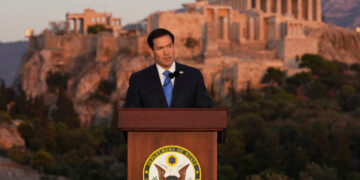
    US Secretary of State Marco Rubio speaks at the Pnyx hill, where ancient Athenians held democratic assemblies, with the ancient Parthenon temple atop the Acropolis in the background, in Athens, Greece October 7, 2026.   Mark Schiefelbein/Pool via REUTERS

    Rubio in Athens: When History Becomes Political Doctrine

    Albanian PM Rama to U.S. Democrats: “Don’t Come to Albania to Take Revenge on Trump”

    Albania’s Top Diplomat Ferit Hoxha at Berlin Process: “EU Enlargement Is a Strategic Investment in Europe’s Security”

    From Pre-Trial Measures to the Presumption of Innocence: What Changes in Albania’s Criminal Procedure Code

  • YOUR VOICE
  • ARGUMENTUM MAGAZINE
  • Shqip
No Result
View All Result
Argumentum
No Result
View All Result
Home ENGLISH

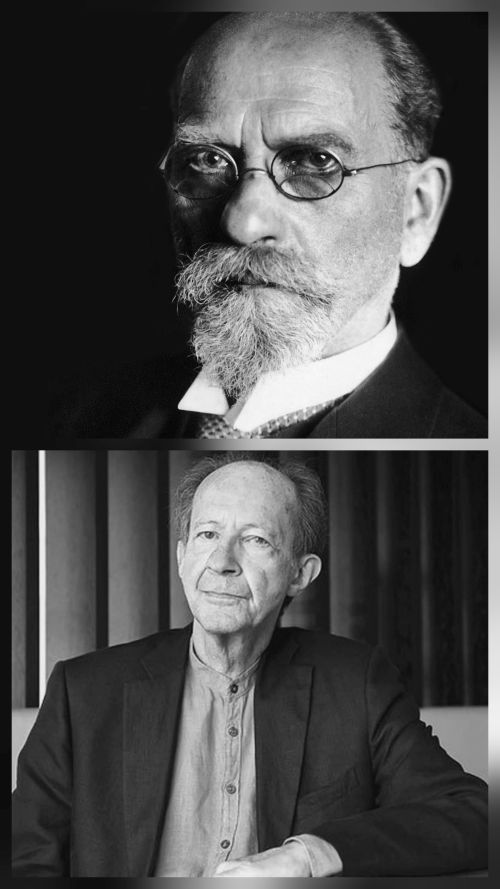
Edmund Husserl and Giorgio Agamben: Europe Between the Idea and the End of History

10 November, 2025
in ENGLISH, English OP/ED
A A
Share on FacebookShare on Twitter

(An Essay on the Spirit of Europe)

By Zlatko Kramarić*|ARGUMENTUM

Abstract
This text examines two philosophical perspectives on Europe: Husserl’s idea of Europe as a spiritual–rational project of universality, and Agamben’s conception of post-historical Europe as a space of the state of exception and biopolitical control. The essay compares Husserl’s vision of the renewal of spirit with Agamben’s diagnosis of the end of the European political and philosophical project, while also incorporating the perspectives of authors who interpret Europe through the experience of the camp and the Holocaust (Améry, Bauman, Arendt). In the tension between the “idea” and the “end,” a new possibility emerges for understanding Europe — not as an empire of reason, but as a community that acknowledges its own fragility and limits.

1. Husserl’s Idea of Europe as a Spiritual Project

When Edmund Husserl delivered his famous 1935 lecture Die Krisis des europäischen Menschentums und die Philosophie in the midst of the European crisis of spirit, his “idea of Europe” was not a geographical concept but a spiritual-historical project. For Husserl, Europe represents a teleological form of the life of the spirit, a continuity of rationality stretching from Greek philosophy to modern science.

This continuity, rooted not in a mere cultural heritage but in a constant striving for universal truth, makes Europe a unique phenomenon in history. Husserl therefore calls for a “return from objectivism to subjectivity” — to that sphere in which the original meaning of truth as the living experience of the world is renewed.

For Husserl, Europe is not a fact but a task — a “spiritual form” that must be continually reflected upon and renewed. The crisis of Europe arises when it forgets its foundation in critical thinking and rational self-awareness, when its science turns into technique and its philosophy into ideology. In this sense, the spirit of Europe is not a legacy but an ongoing obligation to preserve the possibility of universality and truth in a world sinking into relativism and particularisms.
2. Agamben’s Post-Historical Europe

Giorgio Agamben, almost a century later, inherits Husserl’s concern but radically transforms it. In his works — especially Mezzo senza fine and L’uso dei corpi — Europe no longer appears as a project of spirit but as the site of an epochal ending and the failure of political rationality.
While Husserl believed in Europe’s renewal through a return to philosophy, Agamben sees Europe as a laboratory of biopolitical mechanisms that have erased the boundary between life and law, between human being and citizen.

If for Husserl Europe was a metaphysical project of universal rationality, for Agamben it has become a space of the state of exception — a continent that has replaced its spiritual idea with an apparatus of power. He recognizes that European universalism, in its modern forms, often becomes an instrument of exclusion: camps, borders, refugee regimes, security laws. In these, Agamben sees the symptom of what he calls “the post-historical condition of Europe” — where history no longer moves toward an ideal but circulates within endless administrative mechanisms.

3. Europe from the Perspective of the Camp

Agamben’s reflection is not a solitary voice. As Jean Améry wrote in his Essays on the Camp, “European humanism was extinguished in the smoke of the crematoria.” The camp, for him, was the negative epic of Europe — the place where faith in Enlightenment reason and human autonomy vanished.

Similarly, Zygmunt Bauman, in Modernity and the Holocaust, demonstrates that the Holocaust was not an exception but a product of modernity itself — of its rationality, bureaucracy, and organized coldness. In short: a purely administrative act.
Hannah Arendt, in The Origins of Totalitarianism, speaks of “administrative evil,” the moment when rationality separated from conscience. Even Ernst Nolte, from a different standpoint, recognized the camp as a modern form of political violence arising not from barbarism but from the very logic of historical progress.
Thus, the camp becomes the dark mirror of Husserl’s idea of Europe: if for Husserl Europe was the space of universal consciousness, then for Améry and Bauman it became the space of universal dehumanization.

In this reversal, the camp emerges as the antithesis of the European spirit — the site where the limits of rationality and moral self-understanding are exposed. Agamben sees here “the center of the political space of modernity”: the camp is not the past but a paradigm, the architectural and symbolic foundation of a Europe that fears its own history.
Was not the creation of Goli Otok, the Yugoslav labor camp for those who supported the Cominform Resolution, an example of the same mechanism — born of a regime’s fear of its own (criminal) past? “Either we liquidate them, or they will liquidate us!” — the dilemma was banal, the answer radical.

4. Between the Idea and the End

Yet between Husserl and Agamben — between the idea and the camp — there lies an invisible link: both conceive Europe not as an empirical fact but as a spiritual event. For Husserl, it is the event of reason’s self-understanding; for Agamben and Améry, the event of civilization’s self-annihilation.

Husserl’s “idea of Europe” represents the possibility of meaning; Agamben’s “post-Europe” represents the possibility of its end. But precisely within this tension — between spirit and emptiness, memory and forgetting — there opens a space for renewed reflection: can Europe once again find its justification, not as an empire of reason but as a community that recognizes its own fragility?

Perhaps, as Agamben suggests, the only way out of Europe’s crisis is a return to life not reduced to function — to what he calls “pure use.” In this sense, the spirit of Europe might be renewed not through another rational project, but through an ethic of modesty, responsibility, and measure — the very sophrosyne that Greek philosophy, Husserl’s archetype of Europe, once revered.

Epilogue: Europe After the Camp

If the camp was the nadir of European history, then every new Europe — political and spiritual — must think from that depth. Between ashes and ideals, between memory and forgetting, Europe can no longer speak in the tone of grandeur. Its voice must be quiet, aware of its fragility — perhaps even penitential. For we Europeans are not absolved of the capacity for evil.
In a world that has lost metaphysical certainty, Husserl’s idea of Europe can survive only if it embraces Agamben’s lesson: that true spirit is measured not by the magnitude of projects but by the ability to protect what is human in its vulnerability.
Perhaps the new Europe is precisely this — a Europe of remembrance, a Europe of measure, a Europe that has learned to be silent before its camps and to speak only when it finds a language that does not exclude.

Today, Europe stands between Husserl’s idea and Agamben’s prophecy — between the memory of spirit and the experience of its disappearance. And perhaps it is precisely this tension, this irreconcilable space in between, that still makes Europe possible. For, as Husserl warned, its fate depends on the ability to see in crisis not an end, but a challenge — and, despite everything, to reinvent itself as a space of meaning.

In this quieter yet morally deeper space, Europe may still endure — not as a triumph, but as a testimony to the possibility of meaning after the collapse of meaning.

Notes on the Authors

Edmund Husserl (1859–1938) – German philosopher and founder of phenomenology; author of The Crisis of European Sciences and Transcendental Phenomenology.

Giorgio Agamben (b. 1942) – Italian philosopher known for his concepts of homo sacer and the state of exception.

Jean Améry (1912–1978) – writer and essayist, Holocaust survivor, author of At the Mind’s Limits.

Zygmunt Bauman (1925–2017) – Polish-British sociologist, author of Modernity and the Holocaust.

Hannah Arendt (1906–1975) – political philosopher, author of The Origins of Totalitarianism.

*Zlatko Kramarić is a Croatian publicist, author, and diplomat, currently serving as Ambassador to Albania. Formerly a university professor and politician, he is known for his work in literature, cultural studies, and regional history.

/Argumentum.al

© 2025 Argumentum

Related Posts

ENGLISH

Albania above all

19 October, 2026
Current Events

Albanian PM Rama Holds Up Protest Stone: “There Can Be No Negotiation with Violence”

19 October, 2026
Current Events

Albania’s Interior Minister Says Protests Have “Crossed the Red Line” as 295 People Injured in Six Days

19 October, 2026

Follow US

Subscribe

Receive Argumentum Magazine by Email

Last Posts

Albania above all

19 October, 2026

Albanian PM Rama Holds Up Protest Stone: “There Can Be No Negotiation with Violence”

19 October, 2026

Albania’s Interior Minister Says Protests Have “Crossed the Red Line” as 295 People Injured in Six Days

19 October, 2026

Ten Police Officers Injured in Attack on Police Station in Albania’s Capital

18 October, 2026

Albania’s Student Protests Enter Sixth Day as Clashes with Police Intensify; Rama Rules Out Resignation

18 October, 2026
Argumentum

“Argumentum”, një proces intelektual …

Contact Us

[email protected]
[email protected]
[email protected]

Follow Us

Media Partner

Register

Receive Argumentum Magazine by Email
  • Home
  • Privacy Policy
  • About Us
  • Contact

© 2022 Argumentum. All Rights Reserved. | NUIS: L91415033Q

Welcome Back!

Login to your account below

Forgotten Password?

Retrieve your password

Please enter your username or email address to reset your password.

Log In

Add New Playlist

No Result
View All Result
  • Home
  • OP/ED
  • Interview
  • Realpolitik
  • Current Events
  • Top News
  • YOUR VOICE
  • ARGUMENTUM MAGAZINE
  • Shqip

© 2022 Argumentum. All Rights Reserved. | NUIS: L91415033Q

This website uses cookies. By continuing to use this website you are giving consent to cookies being used. Visit our Privacy and Cookie Policy.