








• SHQIPËRI
  • KOSOVË
  • MAQEDONIA E VERIUT
  • MALI I ZI
  • Revista në PDF
2 September, 2026
 
  • Home
  • OP/ED

    The Reconfiguration of Maritime Governance: Structural Hegemonic Decline and the Arctic Pivot

    Between Political Calculation and Retreat: Croatian Communists at the End of an Era

    The West is buying time, but to whom is it giving it?

    27 July 1941 – A Site of Memory Between War, Revolution and Europe

    The cult of Saint Veneranda / Saint Pren(d)a / Saint Premte / Saint Paraskeva among Albanians

    The Self-Inflicted Decoupling: How U.S. Immigration Policy Is Ceding the Tech Edge to China

    The Blueprint Does Not Stop at the Drina

    The Underlying Logic behind China’s Economic Success

    Do Not Misuse the U.S. Declaration of Independence to Justify the Narrative of Insurrection in Albania

  • Interview

    Exclusive Interview with Oleksandr Tyshchenko: A 40-Year Legacy of Chernobyl, Nuclear Risks, and Global Responsibility

    INTERVIEW: ZLATKO KRAMARIĆ – THOUGHTS ON THE OLD CONTINENT

    EXCLUSIVE / Ukrainian Ambassador to Albania, Volodymyr Shkurov: “Ukraine wants peace, but not at the expense of its freedom and independence”

    EXCLUSIVE| Ambassador Tayyar Kagan Atay: Türkiye and Albania, a Strategic Partnership Rooted in Shared Heritage and a Common Vision for the Future

    “Diplomacy, Not War”: Palestinian Ambassador to Albania Calls for Justice, Peace, and Global Action for Gaza

    Exclusive: “Even After Tito – Tito”/ Ambassador Zlatko Kramarić on Authoritarian Legacies and Democracy’s Future in the Balkans

    The Conclusion of the Diplomatic Mission / Ambassador Dancho Markovski: Strengthening Albania-North Macedonia Relations for a Shared European Future

    A Century of Diplomatic Relations Between Albania and Russia: Exclusive Interview with the Russian Ambassador to Albania, H.E. Alexey Zaytsev

    Exclusive/ The chairman of the Freedom Party, Ilir Meta: “The will of the citizens will triumph in Albania, as it did in North Macedonia”

  • Realpolitik

    Belgrade, Zelensky and the Consulates! The European Pact takes water! Drone in Leipzig and hybrid war! Why a  ceasefire is needed in September

    The Summit of Unity! Think of peace and prepare for war! It’s only the start to the end! Just a pause between two wars!

    Peace with war diplomacy! The protest,  image and tourism! Why this silence from the EU Commission and Council? A deal or a pause?

    Just kind words  in Tivat! Where is the peace!? A deal yes, peace No!What is happening with USA and  EU?  5 elections but no solution!

    IBAR? ”Sufficiently! Much ado about nothing! Shart contrasts in Beijing! Where is the exit?!

    Neither peace nor war! Peace with bombs?! IBAR in autumn?! Not another Hormuz in Taivan! 

    IBAR – a springing board or an obstacle? Can we catch the EU Negotiation train 2027? When the dress makes the news!  EU electoral April  ends in a draw 1:1!  

    The European Parliament building in Strasbourg, France with flags waving calmly celebrating peace of the Europe. July 12, 2020.

    EU 2027 or 2037! Even half membership failed! No exit strategy!     

    What next?

  • Current Events

    Albanian Opposition Leader Sali Berisha to Return to U.S. Five Years After Entry Ban

    Bekim Sejdiu Named Consensus Candidate for Kosovo Presidency

    President Begaj Receives New Dutch Ambassador Marleen Monster

    Albania on Alert: Bomb Threats Target Several Institutions

    Belgium Opens First-Ever Embassy in Tirana, Strengthening Bilateral Ties

    MEFA: Albania Successfully Repatriates Five Citizens, Including Women and Children, from Syria

    Hoxha: A Modern Diplomacy for a European Albania

    The Delayed Awakening: Realpolitik and the Structural Causes of European Stagnation

    Democracy Cannot Be Governed by Noise

  • Top News

    Albania Plans Distribution of 17,000 Textbooks to Albanian Diaspora for 2026–2027 School Year

    Belgium Opens First-Ever Embassy in Tirana, Strengthening Bilateral Ties

    US Launches Economic Offensive Against Iran, Bessent Warns Countries to Cut Tehran’s Lifelines

    Rama, Vučić, Zelensky: Where Is Albania’s National Interest?

    Council of Albanian Ambassadors Raises Concern Over Serbian Plan to Alter the Ibër River

    Rama: Foreign Information Manipulation Has Become One of the Greatest Threats to Democracy and European Security

    The Council of Albanian Ambassadors condemns chauvinistic rhetoric by Serbian officials and calls for diplomatic action

    NATO at Ankara 2026: Strategic Rebalancing Between Russia Deterrence, Turkey’s Rise, and National Interests

    Daniel Serwer: A Bad War Ending Badly May Still Be Good News

  • YOUR VOICE
  • ARGUMENTUM MAGAZINE
  • Shqip
No Result
View All Result
Argumentum
  • Home
  • OP/ED

    The Reconfiguration of Maritime Governance: Structural Hegemonic Decline and the Arctic Pivot

    Between Political Calculation and Retreat: Croatian Communists at the End of an Era

    The West is buying time, but to whom is it giving it?

    27 July 1941 – A Site of Memory Between War, Revolution and Europe

    The cult of Saint Veneranda / Saint Pren(d)a / Saint Premte / Saint Paraskeva among Albanians

    The Self-Inflicted Decoupling: How U.S. Immigration Policy Is Ceding the Tech Edge to China

    The Blueprint Does Not Stop at the Drina

    The Underlying Logic behind China’s Economic Success

    Do Not Misuse the U.S. Declaration of Independence to Justify the Narrative of Insurrection in Albania

  • Interview

    Exclusive Interview with Oleksandr Tyshchenko: A 40-Year Legacy of Chernobyl, Nuclear Risks, and Global Responsibility

    INTERVIEW: ZLATKO KRAMARIĆ – THOUGHTS ON THE OLD CONTINENT

    EXCLUSIVE / Ukrainian Ambassador to Albania, Volodymyr Shkurov: “Ukraine wants peace, but not at the expense of its freedom and independence”

    EXCLUSIVE| Ambassador Tayyar Kagan Atay: Türkiye and Albania, a Strategic Partnership Rooted in Shared Heritage and a Common Vision for the Future

    “Diplomacy, Not War”: Palestinian Ambassador to Albania Calls for Justice, Peace, and Global Action for Gaza

    Exclusive: “Even After Tito – Tito”/ Ambassador Zlatko Kramarić on Authoritarian Legacies and Democracy’s Future in the Balkans

    The Conclusion of the Diplomatic Mission / Ambassador Dancho Markovski: Strengthening Albania-North Macedonia Relations for a Shared European Future

    A Century of Diplomatic Relations Between Albania and Russia: Exclusive Interview with the Russian Ambassador to Albania, H.E. Alexey Zaytsev

    Exclusive/ The chairman of the Freedom Party, Ilir Meta: “The will of the citizens will triumph in Albania, as it did in North Macedonia”

  • Realpolitik

    Belgrade, Zelensky and the Consulates! The European Pact takes water! Drone in Leipzig and hybrid war! Why a  ceasefire is needed in September

    The Summit of Unity! Think of peace and prepare for war! It’s only the start to the end! Just a pause between two wars!

    Peace with war diplomacy! The protest,  image and tourism! Why this silence from the EU Commission and Council? A deal or a pause?

    Just kind words  in Tivat! Where is the peace!? A deal yes, peace No!What is happening with USA and  EU?  5 elections but no solution!

    IBAR? ”Sufficiently! Much ado about nothing! Shart contrasts in Beijing! Where is the exit?!

    Neither peace nor war! Peace with bombs?! IBAR in autumn?! Not another Hormuz in Taivan! 

    IBAR – a springing board or an obstacle? Can we catch the EU Negotiation train 2027? When the dress makes the news!  EU electoral April  ends in a draw 1:1!  

    The European Parliament building in Strasbourg, France with flags waving calmly celebrating peace of the Europe. July 12, 2020.

    EU 2027 or 2037! Even half membership failed! No exit strategy!     

    What next?

  • Current Events

    Albanian Opposition Leader Sali Berisha to Return to U.S. Five Years After Entry Ban

    Bekim Sejdiu Named Consensus Candidate for Kosovo Presidency

    President Begaj Receives New Dutch Ambassador Marleen Monster

    Albania on Alert: Bomb Threats Target Several Institutions

    Belgium Opens First-Ever Embassy in Tirana, Strengthening Bilateral Ties

    MEFA: Albania Successfully Repatriates Five Citizens, Including Women and Children, from Syria

    Hoxha: A Modern Diplomacy for a European Albania

    The Delayed Awakening: Realpolitik and the Structural Causes of European Stagnation

    Democracy Cannot Be Governed by Noise

  • Top News

    Albania Plans Distribution of 17,000 Textbooks to Albanian Diaspora for 2026–2027 School Year

    Belgium Opens First-Ever Embassy in Tirana, Strengthening Bilateral Ties

    US Launches Economic Offensive Against Iran, Bessent Warns Countries to Cut Tehran’s Lifelines

    Rama, Vučić, Zelensky: Where Is Albania’s National Interest?

    Council of Albanian Ambassadors Raises Concern Over Serbian Plan to Alter the Ibër River

    Rama: Foreign Information Manipulation Has Become One of the Greatest Threats to Democracy and European Security

    The Council of Albanian Ambassadors condemns chauvinistic rhetoric by Serbian officials and calls for diplomatic action

    NATO at Ankara 2026: Strategic Rebalancing Between Russia Deterrence, Turkey’s Rise, and National Interests

    Daniel Serwer: A Bad War Ending Badly May Still Be Good News

  • YOUR VOICE
  • ARGUMENTUM MAGAZINE
  • Shqip
No Result
View All Result
Argumentum
No Result
View All Result
Home ENGLISH

Symbolic Reform Without Substance: Renaming Communist Parties in Eastern Europe as a Failed Transition to Social Democracy

17 November, 2025
in ENGLISH, English OP/ED
A A
Share on FacebookShare on Twitter

Zlatko Kramarić*|ARGUMENTUM

1. Introduction

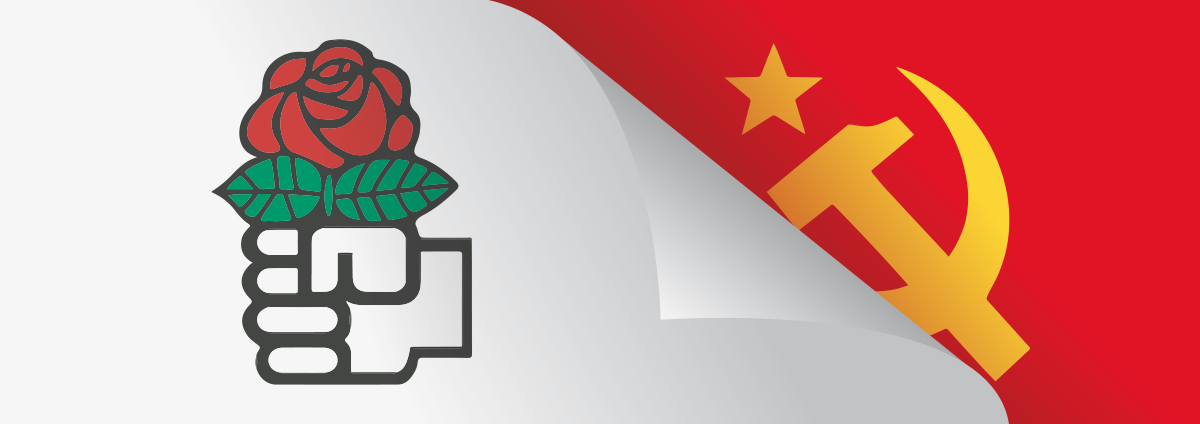
Across Eastern Europe—and notably within the former Yugoslavia—the early 1990s brought a wave of rebranding in which communist parties adopted the name and vocabulary of social democracy. The assumption was that a change in nomenclature would signal a break with Leninist organizational norms and announce the arrival of democratic pluralism. Yet these transformations were, in most cases, purely nominal: a symbolic gesture toward Europe rather than evidence of a substantive ideological shift.

This essay offers a critical analysis of those processes, with special attention to Yugoslav successor states and the distinctive Albanian case. By combining a theoretical framework rooted in sociolinguistics and symbolic power (Labov, Fishman, Bourdieu) with a historical overview of earlier party renamings in socialist and post-socialist contexts, the text argues that these renamings largely failed to deliver democratic renewal. Instead, they contributed to subsequent political marginalization of the renamed parties and the rise of ad hoc political movements across the region.

2. Theoretical Framework: Language, Symbolic Power, and Political Legitimacy

2.1. William Labov: the politics of linguistic shifts

Labov’s work on language change emphasises that linguistic innovation gains legitimacy only when supported by authentic community practice. Applied to politics, a party name—like any symbolic linguistic marker—cannot produce legitimacy if it contradicts real behaviour. Renaming a communist party “social democratic” without changing its internal culture or political habitus represents, in Labov’s terms, a prestige claim without a prestige source.

2.2. Joshua Fishman: language, identity, and functional domains

Fishman’s theory of functional domains explains why linguistic labels must correspond to the social roles institutions actually perform. If a party continues to operate within a one-party logic (centralism, informal hierarchies, ideological rigidity), the domain shift implied by a new name (“social democratic”) collapses. The result is functional incongruence: a mismatch between self-description and real social roles.

2.3. Pierre Bourdieu: symbolic capital, habitus, and misrecognition

Bourdieu’s concept of symbolic power is essential for understanding these renamings. For him, institutional labels work only when supported by social practices that reproduce the symbolic capital they claim. In much of post-communist Europe, renaming was a form of political misrecognition: an attempt to accumulate symbolic capital (Europeanism, democratic credibility) without altering the party habitus formed under communism.

Thus, the renamings were performative acts that lacked performative force.

3. Historical Overview: Renamings Before and After 1989

3.1. Earlier precedents under state socialism

Renaming ruling parties was not new. After the Cominform crisis (1948), Yugoslavia renamed the Communist Party of Yugoslavia into the League of Communists—a manoeuvre meant to distance itself from Stalinism without genuine democratization. Similarly, in the GDR and Poland, linguistic recalibrations were used to mask continuity.

Thus, 1990 was not a moment of rupture, but rather the continuation of a long-standing communist technique: symbolic adaptation to preserve power.

3.2. The 1990s: Yugoslav successor states and the promise of social democracy

In Slovenia, Croatia, Serbia, Montenegro, North Macedonia, and Bosnia and Herzegovina, the ex-communist parties adopted the label “social democratic,” “socialist,” or “social democratic reformist,” hoping to align themselves with European social democracy (SPD, Labour, SAP). However, unlike Western social democratic parties—rooted in labour movements, civic negotiation cultures, and parliamentary pluralism—post-Yugoslav parties lacked:

-internal democracy

-programmatic renewal

-clear ideological realignment

-credible break with past authoritarian practices

The result was a structural deficit of authenticity.

3.3. The Albanian exception

Albania is unique: its ruling Party of Labour was renamed Socialist Party in 1991, but—unlike in the Yugoslav region—the name change was followed by a gradual transformation of internal culture and political organisation. The Albanian Socialist Party (under Nano, then Rama) slowly built a new symbolic and programmatic identity.

Hence, Albania is the regional outlier: four consecutive electoral victories testify that its renaming was not merely symbolic.

4. Political Consequences: Crisis of Trust and the Rise of New Movements

4.1. Why the renamed parties failed

In most post-Yugoslav states, the rebranded former communist parties increasingly suffered electoral decline. The reasons correlate directly with the symbolic nature of the reforms:

Lack of ideological coherence (they invoked social democracy while continuing technocratic or clientelist practices).

Absence of internal democratization (elite continuity and tightly controlled leadership structures).

Inability to articulate a credible reformist vision distinct from nationalist or neoliberal alternatives.

Your central hypothesis is confirmed by the regional pattern: these parties lost because voters gradually recognised the renamings as symbolic manipulations rather than genuine ideological transformations.

4.2. The emergence of ad hoc political movements

This vacuum enabled the rise of new, loosely structured political forces—civic, green, anti-corruption, or activist-based. The Croatian case (Možemo!) is emblematic: a movement that arose precisely because classical “social democrats” failed to embody social democratic values.

Similar phenomena can be observed in Serbia (Ne davimo Beograd / Zajedno), Slovenia (Levica), and North Macedonia (civil society-based political coalitions).

These movements are a direct symptom of the failure of the renamed communist parties to reinvent themselves credibly.

5. Conclusion: Renaming Without Reform as a Failed Post-Communist Strategy

The renamings of communist parties into “social democratic” or “socialist” parties in Eastern Europe and the former Yugoslavia were overwhelmingly symbolic gestures, not substantive ideological transformations.

Using Labov, Fishman, and Bourdieu, we can conclude that:

Linguistic signals cannot produce legitimacy without corresponding practices.

Institutional self-definition must match functional reality.

Symbolic capital cannot be acquired by fiat.

The political consequences were profound: while Albania stands as a partial exception, most renamed parties in the region have been electorally weakened or displaced, opening the field for ad hoc, activist, or NGO-based movements that better captured the democratic and social aspirations once associated with genuine social democracy.

In this sense, the renaming strategy—intended as a shortcut to legitimacy—produced the opposite outcome: a deep crisis of trust that still shapes the political landscape of post-communist Europe.

*Zlatko Kramarić is a Croatian publicist, author, and diplomat, currently serving as Ambassador to Albania. Formerly a university professor and politician, he is known for his work in literature, cultural studies, and regional history.

/Argumentum.al

© 2025 Argumentum

Related Posts

Current Events

Albanian Opposition Leader Sali Berisha to Return to U.S. Five Years After Entry Ban

1 September, 2026
ENGLISH

The Illyrians, Skanderbeg and Religion: Anatomy of an Identity War

1 September, 2026
ENGLISH

Council of Albanian Ambassadors, supports the candidacy of Ambassador Bekim Sejdiu for President of the Republic of Kosova.

31 August, 2026

Follow US

Subscribe

Receive Argumentum Magazine by Email

Last Posts

Albanian Opposition Leader Sali Berisha to Return to U.S. Five Years After Entry Ban

1 September, 2026

The Illyrians, Skanderbeg and Religion: Anatomy of an Identity War

1 September, 2026

Council of Albanian Ambassadors, supports the candidacy of Ambassador Bekim Sejdiu for President of the Republic of Kosova.

31 August, 2026

Bekim Sejdiu Named Consensus Candidate for Kosovo Presidency

31 August, 2026

Germany Reacts to Iceland’s Rejection of EU Talks: “The EU Must Become More Attractive”

31 August, 2026
Argumentum

“Argumentum”, një proces intelektual …

Contact Us

[email protected]
[email protected]
[email protected]

Follow Us

Media Partner

Register

Receive Argumentum Magazine by Email
  • Home
  • Privacy Policy
  • About Us
  • Contact

© 2022 Argumentum. All Rights Reserved. | NUIS: L91415033Q

Welcome Back!

Login to your account below

Forgotten Password?

Retrieve your password

Please enter your username or email address to reset your password.

Log In

Add New Playlist

No Result
View All Result
  • Home
  • OP/ED
  • Interview
  • Realpolitik
  • Current Events
  • Top News
  • YOUR VOICE
  • ARGUMENTUM MAGAZINE
  • Shqip

© 2022 Argumentum. All Rights Reserved. | NUIS: L91415033Q

This website uses cookies. By continuing to use this website you are giving consent to cookies being used. Visit our Privacy and Cookie Policy.