







*By Altin Gjeta
The relationship of the internationals, namely, the western powers with Kosovo is not new and barely linear.
Kosovo was one of the four predominantly ethnic-Albanian populated provinces (vilajet of Kosovo) under the Ottoman Empire for many centuries. And when the Empire collapsed in the beginning of the 20th century, Albanian leaders declared independence in historical lands including Kosovo.
Yet, great power politics of the time outmanoeuvred Albanians’ determination to have their independent nation-state governing all Albanian inhabited lands. The nascent and weak Albanian state was put under international supervision at the 1913 London Ambassadors’ Conference, while Kosovo and other parts of Albanian populated territories were carved out to please its neighbours’ ambitions.
So, Kosovo was annexed by Serbia and for almost a century remained under its rule. There was systematic oppression of Kosovo Albanians, mass expulsion, imprisonment and torture. Though, their status was improved a bit under the 1974 Yugoslavia’s Constitution, giving Kosovo the status of an autonomous province within Serbia, Milosevic stripped Kosovo off its autonomous status in 1989 and completely disenfranchised Kosovo Albanians. They were expelled from public administration, Serbia’s special police force increased its foothold in the province, and Albanian leaders were arrested for demonstrating for national and human rights. While this happened, the international community was busy dealing with the end of Cold War, the war in Croatia and then with terrible events in Srebrenica.
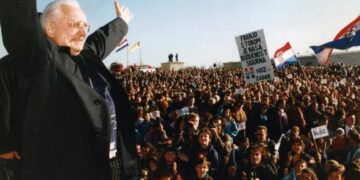
The non-violent movement led by Ibrahim Rugova in the beginning of the 1990s had drawn some diplomatic attention is some western quarters (the 1992 Christmas warning of the U.S President Bush). Nonetheless, having seen Kosovo excluded from Dayton Talks in 1995 there was a realisation in Kosovo that peaceful resistance was not paying off as expected.
Serbia’s grip over Kosovo was getting tighter and tighter, particularly after military and political catastrophe in Bosnia. The economic situation was also unbearable; unemployment was at the staggering figure of 80%, education and health care services were provided by parallel structures funded by Albanian diaspora.
In the meantime, Serbian special police increased violence over the civilian population. Kosovo Albanians were living under an apartheid-like regime.
Under these dire situation emerged the KLA which started attacking Serbian militia and committing sabotage acts. The fighting intensified in 1997 leading to 1998. In January 1998 Serbia moved the army to crush the Albanian resistance in Kosovo. So, within a year an all out war broke out, and Milosevic’s forces expelled roughly one million Albanians from Kosovo.
Civilian population was targeted with the view of ethnically cleansing Kosovo. Yet, the internationals were still committed to respecting Yugoslavia’s territorial integrity and sought diplomatic solutions, sending Holbrooke and other western diplomats to talk to Milosevic. Holbrook was particularly adamant in finding a solution with Milosevic, partly because there was a power struggle between him and Secretary of State Albright.
But things were spiralling downwards in Kosovo. In January 1999 the OSCE observing mission discovered 45 massacred bodies of children, women and elderly in the village of Recak. It all became clear to the western powers that genocide was under way in Kosovo. A second Srebrenica-like genocide would bury completely the credibility and moral supremacy the West was claiming back at the time.
However, there was a last diplomatic dich to turn Serbia round in February-March in Ramboullet. As we all know, thanks god Milosevic rejected the Ramboullet agreement, while Kosovo Albanian leaders agreed to it half-heartedly but sufficient to trigger Nato’s ariel campaign to end atrocities in Kosovo. Following this, a NATO-led peacekeeping force was put on the ground and Kosovo was put under the UN administration. The future status question would be decided in the foreseeable future within three years according to the 1244 UN resolution.
Nato’s intervention and UN administration started a new chapter in internationals’ engagement with Kosovo. The western powers realised that there would be no peace in the Balkans unless Kosovo’s final statues would be solved. In addition, the West was at the peak of its moral and military power; so, it wanted to project Kosovo to the world as a success story of international peace and state building. This became more acute after humiliating failures in Bosnia and subsequent fiasco in Afghanistan and Iraq.
Thereby, in Kosovo, the West indulged itself in hubris and pragmatism at the same time. This is how the Ahtisaari Process came into being. In 2005 SG of UN appointed late Marty Ahtisaari as its special envoy for Kosovo’s final status talks. Talks lasted two years and it was shuttle diplomacy combined with intra-party negotiations in Vienna. The idea was to reach at a mutually accepted settlement between Kosovo and Serbia.
It is important to note that the Ahtisaari Process took place in a different world. The US was at the helm of the international order, Russia was still leaking its wounds from collapse the Soviet Union, and China had just started its quite rise.
Yet, though Russia initially engaged constructively in the Ahtisaari-led talks and was even willing to support a settlement agreed by Belgrade as one UK former diplomat confessed to me, by the beginning of 2007 it became clear that Russian by-in strategy was not going to work. Although Russia dropped out, the West had set a clear end game for the Ahtisaari Process: Kosovo’s independence. The Contact’s Group guiding principles and SG terms of reference for Ahtisaari clearly indicate this. In addition, the UN envoy told Albanians that independence was already cooked up for Kosovo.
Ahtisaari talks centred on protection of minority rights, particularly concerning Kosovo Serbs. However, this did not convince Serbia to come to an agreement short of having Kosovo part of its territory. Kosovo Albanian delegation saw extensive minority rights for Kosovo Serbs as a painful concession in return for statehood.
Nonetheless, Ahtisaari went ahead with the Proposal, recommending independence as the only viable alternative for Kosovo, peace and security in the region. This opened the way to Kosovo’s declaration of independence.
Ahtisaari was not only a capable diplomat that carefully crafted a document that stewarded Kosovo toward independence (with all its shortcomings). He had the support of the western powers, particularly of the US and UK. I have seen UN archives recently and, in every diplomatic cable between Ahtisaari and SG of the UN or Security Council meetings, the US and UK representatives made the case for Kosovo’s independence as the only viable solution to the conflict.
This Process, with all its shortcomings, at the end of the day delivered Kosovo’s independence. Could that have happened earlier while Russia and China were still weak and the Ahisaari Plan get the blessing of the Security Council? With Russia taken out and China still weak, the Ahtisaari Process would have potentially rendered Kosovo a finished business in beginning of the 2000s.
Yet, though late, it did create a state in Kosovo. But as we know, it did not square the circle. Serbia did not accept it, Russia and China as permanent UNSC either. And Serbian-funded parallel structures created a black hole in term of state authority in the North, while Kosovo got recognised by many states, it struggled to get into international bodies like UN.
So Kosovo remained contested both internally and externally. This forced Prishtina to renegotiate its statehood within the EU facilitated dialogue which started in 2011 initially at the technical level and then moved up to high political stakes.
But this has always been Serbia’s strategy; putting off a final solution and keeping Kosovo in limbo.
As one US former diplomat put it, constantly talking about Kosovo’s status without finding a final resolution has always been Serbia’s strategy to preserve the status quo in Kosovo untill things turn around in favour of Serbia.
Did Kosovo have any other choice and reject engaging with the EU dialogue? It seems it did not. There was a UN resolution Kosovo could not ignore. What is more, Kosovo wanted to bring the North under its authority and advance its statehood internationally.
Though there was ostensibly some progress on the technical level, I think the EU dialogue re-opened the question of Kosovo’s statehood. At least it partially did. The Brussels agreements envisaged and were obsessed with the establishment of an Association of Serb majority municipalities in Kosovo. This did not only collapse the talks but renegotiated the Ahtisaari Plan which did not foresee more entrenched territorial self-government rights for Kosovo Serbs. In a confidential note sent to the Secretary General of the UN in 2007 Ahtisaari said that the current decentralisation arrangement is already on the edge and may endanger the viability of the state.
However, the EU pushed Kosovo towards an Ahtisaari Plus package with the ASM. In addition, the EU dialogue engineered Serbian List in Kosovo. It was seen as tool in integrating Kosovo Serbs within Kosovo’s system. Yet, Serbian List undermined Kosovo’s institutions, particularly in the North. And Kosovo Serbs are hijacked by Serbian List and squeezed between different loyalties.
Therefore, the international community led by the EU brough Belgrade into discussion around Kosovo’s sovereignty hoping to find a lasting solution. But it lacked vision. Brussels agreements’ provisions are ambiguous least to say, lack implementing mechanisms and most importantly do not set a final objective; what does it want to achieve?
Normalisation has been short of transformation, and we have seen break down of the dialogue even on marginal issues such as license plates. There have been disagreements related to the sequencing of the implementation. But while Kosovo has been sanctioned for failing to implement the ASM, Serbia has walked free even after the Banska attack in September 2023.
The Ahtisaari Process delivered Kosovo’s independence. The EU dialogue has not been able to finish the business. Kosovo remains contested both internally by Kosovo Serbs, and externally ironically even by 5 EU countries. Finally, the Ahtisaari Process got Serbia out of Kosovo, while the EU dialogue brought it back, tying the fate of Kosovo’s Euro-Atlantic integration and internal sovereignty to Serbia’s will.
So, what sets the Ahtisaari Process apart from the EU Dialogue?
Contrary to the Ahtisaari Process, the EU dialogue has been managed instability of the conflict. In other words, the EU takeover in Kosovo-Serbia relations as I said has been centred on management not transformation of the conflict.
The EU dialogue ended up into a never-ending process with no clearly set outcome. In contrast, in the Ahtisaari Process the West set an overarching goal since its inception: Kosovo’s independence, with clear guidelines and walked towards it in a confident and determined way.
The Ahtisaari Process was quite centralised and effective. The EU has been marred by differences within its ranks: 5 members do not recognise Kosovo, limiting its ability to show credibility and power.
The Ahtisaari Process was UN-led and backed by the US and UK at a time of unipolarity, while the EU dialogue has been bumpy and undergone many geopolitical turbulences.
It seems that the western powers shifted from unilaterally supporting Kosovo to exerting more pressure on Prishtina.So, what changed in their posture towards Kosovo?
First, after the technical dialogue, the US did not show interest in the EU dialogue. Pivoting towards Asia, the US almost exited Kosovo. This left EU exposed to the lack of leadership and unity.
Second, there has been a feeling within some circles in the West that Kosovo was given independence. So, some western diplomats would argue – it is time for Kosovo to give something back to Serbia. Therefore, western powers increased pressure on Kosovo to compromise regardless of its concerns or views. The dialogue was always about Kosovo as a way of treating Serbia’s Kosovo syndrome.
Third,Kosovo seems to me, it’s not anymore, the darling of the West. In a transactional, multipolar international order, when the US has turned more inwards and liberal interventionism has run out of steam, Kosovo has lost the symbolic value for the West. It does not matter anymore as it used to.
There is no doubt that Kosovo won’t go back where it was, but it has to complete the final stretches towards a fully-fledged state, internationally recognised and internally stable. Getting into the UN, NATO and EU on the one hand, and integrating Kosovo Serbs within its legal framework will ultimately solve the remaining questions of statehood. But, in an insecure world, these final steps will require Kosovo resilience and taught decisions.
To conclude, what I have been trying to argue here is that politics change, interests change and alliances alter. The good momentum to fully complete Kosovo’s statehood in 2000s, I think unfortunately, was missed.
What Kosovo is left now, is uncertainty. Nonetheless, I don’t want to end my talk on a negative note. I think Kosovo has shown in the past that it is able to overcome greater challenges. And it will successfully navigate the current constraints because Kosovo is young, hopeful and determined to build a brighter future.
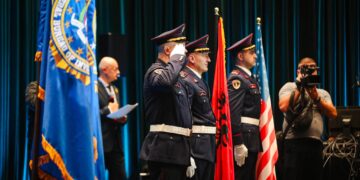
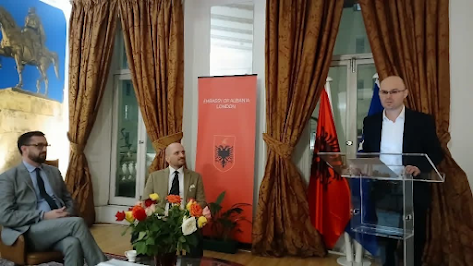
* Talk delivered at the event organised jointly by the Embassies of Albania and Kosovo in London celebrating the 18th anniversary of Kosovo’s independence.
© 2026 Argumentum