












































By Dr. Zlatko Kramarić| ARGUMENTUM
Ambassador of Croatia to Albania
Introduction: Benjamin and the History of the Defeated
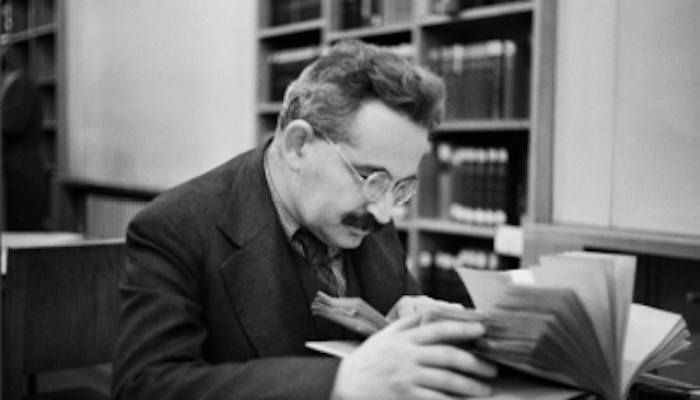
Walter Benjamin (1892–1940), in his philosophy of history, offers a radical critique of the linear idea of progress. For him, history is not a chronicle of the victors, but a space in which the voice of the defeated is always hidden. In his famous Ninth Thesis on the Philosophy of History, Benjamin writes: “Where we perceive a chain of events, he sees one single catastrophe which keeps piling wreckage upon wreckage.”
This visual and metaphysical insight forms the foundation of his interpretation of the European spirit: Europe is not a beacon of progress, but a continent that, through its own delusions, accumulates ruins.
Applying this perspective to Croatian history enables a deeper understanding of the phenomenon of a small nation within a large Europe. Croatian ruins—political, cultural, and moral—are not merely local tragedies but reflections of the European logic of historical violence and oblivion. Benjamin helps us see how universal European phenomena and local tragedies intertwine throughout Croatian history, and how the “history of the defeated” becomes a moral and spiritual imperative.
If Croatian history were viewed through the eyes of this philosopher, it would appear as a long, tragic chain of ruins—a sequence of defeats that the victors tirelessly transform into myths, while the true losers—people, ideas, and cities (Vukovar, Španovica, Zrin…)—sink into oblivion. Croatian history, read through Benjamin’s perspective, becomes a European parable: the fate of a small nation caught between empires and ideologies, between centers of power and its own moral dilemmas, between the desire to belong to Europe and the relentless geographical proximity of the Balkans.
Benjamin would say that Croatian history unfolds “under the sign of catastrophe”—not because it is uniquely tragic, but because it clearly demonstrates how European history functions when it ceases to be universal and becomes purely ideological. In this sense, Croatia is one of the places where Europe reveals itself: its limits, its illusions, and its unfinished ideas.
1. The End of Austria-Hungary: Ruins of a Central European Cosmopolitan Vision
For Benjamin, every epoch carries within it the sign of its own downfall, and it is precisely at the moment of triumph that its fragility becomes most visible. Such a moment was the collapse of the Austro-Hungarian Monarchy, which simultaneously marks the beginning of modern Croatia.
This collapse was not merely a political event but a catastrophe of spirit. With it disappeared an entire vision of Central European cosmopolitan culture—the world in which Zagreb, Vienna, Budapest, and Prague shared a common cultural language, a world in which Europe seemed synonymous with diversity and order.
Benjamin would not have seen this catastrophe simply as a “necessary historical development.” Instead, he would recognize it as a tragic rupture of continuity—a moment in which the aura of an entire civilization collapsed. Everything that followed—the creation of nation-states, ideological polarization, wars—did not represent progress but rather a prolonged agony.
Croatia, as an heir to the lost empire, became a typical space of Benjamin’s “history of the defeated”: never a victor, always on the margins, condemned to live between myths of greatness and the reality of defeat.
In this sense, the Croatian experience of 1918 closely resembles Benjamin’s concept of Jetztzeit—the moment when time fractures and the past and present flash together in a sudden constellation. That moment was not liberation but the discovery of vulnerability: through Croatia’s fate, Europe realized that modernity could collapse from within. This moment would define the entire twentieth century, shaping the moral and political dilemmas later manifested in wars and irreconcilable ideological divisions.
2. Between Berlin and Moscow: War as a Theological Drama
During the Second World War, Croatia was paradoxically both with Berlin and Moscow—and against them. The Ustaša and Partisan movements, though mutually destructive, shared the same modernist illusion: faith in historical necessity and in an ideological project promising redemption.
Benjamin would recognize this as a secularized form of theology—what he described as the “messianic violence” of history.
The Ustaša project was a radical appropriation of the myth of the nation, while the Partisan movement believed in messianic redemption through revolution. Both served, in Benjamin’s terms, the religion of progress, which demands sacrifices and justifies violence.
Thus the Croatian wartime experience cannot be divided simply into “right” and “wrong” sides—because both sides, each in its own way, were caught in Benjamin’s “storm of history.”
If the Angel of History were looking at Zagreb, Jasenovac, Bleiburg, or Goli Otok, it would see exactly what Benjamin described: a single catastrophe continually piling ruins upon ruins. Yet within these ruins lies what Benjamin called the “spark of insight”—the possibility of recognizing a moral truth that fits into no myth.
3. Partisan Modernity and the Socialist Myth of Progress
Post-war Yugoslavia continued the same logic of historical messianism, only with altered symbols. The Titoist project was, in Benjamin’s sense, an apotheosis of progress—the conviction that history could be completed through revolution and that modernity could be achieved by political will.
Yet Benjamin teaches that precisely at the moment of triumph—when “history moves forward”—illusion is most deeply present.
Yugoslav socialism, with its myths of brotherhood, industrialization, and the new man, was a variant of the European theology of history: the belief that the past could be forgotten and that a new civilization could be built through planning and discipline.
In reality, however, this meant the systematic erasure of Benjamin’s “defeated”—those who suffered without the right to a monument, those who disappeared into the “forgotten layers” of history.
Croatia within this paradigm remained divided: between the need for memory and the imperative of forgetting, between melancholy and ideological optimism. Benjamin would say that here “time has stopped”—that the Angel of History is trapped between ideology and memory, between the socialist myth and moral insight.
4. 1991 and a New Ruin: The Continuity of Catastrophe
Benjamin would view Croatian independence in 1991 not as final liberation, but as yet another attempt at redemption through history—another myth of a new beginning.
The collapse of Yugoslavia, with its wars, crimes, and new borders, shows that Benjamin’s “wind of progress” has not yet calmed. It blows from paradise, while Europe—and Croatia with it—still believes it is moving forward.
In reality, what was called a “return to Europe” occurred precisely at the moment when Europe had lost its own soul—when it had become primarily an economic project rather than a spiritual one.
Croatia entered this Europe as a country of memory without remembrance, with a political culture that still struggles to distinguish defeat from victory.
Benjamin would call this the “forgetfulness of the angel”—a moment when history repeats itself because no one wishes to look at the ruins anymore. Croatian transition, with its moral confusions and selective memory, bears witness to the absence of Benjamin’s “theological consciousness of the defeated.”
5. The History of the Defeated: Benjamin’s Ethics of Memory
Benjamin’s central demand—that history must be written in the name of the defeated—becomes in the Croatian context a profound ethical question.
Who are the defeated in Croatian history? Are they the Austro-Hungarian modernists who believed in Central European cultural continuity?
The civic elites who disappeared in ideological storms? The victims of Jasenovac and Bleiburg, the prisoners of Goli Otok, the victims of the Homeland War?
Benjamin teaches that the moral task of historians—and of society—is to “extend a hand” to these defeated, to rescue them from oblivion and resurrect them in memory. History, he argues, is not the chronicle of victors but the liturgy of the lost.
If Croatia is truly to become European, it must accept this liturgical dimension of its past—not as a burden but as a source of ethical maturity.
6. Benjamin’s Europe and the Croatian Horizon
Benjamin’s “Europe of ruins” is not a Europe without hope. On the contrary, it offers an ethical and spiritual compass. It is the only Europe capable of renewal precisely because it is conscious of its fragility.
Croatia, if it wishes to belong to such a Europe, must stop reproducing the myths of victors and begin building a culture of spiritual self-reflection.
Benjamin might say: “Redemption comes not when we forget defeat, but when we understand it.”
Croatia could recognize itself in Benjamin’s Angel of History—a country looking backward, aware of ruins, yet still carried forward by a wind calling toward the future.
Conclusion
Walter Benjamin offers Croatia—and the entire post-imperial, post-socialist Europe—a theological lesson in humility.
History is not progress but a constant confrontation with unrealized possibilities, with defeats and political failures. No nation can redeem itself until it acknowledges the existence of its forgotten and its defeated.
Croatia, in this sense, is not an exception but a paradigm. In its history, like in a mirror, Benjamin’s insight is reflected: every epoch that believes it walks toward the light is in fact walking through the ashes of its own ruins.
Yet precisely that ash—if we recognize it—can become fertile ground for a new spiritual beginning.
Benjamin might say that Europe today needs Croatia as a reminder: that true European consciousness is always also consciousness of defeat, fragility, and the ongoing struggle between forgetting and remembrance.
Only such a Europe—and only such a Croatia—can still have a soul.
© 2026 Argumentum