























Zlatko Kramarić*|ARGUMENTUM
Ambassador of Croatia to Albania
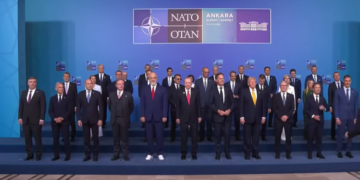
Europe is once again at a crucial historical crossroads. The war in Ukraine, the conflicts in the Middle East, the growing uncertainty in global power relations, and the increasingly visible cracks within the European Union itself require a new rethinking of its political and security architecture. After more than three decades of liberal optimism, when the “end of history” seemed to seal the triumph of democracy and the market economy, Europe is facing its own paradox – stability without vision and democracy without content.
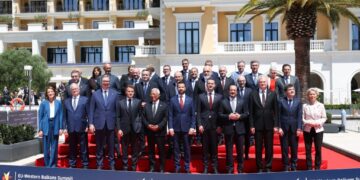
In this context, the Western Balkans remain a space where European values are often declared but rarely lived. Almost all the countries of the region are formally committed to the European path, but their internal political reality shows a different face: democratic institutions are weak, the media is under pressure, corruption is endemic, and power is being personalized and centralized. In the name of “stability”, Brussels has tolerated authoritarian tendencies for years – convinced that controlled stagnation is less of a risk than political upheaval. But it is precisely this logic of stability without democracy that has led to the current situation: the loss of citizens’ trust in European processes, the strengthening of nationalisms, and the return of discourses from the past.
The enlargement process has turned into a bureaucratic procedure without political imagination
The European Union is facing its own fatigue and structural contradictions. The enlargement process, once one of the most powerful tools of European transformation, has turned into a bureaucratic procedure devoid of political imagination. When “European values” are reduced to the technical fulfillment of chapters, rather than to real political culture and social change, then the Union loses what once made it attractive – its moral and civilizational strength. At the same time, the member states themselves no longer offer a convincing model: populism, the rise of the extreme right and the weakening of democratic standards within the EU show that Europe can no longer credibly demand what it itself fails to live up to.
The new American establishment views Europe more through the prism of transactional relationships than shared values.
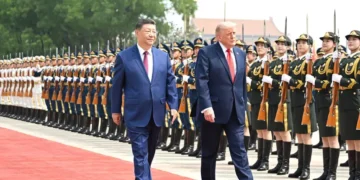
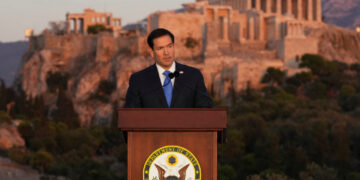
The new global context further complicates Europe’s position. Russian aggression in Ukraine has exposed the limits of European security autonomy, while conflicts in the Middle East and African migration crises show how dependent Europe is on external actors. In addition, American foreign policy is going through a phase of reexamination and loss of continuity. For the first time since World War II, there is no solid European reflex in Washington – neither understanding nor instinct. The new American establishment views Europe more through the prism of transactional relations than shared values. Senator Marco Rubio, for example, symbolizes this new generation of American politicians for whom Europe is merely a regional partner, not a civilizational companion.
Can Europe rediscover the meaning of its political mission?
All this raises the question: can Europe rediscover the meaning of its political mission? The answer, it seems, lies in the necessity of resetting European policies. Europe must renew its own narrative – not as a technical union of regulations, but as a community of meaning and solidarity. It must stop supporting “stable autocrats” in the Balkans and start building partnerships with societies, not just governments. It must rediscover its own language of freedom, rights and responsibility. Resetting European policy towards the Western Balkans means rejecting paternalism and creating a real political dialogue. Instead of endless processes of harmonisation, it is necessary to more clearly recognise the political will, cultural specificities and democratic potential of individual societies. Otherwise, Europe will lose what little credibility it has left. It is time to rethink the strategy of “stability at all costs”. Because stability without democracy is not stability, but a temporary peace before a new crisis. If Europe wants to remain relevant, it must become politically courageous again – and morally consistent.
Europe between anger and wrath: from Homer to Sloterdijk
Europe today finds itself in a strange emotional-political state: between indifference and anger, between exhaustion and latent aggression. The war in Ukraine, the rise of populism, the fear of migration, distrust of institutions and the moral fatigue of the liberal project – all this creates an atmosphere in which the distinction between justified indignation and blind rage is lost. It is precisely this distinction, which goes back to the very beginnings of European culture, that stands at the heart of one of the most profound diagnoses of modernity: the distinction between anger and wrath. When Homer invokes in the first verses of the Iliad: “Anger, O goddess, sing to Achilles”, he not only opens the epic about the Trojan War, but also the first great moral drama of Western civilization. Mēnis – divine anger – is not an ordinary emotion, but a cosmic reaction to a violation of order and justice. It is a moral energy, a righteous rage that arises when the foundation of community is undermined.
The German philosopher Peter Sloterdijk , in his book Zorn und Zeit (Anger and Time), takes this very Homeric opening line as his starting point to describe the condition of modern man. According to him, the history of the West can be read as the history of anger management. Each epoch creates its own “anger banks” (Zornbanken) – symbolic spaces in which people deposit feelings of injustice and humiliation, waiting to one day be transformed into political energy. In antiquity, these were the gods, in Christianity, God’s justice, and in modern times – revolutionary ideologies and great utopias. But in today’s Europe, Sloterdijk warns, these banks are empty. Moral energy has been exhausted, and the remaining anger no longer has its object or purpose. What we call “the anger of the people” today is often not an expression of righteous anger, but rather an accumulated resentment – frustration without an idea, rage without meaning . While anger could once be sublimated into a political vision (as in the French Revolution or the human rights movements), today’s anger is dissipated in national and identity fears, in digital struggles and anti-government movements that do not know what they really want, except negation. The distinction between anger and rage is therefore crucial. Anger in the Homeric sense is a reaction that has a measure – it is just, conscious and capable of restoring the moral order. Anger, on the contrary, is the blind energy of the mass that does not create but destroys. Europe, as Sloterdijk says, has lost the ability to “be dignifiedly angry”: it no longer knows how to distinguish righteous resistance from destructive rage.
If the Iliad is an epic of anger, then the Odyssey is an epic of wanderings.
If the Iliad is an epic of anger, then the Odyssey is an epic of wandering. In this sense, today’s Europe is an Odysseus who no longer knows where he is returning. Lost between universal ideals and particular interests, between tradition and the global market, it wanders, without an Ithaca to wait for it. In this wandering state, anger turns into rage, and moral restlessness into political apathy. Sloterdijk therefore calls for the restoration of what Plato called thymos – the spiritual force that stands between reason and lust, the source of courage, dignity and a sense of justice. Without thymos, people become mere consumers of desires; without anger, citizens lose the ability to act morally. Today’s European crisis – political, cultural and spiritual – is not just a question of economic or geopolitical interests. It is a crisis of emotional and moral capital. Europe has renounced anger and left anger to the periphery: to radical movements, authoritarian leaders, disillusioned layers of society. Thus she lost the kind of moral energy that once drove her loftiest ideas.
Achilles, at the end of the Iliad, realizes that anger without purpose leads only to death. This is a lesson that Europe could repeat today. It is not anger that is dangerous – its absence is dangerous. When the capacity for moral indignation disappears, only indifference remains – and indifference is, as Sloterdijk warns, a silent form of civilizational suicide. Europe does not have to choose between destructive rage and sterile peace. Between these two poles there is space for what Homer would have recognized as holy anger: a righteous unrest that does not destroy, but heals . Only such anger can restore the continent to its lost dignity – and perhaps open the way for a new, wiser Ithaca.
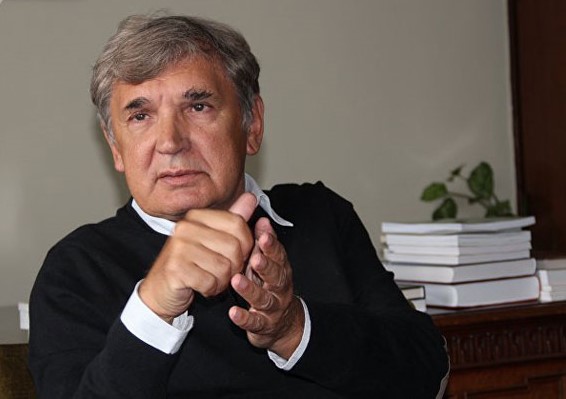
*Zlatko Kramarić is a Croatian publicist, author, and diplomat, currently serving as Ambassador to Albania. Formerly a university professor and politician, he is known for his work in literature, cultural studies, and regional history.
© 2025 Argumentum