

























• SHQIPËRI
  • KOSOVË
  • MAQEDONIA E VERIUT
  • MALI I ZI
  • Revista në PDF
13 July, 2026
  • Home
  • OP/ED

    The Blueprint Does Not Stop at the Drina

    The Underlying Logic behind China’s Economic Success

    Do Not Misuse the U.S. Declaration of Independence to Justify the Narrative of Insurrection in Albania

    The visit that changed Albania’s strategic future

    Pierre Nora and the institution of memory we lack in Eastern Europe

    The Blueprint of a Diplomatic Debacle: Analyzing Germany’s Historic UNSC Loss

    Between Russia, Iran and Europe: Azerbaijan as a balancing power in the South Caucasus

    The Zero-Tariff Gate: Sovereignty as a Service in the Sino-African Corridor

    Albania vs. the Sea/ Marginal Notes on A. Leka’s Novel The Hidden Side of the Albanian Socialist Garden

  • Interview

    Exclusive Interview with Oleksandr Tyshchenko: A 40-Year Legacy of Chernobyl, Nuclear Risks, and Global Responsibility

    INTERVIEW: ZLATKO KRAMARIĆ – THOUGHTS ON THE OLD CONTINENT

    EXCLUSIVE / Ukrainian Ambassador to Albania, Volodymyr Shkurov: “Ukraine wants peace, but not at the expense of its freedom and independence”

    EXCLUSIVE| Ambassador Tayyar Kagan Atay: Türkiye and Albania, a Strategic Partnership Rooted in Shared Heritage and a Common Vision for the Future

    “Diplomacy, Not War”: Palestinian Ambassador to Albania Calls for Justice, Peace, and Global Action for Gaza

    Exclusive: “Even After Tito – Tito”/ Ambassador Zlatko Kramarić on Authoritarian Legacies and Democracy’s Future in the Balkans

    The Conclusion of the Diplomatic Mission / Ambassador Dancho Markovski: Strengthening Albania-North Macedonia Relations for a Shared European Future

    A Century of Diplomatic Relations Between Albania and Russia: Exclusive Interview with the Russian Ambassador to Albania, H.E. Alexey Zaytsev

    Exclusive/ The chairman of the Freedom Party, Ilir Meta: “The will of the citizens will triumph in Albania, as it did in North Macedonia”

  • Realpolitik

    Peace with war diplomacy! The protest,  image and tourism! Why this silence from the EU Commission and Council? A deal or a pause?

    Just kind words  in Tivat! Where is the peace!? A deal yes, peace No!What is happening with USA and  EU?  5 elections but no solution!

    IBAR? ”Sufficiently! Much ado about nothing! Shart contrasts in Beijing! Where is the exit?!

    Neither peace nor war! Peace with bombs?! IBAR in autumn?! Not another Hormuz in Taivan! 

    IBAR – a springing board or an obstacle? Can we catch the EU Negotiation train 2027? When the dress makes the news!  EU electoral April  ends in a draw 1:1!  

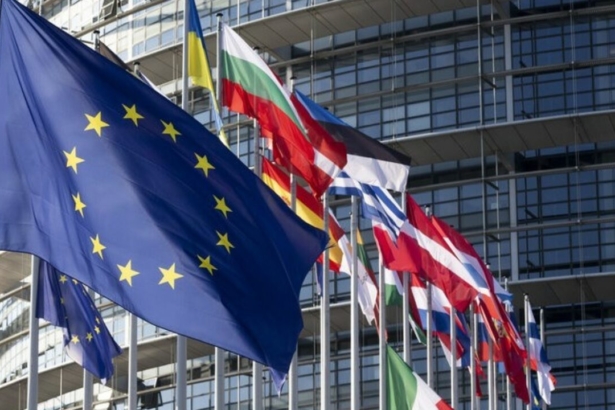
    The European Parliament building in Strasbourg, France with flags waving calmly celebrating peace of the Europe. July 12, 2020.

    EU 2027 or 2037! Even half membership failed! No exit strategy!     

    What next?

    “With diplomatic velvet“! Major question marks! In Washington yes, but  in the White House NO! A strange dinner in Brussels!

    From a great ‘apple of disaccord’ to a  point of  cooperation! A bad start! The strange absence in Davos!

  • Current Events

    When Algorithm Becomes the Most Powerful Manipulator: The Case of the Protests in Tirana

    NATO Summit in Ankara: Allies Adopt Declaration Reaffirming Collective Defence and Long-Term Security Commitments

    The Diplomacy of Gas and Algorithms: The Nuances of Official Tirana—Is It Breaking the European Taboo with Azerbaijan?

    Protection for Serbs, or Protection for Radoicic?

    The Architecture of Selective Sovereignty:Corporate Immunity, Technological Protectionism, and the Erosion of Credibility

    Montenegro’s Unfinished Transition

    The Paradox of Selective Capitalism: How Western Rule-Breaking Accelerates Its Own Systemic Demise

    A prestigious book on an emblem of Turkish state!

    Council of Albanian Ambassadors Backs Civic Protests, Calls for Transparency and Protection of National Interests

  • Top News

    NATO at Ankara 2026: Strategic Rebalancing Between Russia Deterrence, Turkey’s Rise, and National Interests

    Daniel Serwer: A Bad War Ending Badly May Still Be Good News

    Friedrich Merz, Keir Starmer, António Costa, Donald Trump, Emmanuel Macron, Mark Carney, Ursula von der Leyen, Giorgia Meloni and Sanae Takaichi

    G7 Leaders Gather in Évian Amid Global Uncertainty, Focus on Security, Economy and International Cooperation

    Russian Ambassador in Tirana: “Without a Strong and Sovereign Russia, the Creation of a Just World Order Is Impossible”

    “The Flamingo Revolution”: Day 10 of Protests in Albania Draws International Attention

    Rama alleges ‘hybrid war’ behind protests against Kushner-linked coastal development

    No End in Sight: Trump, Netanyahu and the Expanding Middle East War

    Tirana – €20 Million EU–Banking Agreement Boosts Albanian SMEs

    “EU4Municipalities II” Project, a Strategic Investment for Strengthening Municipalities and Accelerating Albania’s Path towards the EU

  • YOUR VOICE
  • Shqip
No Result
View All Result
Argumentum
  • Home
  • OP/ED

    The Blueprint Does Not Stop at the Drina

    The Underlying Logic behind China’s Economic Success

    Do Not Misuse the U.S. Declaration of Independence to Justify the Narrative of Insurrection in Albania

    The visit that changed Albania’s strategic future

    Pierre Nora and the institution of memory we lack in Eastern Europe

    The Blueprint of a Diplomatic Debacle: Analyzing Germany’s Historic UNSC Loss

    Between Russia, Iran and Europe: Azerbaijan as a balancing power in the South Caucasus

    The Zero-Tariff Gate: Sovereignty as a Service in the Sino-African Corridor

    Albania vs. the Sea/ Marginal Notes on A. Leka’s Novel The Hidden Side of the Albanian Socialist Garden

  • Interview

    Exclusive Interview with Oleksandr Tyshchenko: A 40-Year Legacy of Chernobyl, Nuclear Risks, and Global Responsibility

    INTERVIEW: ZLATKO KRAMARIĆ – THOUGHTS ON THE OLD CONTINENT

    EXCLUSIVE / Ukrainian Ambassador to Albania, Volodymyr Shkurov: “Ukraine wants peace, but not at the expense of its freedom and independence”

    EXCLUSIVE| Ambassador Tayyar Kagan Atay: Türkiye and Albania, a Strategic Partnership Rooted in Shared Heritage and a Common Vision for the Future

    “Diplomacy, Not War”: Palestinian Ambassador to Albania Calls for Justice, Peace, and Global Action for Gaza

    Exclusive: “Even After Tito – Tito”/ Ambassador Zlatko Kramarić on Authoritarian Legacies and Democracy’s Future in the Balkans

    The Conclusion of the Diplomatic Mission / Ambassador Dancho Markovski: Strengthening Albania-North Macedonia Relations for a Shared European Future

    A Century of Diplomatic Relations Between Albania and Russia: Exclusive Interview with the Russian Ambassador to Albania, H.E. Alexey Zaytsev

    Exclusive/ The chairman of the Freedom Party, Ilir Meta: “The will of the citizens will triumph in Albania, as it did in North Macedonia”

  • Realpolitik

    Peace with war diplomacy! The protest,  image and tourism! Why this silence from the EU Commission and Council? A deal or a pause?

    Just kind words  in Tivat! Where is the peace!? A deal yes, peace No!What is happening with USA and  EU?  5 elections but no solution!

    IBAR? ”Sufficiently! Much ado about nothing! Shart contrasts in Beijing! Where is the exit?!

    Neither peace nor war! Peace with bombs?! IBAR in autumn?! Not another Hormuz in Taivan! 

    IBAR – a springing board or an obstacle? Can we catch the EU Negotiation train 2027? When the dress makes the news!  EU electoral April  ends in a draw 1:1!  

    The European Parliament building in Strasbourg, France with flags waving calmly celebrating peace of the Europe. July 12, 2020.

    EU 2027 or 2037! Even half membership failed! No exit strategy!     

    What next?

    “With diplomatic velvet“! Major question marks! In Washington yes, but  in the White House NO! A strange dinner in Brussels!

    From a great ‘apple of disaccord’ to a  point of  cooperation! A bad start! The strange absence in Davos!

  • Current Events

    When Algorithm Becomes the Most Powerful Manipulator: The Case of the Protests in Tirana

    NATO Summit in Ankara: Allies Adopt Declaration Reaffirming Collective Defence and Long-Term Security Commitments

    The Diplomacy of Gas and Algorithms: The Nuances of Official Tirana—Is It Breaking the European Taboo with Azerbaijan?

    Protection for Serbs, or Protection for Radoicic?

    The Architecture of Selective Sovereignty:Corporate Immunity, Technological Protectionism, and the Erosion of Credibility

    Montenegro’s Unfinished Transition

    The Paradox of Selective Capitalism: How Western Rule-Breaking Accelerates Its Own Systemic Demise

    A prestigious book on an emblem of Turkish state!

    Council of Albanian Ambassadors Backs Civic Protests, Calls for Transparency and Protection of National Interests

  • Top News

    NATO at Ankara 2026: Strategic Rebalancing Between Russia Deterrence, Turkey’s Rise, and National Interests

    Daniel Serwer: A Bad War Ending Badly May Still Be Good News

    Friedrich Merz, Keir Starmer, António Costa, Donald Trump, Emmanuel Macron, Mark Carney, Ursula von der Leyen, Giorgia Meloni and Sanae Takaichi

    G7 Leaders Gather in Évian Amid Global Uncertainty, Focus on Security, Economy and International Cooperation

    Russian Ambassador in Tirana: “Without a Strong and Sovereign Russia, the Creation of a Just World Order Is Impossible”

    “The Flamingo Revolution”: Day 10 of Protests in Albania Draws International Attention

    Rama alleges ‘hybrid war’ behind protests against Kushner-linked coastal development

    No End in Sight: Trump, Netanyahu and the Expanding Middle East War

    Tirana – €20 Million EU–Banking Agreement Boosts Albanian SMEs

    “EU4Municipalities II” Project, a Strategic Investment for Strengthening Municipalities and Accelerating Albania’s Path towards the EU

  • YOUR VOICE
  • Shqip
No Result
View All Result
Argumentum
No Result
View All Result
Home ENGLISH

Sovereignty in the Cyber Age: What is Brussels Really After as It Drags Founding Members to Court?

13 July, 2026
in ENGLISH, In Focus
A A
Share on FacebookShare on Twitter

Dr. Ermir I. Hajdini

Legal Analyst & University Lecturer

The European Commission’s decision to drag Ireland, Spain, France, and the Netherlands before the Court of Justice of the European Union (CJEU) is being quietly framed in Brussels as a routine enforcement mechanism—a simple administrative correction for a missed legislative deadline [1]. Let’s see beyond this clinical, bureaucratic vocabulary. This judicial offensive, paired with the looming threat of punitive financial penalties, marks a critical escalation in the political tug-of-war between sovereign nation-states and an unelected central bureaucracy.

The underlying reality of this legal battle points to a question that goes far deeper than administrative delays: What is the EU actually suing for? It is not merely fighting over missing paperwork. Brussels is executing a strategic maneuver to secure something far more valuable—total institutional control over critical infrastructure metrics, national security data flows, and the sovereign power to govern domestic digital territory.

Under the banner of collective security, Brussels is building an unprecedented reporting apparatus designed to bypass local oversight and pipe national security data directly to the center. Yet, a deep contradiction lies in what happens when the gaze shifts from sovereign capitals to global corporate power. While member states are disciplined in court for missing administrative windows, the structural design of accompanying legislation—most notably the EU Artificial Intelligence Act—is actively codifying a landscape where American Big Tech monopolies manage the actual digital territory. The emerging architecture is one of selective sovereignty: absolute compliance demanded from the nation-state, and regulatory shelter granted to the global corporate empire.

The NIS2 Pipeline: Subordinating the Sovereign Capital

The immediate catalyst for the Commission’s legal action is the Network and Information Systems Directive (NIS2), which vastly expands central oversight into 18 critical sectors, including health, energy, transport, and public administration [1, 2]. Because it was issued as a directive rather than a direct regulation, it required individual national parliaments to transpose its text into domestic law [2].

The fact that powerhouse founding members like France and the Netherlands, alongside major economic hubs like Spain and Ireland, blew past the October 17, 2024 deadline is not a mere failure of administrative pacing [2, 3]. It reflects a profound institutional friction. National governments are realizing that the mandatory reporting pipelines dictated by NIS2 effectively convert sovereign domestic intelligence and infrastructure metrics into centralized raw data for Brussels [4].

By escalating this delay to the CJEU following unheeded letters of formal notice and reasoned opinions, the Commission is signaling that national parliaments no longer possess the autonomy to pace, adapt, or filter their own domestic security protocols [1]. It is an aggressive assertion of bureaucratic primacy: the unelected executive branch of the EU using judicial warfare to ensure that sovereign capitals act as data-collection subsidiaries for a centralized apparatus [1, 3].

The Corporate Contradiction: Consolidation Through the AI Act

The political tension becomes glaringly obvious when this strict disciplinary approach toward nation-states is contrasted with the operational reality of the EU AI Act. While member states face severe penalties for lagging on compliance paperwork, the heavy legal burdens and “monumental” compliance costs of the AI Act are having an entirely different effect on the market: they are choking out domestic European innovation while insulating American Big Tech.

The immense compliance moats built into the AI Act require armies of attorneys, specialized risk-assessment infrastructure, and vast computing resources to navigate. For local European tech startups, open-source developers, and independent digital innovators, these barriers are fatal; they simply lack the capital to survive the regulatory gauntlet.

Conversely, the massive tech conglomerates of Silicon Valley possess the exact infrastructure and liquid capital required to absorb these regulatory hurdles effortlessly. By implementing a framework that effectively suffocates local alternatives, Brussels has done something remarkable: it has codified a protected oligopoly. The EU’s regulatory zeal has inadvertently served as the ultimate market-protection mechanism for foreign corporate giants, leaving European infrastructure completely dependent on American technology.

The Asymmetry of Transatlantic Capitulation

The Commission’s aggressive legal policing of its own member states becomes even more damning when contrasted with its submissive posture toward Washington. While Brussels threatens its own founding members with punitive court sanctions over minor administrative reporting delays, it simultaneously executes trade frameworks that actively bleed European economic sovereignty. A prime example is the Commission’s recent transatlantic trade pact, negotiated directly from the center despite intense friction from member capitals who recognized the staggering asymmetry of the deal. Under the pretext of avoiding a tariff war, the central bureaucracy locked the bloc into a framework where the EU eliminates all duties on U.S. industrial imports and commits to pumping hundreds of billions of dollars in investments and energy procurement directly into the American economy. Meanwhile, European exporters are left saddled with a structural 15% tariff ceiling on critical sectors like automotive and semiconductors, alongside punishing 50% tariffs on steel and aluminum. This represents a profound breach of bona fide toward the nation-states: an unelected executive that uses the full weight of the judiciary to strip domestic capitals of their data autonomy, while turning a blind eye as European capital is systematically outsourced to subsidize foreign industries.

The New European Architecture

When you connect these two legislative pillars, the broader geopolitical picture becomes clear. We are witnessing the construction of a digital panopticon with a dual-layered reality:

  1. A centralizing political bureaucracy that uses judicial coercion to force sovereign member states to surrender baseline data, report critical vulnerabilities, and yield control of national infrastructure timelines to Brussels [1, 4].
  2. A consolidated corporate monopoly where the actual digital tools, cloud environments, and artificial intelligence architectures underpinning that infrastructure are managed by a handful of untouchable global tech giants, safely sheltered behind a regulatory moat that blocks domestic competition.

The lawsuit brought against France, Spain, Ireland, and the Netherlands is a warning shot [1]. It reveals that in the eyes of the central bureaucracy, national sovereignty over digital and security policy is a legacy concept to be managed, disciplined, and ultimately phased out. The true question for the capitals currently facing the CJEU is not whether they can afford the daily fines—it is whether they can afford the permanent surrender of their digital independence.

Sources & References

  • [1] European Commission Official Statement (July 8, 2026): “Commission refers Ireland, Spain, France and the Netherlands to the Court of Justice for failing to transpose the rules on cybersecurity.” Formal press release detailing the path from the initial November 2024 formal notices and May 2025 reasoned opinions to full CJEU referral.
  • [2] Directive (EU) 2022/2555 (The NIS2 Directive): Legal framework expanding EU-wide cybersecurity mandates across 18 critical sectors with an official national transposition deadline of October 17, 2024.
  • [3] Court of Justice of the European Union (CJEU) Filings (July 2026): Enforcements seeking financial sanctions, including lump-sum fines and rolling daily penalties against the four non-compliant member states.
  • [4] European Union Agency for Cybersecurity (ENISA) Threat Report: Documentation highlighting public administration as a major target for infrastructure disruptions, underlining Brussels’ push to centralize infrastructure reporting metrics.

/Argumentum.al

© 2026 Argumentum

Related Posts

Balkan Overview

The Blueprint Does Not Stop at the Drina

11 July, 2026
Current Events

When Algorithm Becomes the Most Powerful Manipulator: The Case of the Protests in Tirana

11 July, 2026
ENGLISH

The Underlying Logic behind China’s Economic Success

9 July, 2026

Follow US

Subscribe

Receive Argumentum Magazine by Email

Last Posts

Sovereignty in the Cyber Age: What is Brussels Really After as It Drags Founding Members to Court?

13 July, 2026

The Blueprint Does Not Stop at the Drina

11 July, 2026

When Algorithm Becomes the Most Powerful Manipulator: The Case of the Protests in Tirana

11 July, 2026

The Underlying Logic behind China’s Economic Success

9 July, 2026

NATO Summit in Ankara: Allies Adopt Declaration Reaffirming Collective Defence and Long-Term Security Commitments

8 July, 2026
Argumentum

“Argumentum”, një proces intelektual …

Contact Us

[email protected]
[email protected]
[email protected]

Follow Us

Media Partner

Register

Receive Argumentum Magazine by Email
  • Home
  • Privacy Policy
  • About Us
  • Contact

© 2022 Argumentum. All Rights Reserved. | NUIS: L91415033Q

Welcome Back!

Login to your account below

Forgotten Password? Sign Up

Create New Account!

Fill the forms bellow to register

*By registering into our website, you agree to the Terms & Conditions and Privacy Policy.
All fields are required. Log In

Retrieve your password

Please enter your username or email address to reset your password.

Log In

Add New Playlist

No Result
View All Result
  • Home
  • OP/ED
  • Interview
  • Realpolitik
  • Current Events
  • Top News
  • YOUR VOICE
  • Shqip

© 2022 Argumentum. All Rights Reserved. | NUIS: L91415033Q

This website uses cookies. By continuing to use this website you are giving consent to cookies being used. Visit our Privacy and Cookie Policy.