








No more hire today and fire tomorrow! Either Brussels or Balluku!
REAL POLITIK NO. 101
1 – 16 MARCH 2026
Comments “ flash” on 3 major diplomatic events, only in 1.000 words by the prominent analyst, Grand Master in Diplomacy,
DR. JORGJI KOTE
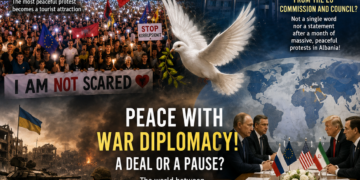
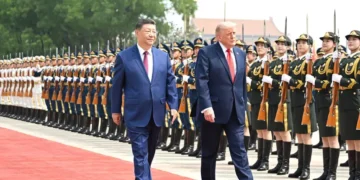
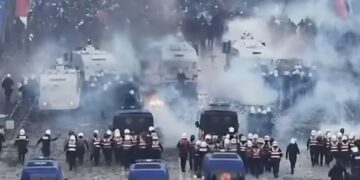
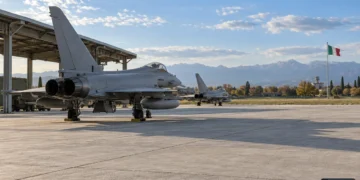
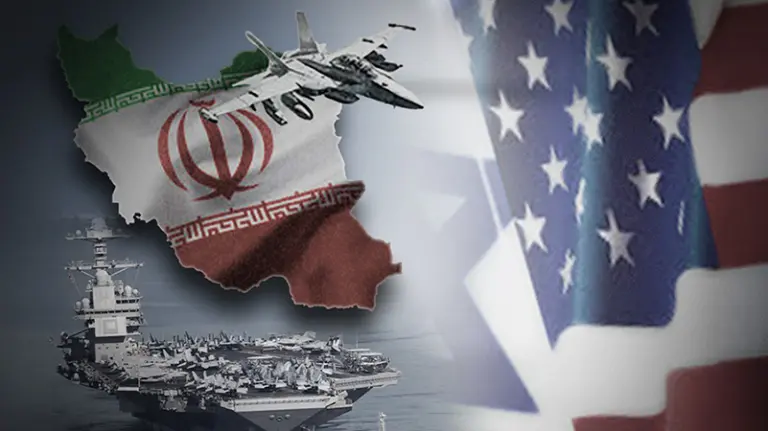
1.What next? Two weeks ago, the USA and Israel launched their military attacks against Iran with impressive achievements in executing dozens of country’s major leaders, the destruction of naval and air forces and others. Yet, the problem is that the USA started this war without clear-cut entry& exit plans and targets. President Trump issues contradictory statements on the military and especially political objectives, at times with affirmations and then negations. Hence, to put it in a word, there is no clear answer to the major geopolitical question in these cases “ what next?” Moreover, even in military terms one cannot claim a victory without land interventions, an almost impossible mission or with several human effects. Besides, it is the hard mission of liberating the Strait of Hormuz. Likewise, there is no mention of a regime change or who would replace mollahs. Should there be a marionete or puppet government; true, it may temporarily solve the problem; yet, it can turn out to be “ a time bomb” . And then, what about the democratic opposition?
2. No more ‘hire today and fire tomorrow’!
On 5th March 2026, the former Foreign Minister, Mrs. Elisa Spiropali was unexpectedly fired in her first 6 months in the office, without any official explanation. This brought back to memory the negative practice of frequent changes of our chief diplomats who are suppossed to be guarants of diplomatic continuity.
International experience and practice shows that foreign ministers in general stay relatively for a longer time in their office than their colleagues.
Actually, there are almost no other cases in international relations when they do no stay at least 4 years, not to mention others who have stayed much longer, even for 10 years. Thus, the Russian Foreign Minister, Sergei Lavrov has been holding this office for 22 consecutive years, whereas the German legendary foreign minister Hans Dietrich Genscher for 17 years until he resigned in 1993.
The opposite occurs in Albania, where in the last 35 years we have had 18 foreign ministers or one in less than two years! Only three of them ended their 4 year term – Alfred Serreqi, Paskal Milo and Ditmir Bushati.
Moreover, these frequent changes have taken place within the same governmental coalition and of the Socialist Party in the last 9 years. Thus, if during the period 1997-2013 there were 12 foreign ministers, from 2013 – 2025 6 chief diplomats were replaced! Whereas only during the last 6 months, September 2025 – March 2026 3 other foreign socialist ministers changed!
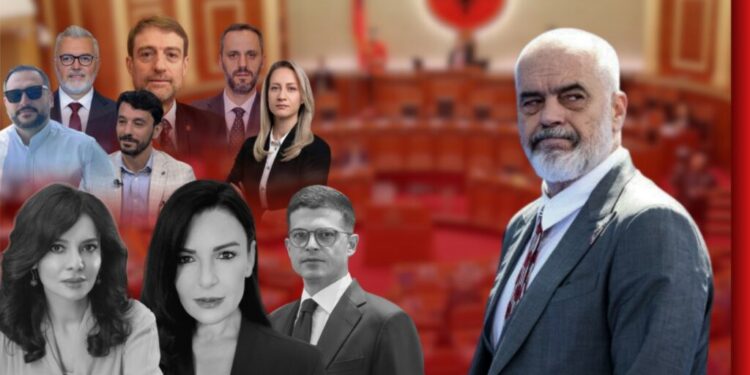
Par consequence, as many other colleagues, during the period 2005 – 2013 in the Foreign Ministry in Tirana and in our Embassy in Brussels I served for 7 Foreign Ministers! In another case, within less than one year, we asked the Belgian Foreign Minister to invite three Albanian foreign ministers in Brussels!
Even worse is that they produce changes of directors and experts in the Ministry. Likewise, the Protocol Service in Tirana and in embassies is overburdened with letters, messages, requests for visits and appointments and others.
These frequent changes are not welcome as in diplomacy it is important for our partners to meet the same faces for a long time, for this adds to their reliability and efficiency.
Hoewever, the good news is that Mrs. Spiropali was replaced with Ambassador Ferit Hoxha.
As I have mentioned in earlier articles and in my book “ Negotiations – the final challenge of integration, Ferit Hoxha is our most fuffilled ambassador of career. He is the only one who has gone through the entire diplomatic hierarchy– specialist in Foreign Ministry, diplomat in New York, director, director general, secretary general and 6 times ambassador in Brussels, Paris and New York; and in special historic moments for Albania. To start with, in November 1998 he began in Brussels as Chief of our Mission to the EU and opened the negotiations for the Stabilization and Association Agreement ( SAA) wheres in the last two years when he was back in Brussels, we opened the six clusters of EU Accession Negotiations.
During 2023 – 2024 Ambassador Hoxha was the Head of our Permanent Representation in New York when Albania was for the first time Non-Permanent Member of the UN Security Council and he even chaired it two months.
When Ambassador Hoxha was Secretary General in the Foreign Ministry, Albania joined NATO ( 2008); then, we handed over the official application for the EU candidate status ( April 2009); it also started the process of visa liberalization with the EU which was ended in December 2010 and others.
I am an eye-witness in these and other events during the years 1998 – 2001, as his closest associate in our Mission to the EU in Brussels, then later on in the Foreign Ministry and in some trips abroad in other later periods.
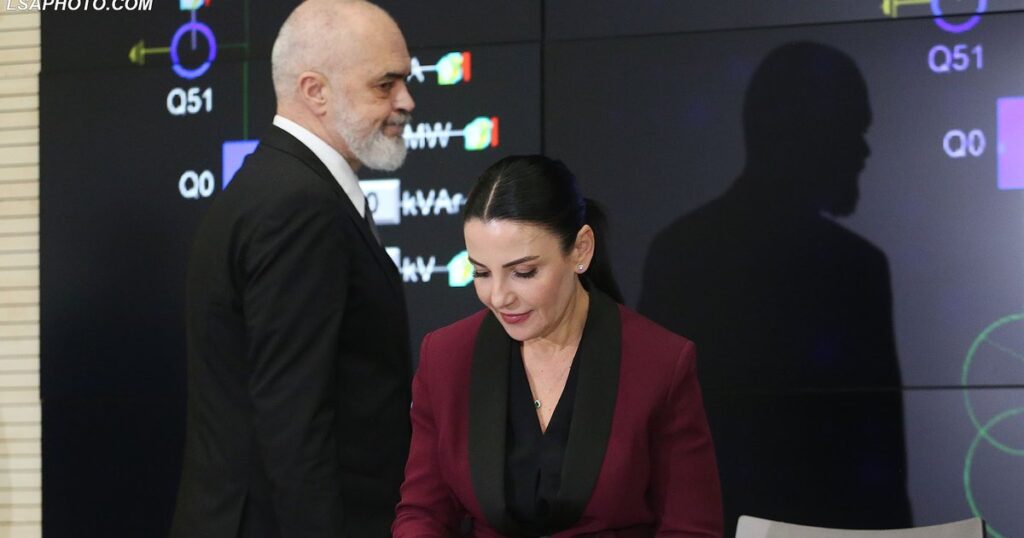
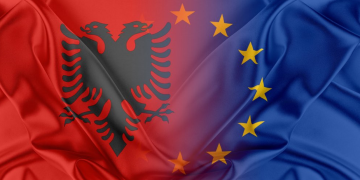
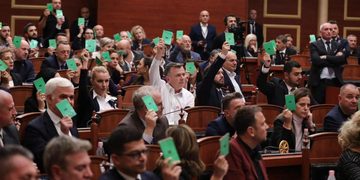
3. Either Brussels or Balluku?! This hard choice came back to our mind on 12 March when the Assembly decided with the votes of the Socialist Party not to give the authorization demanded from the Special Prosecution Office ( SPAK) to arrest MP Belinda Balluku, former Deputy Prime Minister and Minisdter opf Infrastructure. As it was expected, this act was received with several objections both at home and abroad, especially by many EU Member States. The first EU reaction was the refusal last week, only two days after that voting in postponing the IBAR or the Interim Benchmark Assessment Report on Albania, due to the objections from Germany, Sweden and the Netherlands, to mention just a few. This postponment, no one knows for how long is expected to be adopted in the Foreign Ministers’ Meeting in Brussels on 17 March. This means that Albania cannot close negotiations for the first and the most important cluster “ Fundamentals” opened in October 2024 on justice, the judiciary and corruption. Even worse, without that no other cluster can be closed for the time being; the outcome is the serious danger of our failure to attain the target “Albania in the EU 2030”. This is so because the direct political message that the EU is expected to issue this week in Brussels is that before it is too late, we have to choose either Brussels or Balluku, since both cannot stand together. Let us hope that our governing majority will make up its mind to support Brussels.
© 2026 Argumentum