


















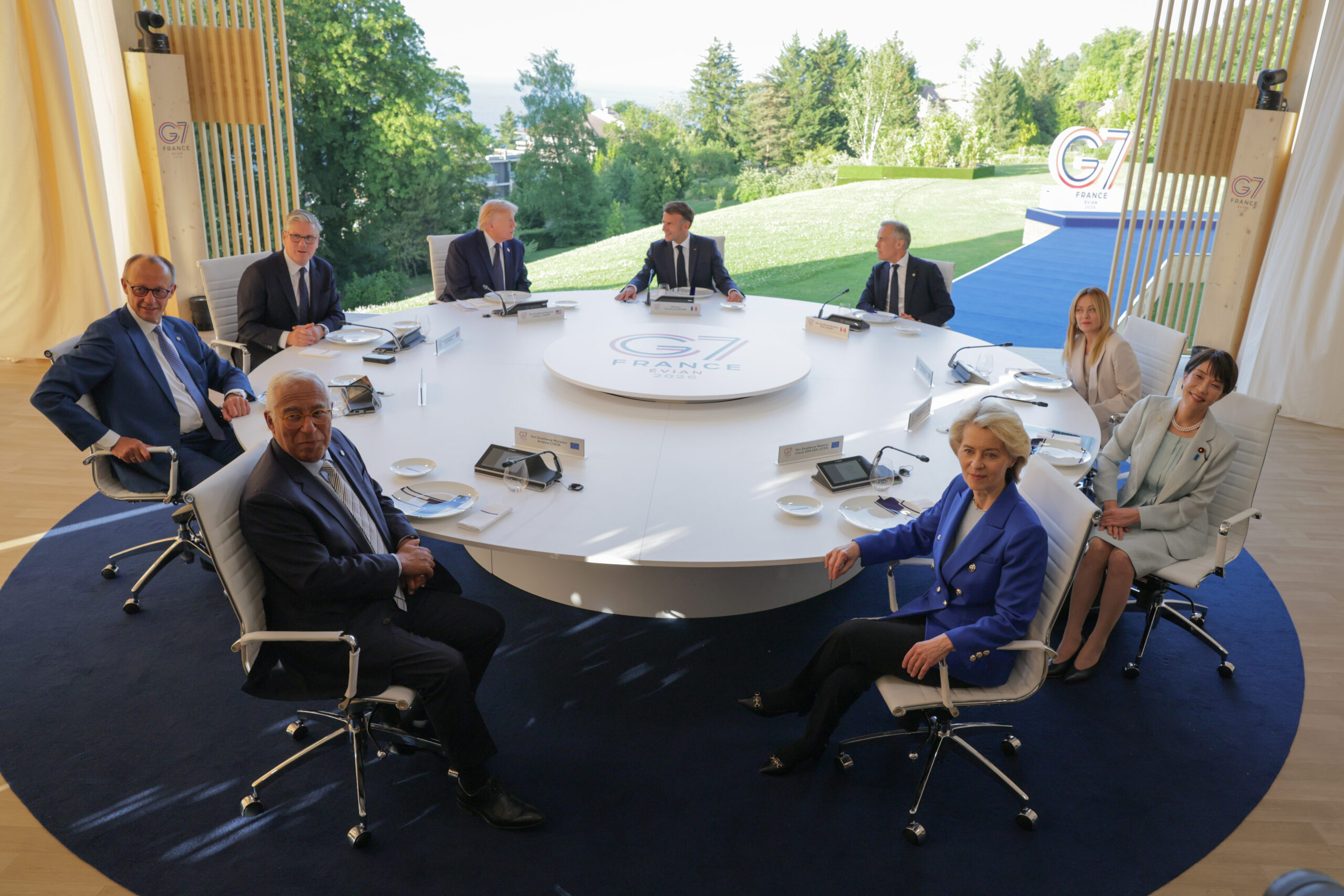
Leaders of the Group of Seven (G7) nations have convened in the French Alpine town of Évian-les-Bains for their annual summit, seeking to forge a common response to a world increasingly shaped by geopolitical tensions, economic instability and challenges to global governance.
The three-day summit, hosted by France from June 15 to 17, brings together the leaders of Canada, France, Germany, Italy, Japan, the United Kingdom, the United States and the European Union. Discussions are taking place against a backdrop of ongoing conflicts in Ukraine and the Middle East, deepening economic imbalances, and growing concerns over the future of international cooperation.
French President Emmanuel Macron welcomed fellow leaders on Monday, opening the summit with a working dinner dedicated to assessing the international situation and exploring coordinated responses to shared challenges.
A key early focus was the recent agreement between the United States and Iran. During a bilateral meeting with U.S. President Donald Trump, Macron welcomed the breakthrough and pledged France’s support for its implementation.
“We are ready to take our fair share of the burden and be part of the commitment of the international community in order to support this deal,” Macron said.
The French president also announced that France stands ready to deploy the aircraft carrier Charles de Gaulle and accompanying frigates to the Strait of Hormuz within days if required, underlining international efforts to safeguard maritime security in the strategically vital waterway.
Geopolitical Crises at the Top of the Agenda
The wars in Ukraine and the Middle East are expected to dominate discussions throughout the summit.
Regarding Ukraine, G7 leaders are seeking to maintain unity in support of Kyiv while exploring pathways toward a lasting peace settlement and strengthening Europe’s long-term security framework.
In the Middle East, discussions are focused on preserving freedom of navigation through the Strait of Hormuz and promoting regional stability following months of heightened tensions.
Economic Security and Supply Chain Resilience
Economic security is another central theme of the Évian Summit.
France has placed particular emphasis on addressing global economic imbalances, including industrial overcapacity, rising debt levels, underinvestment and unfair competition practices. Leaders are expected to discuss measures aimed at fostering balanced and sustainable growth while reducing vulnerabilities that could trigger future financial or geopolitical crises.
Critical mineral supply chains have emerged as a strategic priority. The rapid expansion of renewable energy technologies, electric vehicles and digital industries has significantly increased demand for rare minerals and metals essential for batteries, semiconductors and low-carbon technologies.
With a limited number of countries currently dominating extraction, refining and processing capacities, the G7 is expected to examine ways to diversify supply sources, strengthen industrial cooperation and improve transparency, recycling and stockpiling capabilities.
New Approaches to International Solidarity
France is also pushing for a renewed approach to international development and cooperation.
The French presidency argues that international partnerships should become more efficient, better coordinated and more responsive to the needs of developing countries. Leaders are expected to discuss ways to maximize the impact of development assistance while promoting mutually beneficial partnerships.
To broaden participation beyond the G7, France has invited Brazil, Egypt, India, Kenya and South Korea to join discussions in Évian. These partner countries have been involved in preparatory consultations throughout the year and are expected to contribute to debates on development, economic growth and global governance.
Digital Safety, Crime and Health
The summit agenda extends beyond geopolitics and economics.
Protecting children online has become a shared priority among G7 members following the rapid evolution of artificial intelligence and digital platforms. Leaders will examine initiatives aimed at strengthening online safety standards and improving protections for young users.
The fight against organized crime, particularly drug trafficking and illicit financial networks, will also feature prominently. Special attention is being given to strengthening port security and enhancing international coordination to curb the flow of narcotics into G7 countries.
For the first time in the history of the G7, cancer prevention and treatment have been elevated to the leaders’ agenda. France is advocating greater international cooperation in medical research, data sharing and long-term health targets designed to reduce cancer mortality and improve patient outcomes.
A Summit Seeking Common Ground
Originally established in 1975 following the first oil crisis, the G7 was created as a platform for the world’s leading industrialized democracies to coordinate responses to major international challenges.
More than five decades later, leaders arriving in Évian face a global landscape marked by growing fragmentation and uncertainty. France has framed its presidency as an opportunity to rebuild consensus, strengthen international cooperation and deliver practical solutions to the interconnected challenges confronting the global community.
Whether on security, economic resilience, technology governance or public health, the summit’s success will largely be judged by its ability to translate dialogue into concrete action at a time when international cooperation is under increasing strain.
This version is structured and written in the style of Reuters, AP, Euronews, or AFP international coverage.
© 2026 Argumentum