







As Montenegro enters what may be the final stage of its European Union accession process, unresolved disputes with Croatia, the country’s increasingly polarized political landscape, the rise of historical revisionism, and Serbia’s growing influence over domestic affairs continue to raise fundamental questions about Montenegro’s democratic development and strategic direction. While Brussels remains the strongest advocate of Montenegro’s EU membership, concerns persist over whether the country is genuinely moving toward European political standards or merely fulfilling the minimum technical requirements for accession.
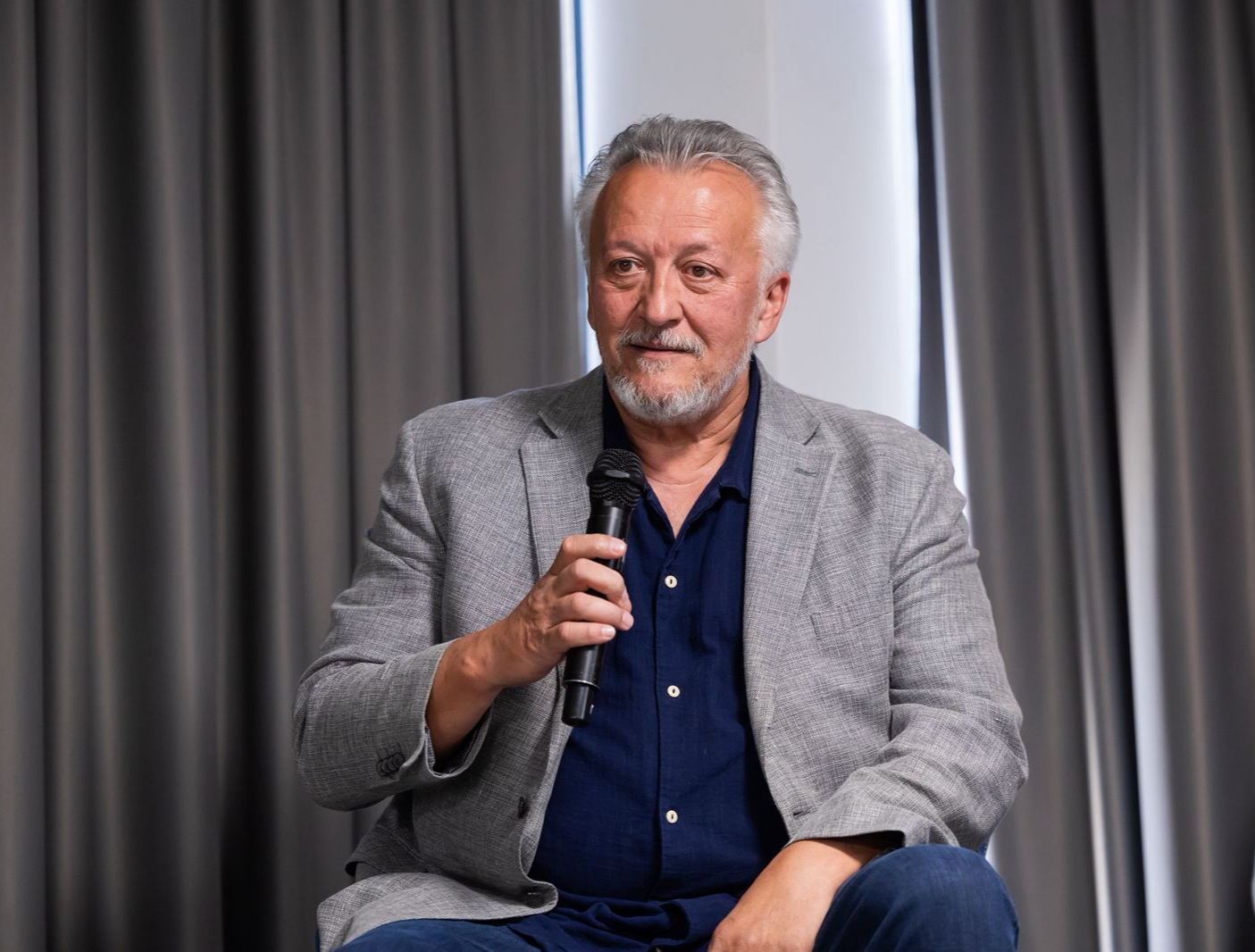
In this interview for Monitor Weekly, historian Srđa Pavlović discusses the border dispute with Croatia, argues that Montenegro must confront the legacy of the wars of the 1990s rather than carry the burden of the JNA into the European Union, examines the ideological character of the current governing coalition, and assesses the prospects for the sovereignist political bloc ahead of next year’s elections. He also reflects on the spread of historical revisionism and explains why he believes Serbia’s policy toward Montenegro represents a long-standing strategic continuity rather than a series of isolated political episodes.
By Monitor Weekly
Q. This past week, the Deputy Prime Minister, Filip Ivanović, stated that the talks between Montenegro and Croatia on border delineation are moving in a good direction, but also noted that international legal arbitration remains an option if an agreement is not reached on all contested issues. Does it seem to you that these negotiations are truly moving in a good direction, and how do you view the border demarcation issue?
S.P. History teaches us that every post-war border settlement carries much more than the mere act of drawing a physical boundary between former warring parties. The border demarcation issue between Montenegro and Croatia is no exception, and it is but one of several unresolved issues between the two countries. For Montenegro, it is also a matter of finally confronting its wartime past and dealing with the legacy of the atavistic passions of Serbian expansionist nationalism that devastated the Croatian coastal region of Konavle and Dubrovnik during 1990s.
It is important to acknowledge the fact that the same expansionist nationalism is governing Montenegro today and from a position of power is slowly dismantling its institutional structure and placing significant obstacles in the country’s path toward the EU membership.
Politicians always try to at the same time reassure and encourage their audiences. Saying that things are moving in the right direction is supposed to calm the population, while mentioning international arbitration aims at suggesting that “all is not lost,” thus allowing us to continue projecting a self-delusional sense of control over the situation that Montenegro, in fact, has little to no control of.
The only correct part of this motivational statement is minister’s use of the term “talks.” As far as I know, the Croatian government is not actively engaged in any type of negotiations on border issues since it has clearly and firmly defined its position. That position is framed by two legal documents.
The first is the conclusion of the international commission known as the Badinter Commission from 1991 regarding the borders of the Yugoslav republics after the breakup of the federation, which transformed the administrative boundaries between the republics into state borders. The second comes from land registry records, according to which the contested Prevlaka peninsula is listed in land records as Croatian territory. For the government in Zagreb, those two documents constitute an institutional and legal statement of fact from which, I am sure, it will not deviate.
The story about arbitration is merely a distraction, leading the public to believe that some external actor will solve our domestic problem. In interstate border disputes, this legal process can only begin if both sides agree to it. I see no indication that Croatia would be willing or have any interest in agreeing to that.
The Montenegrin counterargument that what matters is not what is entered in the land records but who exercised authority over a given territory is unsustainable, particularly because it draws a direct line of continuity and succession from the former SFRY and the Yugoslav People’s Army (JNA). I believe that a responsible government standing at the gates of the EU would not wish to cross that important threshold while carrying the burden of the JNA’s legacy on its shoulders. I also believe it is unrealistic to hope that the Croatian side might yield under pressure from Brussels, Paris, or Berlin and agree to discuss dividing that territory.
What can and should be discussed is the so-called blue maritime boundary line in order to enable thorough and profitable exploration and exploitation of energy resources in Montenegro’s seabed. I believe that formalizing the current provisional land and maritime boundary established by the 2002 Protocol would be the optimal solution for Montenegro. Enything else amounts to political games for domestic election purposes, aimed at slowing Montenegro’s progress toward the EU.
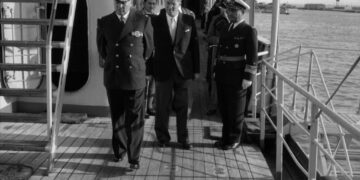
Outstanding issues such as the return of the Croatian training ship whose home port is Split, preserving memorials to crimes committed against Croatian prisoners of war and civilians in the Morinj camp in Montenegro, and providing financial compensation to former prisoners are easier to resolve. Ownership of the ship Jadran is unquestionable, and I believe the Croatian side is prepared to restore it to its former role as a training vessel serving both future Montenegrin and Croatian cadets. Crimes committed at the Morinj camp must be acknowledged, and their consequences whether material or financial, must also be accepted because societies that value truth, justice, morality, and their own dignity act in that way.
Q. Montenegro is only a step away from joining the EU, with considerable encouragement from Brussels. But how close or far are we from a society of European values, with a genuinely European political class?
S.P. Yes, the administration in Brussels is by far the most enthusiastic advocate of Montenegro’s accession to the EU club, and our political structures should take note of that. Although I personally hope for rapid membership, the situation on the ground suggests that it may require a somewhat longer timeframe to achieve it. The atavistic passions of ethnic nationalism, which refuses to recognize Montenegro as a sovereign and independent state, as well as the reality of the partitocracy mindset that absolutely dominates thinking about Montenegro’s future and constitutes the sole framework within which the domestic political class operates, warrant caution.
The current governing structure is to a significant extent ideologically anti-European and anti-Western, while the part of its coalition structure that does not appear so at first glance exists solely within the framework of transactional politics, lacking any ideological foundation or body of convictions. The fact that EU accession documents related to Montenegro, and chapter-closing reports use terminology about meeting the “minimum conditions” says enough about Montenegro’s EU capacities and capabilities, but just as much about the strategic interest of the Brussels administration in seeing Montenegro become a member state as soon as possible.
I think it is misleading to speak about the distance from European values because those values are the product of a generational developmental process that has yet to leave a genuine mark in our region. I hope that Montenegro’s accession to the EU will signify the beginning of that developmental process.
Q. How do you see the domestic political scene, and do you expect any shifts as EU membership and next year’s elections approach?
S.P. The election campaign has been in full swing for some time, and all political actors are operating within that framework. I do not see any new political forces capable of inspiring a discouraged public. Everything I observe on the political scene consists of familiar developments and there are no surprises.
The Serbian political bloc is repositioning itself into two columns that will, however, march in step with the aim at reaching the same political goal: domination of the Serb political parties in Montenegro. Individual leadership ambitions of Serb politicians in Montenegro might clash, but it would be irresponsible to mistake those clashes for a significant split within what is ideologically and religiously a uniform electorate in Montenegro. The ongoing “Europeanization” of part of our Ravna Gora enthusiasts is indeed temporary and is purely a matter of transactional politics.
While it is true that Brussels officials knows who is who in Montenegro, it is equally true that this matters little to them as long as their integration “partner” completes the assigned tasks. The Chetnik Vojvoda, Andrija Mandić’s European image might pacify the emotional charge of one segment of the Serbian electorate in Montenegro, but Milan Knežević’s political radicalism and ideological myopia would successfully “Šešeljize” an equally important part of that electorate. It should not be forgotten that Milan Knežević’s radicalism makes Andrija Mandić appear to be a moderate politician and an acceptable partner for the political West.
The decades-long story of consolidating and unifying the sovereignist political bloc has begun to take shape through the grouping of small parties around the European Alliance coalition. I use the term “coalition” because I believe things should be called by their proper name, although many prefer to believe it is a so-called non-partisan alliance. What matters, however, is that the sovereignist discourse gains a stronger political expression through this and similar initiatives.
A potential problem is that its champions are familiar political figures, some of whom carry a heavy burden from the past, while the political program itself has yet to move beyond familiar rhetoric. The recently concluded DPS anniversary celebration demonstrated an insufficient willingness to offer thirsty citizens new and fresh programmatic directions. As justified as it may be, self-congratulation supported by patriotic slogans is not a desirable and stable architecture for a modernized political offer because it fails to recognize an important reality that dominates the mindset of the Montenegrin youth. It is the reality of state sovereignty and independence as facts that are not and should not be questioned.
Q. Historical revisionism has been going on for quite some time. Where is it leading us?
S.P. Historical revisionism is a constant feature in every society, but it most cases and if society is lucky, it remains on the margins of academic discourse, even though its presence in public discourse may be somewhat more pronounced. Montenegro is currently experiencing a phase of development in which what, until a few decades ago was considered so-called historical absence now dominates both its academic and public spheres, thanks to the structures in power.
This former historical absence became a dominant historical presence within the academia and the educational system in general. This shift occurred not because new documents shedding new light on events from the past had been discovered but because of ideologically underlined different interpretations of the same old facts. Parallel to this, we witness a new wave of inventing traditions (either religious or not) in all spheres of life.
This is possible because those in power wish to shape both the past and the present according to their own ideological and religious models, canons, and ideals. As a result, a significant part of our population lives according to “its ow truth” about the past and the present, and neither feels the need nor has the ability to think critically about either of them. This inevitably leads to the education of generations that regard historical facts as political constructs and conspiratorial lies.
Q. How do you view the attitude of the Serbian authorities toward Montenegro? The “Ćaci” plane in Tivat, the “Ćaci” documentary about the referendum—overall, Vučić has stepped up the pace.
S.P. Over the past several centuries, every government in Serbia has viewed Montenegro as its prey, and often as a useful idiot willing to bleed for someone else’s dreams and interests. That has been and remains a constant of Serbian policy toward Montenegro. To be fair, Montenegro has often legitimized such a perception of itself, and Montenegrins have frequentlly justified the disparaging characterization coined in Belgrade: “those madmen of ours.”
The government of Aleksandar Vučić is merely the latest in a series of predatory structures of power who are salivating while gazing toward Montenegro’s mountains from the slopes of Avala hill. Montenegro’s speedy accession to the EU only intensifies that predatory impulse, and it can be said that we are now living through a period of acute danger from our northern hegemonic neighbor. The most recent landing of the Vučić’s thugs at the Tivat airport was a clear act of attempted terrorism and I fear was intended to be the opening act of major bloodshed, because this “Ćaci” unit obviously had significant logistical support in Montenegro. I hope that this case will not remain unprocessed.
/Argumentum.al