













Europe keeps the record. Belgrade keeps a story, about Srebrenica, about Reçak, about Prekaz, about 1999. The story is a mindset for payback, and this week’s pages have already shown what is being bought to serve it.
By Drizan Shala*
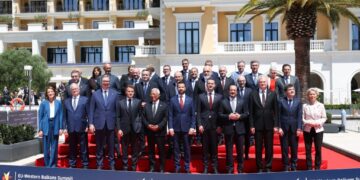
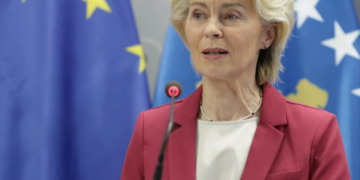
Begin with what Europe said, because Europe said it carefully. Ahead of the thirty first anniversary of Srebrenica, Kaja Kallas and Marta Kos, the Union’s foreign policy chief and its enlargement commissioner, issued a joint statement calling the genocide among the darkest episodes in Europe’s history and declaring that there is no place in Europe for genocide denial, revisionism, or the glorification of convicted war criminals. They called on leaders in Bosnia and Herzegovina and across the region to choose responsibility over division, and they stood with the families who still wait for the earth to return their missing. The Commission remembered the more than eight thousand three hundred victims and reaffirmed its commitment to Bosnia and Herzegovina as a sovereign, united, multiethnic and democratic country. Two years ago the United Nations General Assembly gave the date its formal name and condemned denial of the genocide without reservation.
None of this is boilerplate. Read as a body of text, the European position is precise. It names the crime with the word the courts established. It identifies denial and glorification, not merely violence, as the live threats. It ties the region’s European future to the acceptance of a factual record. The statements are, in effect, the official memory of the continent: this happened, courts proved it, and membership in Europe presumes the ability to say so. Taken at face value, the eleventh of July is the one day of the year on which the rules of the European order are read aloud.
So take them at face value, and then set beside them what the relevant state said in the same week. Two days before the anniversary, Miloš Vučević, president of Serbia’s ruling party and the president’s adviser for regional questions, answered the European record in official party voice. Montenegro’s initiative to mark the eleventh of July as a day of remembrance concerned, in his phrasing on X, the victims of an alleged genocide, a “navodni genocid,” and amounted to stamping the mark of genocide on the Serbian people, the latest move in what he described as years of dirty games running back to the UN resolution itself. Across the Drina the answer has institutional form: a report adopted by the parliament of Republika Srpska resolving that the word genocide is inaccurate and capping the dead at three thousand against a judicial record of more than eight thousand, and, this May, a submission to the United Nations Security Council that completes the inversion, recasting Bosniaks as the vanguard of an Islamist threat to Europe and the entity as Christianity’s last bulwark. The population against whom the genocide was committed, redescribed as the danger requiring defense.
The temptation, on this anniversary, is to file all of this under Bosnia, a bilateral pathology between Belgrade, Banja Luka and Sarajevo, to be managed by high representatives and commemorated by commissioners. I want to argue that the filing is wrong, and I am positioned to argue it, because I am a Kosovar. I write this from Sarajevo, where I study security, which means I live between the two great archives of the same denial. What Vučević posted about Srebrenica this week is not a position about Srebrenica. It is one page of a blueprint, and the blueprint does not stop at the Drina.
The blueprint travels
Consider how official Serbia speaks about the war it fought against my country, and notice that the grammar is identical.
Reçak, the fifteenth of January 1999: at least forty five Albanians killed in a single village, close range gunshot wounds to the head among the documented dead, the massacre that finally moved the Western powers from monitoring to ultimatum. The Serbian state’s answer, then and now, is that it did not happen as the world saw it. The investigating judge sent to the scene pronounced it a fabrication, bodies staged, terrorists dressed as villagers, and she has never retreated from that finding, although a Hague chamber, examining the site directly in 2011 with her account before it, found the opposite, and found one thing more: that the police staged a false crime scene for the judge who came to examine it. The set was hers to see through. She certified it instead. At the close of June the Serbian Orthodox Church pinned the Order of St. Sava, second degree, to her chest, and within days, as Professor Kryeziu documented in these pages, a serving minister and Moscow’s broadcaster had converted the Church’s honor into an acquittal, the judge herself declaring the decoration a confirmation that she was right, weeks before the Basic Court in Prishtina begins hearing the Reçak case on the twentieth of July. Nor is the fabrication thesis a relic kept alive by one loyal judge. Serbia’s president has personally, publicly, called Reçak a fabrication, invented, in his telling, by the foreign monitors who reported it.
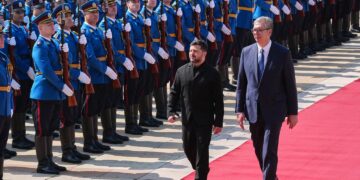
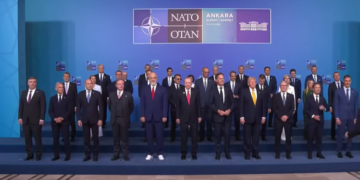
Prekaz, March 1998: fifty eight members of a single family, the Jasharis, killed over three days by police and army units shelling a family compound, women and children among the dead in numbers no combat account can absorb. In Serbia’s official memory this remains an anti terrorist operation, competently executed, the file closed. The 1999 war as a whole enters Serbian state liturgy under one fixed name, the NATO aggression, a phrase renewed with wreaths at garrison ceremonies to this day; readers of this publication will recall that when Serbia’s prime minister and defense minister toured the forward bases at Karaula and Merdare on the eve of the Ankara summit, the itinerary ended at the Kuršumlija barracks, at a memorial to soldiers killed, in the official phrasing, during the NATO aggression. And when the blueprint required an update for the present decade, it received one: after the armed assault at Banjska in September 2023, prepared and equipped in a manner the region understood immediately, Serbia did not investigate its nationals who carried it out. It declared a national day of mourning for the attackers who died.
Srebrenica alleged. Reçak fabricated. Prekaz an operation. The bombing an aggression. Banjska, martyrs. Five theaters, one grammar. In every case the crime is dissolved, the record is attributed to enemies, and the Serbian nation is repositioned as the injured party. This consistency across decades, borders and governments is the analytical fact. A state does not maintain the same interpretive machine, in official voice, across five unrelated files by accident. The machine is the policy.
The story underneath
Examine what the machine actually manufactures, because it is usually treated as a communications nuisance and it is nothing of the kind.
Its first move is a substitution. No court has ever convicted the Serbian people of anything. The Hague tribunal convicted individuals, by name; the International Court of Justice, in a case to which Serbia was a party, confirmed the genocide at Srebrenica and found that Serbia failed in its duty to prevent it. Verdicts are the narrowest instruments law possesses, aimed at commanders and executioners, and they exonerate everyone they do not name. The story’s essential work is to erase that narrowness. “Stamping the mark of genocide on the Serbian people” converts a set of individual convictions into a collective accusation that no one has made, and it performs the conversion for a reason. An accusation against individuals demands a reckoning. An accusation against the nation demands only defense. By manufacturing the collective charge, the story relieves every citizen of the first burden and enlists him in the second. It is a machine for turning atonement into solidarity.
The second move is the conspiracy. Once the nation is the accused, every institution that upholds the record becomes a participant in the plot. The tribunal was political. The foreign monitors invented Reçak. Montenegro’s remembrance initiative is a dirty game by anti Serbs, and the submission from Banja Luka extends the plot into the future tense, discovering an Islamist project behind the neighbors themselves. The frame is what makes the story economical: it never has to answer evidence, because evidence is what the plot produces, and the circle of enemies can be widened administratively to admit a court, a commissioner, a NATO member state, or a neighboring people entire.
Now observe what this does to the moral ledger of a political community, because this is the heart of the matter. A nation persuaded that the crimes attributed to it were invented, and that the invention is the work of hostile powers, has undergone two transformations at once. Its debt has been cancelled: nothing to atone for, no verdict to internalize, no neighbor owed anything. And a claim has been issued in its place: the nation is the injured party, slandered for three decades, bombed by an aggressor, encircled by the fabricators. It owes nothing and it is owed much, and the largest entry in the ledger of what it is owed is written across my country. The name for the politics that grows from such a balance sheet is payback, and payback is patient. It requires only that the ledger be kept open: the sirens that sound across Serbia every March for the anniversary of the bombing, the wreaths at the garrison memorials, the anniversary posts of party presidents, each conscript cohort taught the account afresh, so that when an occasion arrives the response will feel to those who deliver it not like aggression but like the closing of an account.
This is not a hypothesis about Serbian political culture. It is the region’s documented history running once already to its terminus. The wars of the 1990s had many causes, constitutional collapse and economic ruin and one man’s ambition among them, but their ideological preparation was underway a decade before the first shots, in memoranda and anniversary oratory, in the patient curation of grievance into doctrine, until a generation had been prepared to experience assault as restitution. The men who killed at Prekaz, at Reçak, at Srebrenica had been told for years that they were the victims, defending themselves against threats their leaders had conjured. Each atrocity was the terminus of a story before it was an operation. When today’s officials call the genocide alleged and the massacre fabricated, they are not commenting on the past. They are reopening the workshop.
The instrument
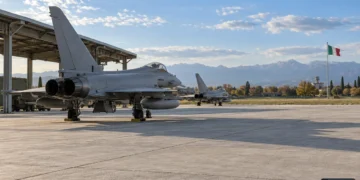
I can afford to be brief about the hardware, because Albatros Rexhaj set out the inventory in these pages two days ago and asked the correct question of it: near hypersonic standoff missiles with reach into Central Europe, ballistic rocket artillery, a 1.63 billion dollar command and intelligence architecture, twelve Rafales, twenty eight forward bases within meters to kilometers of Kosovo’s border and most of the army’s weight stationed in the south, conscription restored to cycle twenty thousand men a year into a rebuilt reserve. His analysis concluded that the arsenal is sized not to Serbia’s neighborhood but to the contingency of a wider European war, in which Belgrade’s function would be that of Moscow’s extended arm. I find the argument persuasive, and my purpose here is to supply the column it deliberately left implicit. An arsenal acquires meaning from intent, and intent, in states as in men, is formed by the story of who owes what to whom. The procurement contracts answer the question of what Serbia can do. The anniversary statements answer the question of what Serbia believes it is entitled to do. A capability sized to someone else’s war, mounted on a grievance ledger in which Kosovo is the principal unsettled account, is not two facts. It is one posture, described twice.
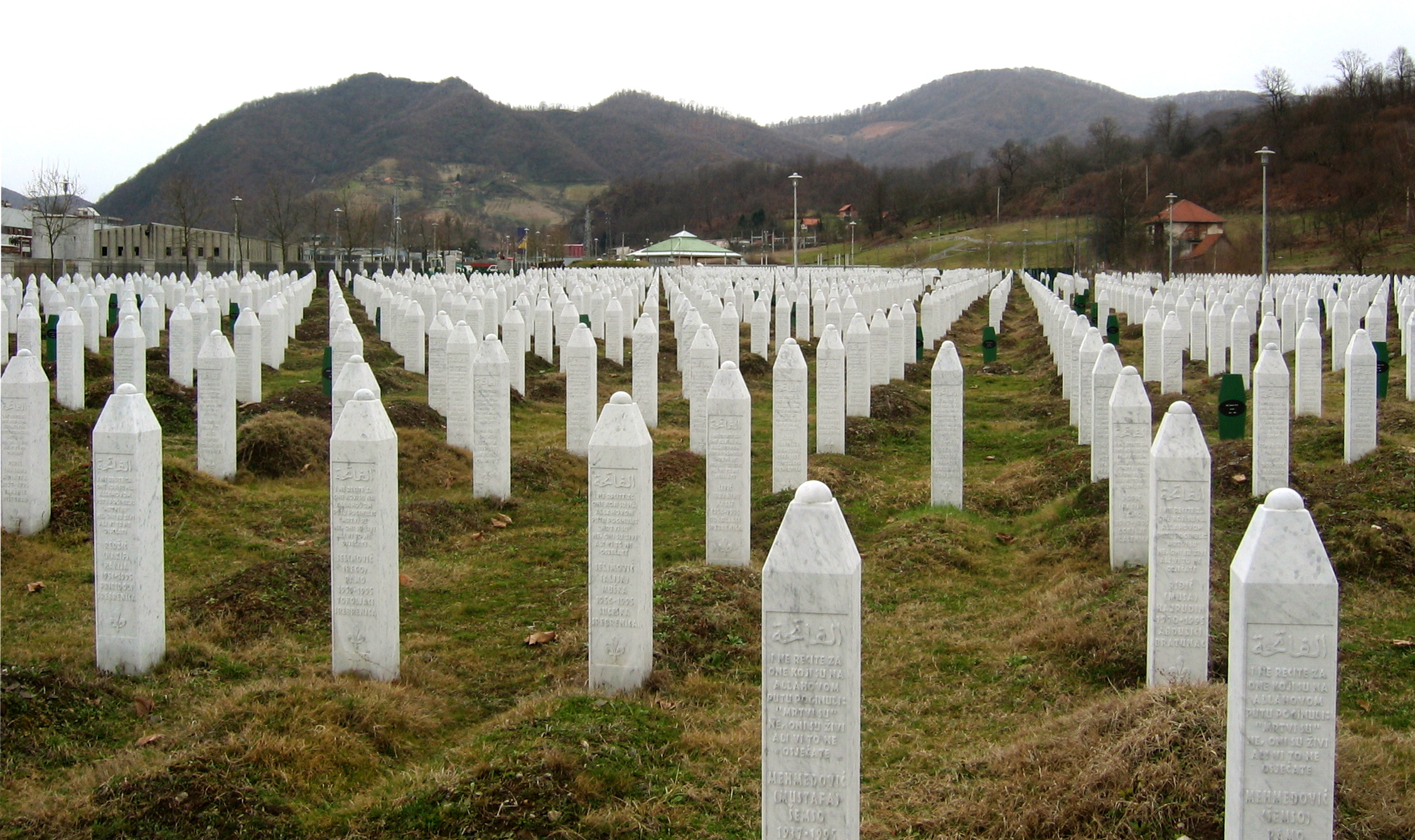
The names will be read at Potočari until evening, more than eight thousand of them, each one established beyond doubt in courtrooms the deniers call political. In January the names of Reçak will be read again in a village that has heard its dead called actors by the president of the neighboring state. In March, Prekaz. Europe will attend, and mourn, and issue statements that are true. The question those statements never quite reach is the one a security researcher from Kosovo, writing in Sarajevo, cannot avoid: what happens when the state that has taught itself to hear every one of those names as a slander decides that the account has waited long enough. The record keeps the dead. The story keeps the debt. Only one of them is being armed.
Drizan Shala is a Kosovar security researcher and a doctoral candidate in Sarajevo. He writes on defense, private security, and the security architecture of the Western Balkans.
/Argumentum.al