










• SHQIPËRI
  • KOSOVË
  • MAQEDONIA E VERIUT
  • MALI I ZI
  • Revista në PDF
17 June, 2026
  • Home
  • OP/ED

    The visit that changed Albania’s strategic future

    Pierre Nora and the institution of memory we lack in Eastern Europe

    The Blueprint of a Diplomatic Debacle: Analyzing Germany’s Historic UNSC Loss

    Between Russia, Iran and Europe: Azerbaijan as a balancing power in the South Caucasus

    The Zero-Tariff Gate: Sovereignty as a Service in the Sino-African Corridor

    Albania vs. the Sea/ Marginal Notes on A. Leka’s Novel The Hidden Side of the Albanian Socialist Garden

    May 9 and the long shadow of a Letter: Is Europe still Schuman’s Project?

    The Arbnesh of Zadar: A living memory of Albanian identity on the Adriatic coast

    Science Diplomacy and Academic Freedom: A strategic nexus for contemporary diplomacy

  • Interview

    Exclusive Interview with Oleksandr Tyshchenko: A 40-Year Legacy of Chernobyl, Nuclear Risks, and Global Responsibility

    INTERVIEW: ZLATKO KRAMARIĆ – THOUGHTS ON THE OLD CONTINENT

    EXCLUSIVE / Ukrainian Ambassador to Albania, Volodymyr Shkurov: “Ukraine wants peace, but not at the expense of its freedom and independence”

    EXCLUSIVE| Ambassador Tayyar Kagan Atay: Türkiye and Albania, a Strategic Partnership Rooted in Shared Heritage and a Common Vision for the Future

    “Diplomacy, Not War”: Palestinian Ambassador to Albania Calls for Justice, Peace, and Global Action for Gaza

    Exclusive: “Even After Tito – Tito”/ Ambassador Zlatko Kramarić on Authoritarian Legacies and Democracy’s Future in the Balkans

    The Conclusion of the Diplomatic Mission / Ambassador Dancho Markovski: Strengthening Albania-North Macedonia Relations for a Shared European Future

    A Century of Diplomatic Relations Between Albania and Russia: Exclusive Interview with the Russian Ambassador to Albania, H.E. Alexey Zaytsev

    Exclusive/ The chairman of the Freedom Party, Ilir Meta: “The will of the citizens will triumph in Albania, as it did in North Macedonia”

  • Realpolitik

    Just kind words  in Tivat! Where is the peace!? A deal yes, peace No!What is happening with USA and  EU?  5 elections but no solution!

    IBAR? ”Sufficiently! Much ado about nothing! Shart contrasts in Beijing! Where is the exit?!

    Neither peace nor war! Peace with bombs?! IBAR in autumn?! Not another Hormuz in Taivan! 

    IBAR – a springing board or an obstacle? Can we catch the EU Negotiation train 2027? When the dress makes the news!  EU electoral April  ends in a draw 1:1!  

    The European Parliament building in Strasbourg, France with flags waving calmly celebrating peace of the Europe. July 12, 2020.

    EU 2027 or 2037! Even half membership failed! No exit strategy!     

    What next?

    “With diplomatic velvet“! Major question marks! In Washington yes, but  in the White House NO! A strange dinner in Brussels!

    From a great ‘apple of disaccord’ to a  point of  cooperation! A bad start! The strange absence in Davos!

    5 lessons from the American 3 January! Don’t count the chicken before they are hatched! Will NATO freeze in Greenland? Wrong diplomatic messages!

  • Current Events

    The Diplomacy of Gas and Algorithms: The Nuances of Official Tirana—Is It Breaking the European Taboo with Azerbaijan?

    Council of Albanian Ambassadors Backs Civic Protests, Calls for Transparency and Protection of National Interests

    Russian Ambassador in Tirana: “Without a Strong and Sovereign Russia, the Creation of a Just World Order Is Impossible”

    EU-Western Balkans Summit 2026: New Impetus for the Enlargement Debate?

    “The Flamingo Revolution”: Day 10 of Protests in Albania Draws International Attention

    Rama alleges ‘hybrid war’ behind protests against Kushner-linked coastal development

    BELGRADE, SERBIA - JUNE 18. 2020: Russian and Serbian flags on display during Russian Foreign Minister Sergei Lavrov's visit to the Liberators of Belgrade Memorial. Valery Sharifulin/TASS,Image: 533095429, License: Rights-managed, Restrictions: UWAGA! Zdjęcia zawierają oryginalny opis dostawcy (ITAR-TASS). Szczególnie w związku z agresją Rosji na Ukrainę mogą zawierać przekaz niezgodny z faktami. Zweryfikuj go przed publikacją, Model Release: no, Credit line: Valery Sharifulin / TASS / Forum

    Balkan Maskirovka: Why Moscow’s “Distancing” Is Only an Operation for the Survival of Vučić’s Regime

    Serbia – China 2026: Technological partnership, geopolitical positioning and a new phase of the Chinese presence in the Western Balkans

    The Digital Protectorate: How the EU AI Act Codified Silicon Valley’s Monopoly

  • Top News

    Daniel Serwer: A Bad War Ending Badly May Still Be Good News

    Friedrich Merz, Keir Starmer, António Costa, Donald Trump, Emmanuel Macron, Mark Carney, Ursula von der Leyen, Giorgia Meloni and Sanae Takaichi

    G7 Leaders Gather in Évian Amid Global Uncertainty, Focus on Security, Economy and International Cooperation

    Russian Ambassador in Tirana: “Without a Strong and Sovereign Russia, the Creation of a Just World Order Is Impossible”

    “The Flamingo Revolution”: Day 10 of Protests in Albania Draws International Attention

    Rama alleges ‘hybrid war’ behind protests against Kushner-linked coastal development

    No End in Sight: Trump, Netanyahu and the Expanding Middle East War

    Tirana – €20 Million EU–Banking Agreement Boosts Albanian SMEs

    “EU4Municipalities II” Project, a Strategic Investment for Strengthening Municipalities and Accelerating Albania’s Path towards the EU

    Albania, Italy deepen defence ties with naval shipbuilding deal

  • YOUR VOICE
  • Shqip
No Result
View All Result
Argumentum
  • Home
  • OP/ED

    The visit that changed Albania’s strategic future

    Pierre Nora and the institution of memory we lack in Eastern Europe

    The Blueprint of a Diplomatic Debacle: Analyzing Germany’s Historic UNSC Loss

    Between Russia, Iran and Europe: Azerbaijan as a balancing power in the South Caucasus

    The Zero-Tariff Gate: Sovereignty as a Service in the Sino-African Corridor

    Albania vs. the Sea/ Marginal Notes on A. Leka’s Novel The Hidden Side of the Albanian Socialist Garden

    May 9 and the long shadow of a Letter: Is Europe still Schuman’s Project?

    The Arbnesh of Zadar: A living memory of Albanian identity on the Adriatic coast

    Science Diplomacy and Academic Freedom: A strategic nexus for contemporary diplomacy

  • Interview

    Exclusive Interview with Oleksandr Tyshchenko: A 40-Year Legacy of Chernobyl, Nuclear Risks, and Global Responsibility

    INTERVIEW: ZLATKO KRAMARIĆ – THOUGHTS ON THE OLD CONTINENT

    EXCLUSIVE / Ukrainian Ambassador to Albania, Volodymyr Shkurov: “Ukraine wants peace, but not at the expense of its freedom and independence”

    EXCLUSIVE| Ambassador Tayyar Kagan Atay: Türkiye and Albania, a Strategic Partnership Rooted in Shared Heritage and a Common Vision for the Future

    “Diplomacy, Not War”: Palestinian Ambassador to Albania Calls for Justice, Peace, and Global Action for Gaza

    Exclusive: “Even After Tito – Tito”/ Ambassador Zlatko Kramarić on Authoritarian Legacies and Democracy’s Future in the Balkans

    The Conclusion of the Diplomatic Mission / Ambassador Dancho Markovski: Strengthening Albania-North Macedonia Relations for a Shared European Future

    A Century of Diplomatic Relations Between Albania and Russia: Exclusive Interview with the Russian Ambassador to Albania, H.E. Alexey Zaytsev

    Exclusive/ The chairman of the Freedom Party, Ilir Meta: “The will of the citizens will triumph in Albania, as it did in North Macedonia”

  • Realpolitik

    Just kind words  in Tivat! Where is the peace!? A deal yes, peace No!What is happening with USA and  EU?  5 elections but no solution!

    IBAR? ”Sufficiently! Much ado about nothing! Shart contrasts in Beijing! Where is the exit?!

    Neither peace nor war! Peace with bombs?! IBAR in autumn?! Not another Hormuz in Taivan! 

    IBAR – a springing board or an obstacle? Can we catch the EU Negotiation train 2027? When the dress makes the news!  EU electoral April  ends in a draw 1:1!  

    The European Parliament building in Strasbourg, France with flags waving calmly celebrating peace of the Europe. July 12, 2020.

    EU 2027 or 2037! Even half membership failed! No exit strategy!     

    What next?

    “With diplomatic velvet“! Major question marks! In Washington yes, but  in the White House NO! A strange dinner in Brussels!

    From a great ‘apple of disaccord’ to a  point of  cooperation! A bad start! The strange absence in Davos!

    5 lessons from the American 3 January! Don’t count the chicken before they are hatched! Will NATO freeze in Greenland? Wrong diplomatic messages!

  • Current Events

    The Diplomacy of Gas and Algorithms: The Nuances of Official Tirana—Is It Breaking the European Taboo with Azerbaijan?

    Council of Albanian Ambassadors Backs Civic Protests, Calls for Transparency and Protection of National Interests

    Russian Ambassador in Tirana: “Without a Strong and Sovereign Russia, the Creation of a Just World Order Is Impossible”

    EU-Western Balkans Summit 2026: New Impetus for the Enlargement Debate?

    “The Flamingo Revolution”: Day 10 of Protests in Albania Draws International Attention

    Rama alleges ‘hybrid war’ behind protests against Kushner-linked coastal development

    BELGRADE, SERBIA - JUNE 18. 2020: Russian and Serbian flags on display during Russian Foreign Minister Sergei Lavrov's visit to the Liberators of Belgrade Memorial. Valery Sharifulin/TASS,Image: 533095429, License: Rights-managed, Restrictions: UWAGA! Zdjęcia zawierają oryginalny opis dostawcy (ITAR-TASS). Szczególnie w związku z agresją Rosji na Ukrainę mogą zawierać przekaz niezgodny z faktami. Zweryfikuj go przed publikacją, Model Release: no, Credit line: Valery Sharifulin / TASS / Forum

    Balkan Maskirovka: Why Moscow’s “Distancing” Is Only an Operation for the Survival of Vučić’s Regime

    Serbia – China 2026: Technological partnership, geopolitical positioning and a new phase of the Chinese presence in the Western Balkans

    The Digital Protectorate: How the EU AI Act Codified Silicon Valley’s Monopoly

  • Top News

    Daniel Serwer: A Bad War Ending Badly May Still Be Good News

    Friedrich Merz, Keir Starmer, António Costa, Donald Trump, Emmanuel Macron, Mark Carney, Ursula von der Leyen, Giorgia Meloni and Sanae Takaichi

    G7 Leaders Gather in Évian Amid Global Uncertainty, Focus on Security, Economy and International Cooperation

    Russian Ambassador in Tirana: “Without a Strong and Sovereign Russia, the Creation of a Just World Order Is Impossible”

    “The Flamingo Revolution”: Day 10 of Protests in Albania Draws International Attention

    Rama alleges ‘hybrid war’ behind protests against Kushner-linked coastal development

    No End in Sight: Trump, Netanyahu and the Expanding Middle East War

    Tirana – €20 Million EU–Banking Agreement Boosts Albanian SMEs

    “EU4Municipalities II” Project, a Strategic Investment for Strengthening Municipalities and Accelerating Albania’s Path towards the EU

    Albania, Italy deepen defence ties with naval shipbuilding deal

  • YOUR VOICE
  • Shqip
No Result
View All Result
Argumentum
No Result
View All Result
Home Current Events

The Diplomacy of Gas and Algorithms: The Nuances of Official Tirana—Is It Breaking the European Taboo with Azerbaijan?

17 June, 2026
in Current Events, ENGLISH, In Focus
A A
Share on FacebookShare on Twitter

Dr. Ermir I. Hajdini

Legal Advisor & University Lecturer

In the contemporary theater of international relations, two seemingly incompatible forces are redesigning the map of global power: the pure materiality of energy resources and the invisible weight of digital structures. The former belongs to the past century—the geopolitics of pipelines, shipyards, and the control of finite resources; the latter represents the New World Order—that of artificial intelligence, computational capacities, and the algorithmic prediction of crises. At this crossroads between “Gas” and “Algorithms,” traditional alliances are undergoing asymmetric fractures, forcing even small actors on the periphery, like official Tirana, to navigate between old ideological dogmas and a cold, stripped-down Realpolitik[^1].

Act I: The Transatlantic Rift and Europe’s Epistemic Dependence

For a long time, the diplomacy of the Balkan peripheries has fed on the naive premise that the “geopolitical West” functions as a monolithic body, where the interests of Washington and those of Brussels automatically align. Today, this assumption is not merely incorrect; it is dangerous. The United States is increasingly operating as a self-sufficient “Continental Island”[^2]—a fortress possessing aggressive capital, energy independence, and, above all, a monopoly over the new technological “super-muscles.”

In Washington, the integration of Artificial Intelligence into strategic decision-making is no longer a future scenario. The classic analysis of diplomatic cabinets is being replaced by advanced predictive intelligence systems developed by the private giants of Silicon Valley[^3]. For the US, this is a pure tool of dominance. However, what is welcomed in Washington is proving counterproductive for Europe.

Lacking sovereign computational capacities and an independent infrastructure of codes, Europe has fallen into what strategic theory terms epistemic dependence (cognitive dependence)[^4]. Brussels is forced to read the global stage, predict risks, and assess threats through foreign analytical “lenses” and algorithms. Unable to generate a genuine and autonomous geopolitical analysis, Europe is losing its role as a protagonist, transforming into a passive actor that merely reacts to scenarios modeled across the Atlantic.

Act II: The Baku Antithesis and the Capitulation of the Velvet Dogma

In this vacuum of European strategic will and analysis, a third actor emerges, representing the complete inversion of bureaucratic doctrine: Azerbaijan. Official Baku does not engage in value-based diplomacy, does not deliver moralistic lectures, and does not submit to the logic of rigid blocs. It operates as a pure “Transactional State,” pragmatically using its geography and resources on the altar of its own sovereign interest[^5].

Here explodes the most poignant paradox of modern Realpolitik. Under the influence of transatlantic narratives, Brussels engaged in successive waves of economic sanctions, cutting off cheap energy sources and self-amputating its own industrial organs—with Germany serving as the most flagrant example of this self-inflicted goal[^6]. However, when “velvet” principles collide with the laws of physics and economics, the result is predictable: the very same Europe that preaches the regulation of technology through stifling frameworks like the AI Act is today forced to line up as a suitor at the gates of Ilham Aliyev to purchase gas.

Azeri gas proves that when a power loses the material means of sovereignty and cheap energy, it also loses the right to dictate the rules of the game. At the gates of Baku, Brussels’ moralizing rhetoric capitulates before the elementary need for industrial survival.

Act III: The Nuances of Official Tirana—The Silent Breaking of the Taboo

In this complex arena, where the “European Teacher” increasingly appears without a compass, the nuances of official Tirana’s foreign policy come into view. For three consecutive decades, Albanian diplomacy has practiced a form of “squared passivity”[^7]: a mechanical and unconditional alignment with every resolution or statement emanating from Brussels, naively believing this to be the sole formula for international legitimacy.

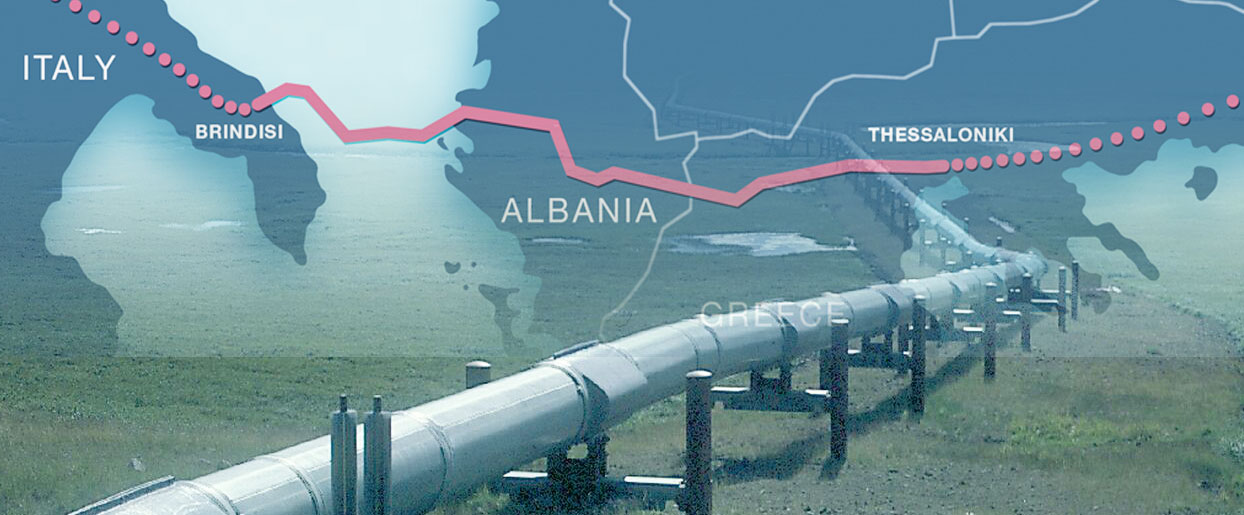
Nevertheless, Tirana’s recent maneuvers demonstrate a pragmatic dualism that merits sharp analysis. While public pledges toward “European values” and formal integration continue, a silent but de facto breaking of this European taboo is occurring on the ground. The intensification of strategic relations with Azerbaijan, joint plans for the gasification of the country, and an openness to infrastructural investments outside standard EU frameworks demonstrate that Tirana is beginning to speak—perhaps driven by the pure material instinct of survival—the language of naked self-interest.

This alignment with Baku is not merely a commercial maneuver or an expansion of an energy portfolio. It is an act of Realpolitik that acknowledges a cold truth: when Europe is no longer capable of guaranteeing its own stability or generating genuine analysis for the region, countries on the periphery must find bilateral transactional axes to secure their future, without waiting for permission from the suffocating bureaucracy of Brussels.

Conclusion: Survival in the Era of Naked Interest

In the New World Order, sovereignty is not a legal status gifted or guaranteed by velvet treaties; it is a muscle that must be exercised in the cold terrain of resources and technology. “The Diplomacy of Gas and Algorithms” is witnessing the collapse of the illusion of a shared transatlantic interest and the de-industrialization of a Europe that believed it could rule the world with regulations, without needing code or energy.

For official Tirana, the nuances of this historical moment demand intellectual courage. Continuing to blindly follow a passive actor on the global stage condemns one to irrelevance. The new path cleared toward Baku shows that Albanian diplomacy is beginning to comprehend the new rules of the game[^8]. Whether this marks the beginning of a strategic emancipation or is simply a tactical move forced by circumstances remains to be seen. But one thing is already certain: in an era where the world order is written in algorithms and fueled by gas, remaining hostage to doctrinal naivety is the final luxury a small state cannot afford.

Footnotes

[^1]: For an in-depth analysis of the shift from classical geopolitics (Heartland/Rimland) toward the “geopolitics of codes” and algorithmic dominance, see: Zuboff, S. (The Age of Surveillance Capitalism, 2019). For the concept of the interaction between critical infrastructure and digital sovereignty, see also the critique on the codification of technological monopolies: Hajdini, E. I., “The Digital Protectorate: How the EU AI Act Codified Silicon Valley’s Monopoly”, The Journal of Digital Diplomacy, May 2026.

[^2]: The concept of the US as a “Continental Island” refers to the modern revision of Nicholas Spykman’s theses regarding the geostrategic self-sufficiency of North America, reinforced by the shale gas revolution and the monopoly over artificial intelligence infrastructure (cloud computing and semiconductor design).

[^3]: On the use of predictive algorithmic systems in foreign policy formulation by the State Department and the Pentagon, see the reports of the National Security Commission on Artificial Intelligence (NSCAI), https://www.dwt.com/-/media/files/blogs/artificial-intelligence-law-advisor/2021/03/nscai-final-report–2021.pdf

 [^4]: Epistemic dependence in international relations implies an actor’s inability to produce independent strategic information and analysis, relying entirely on the intelligence structures and data models of another power. In the European context, this concept is linked to the failure of the Gaia-X project for a sovereign European cloud and the complete dependence of EU agencies on Silicon Valley firms for Big Data analysis.

 [^5]: On the concept of the “Transactional State” in the post-liberal era, see: Bremmer, I., Every Nation for Itself: Winners and Losers in a G-Zero World (2012). The case of Azerbaijan represents the paradigm of European re-orientation: the Memorandum of Understanding on a Strategic Partnership in the Field of Energy, signed between the European Commission and Baku, proved that the bloc’s industrial needs prevail over Brussels’ normative agenda.

[^6]: The de-industrialization of Germany, driven by the loss of cheap Russian gas and the high cost of the energy transition, has brought an inevitable decline in Berlin’s diplomatic weight on the international stage. This decline in relative power was clearly manifested in Germany’s recent loss in the race for a non-permanent seat on the UN Security Council in the June 2026 votes. See the expanded analysis: Hajdini, E. I., “The Fall of Berlin and the New Order at the UN”, Realpolitika, June 2026.

[^7]: The term “squared passivity” refers to the doctrine of Albanian foreign policy post-1992, characterized by the principle of unconditional bandwagoning with the official line of the US and the EU, often without calculating local economic costs. Tirana’s strategic rapprochement with Baku through projects such as the gasification of Korçë and potential investments in distribution infrastructure via TAP marks a pragmatic deviation from this rigid line.

 [^8]: For an analysis of how small states can develop “asymmetric strategic autonomy” in a fragmented world, see: Keohane, R. O., “Lilliputians’ Dilemmas: Small States in International Politics.” In today’s era, this exercising of the muscle of sovereignty requires abandoning “Westphalian naivety” (the belief that sovereignty is automatically respected by international law) and shifting toward the material defense of national interest.

/Argumentum.al

© 2026 Argumentum

Related Posts

ENGLISH

Daniel Serwer: A Bad War Ending Badly May Still Be Good News

17 June, 2026
Friedrich Merz, Keir Starmer, António Costa, Donald Trump, Emmanuel Macron, Mark Carney, Ursula von der Leyen, Giorgia Meloni and Sanae Takaichi
ENGLISH

G7 Leaders Gather in Évian Amid Global Uncertainty, Focus on Security, Economy and International Cooperation

16 June, 2026
ENGLISH

Just kind words  in Tivat! Where is the peace!? A deal yes, peace No!What is happening with USA and  EU?  5 elections but no solution!

15 June, 2026

Follow US

Subscribe

Receive Argumentum Magazine by Email

Last Posts

Daniel Serwer: A Bad War Ending Badly May Still Be Good News

17 June, 2026

The Diplomacy of Gas and Algorithms: The Nuances of Official Tirana—Is It Breaking the European Taboo with Azerbaijan?

17 June, 2026
Friedrich Merz, Keir Starmer, António Costa, Donald Trump, Emmanuel Macron, Mark Carney, Ursula von der Leyen, Giorgia Meloni and Sanae Takaichi

G7 Leaders Gather in Évian Amid Global Uncertainty, Focus on Security, Economy and International Cooperation

16 June, 2026

Just kind words  in Tivat! Where is the peace!? A deal yes, peace No!What is happening with USA and  EU?  5 elections but no solution!

15 June, 2026

Council of Albanian Ambassadors Backs Civic Protests, Calls for Transparency and Protection of National Interests

12 June, 2026
Argumentum

“Argumentum”, një proces intelektual …

Contact Us

[email protected]
[email protected]
[email protected]

Follow Us

Media Partner

Register

Receive Argumentum Magazine by Email
  • Home
  • Privacy Policy
  • About Us
  • Contact

© 2022 Argumentum. All Rights Reserved. | NUIS: L91415033Q

Welcome Back!

Login to your account below

Forgotten Password? Sign Up

Create New Account!

Fill the forms bellow to register

*By registering into our website, you agree to the Terms & Conditions and Privacy Policy.
All fields are required. Log In

Retrieve your password

Please enter your username or email address to reset your password.

Log In

Add New Playlist

No Result
View All Result
  • Home
  • OP/ED
  • Interview
  • Realpolitik
  • Current Events
  • Top News
  • YOUR VOICE
  • Shqip

© 2022 Argumentum. All Rights Reserved. | NUIS: L91415033Q

This website uses cookies. By continuing to use this website you are giving consent to cookies being used. Visit our Privacy and Cookie Policy.