






Russia spent a year certifying Milorad Dodik’s convictions. Aleksandar Vučić tested them on Saturday.
By Drizan Shala*
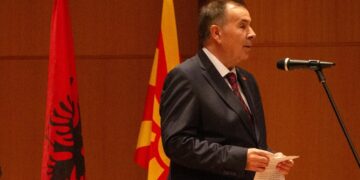
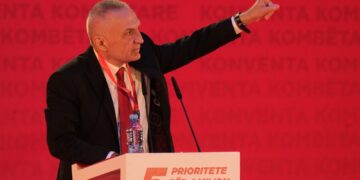
This morning Milorad Dodik posted his summary of the week. Serbia’s support for Republika Srpska “has never been stronger and more concrete.” Srpska knows that in Serbia it has “a friend who is always with its people.” That unity is strength and the best guarantee of a secure future. “Tokom sedmice s predsjednikom Vučićem,” during the week with Serbia’s president, he visited several municipalities in Srpska and the Serb people of Drvar.
The week he reviewed contains Saturday.
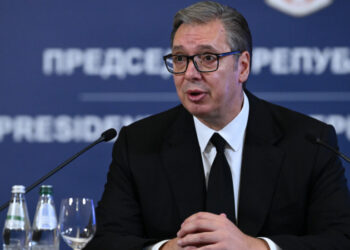
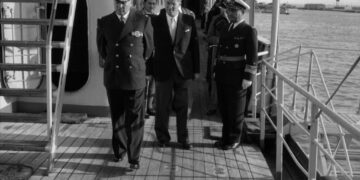
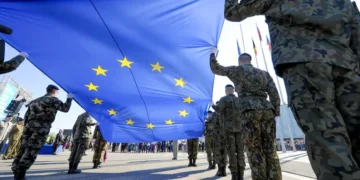
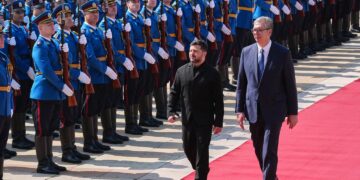
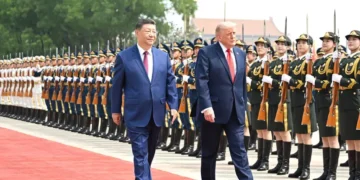
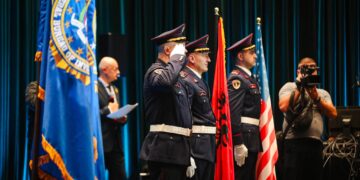
On Saturday the friend who is always with his people received Volodymyr Zelensky at the foot of a red carpet, walked him past a formation of the Army Guard, sat with him for more than three hours and gave a dinner in his honor. None of it appears in the summary. Dodik itemized seven days of friendship and removed the guest.
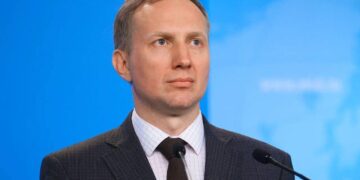
We address the deletion to Igor Kalabuhov, ambassador of the Russian Federation in Sarajevo, because Moscow has invested enough in this man to be entitled to an explanation of what disappeared.
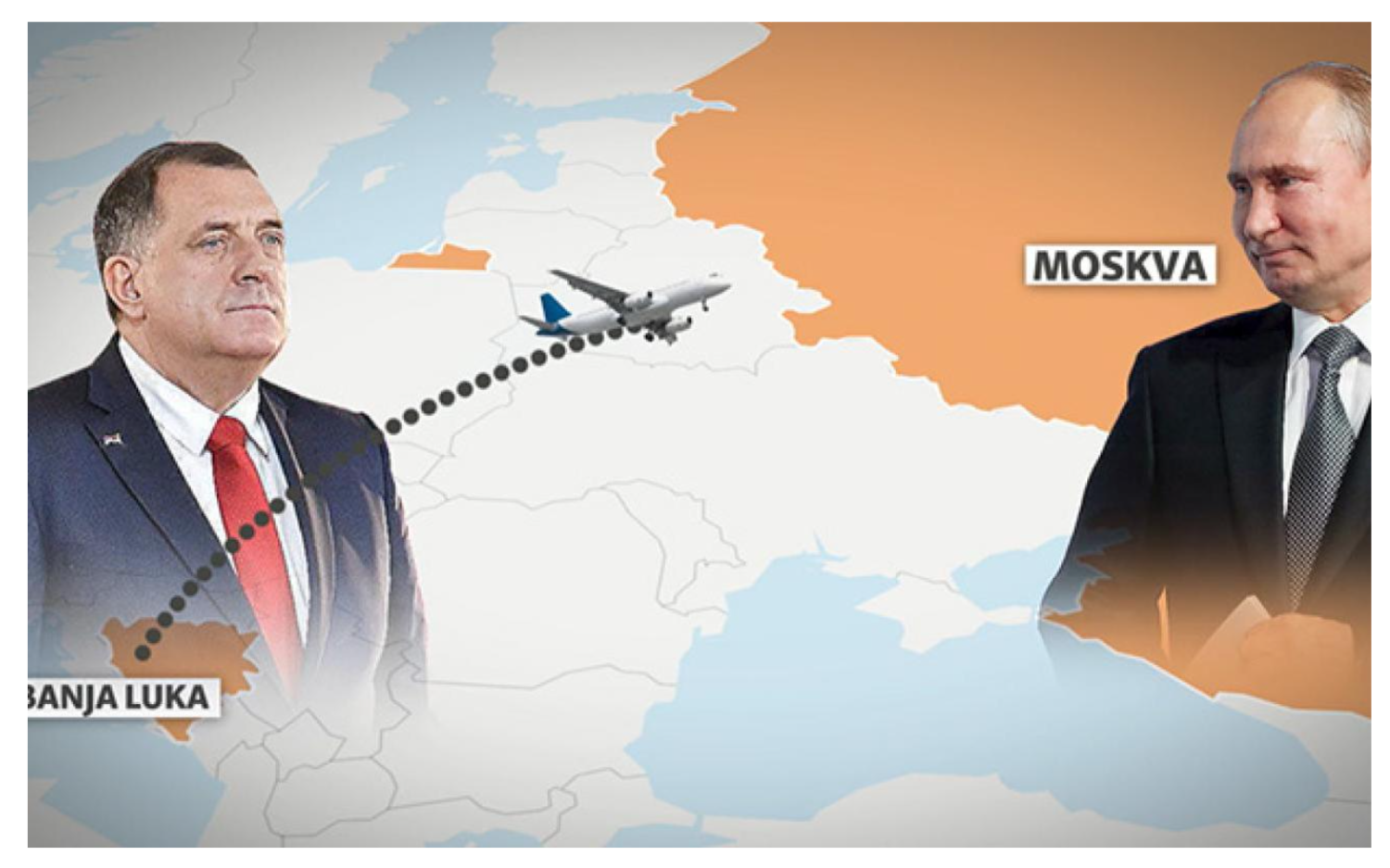
The investment is on record. In February Dodik published a letter of full support from Dmitry Medvedev. In May he stood at Vladimir Putin’s Victory Day reception, described their Moscow meeting as one of the most important he has held, and took a call from Sergei Shoigu, whose readout certified that Republika Srpska faces pressure precisely because it refuses to abandon its freedom and its institutions. Between the two came Deputy Foreign Minister Grushko. Moscow does not spend that kind of senior time on a man whose convictions it considers decorative.
The convictions performed reliably all year. In March, in Serbian and in English, Dodik condemned Zelensky’s pressure on Viktor Orbán as an act of hostility toward a sovereign friend and called the Ukrainian president “an actor performing a comedy while his nation endures a tragedy.” By June the “regime in Kyiv” had lost all scruples. By July the European Union was prepared to fight “until the last Ukrainian.” The doctrine had range. It reached mobilization offices in Zakarpattia and a student dormitory in Russia. Distance was never its filter, and jurisdiction was never its condition.
Then Zelensky landed in Belgrade and the doctrine stopped. Not a sentence in Serbian. Not a sentence in English. One of the region’s most prolific commentators on Ukraine watched the largest Ukraine event his neighborhood has ever hosted, held his tongue for two full days, and on the third morning published an account of the week with the event removed.
There is an innocent reading, and it deserves a hearing. Another state’s diplomacy is not his portfolio; Serbia receives whom Serbia chooses. But Hungary’s diplomacy was not his portfolio in March, and Russian dormitories lie in no municipality of Republika Srpska. He has never once treated jurisdiction as a condition for comment. He discovered the condition on the weekend Aleksandar Vučić needed it.
That is what should interest Moscow about Saturday. For most of the year there was no way to distinguish loyalty to Moscow from loyalty to Belgrade; the two capitals required sufficiently similar things that service to one could be presented as service to both. Saturday forced them apart. The Ukrainian president Dodik had attacked for months arrived in the capital of his indispensable patron and received military honors. If the position on Zelensky was conviction, this was the moment suppressing it would have cost the most. It proved easy.
There is a second entry in the ledger. On 4 August Dodik spoke at Mrkonjić Grad and thanked Serbia’s president by name for reviving the memory of Oluja. The same day Russia’s representatives in Belgrade published their statement on Oluja as precedent. Four days later Vučić gave the honor guard to a president who last year congratulated Croatia on the anniversary of the operation. The contradiction sat under television lights. Dodik found nothing to say about that either.
Perhaps Moscow reads all of this as coordination among friends, a temporary quiet from Banja Luka in service of a Serbian relationship Moscow itself finds useful. Only Moscow can judge that. The other possibility now sits in the record: that a year of senior political capital protects a politician whose most advertised convictions remain operational only until Belgrade asks him to suspend them.
This morning’s post is what makes the silence evidence, because silence alone would have been deniable. Dodik went further. He reconstructed the week, praised the friendship, declared their unity stronger than ever, and removed the single event that would have brought those declarations into contact with everything he has said about Ukraine since February. Editing of that kind has an audience, and the audience was not in Sarajevo.
Protection and command are different things, Ambassador, and Saturday separated them. Fire discipline has to be issued; armies train it and check it, and it discloses to an observer the one fact worth knowing, which is where the orders come from. The orders visible in this record do not come from Urijana Dedina 93.
*Drizan Shala writes on security, institutions, and political violence for Kosovo Dispatch and Tirana Examiner. He is a doctoral candidate at the University of Sarajevo.
© 2026 Argumentum